
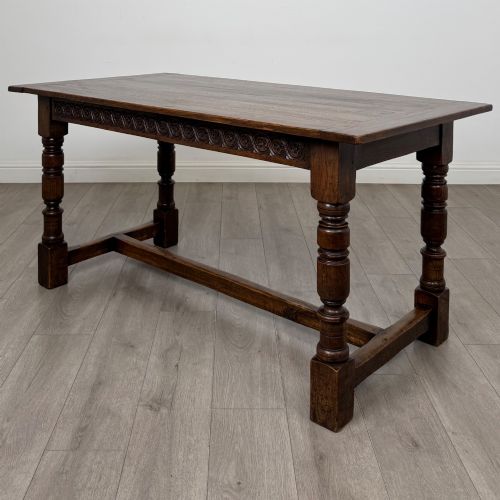
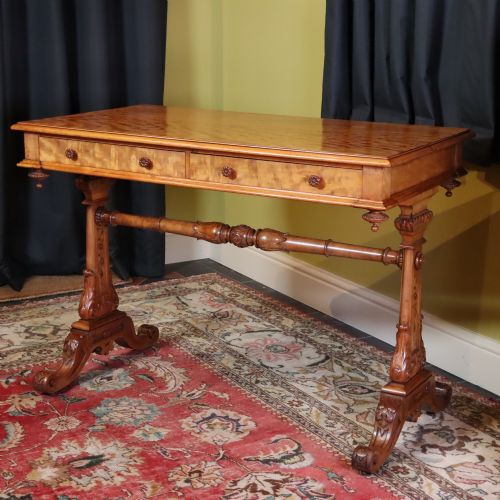
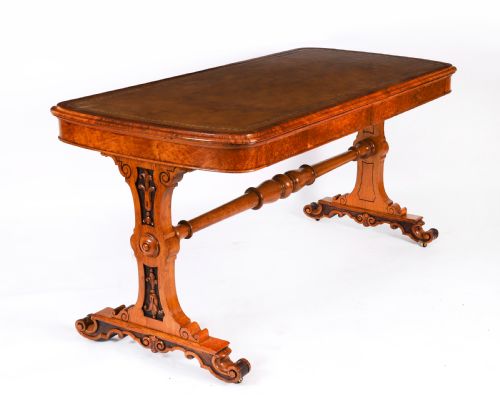
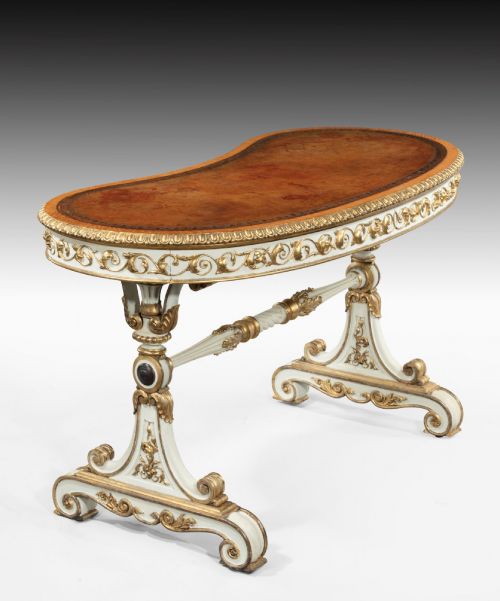
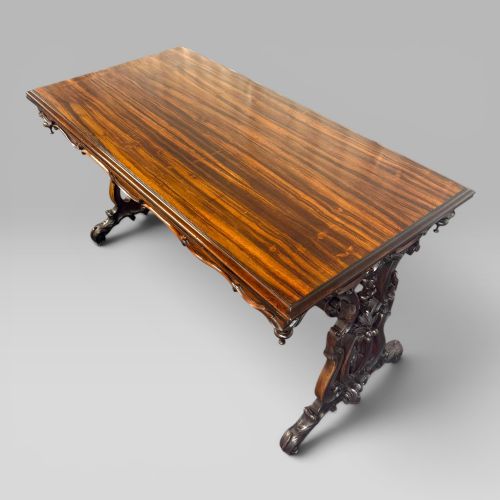
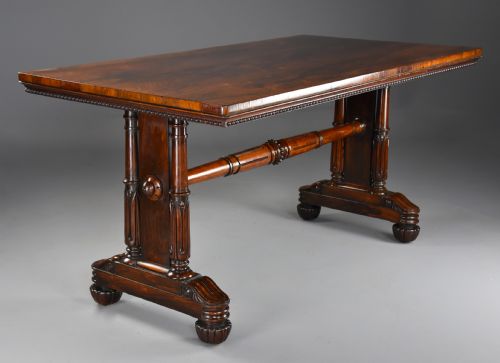
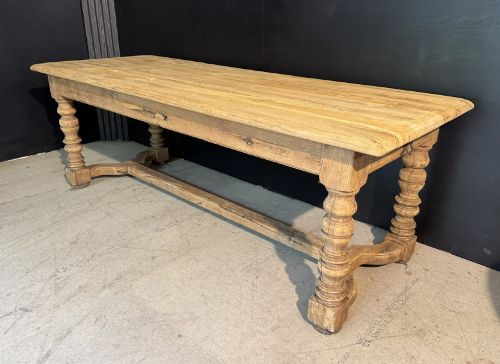
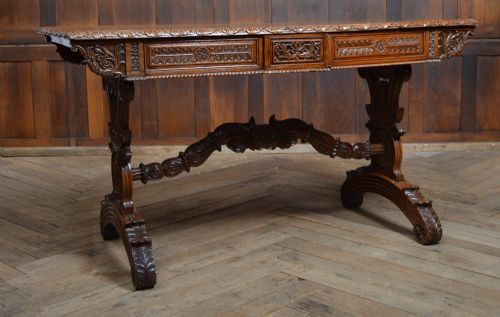

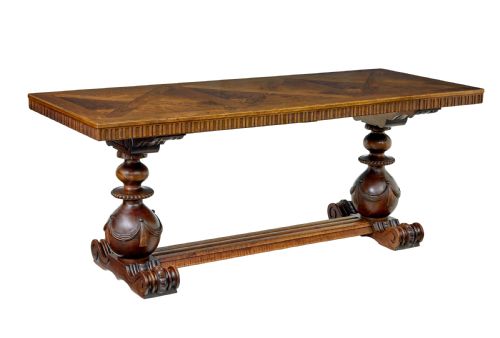

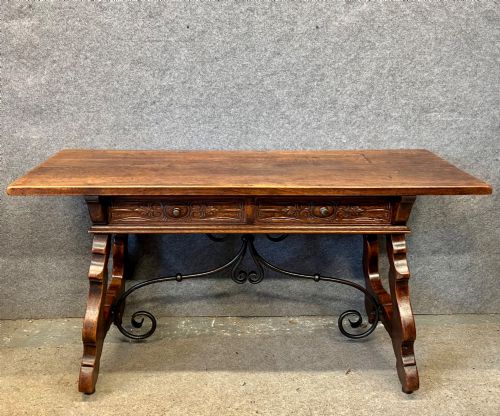

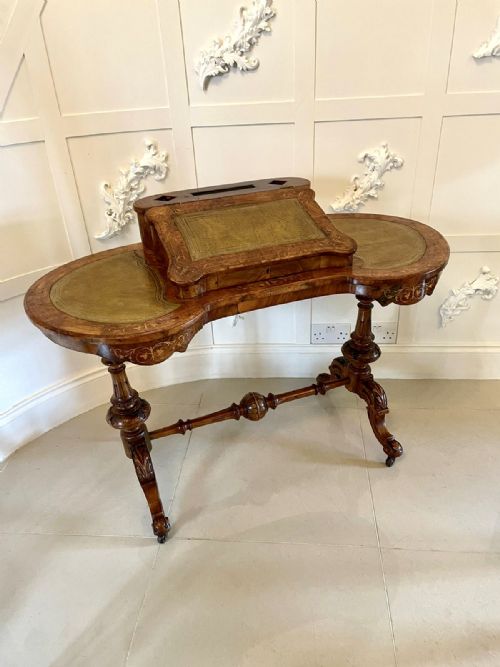


Carved Trestle Desk
A carved trestle desk offers substantial surface space and striking woodwork, bringing distinct character to a study.
What a carved trestle desk is
A carved trestle desk provides a sturdy workspace supported by shaped uprights rather than standard legs, with examples appearing across various historical periods.
The pieces grouped under a carved trestle desk span several formats, including nineteenth-century library tables, seventeenth-century walnut tables, and early twentieth-century Scandinavian designs.
Walnut, rosewood, padauk, and mahogany provide the primary timbers for these surfaces, occasionally accompanied by leather inserts, brass details, or giltwood and ivory paintwork.
How they were made
Cabinetmakers utilised solid timbers such as walnut, padauk, and rosewood, constructing robust frames designed to support heavy use in libraries and studies.
Decorative elements involve detailed carving directly into the wood, alongside specialised treatments like giltwood and ivory paintwork or wrought iron fittings.
Retail Price Guide 2026
Typical UK retail prices for carved trestle desk, calculated from the Sellingantiques database of over a million retail prices indexed since 2003. This retail price guide relies exclusively on Sellingantiques data; no external sources or auction records are used, so the figures do not describe the wider market.
What varies in quality
The refinement of the carving and the depth of the original patina distinguish finer examples from simpler workshop productions.
Choice of dense hardwoods like padauk and rosewood, combined with thoughtful integration of leather writing surfaces and brass hardware, separates standard tables from exceptional library pieces.
The Carved Trestle Desk Glossary
- Trestle
- A structural support consisting of a horizontal beam fixed to two splayed uprights. This form provides substantial legroom beneath the writing surface.
- Patina
- The surface sheen and coloration developed through age and handling. Good original patina indicates minimal harsh restoration.
- Padauk
- A dense tropical hardwood known for its reddish-brown colour. Cabinetmakers valued it for strength and fine finishing.
- Giltwood
- Wood that has been treated with gold leaf or gold paint. This technique highlights carved details on formal nineteenth-century pieces.
Frequently Asked Questions
What is a carved trestle desk?
A carved trestle desk is a sturdy writing surface supported by decorated upright ends rather than standard corner legs.
These pieces draw on styles ranging from seventeenth-century Spanish Baroque to Victorian and early twentieth-century Scandinavian designs.
How do I date a desk?
Dating relies on identifying the primary timber, construction methods, and decorative motifs characteristic of periods such as the seventeenth or nineteenth century.
Examining secondary woods and surface finishes helps confirm the era of manufacture.
Which woods were used?
Common timbers include walnut, rosewood, padauk, and mahogany, selected for their durability and rich grain patterns.
Some examples also feature painted wood or giltwood highlights alongside leather inserts.
Where were they placed?
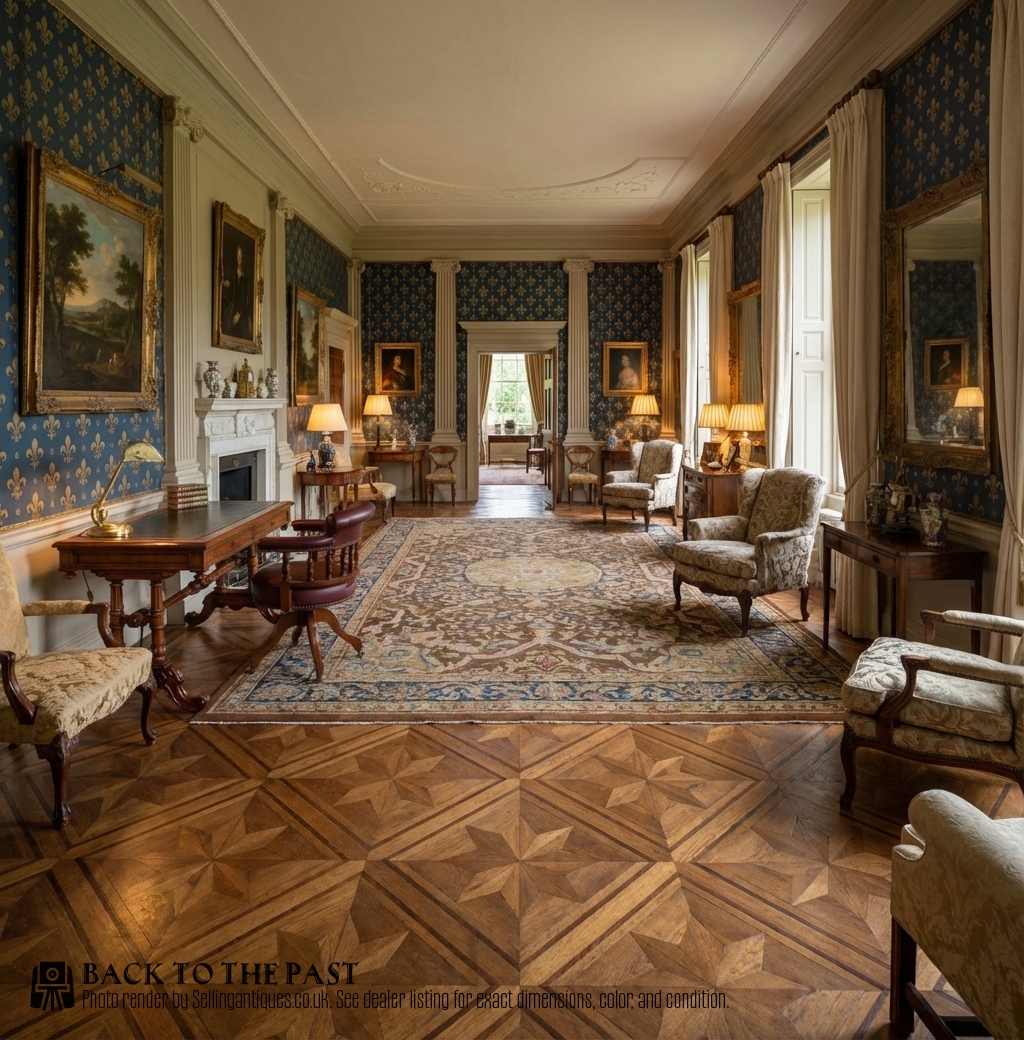
These tables typically stood in libraries, studies, or large reception rooms where a substantial workspace was required.
Many designs allow free-standing placement in the centre of a room rather than against a wall.