
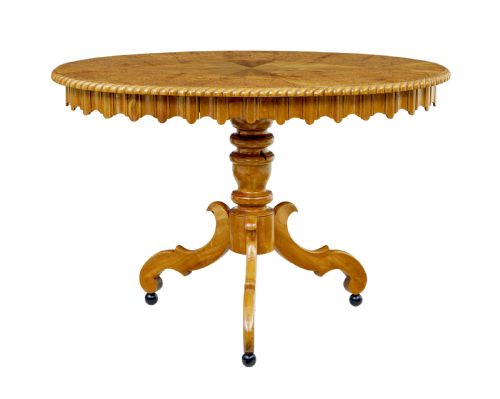
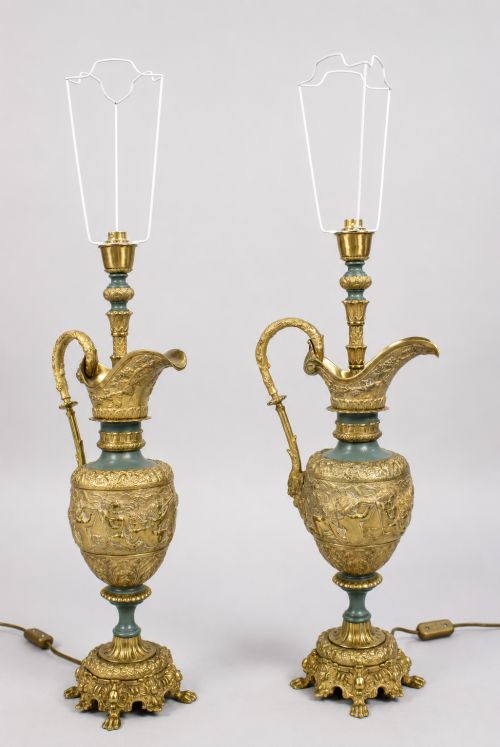
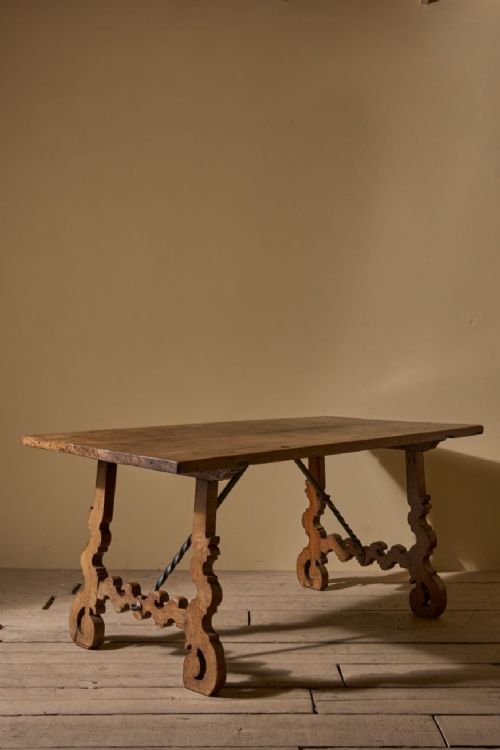
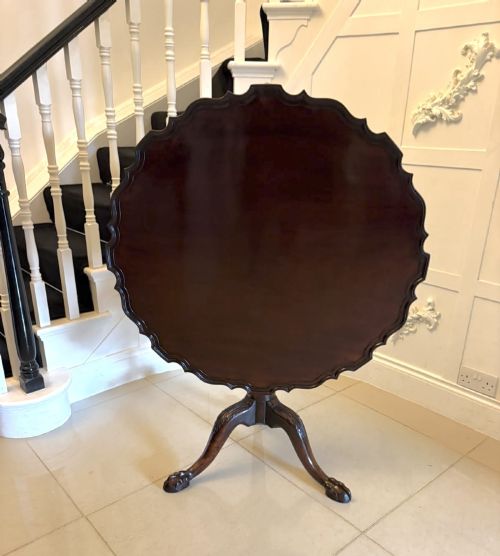
Antique Carved Table
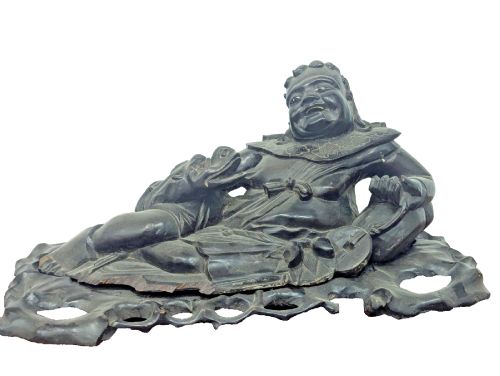
An antique carved table brings historical depth to a room through dense hand-worked timber and sculptural ornament.
Antique Carved Table
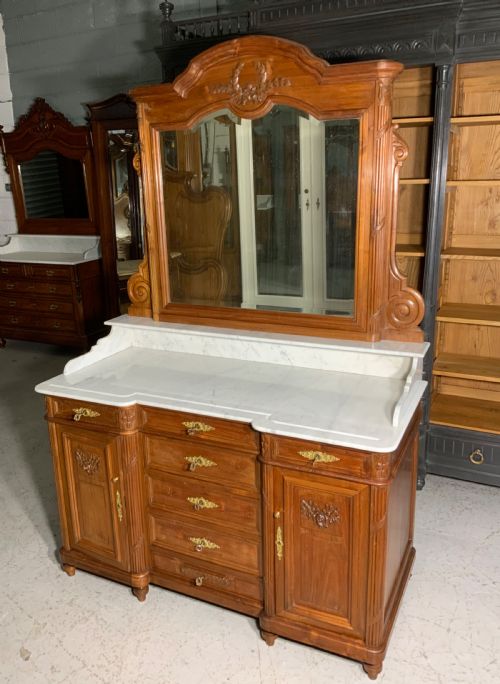
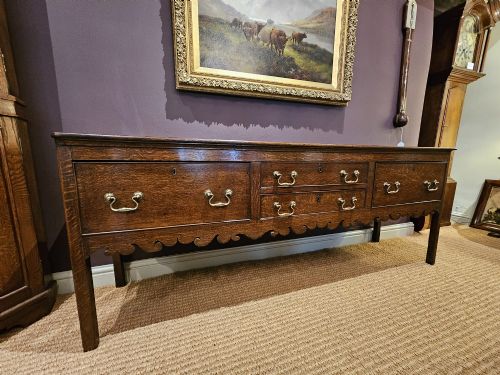
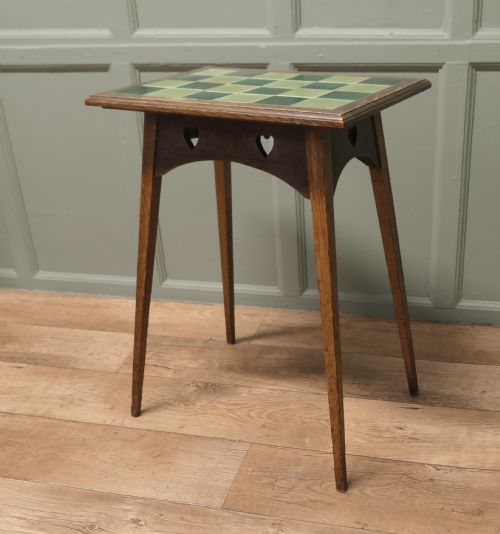
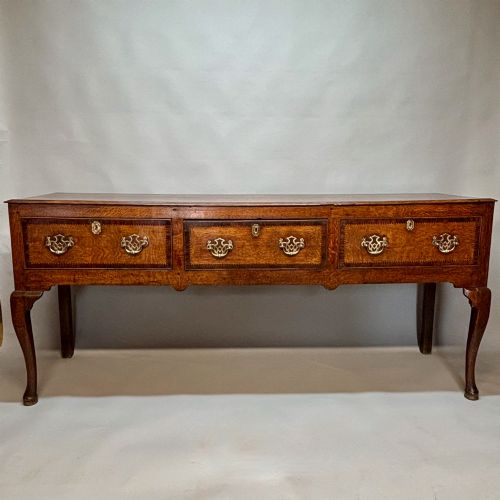
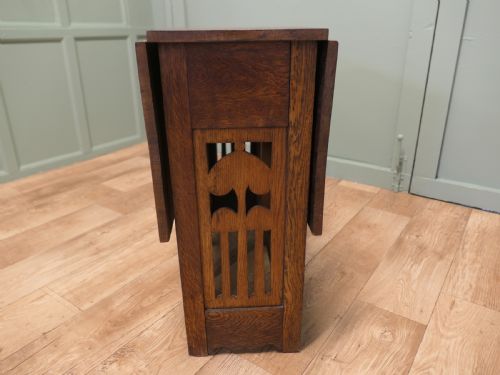
An antique carved table encompasses diverse domestic forms ranging from substantial oak refectory boards to smaller occasional, console, and centre pieces. The evidence shows frequent examples originating across the 18th, 19th, and early 20th centuries in oak, mahogany, and walnut.
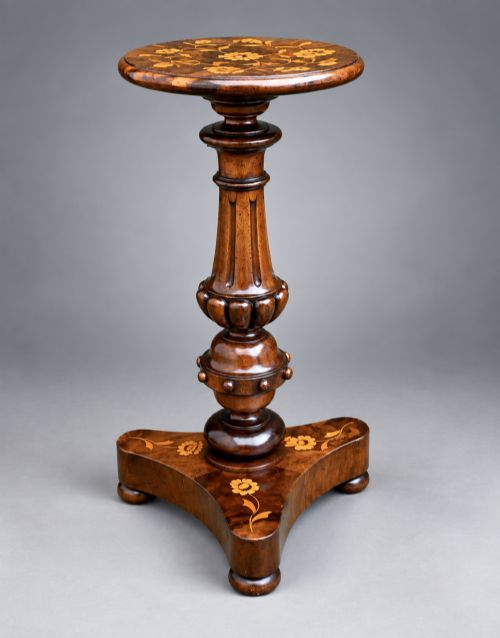
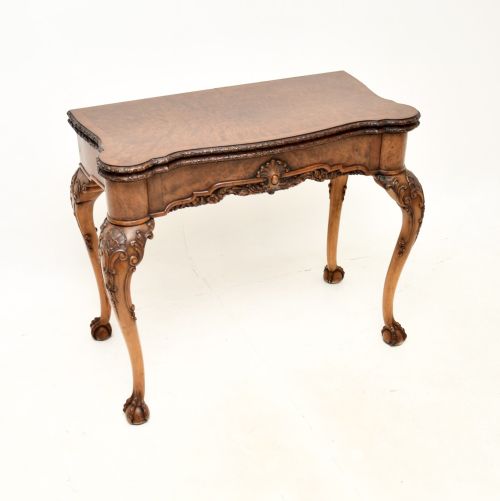
Buyers regularly encounter Victorian burr walnut centre tables and oak side tables alongside Georgian mahogany dining pieces. These items serve functional roles in contemporary interiors while displaying period carving styles such as French Rococo, Gothic, and Queen Anne Revival.
Materials and Construction
Cabinetmakers utilised dense native and exotic hardwoods including oak, mahogany, walnut, and rosewood to provide a stable foundation for intricate hand-carved detail. Timber selection dictated the depth and sharpness achievable in relief motifs such as acanthus leaves and scrolling foliage.
Joinery methods varied by period, employing traditional pegging and draw-leaf mechanisms in earlier oak formats, and sophisticated veneering and pedestal structures in later Victorian and Edwardian examples.
Materials appearing across the inventory include solid oak, mahogany, walnut, rosewood, and decorative marble.
Markers of Excellence
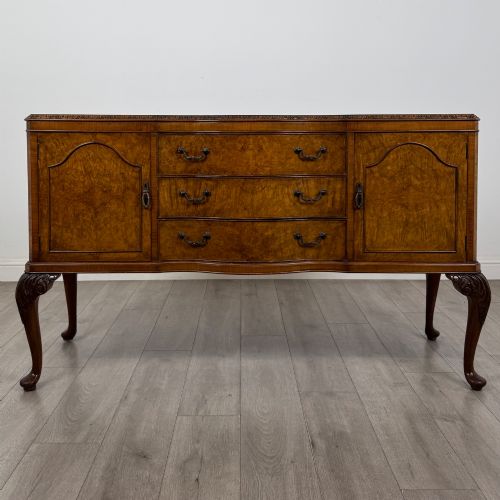
Quality rests upon the crispness of the hand-carved ornamentation and the selection of timber figures such as burr walnut or figured mahogany. Superior pieces exhibit depth and precision in the carving rather than shallow, mechanical shaping.
Structural integrity and original surface patination distinguish finer examples from altered or heavily restored stock. The harmony between the timber base and any applied marble tops or brass inlays also determines the standing of a piece.
Felix-Alfred Ternisien·Gillows Oxford Street Workshop
The Antique Carved Table Glossary
- Console table
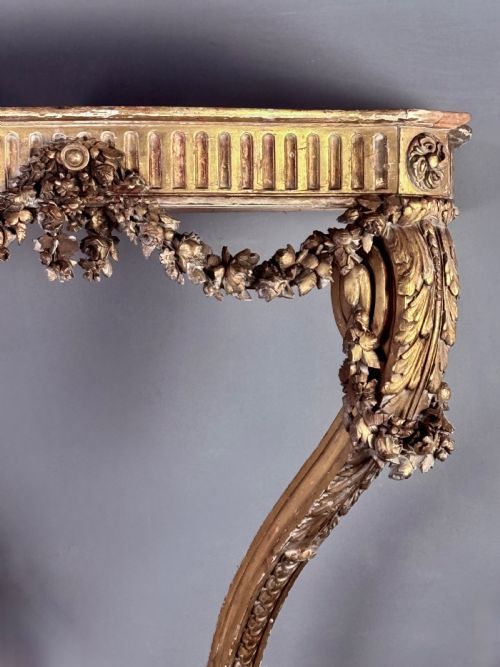
- A table designed to stand against a wall, frequently supported by carved legs or brackets. These pieces often feature decorative marble tops or elaborate gilt wood frames.
- Tilt top
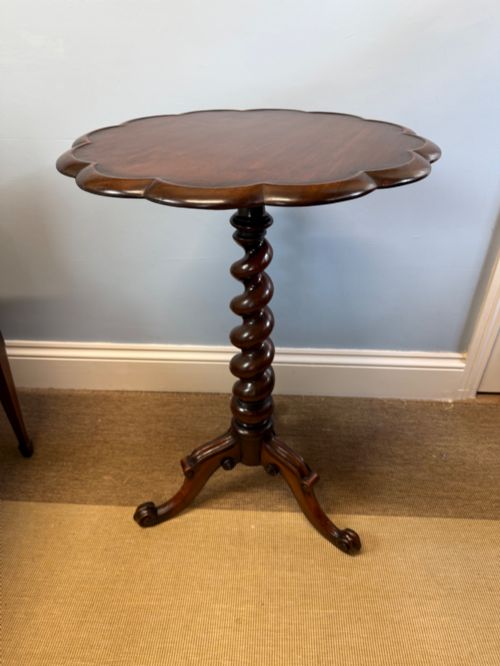
- A tabletop mounted on a pillar and tripod base with a mechanism that allows the surface to tilt vertically when not in use. This design saved space in period interiors.
- Refectory table
- A long, narrow dining table traditionally used in communal dining halls and constructed with heavy timber frames. Examples often incorporate stretchers for added stability.
- Burr walnut
- A highly prized wood veneer obtained from the Burl growths of walnut trees. It displays swirling, irregular grain patterns favoured for decorative table surfaces.
- Card table
- A small folding table designed for evening gaming, often featuring a hinged top that opens to reveal a baize-lined playing surface. Many period versions include clever compartment storage for cards.
Antique Carved Table: Frequently Asked Questions
How do I care for an antique wooden table?
Maintain a stable indoor environment away from direct heat sources and strong sunlight to prevent timber shrinkage or splitting.
Apply natural beeswax periodically to nourish the wood grain and preserve the historic surface finish without building up heavy chemical residues.
Can I use an antique carved table every day?
Many solid hardwood forms, such as oak refectory and mahogany dining tables, were built for heavy domestic use and remain entirely practical for daily dining.
Delicate occasional or gilt console tables with marble tops require greater care, often functioning better as display surfaces rather than active workspaces.
How do I identify the period of a carved table?
Examine the primary timber, construction joints, and the style of the carving to establish chronological markers. For instance, heavy geometric oak work often points to earlier centuries, while burr walnut and refined rosewood frequently indicate Victorian or Edwardian production.