

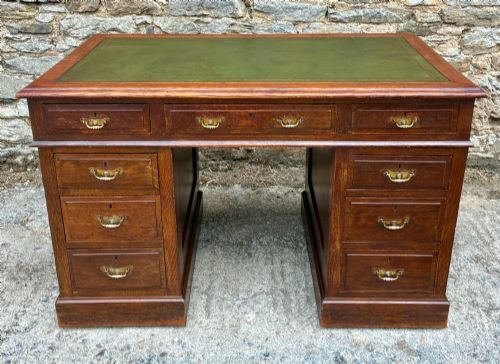
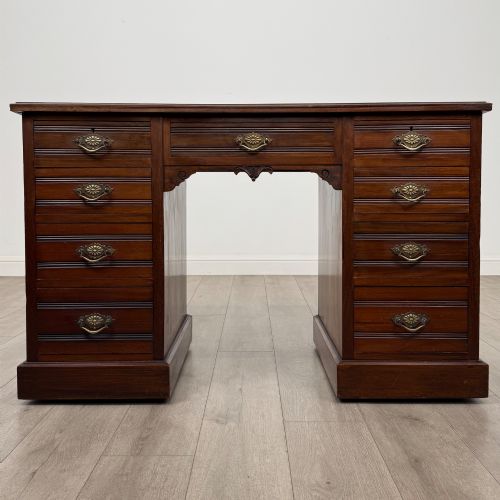
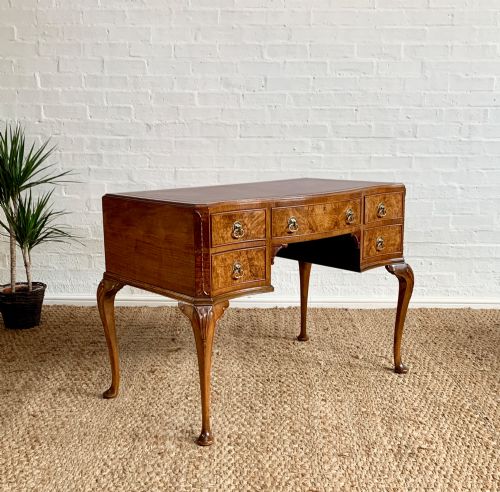
Carved Executive Desk
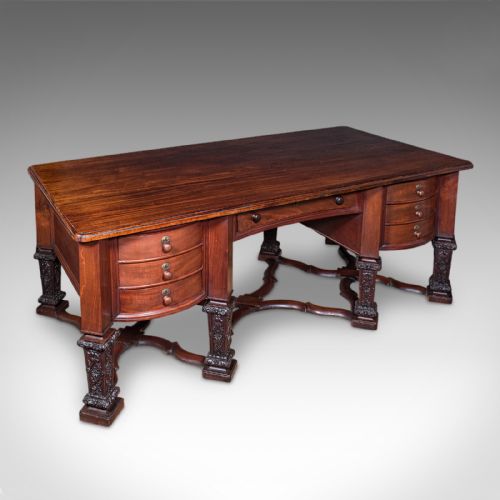
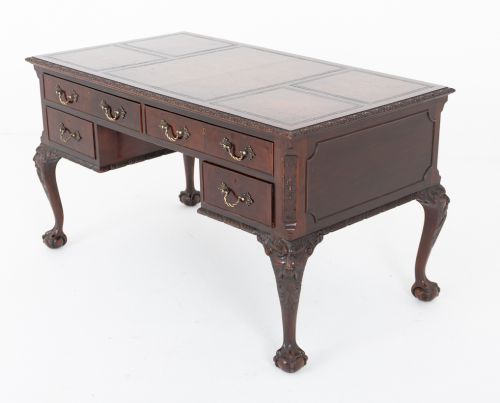
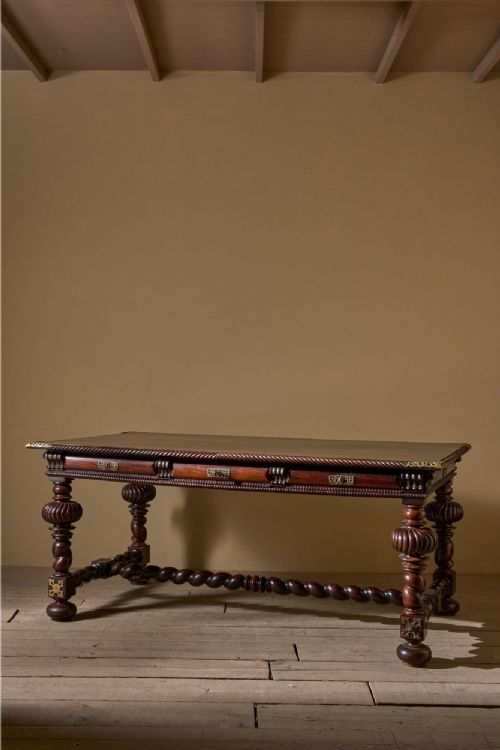
A carved executive desk provides a substantial working surface and generous storage, anchoring a study with rich timber grain and period detail.
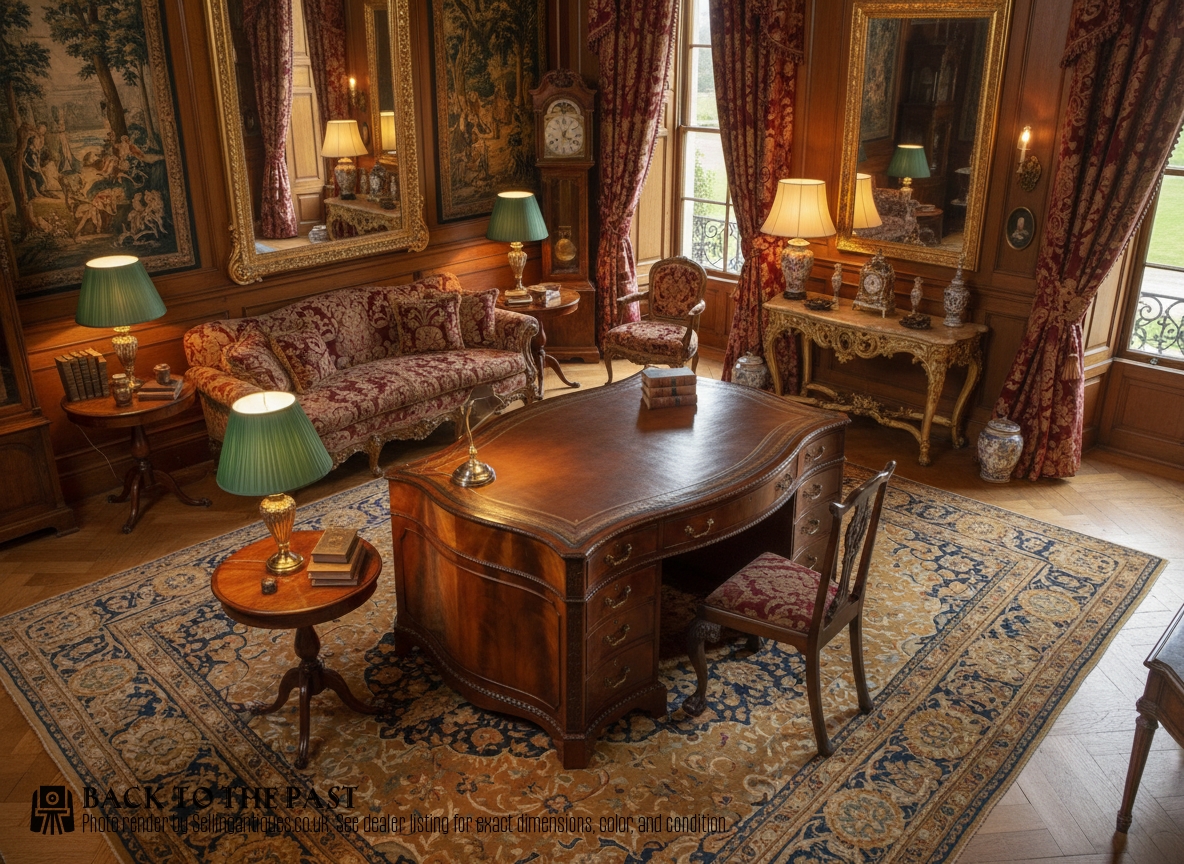
Carved Executive Desk
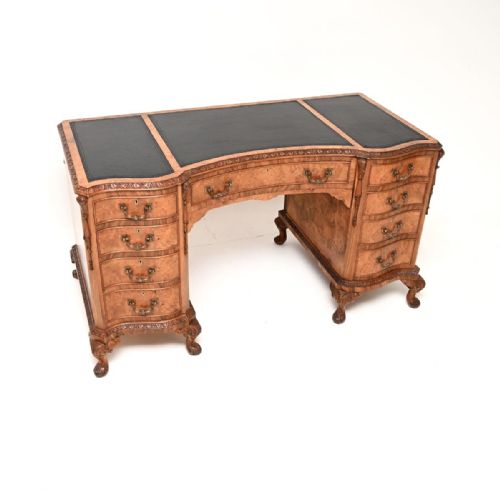
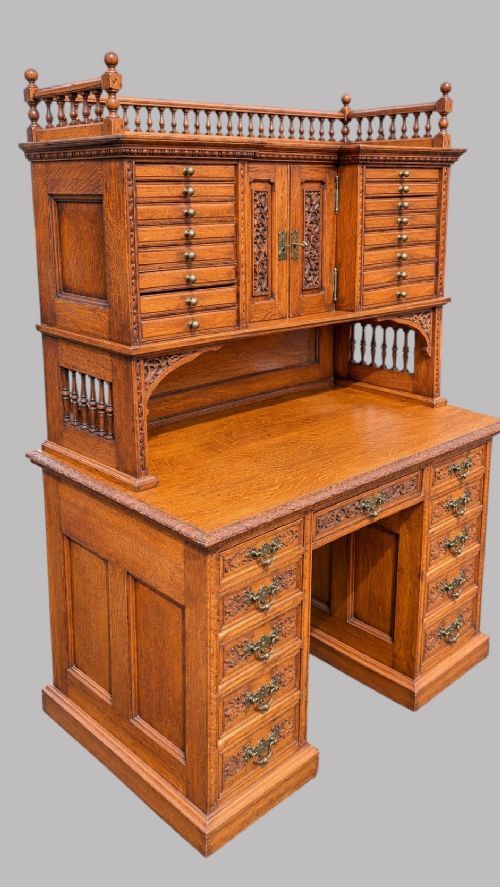
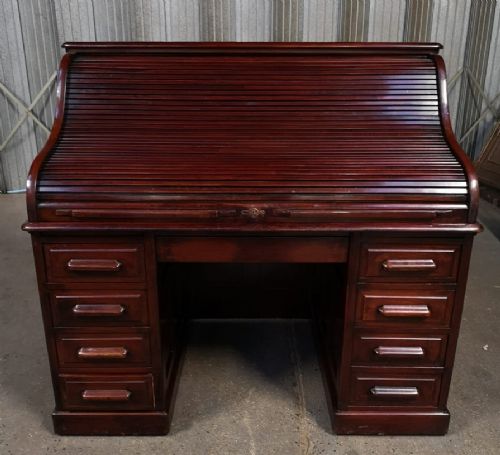
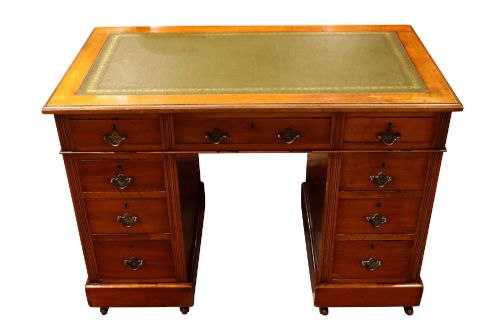
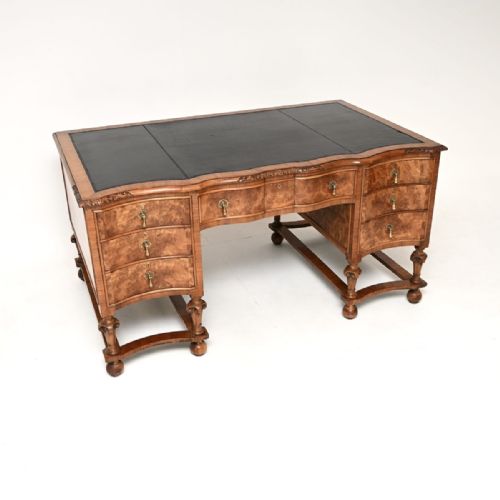
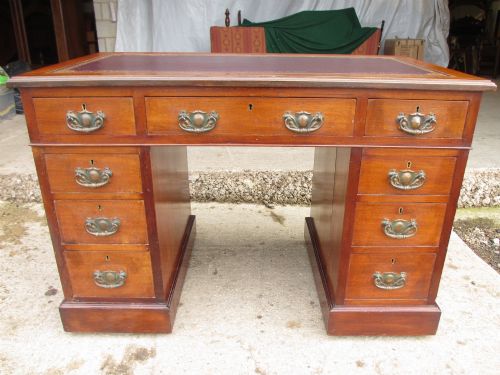
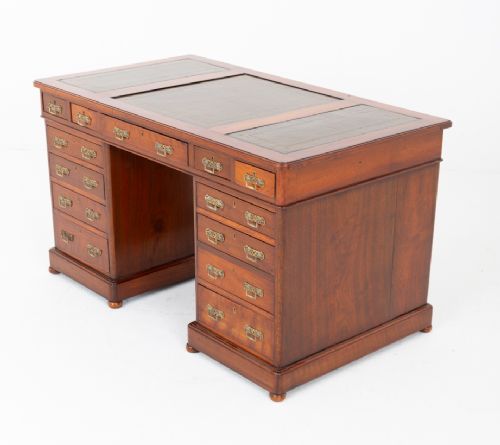
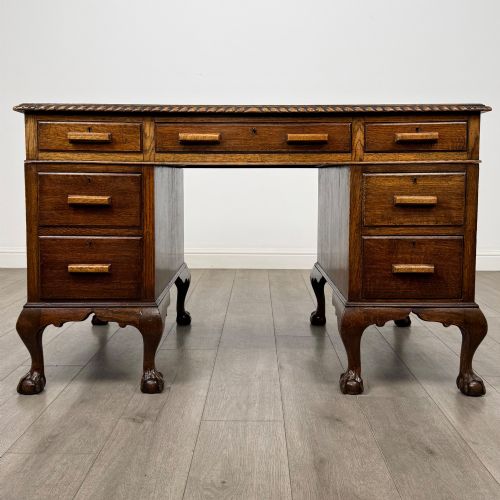
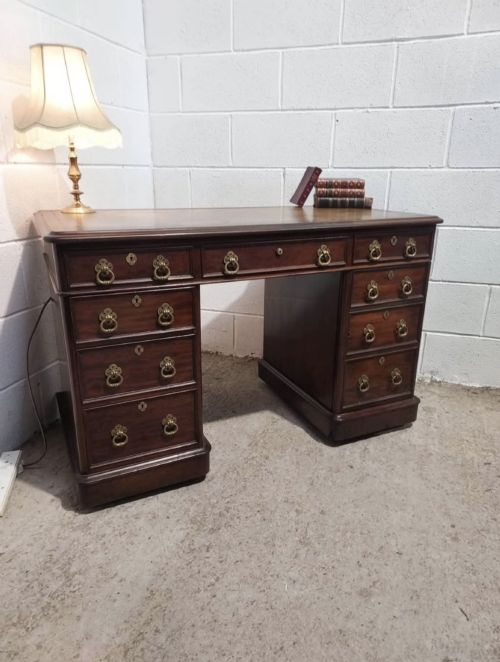
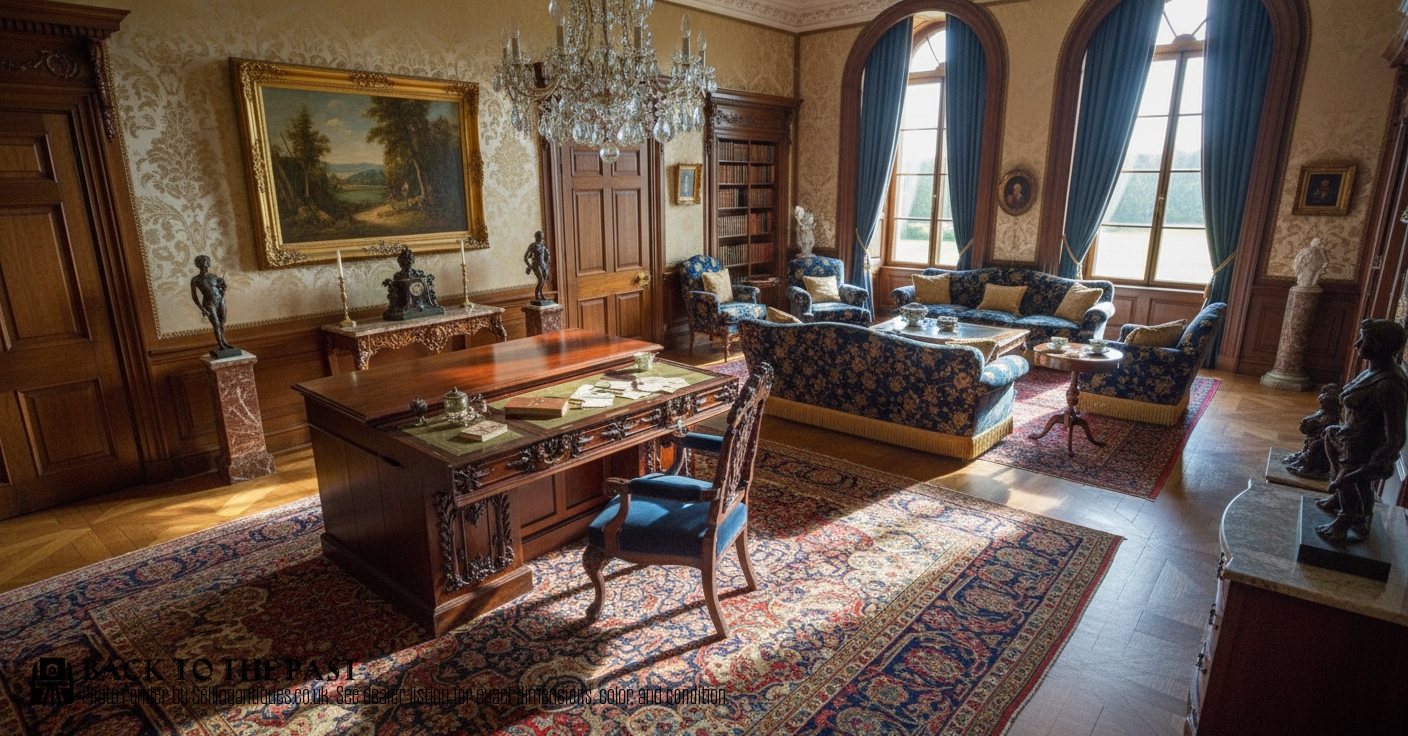
A carved executive desk is typically a heavy pedestal or partners form designed for a primary study or office. These large pieces offer multiple drawers, kneeholes, and writing surfaces inset with leather.
The selections span the Victorian, Edwardian, and George IV periods, alongside revivals of earlier Chippendale and Queen Anne styles. Oak, mahogany, and burr walnut dominate the forms, frequently enriched with hand-carved mouldings and panel details.
Pedestal formats with banks of drawers on either side appear frequently, alongside library tables and partners desks finished on all sides for placement in the centre of a room.
Materials and Construction
Makers utilised dense cabinet timbers including mahogany, oak, and burr walnut, often laid as veneers over solid secondary woods to create striking grain patterns. Fine brass hardware, locks, and tooled leather writing inserts complete the standard construction of the period.
Joinery relied on traditional methods such as dovetailed drawer construction and framed panels, paired with hand-carved wooden embellishments along the plinths, drawer edges, and legs.
Materials recorded across these listings include solid mahogany, oak, burr walnut, rosewood, and brass hardware.
Assessing Quality and Execution
Quality rests in the selection of figured timber, the crispness of the hand carving, and the retention of original fittings like brass handles and locks. Pieces stamped or labelled by known cabinetmakers often exhibit superior structural joinery and refined proportions.
Subtle details such as mahogany drawer linings, finely tooled leather surfaces, and balanced grain matching across multiple pedestals separate standard commercial pieces from exceptional workshop productions.
Maple and Co·Wylie and Lochhead Glasgow·Whytock and Reid of Edinburgh·Edwards and Roberts
The Carved Executive Desk Glossary
- Partners desk
- A large double-sided desk designed so two people can sit opposite one another, featuring drawers and cupboards on both faces.
- Pedestal desk
- A freestanding desk comprising a top surface resting on two separate pedestals containing banks of drawers.
- Kneehole desk
- A smaller form of pedestal desk featuring a central recess for the legs beneath the main writing surface.
- Burr walnut
- Timber taken from a tree growth or burl, highly prized for its swirling, intricate grain patterns used in decorative veneering.
- Tooled leather
- Leather treated with gold leaf or blind tooling impressions around the perimeter of a writing surface.
Carved Executive Desk: Frequently Asked Questions
What is a partners desk?
A partners desk is built to be used from both sides simultaneously, featuring banks of drawers or cupboards facing each other beneath a shared top.
These pieces were traditionally placed in the middle of a room rather than against a wall, allowing two individuals to work opposite one another.
How do I care for a leather desk top?
The leather writing surface should be dusted gently and treated periodically with specialised leather balms to prevent drying and cracking.
Avoid placing damp glasses or unprotected hot items directly on the leather to preserve the gold tooling and the finish of the hide.
How do I distinguish oak from mahogany?
Oak displays a pronounced, open grain with visible medullary rays, often carrying a golden-brown or deeper fumed tone.
Mahogany presents a smoother, tighter grain texture with deep reddish-brown tones that darken and enrich with age.
Can these desks be dismantled for transport?
Many pedestal desks are constructed in three distinct sections, consisting of the two drawer pedestals and the top.
Lifting the top off the pedestals allows for easier movement through doorways and up staircases during relocation.