



Ornate Walnut Desk
An ornate walnut desk brings dense grain, rich timber marquetry, and ambitious carving into a room, offering a tactile workspace rooted in nineteenth-century craftsmanship.
Ornate Walnut Desk
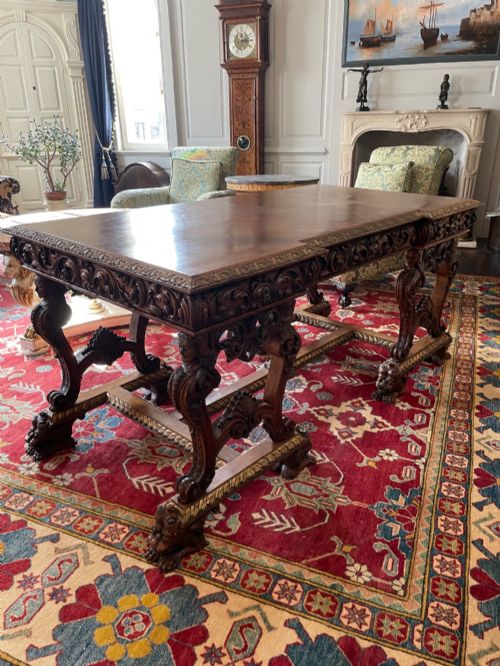
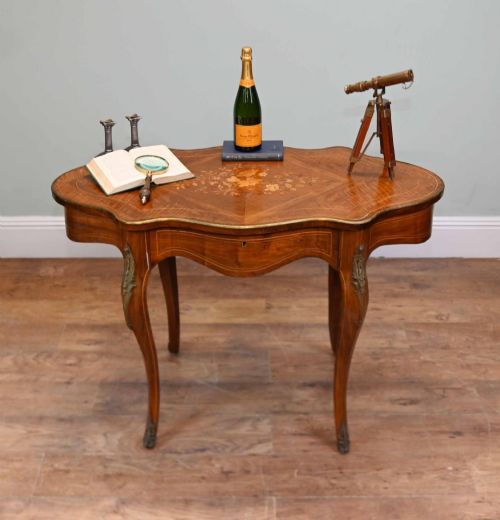
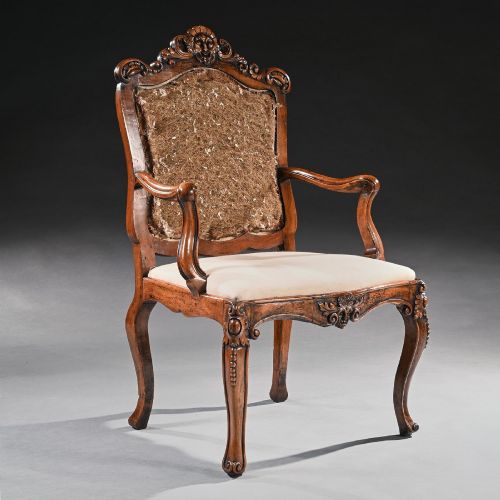
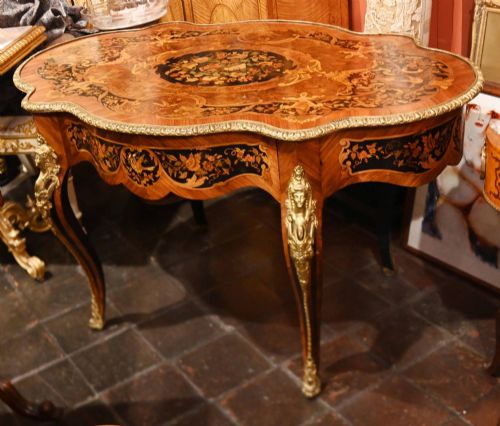
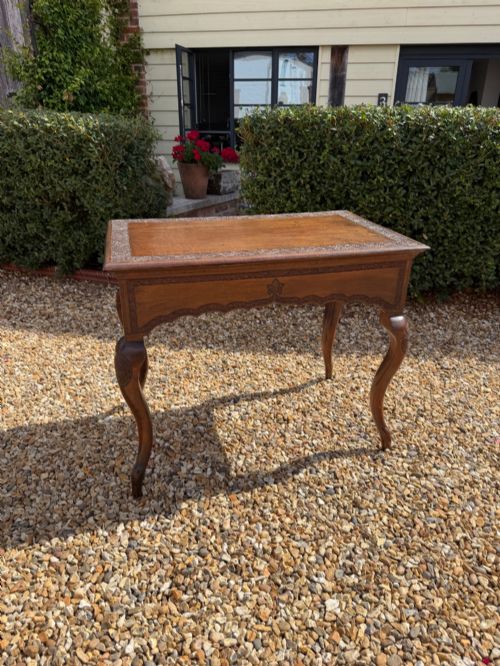
An ornate walnut desk encompasses heavy nineteenth-century forms, including bureau de dame writing furniture, Davenport styles, and French Louis XV style tables featuring elaborate marquetry inlay. These pieces serve as functional writing surfaces while displaying decorative carving, such as Italian Renaissance revival motifs or Rococo scrolls.
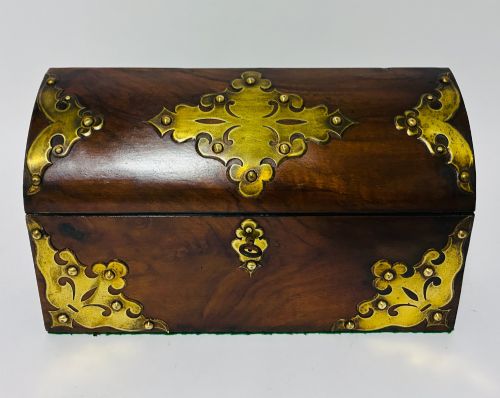
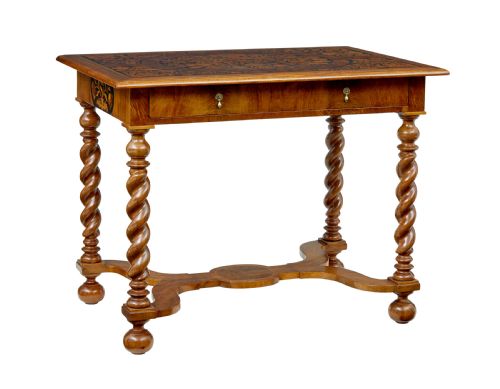
The versions most commonly met on this page span the Victorian era and continental European workshops, frequently incorporating burr walnut, brass mounts, and ormolu details. Alongside dedicated desks, related writing tables and secretaire cabinets appear, sharing the same dark timber palette and decorative ambition.
Makers and regional schools ranged from Italian workshops in Florence to French cabinet makers utilising timber marquetry and intricate hand carving. Collectors encounter everything from compact bureau desks to grand library tables built during the mid to late nineteenth century.
Distinguishing quality levels
Quality reveals itself in the depth and crispness of the hand carving, the complexity of the timber marquetry, and the selection of highly figured burr walnut veneers. Superior examples display seamless veneer matching across expansive surfaces and finely cast ormolu or brass mounts rather than generic stamped hardware.
Structural integrity and the preservation of original finishes separate high-end examples from standard production, particularly in the precision of sliding mechanisms, fitted desk interiors, and heavy structural joints. The presence of documented workshop origins or ambitious architectural carving elevates certain Italian and French pieces above simpler continental counterparts.
Ornate Walnut Desk Retail Price Guide 2026
Typical asking prices for ornate walnut desk among the pieces listed under this phrase on Sellingantiques today, from the lower quarter to the upper quarter. They describe what is for sale here now, not the wider market.
Materials span solid walnut, fruitwood, rosewood, brass, ormolu, and detailed timber marquetry inlay.
Angiolo Barbetti Firenze
The Ornate Walnut Desk Glossary
- Burr walnut
- A specialised timber cut from the abnormal growth of a walnut tree, yielding swirling, highly decorative grain patterns highly prized for veneer work.
- Marquetry
- The art of applying decorative veneer pieces of various woods to a structural panel, forming intricate pictorial or geometric designs.
- Ormolu
- Gilded bronze ornamentation applied to furniture mounts, desk galleries, and feet, popular in French nineteenth-century cabinet making.
- Secretaire-à-abattant
- A tall writing cabinet featuring a drop-front fall leaf that conceals a fitted interior of small drawers and pigeonholes.
- Davenport desk
- A compact box-form writing desk with a sloping top surface, side drawers, and a small upper stationery compartment.
Ornate Walnut Desk: Frequently Asked Questions
What is an ornate walnut desk?
An ornate walnut desk is a nineteenth-century writing table or bureau constructed from walnut or burr walnut, featuring decorative elements such as marquetry, hand carving, and brass mounts.
These pieces range from compact ladies' writing desks to large architectural library tables produced across England, France, and Italy.
How do I identify French styles?
French nineteenth-century desks often display Louis XV or Empire influences, characterised by serpentine lines, floral marquetry, and cast ormolu mounts.
Look for asymmetric scrollwork, cabriole legs, and elaborate floral veneer patterns that set French pieces apart from plainer English forms.
Where were these desks made?
Production centres spanned Victorian England, France, and Italy, with specific regional workshops specialising in distinct carving styles and marquetry techniques.
Italian makers frequently produced deeply carved Renaissance revival forms, while French cabinet makers focused on refined floral inlay and gilded bronze mounts.
How do I maintain burr walnut?
Burr walnut requires stable indoor humidity and protection from direct sunlight to prevent veneer lifting and timber drying over time.
Apply traditional beeswax periodically to nourish the grain, buffing gently with a soft cloth to preserve the natural lustre of the polished surface.