
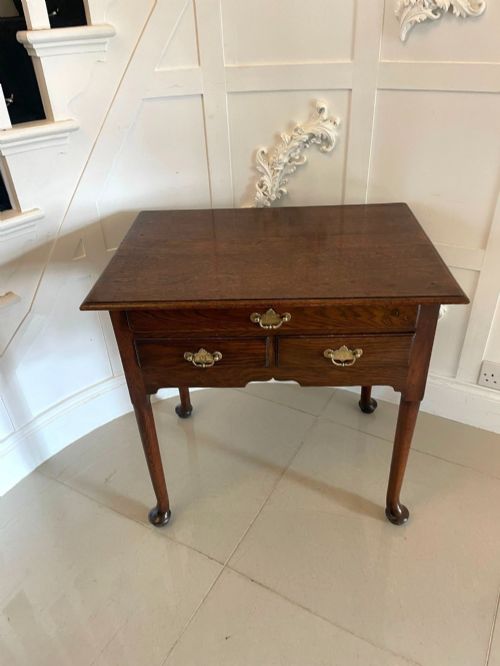
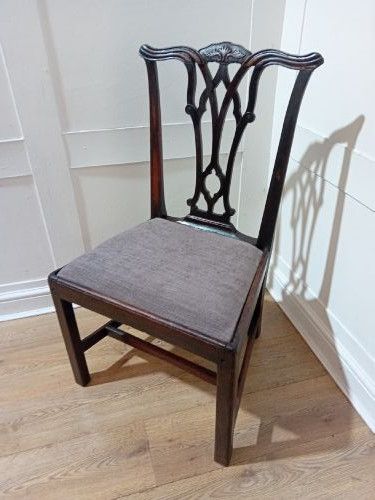


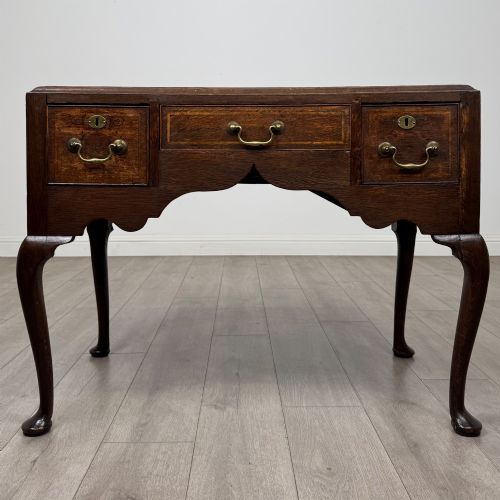
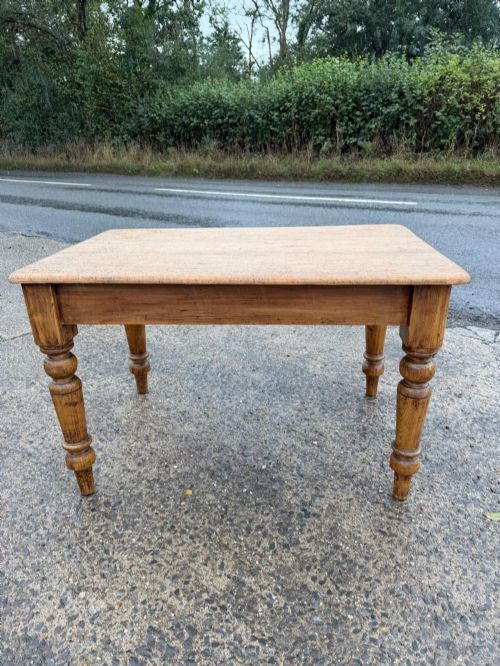
Antique Hall Desk
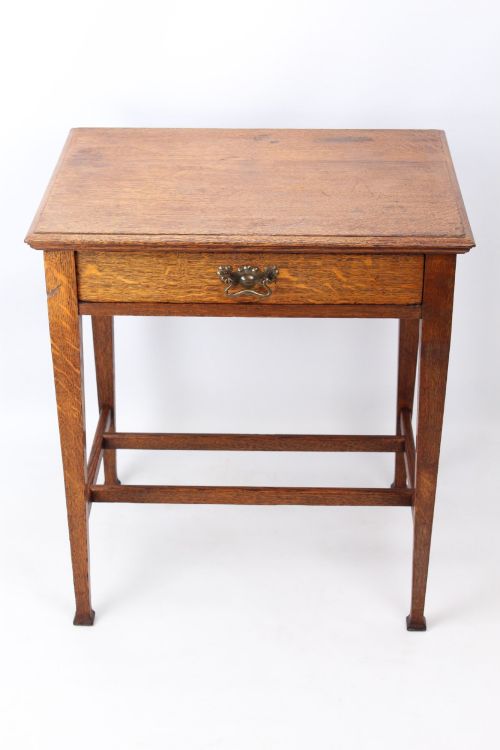
An antique hall desk serves as a practical writing surface and a striking entrance piece.
Understanding the Antique Hall Desk
An antique hall desk combines the utility of a writing surface with the slim proportions needed for an entrance space.
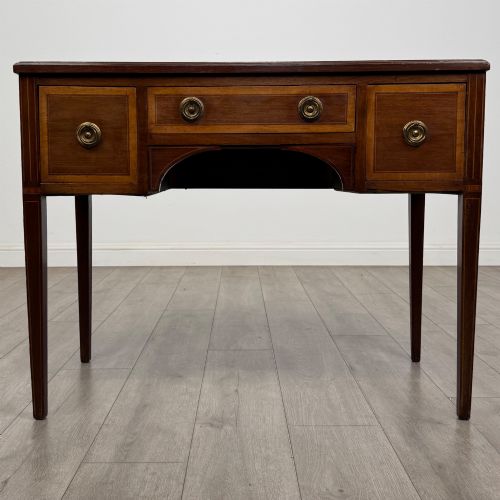
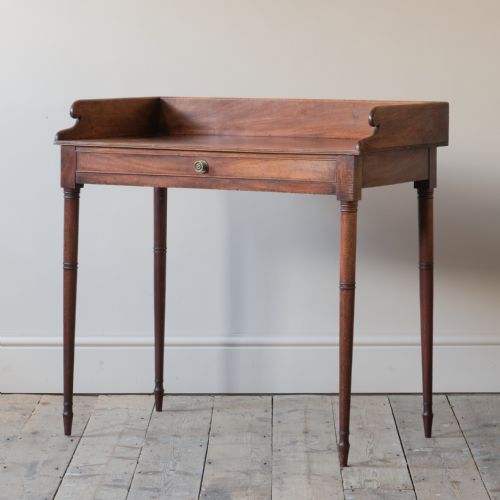
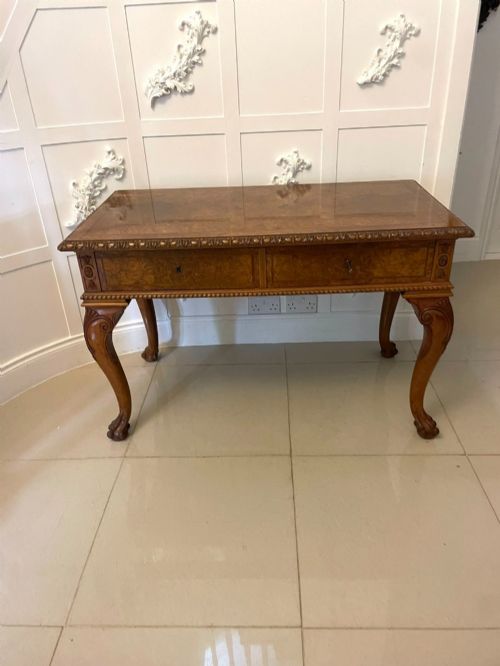
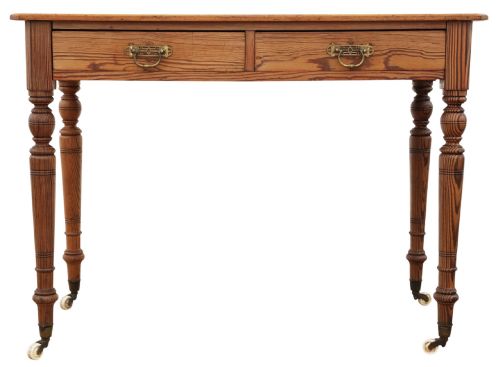
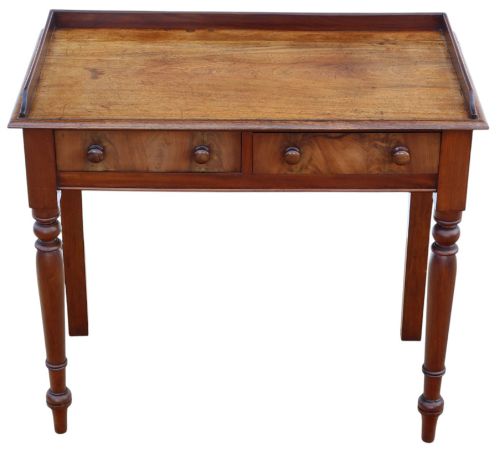
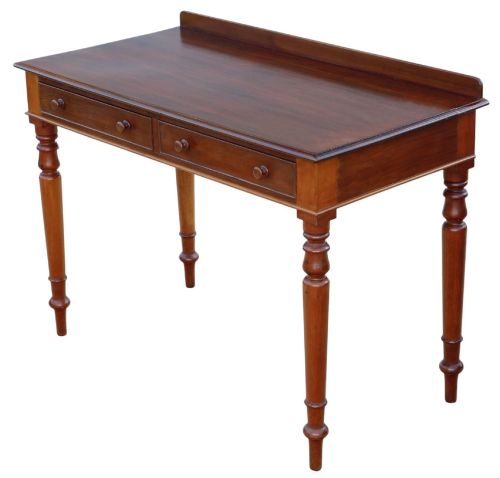
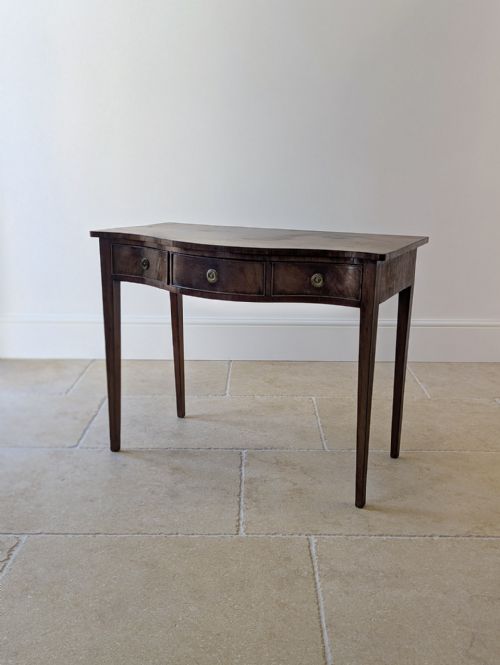
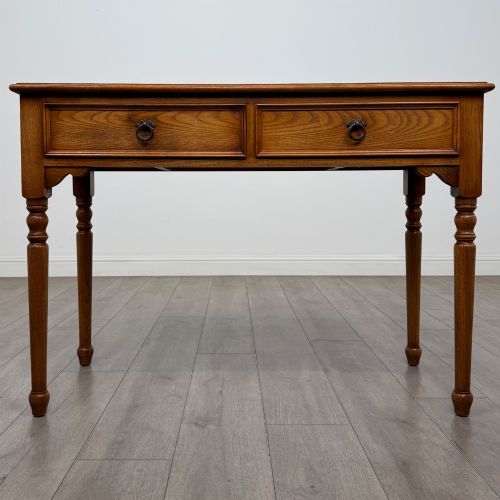
The pieces appearing on this page span the Victorian and Edwardian periods, alongside earlier Georgian forms.
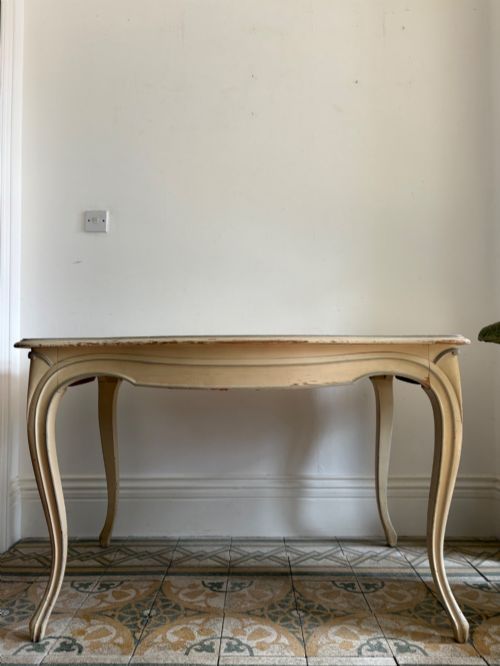
Buyers most frequently encounter compact writing tables, side tables, and occasional desks designed for hallways and reception rooms.
Materials and Construction
Cabinet makers utilised sturdy timbers such as mahogany, oak, walnut, rosewood, and pine to construct these desks.
Surfaces frequently feature inset leather panels, whilst brass hardware and ceramic details accent drawers and fittings.
Distinguishing Quality
Finer examples display superior timber selection, such as flame grain mahogany or figured walnut, alongside crisp carving.
The integration of secondary timbers and the precision of drawer joinery separate standard workshop pieces from superior productions.
Gillows
The Antique Hall Desk Glossary
- Lowboy
- A small oak or mahogany table with drawers, often utilised as a compact desk or side table.
- Writing Table
- A freestanding table with one or more drawers, built specifically for correspondence and study.
- Side Table
- A narrow table designed to stand against a wall in a hallway or reception room.
- Pedestal Desk
- A heavy writing desk supported by two banks of drawers rather than simple legs.
Frequently Asked Questions
Where should I place an antique hall desk?
These compact pieces fit naturally in narrow hallways, entrance lobbies, or quiet corners of a study.
Their shallow depth ensures they do not obstruct walkways while offering a functional surface for correspondence.
How do I care for a leather desk top?
Keep the leather surface clean by dusting it gently with a dry cloth and avoiding harsh chemical cleaners.
Occasional treatment with specialised leather balm helps prevent the material from drying and cracking over time.
What is the difference between a hall desk and a writing table?
A hall desk is specifically chosen for its slim proportions to suit transitional spaces like entranceways.
Writing tables serve the same functional purpose but may be deeper and intended for primary use in a library or study.
Can these desks be used for daily computer work?
Most antique desks are shallower and lower than modern office furniture, accommodating laptops rather than large desktop monitors.
Careful measurement of knee clearance and surface depth ensures comfortable everyday use.