
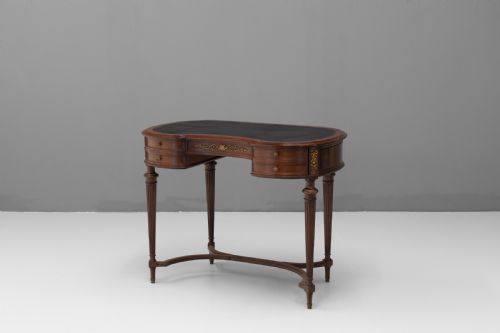


Black Leather Writing Desk
A black leather writing desk brings tactile warmth and enduring utility to a room, offering a generous workspace defined by smooth hide and rich timber.
What They Are
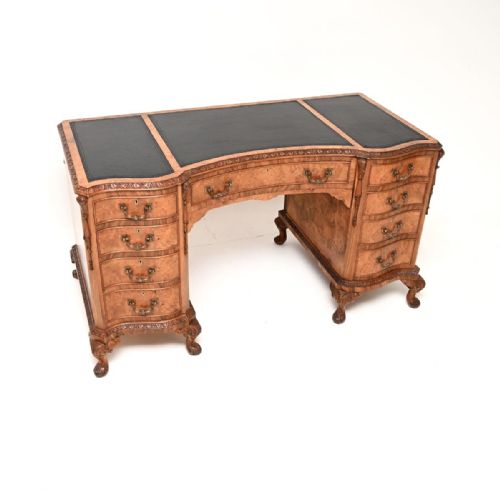
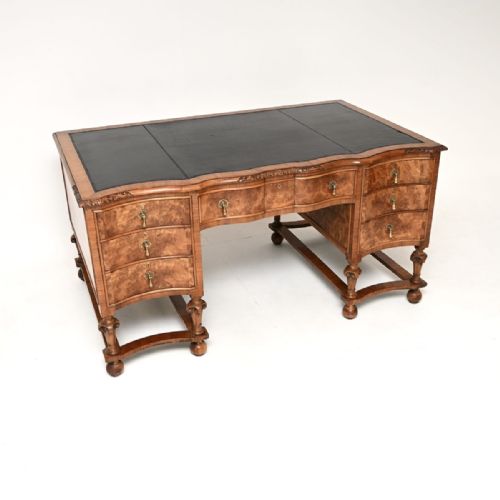
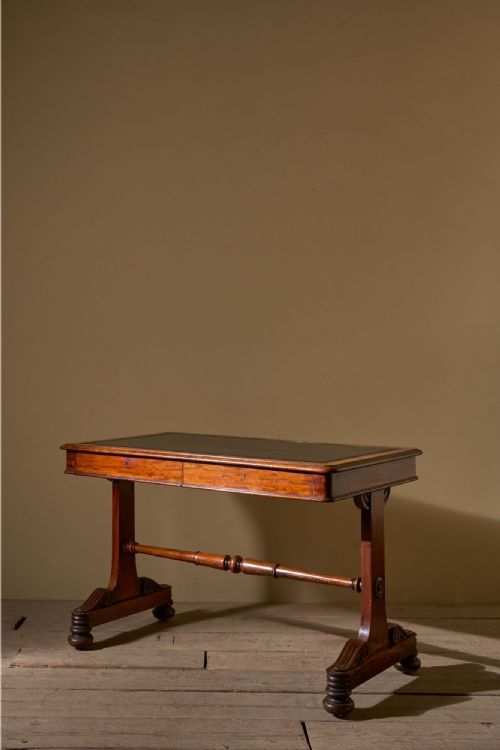
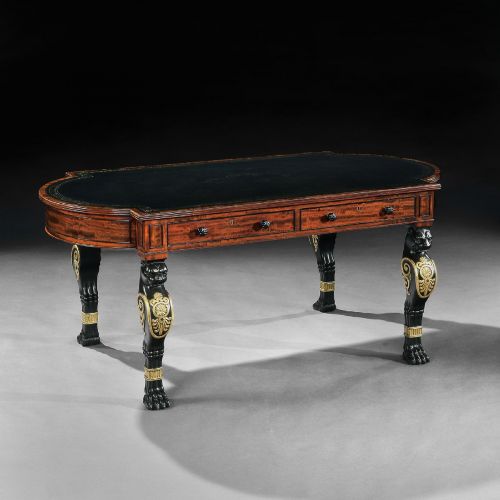
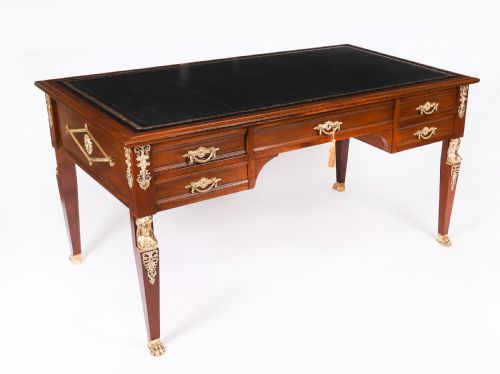
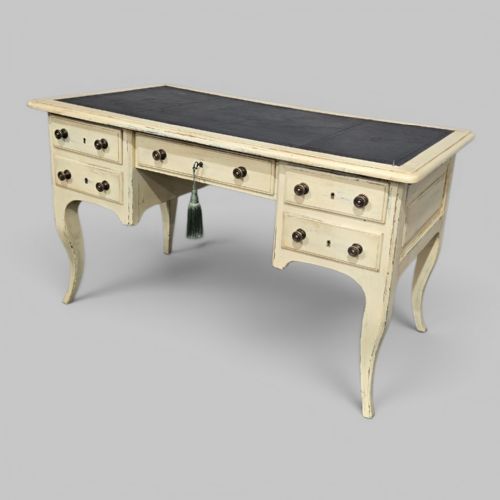
When searching for a black leather writing desk, a buyer encounters freestanding partners desks, pedestal office desks, and compact writing furniture. These pieces span several distinct historical periods, running from the early nineteenth century through to the interwar decades.
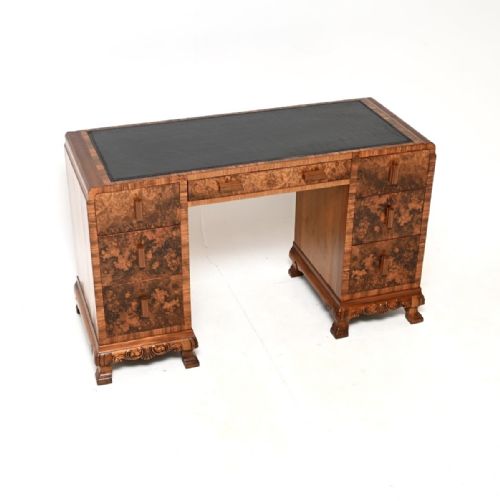
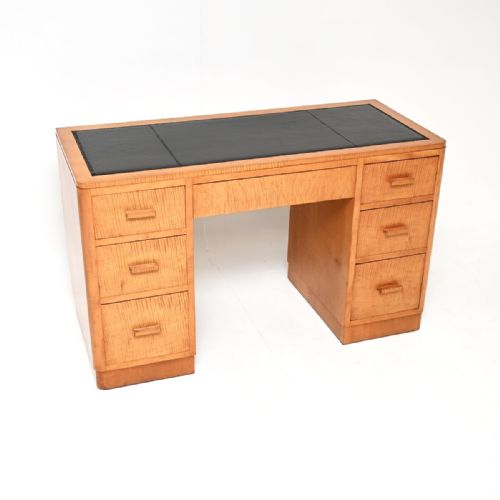
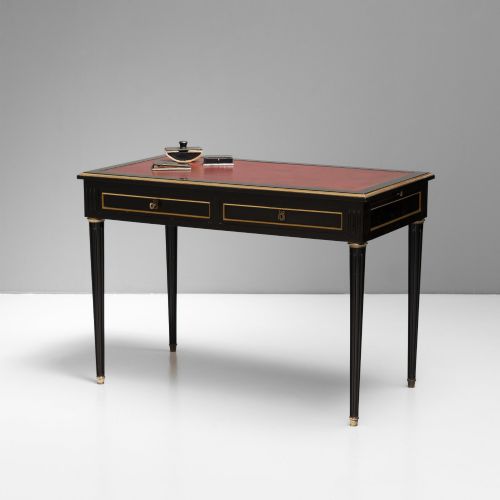
The Regency era brings substantial burr oak examples, whilst later Victorian and Edwardian periods favour pedestal formats in walnut and solid wood. Art Deco iterations from the nineteen-thirties showcase burr walnut alongside characteristic geometric styling.
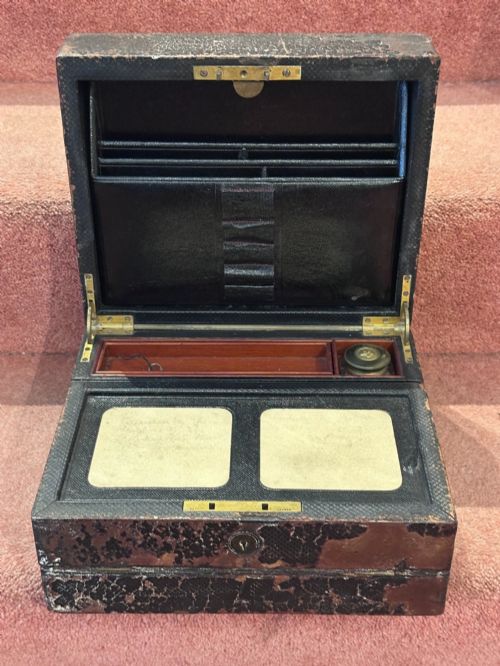
Beyond standard writing desks, the category occasionally encompasses portable forms such as writing boxes and sloped lap desks. Each version provides a dedicated writing surface combined with built-in storage compartments or drawers.
How They Were Made
Cabinetmakers constructed these desks using cabinet timbers such as mahogany, walnut, burr oak, and ebonised wood. Veneers of burr walnut and burr oak provided complex grain patterns across large flat surfaces.
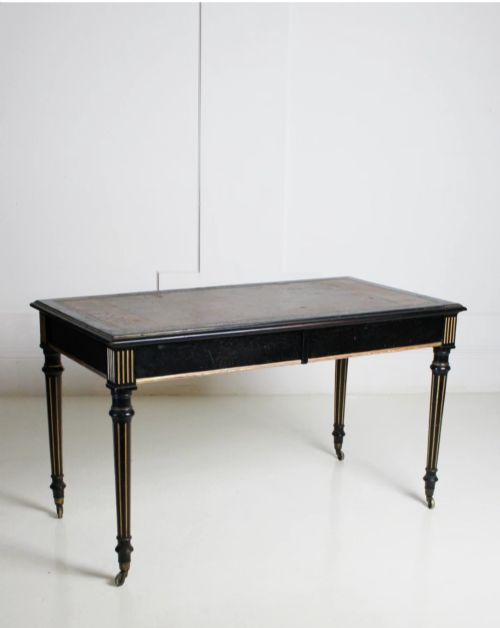
Writing surfaces feature inset panels of black leather, frequently ornamented with blind or gilt tooling around the perimeter. Gilt bronze mounts appear on specific continental-influenced pieces to accentuate structural lines.
Early lap desks brought office work into the carriage, letting travellers draft correspondence while bouncing down dirt roads.
What Varies in Quality
Quality rests upon the selection of timber and the precision of the cabinetwork. Fine examples employ carefully matched burr veneers across the primary surfaces and drawers, whilst simpler items utilise plain solid woods.
The execution of the leather top and its surrounding decoration dictates the visual finish. Crisp tooling and thick, supple leather elevate a desk above standard utilitarian workshop production.
The Black Leather Writing Desk Glossary
- Pedestal desk
- A heavy office desk comprising a central writing surface supported by two stacks of drawers. These units frequently incorporate panelled sides and leather inserts.
- Burr walnut
- A prized timber veneer taken from the warted growths of walnut trees, displaying intricate swirling grain patterns. Cabinetmakers use it on high-status surfaces to create striking visual movement.
- Ebonised wood
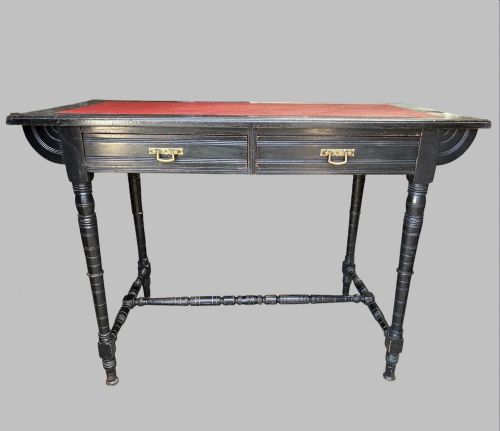
- Timber treated with a chemical stain or finish to imitate ebony. This dark treatment was favoured during various nineteenth-century revivals.
- Tooling
- Impressed decorative patterns applied to the leather writing surface using heated brass stamps. This work is often highlighted with gold leaf.
Frequently Asked Questions
How do I date a black leather writing desk?
Dating relies on identifying the underlying timber, construction methods, and stylistic details. Pieces from nineteen hundred often show simpler Edwardian lines, whereas eighteen hundred Regency desks display classical proportions and substantial oak or mahogany frames.
Hardware such as drawer pulls and locks also offer chronological clues. Examining the drawer linings and secondary timbers helps distinguish between early nineteenth-century work and later twentieth-century production.
What is the difference between a partners desk and a pedestal desk?
A partners desk provides workspace and storage access from both the front and the back, allowing two individuals to sit opposite one another. A standard pedestal desk has drawers only on one side and a solid back panel designed to face a wall.
Both types incorporate the characteristic black leather writing surface. However, partners desks are typically larger and were originally intended for offices shared by business associates or legal partners.
How should I care for the leather top?
The black leather insert requires gentle cleaning with a damp cloth and periodic treatment with specialist leather balms to prevent drying and cracking. Avoid using harsh chemical solvents that can strip the dyed finish and the surrounding gilt tooling.
Solid wood frames benefit from occasional waxing to nourish the grain. Keeping the desk away from direct heat sources and strong sunlight protects both the leather and the underlying timber veneers.
Are these desks suitable for daily computer work?
Many period desks accommodate modern equipment whilst retaining their traditional appearance. However, buyers should check the kneehole height and overall surface dimensions to ensure laptops and monitors fit comfortably.
The sturdy construction of mahogany, walnut, and oak frames easily supports modern weights. The leather surface also provides a durable pad for writing and mouse use without requiring an additional desk mat.