


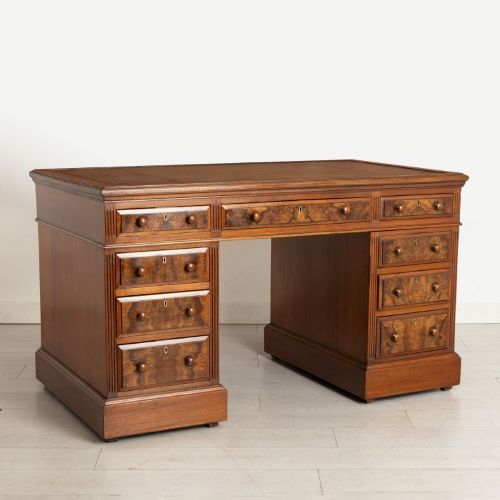
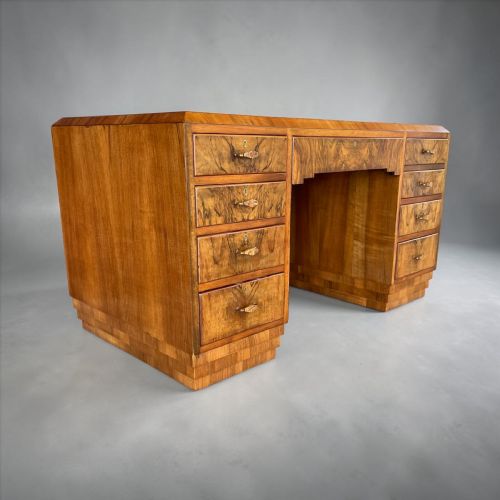
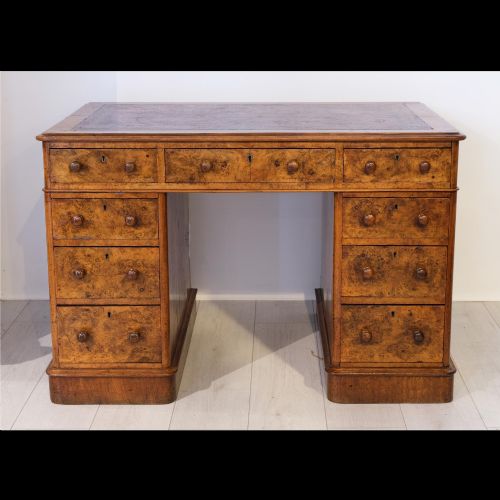
Burr Walnut Office Desk
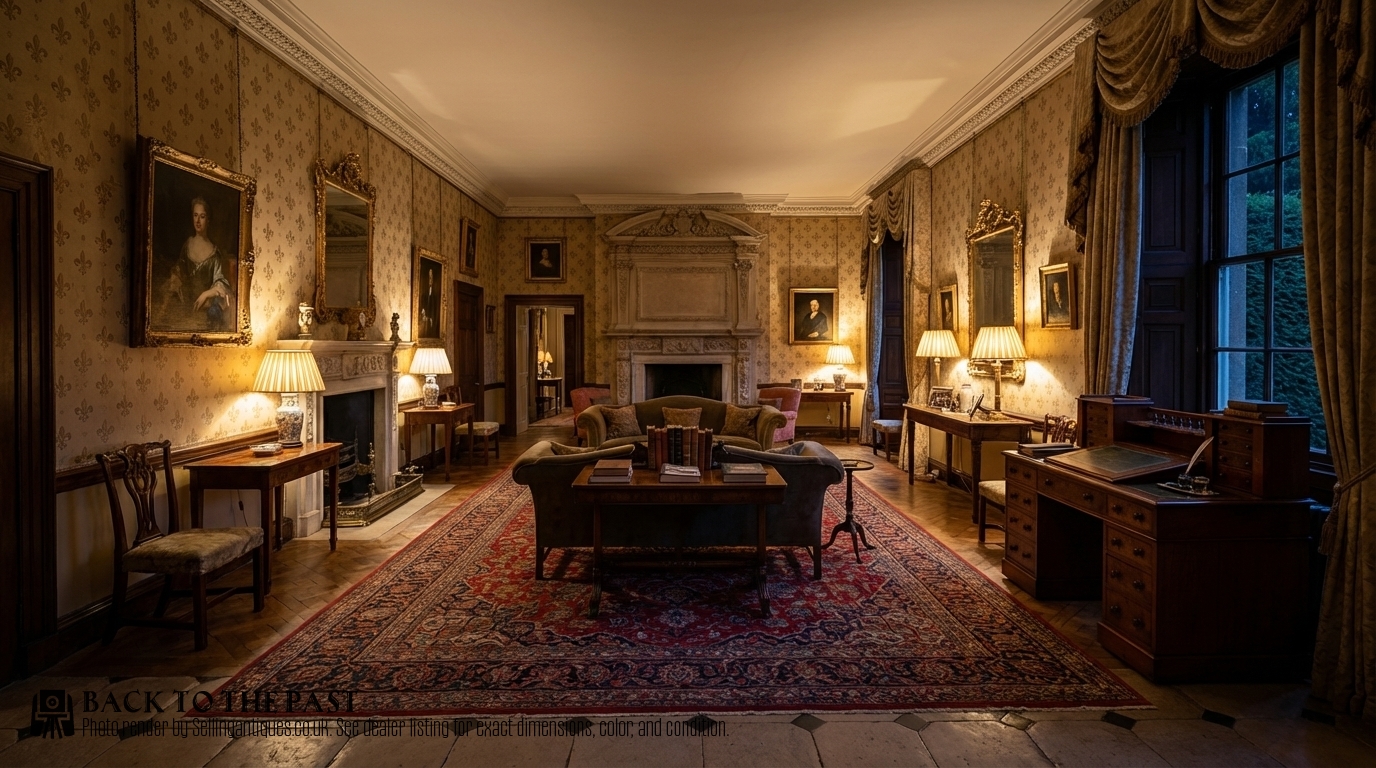
A burr walnut office desk brings warmth and rich grain patterning to a study, offering a robust workspace wrapped in historical character.
Burr Walnut Office Desk
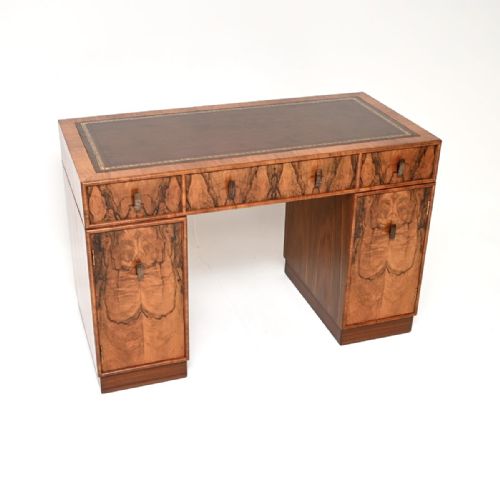
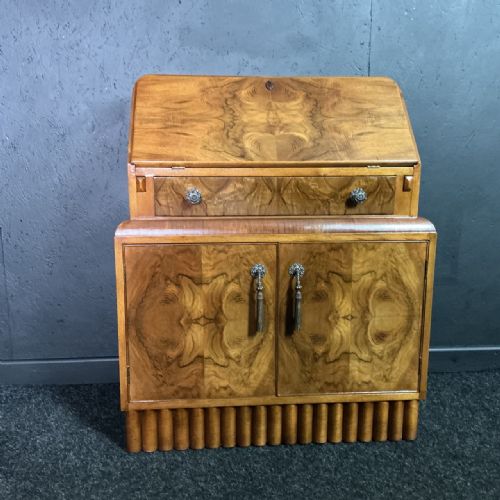
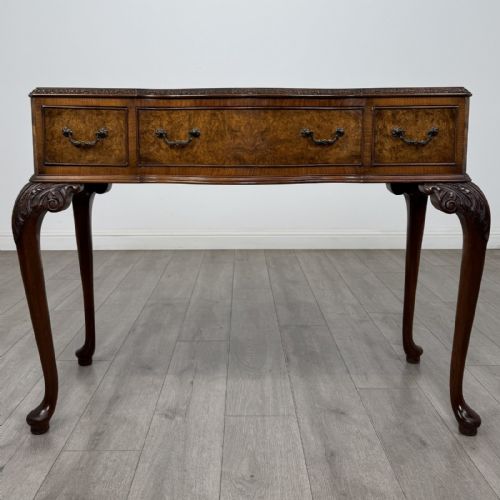
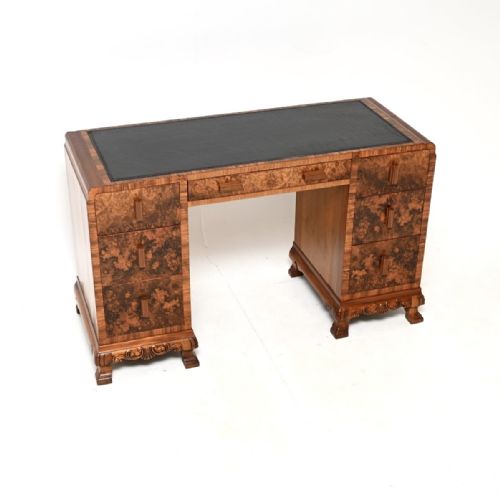
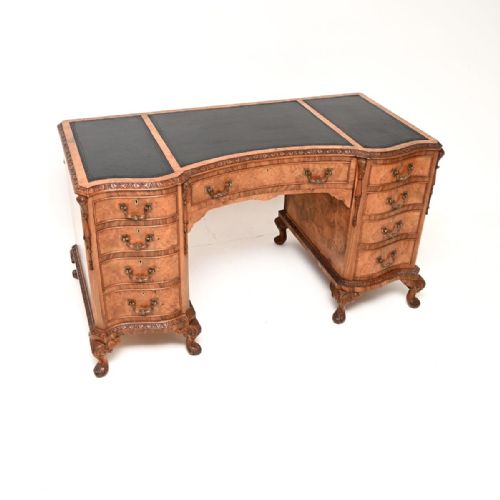
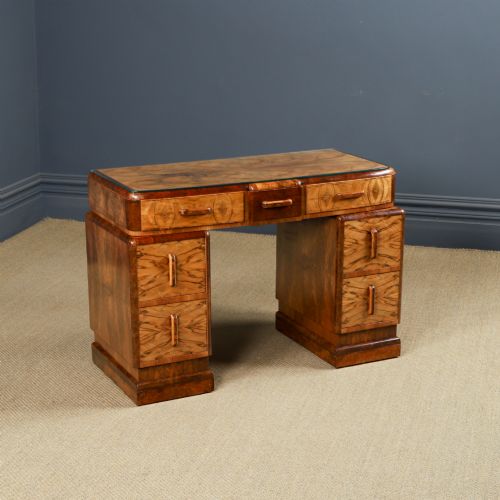
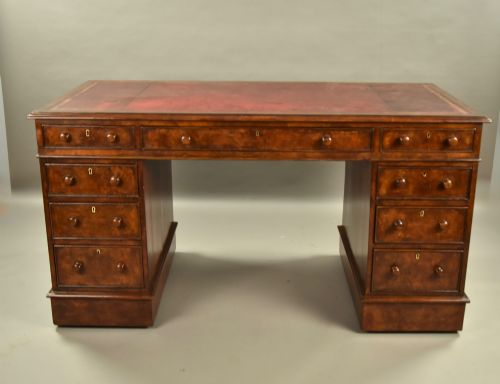
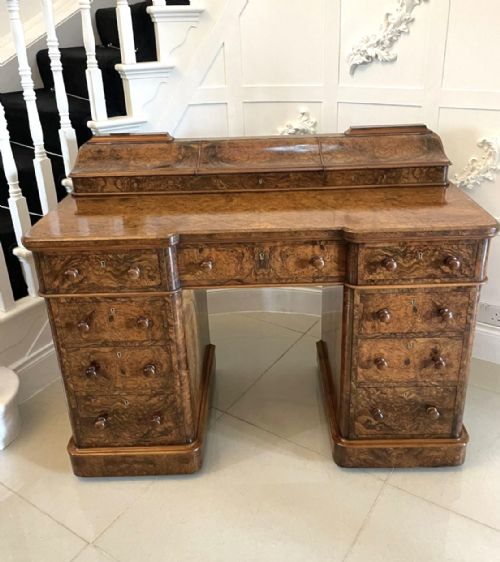
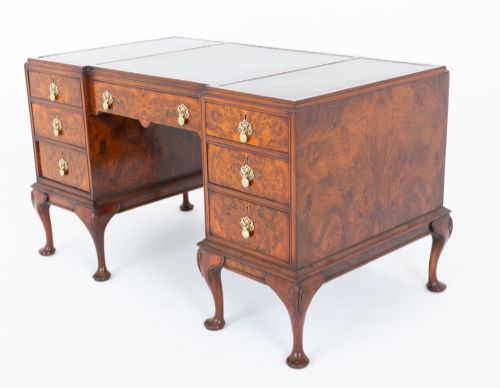
A burr walnut office desk encompasses everything from 19th-century Victorian pedestal tables to streamlined Art Deco writing stations. Buyers encounter twin pedestal forms, compact kneehole variants, and ornate Davenport designs across this selection.
The material runs through multiple eras, appearing in mid-Victorian pieces with carved details and later Edwardian or 1930s incarnations. These items bridge formal study architecture and practical daily utility.
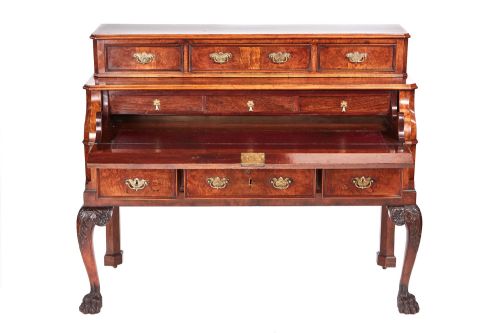
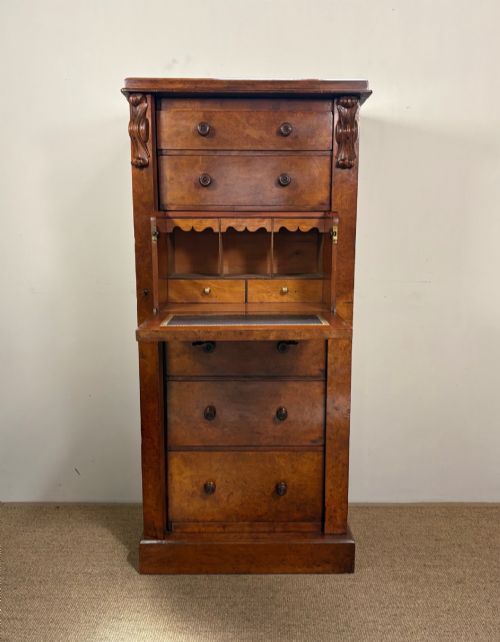
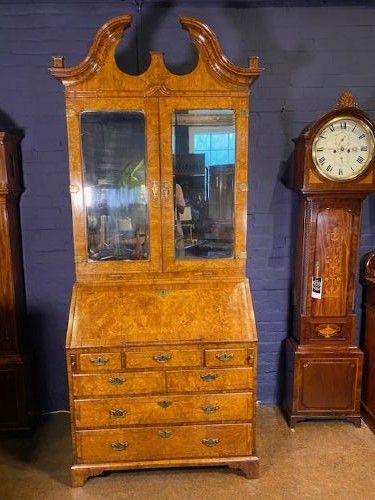
Pedestal configurations dominate the offering, featuring banks of drawers flanking a central opening. Writing tables and bureau bookcases also feature, supplying alternative compartments for correspondence and storage.
What varies in quality
The intensity and match of the burr walnut veneer determine much of the visual hierarchy, with symmetrical figuring commanding greater appreciation. Secondary timber selection and the weight of the brass fittings also signal the standard of manufacture.
Structural integrity of the pedestal bases and the condition of integrated leather writing surfaces separate standard utility pieces from exceptional examples. Fine carving work, such as detailed paw feet, distinguishes superior Victorian items.
Burr Walnut Office Desk Retail Price Guide 2026
Typical asking prices for burr walnut office desk among the pieces listed under this phrase on Sellingantiques today, from the lower quarter to the upper quarter. They describe what is for sale here now, not the wider market.
The listings show periods ranging from the mid-nineteenth century through the Victorian era and into 1930s Art Deco.
Maple and Co·Wylie and Lochhead Glasgow
The Burr Walnut Office Desk Glossary
- Burr walnut
- A prized timber harvested from the gnarled growth on walnut trees, yielding complex, swirling grain patterns. It is typically sliced into thin veneers for furniture facades.
- Pedestal desk
- A heavy freestanding desk comprising two supporting pedestals of drawers with a central desktop spanning the gap. This form provides substantial storage alongside a central writing space.
- Davenport
- A compact writing desk featuring a sloping lid above a bank of side drawers, originating in the late 18th century and popular through the Victorian era. It often incorporates hidden compartments and stationary wells.
- Kneehole desk
- A smaller bureau or pedestal desk featuring a central recessed space for the user's knees, flanked by vertical stacks of small drawers.
- Partners desk
- A large double-sided desk designed so two people can work opposite each other simultaneously, featuring matching drawer configurations on both sides.
Burr Walnut Office Desk: Frequently Asked Questions
What is a burr walnut office desk?
A burr walnut office desk is a wooden workspace surfaced with decorative burr walnut veneer, appearing in styles from Victorian revival to Art Deco. These pieces combine functional drawer storage with distinctive, swirling wood grain.
They serve as focal points in studies or libraries, offering durable writing surfaces combined with historical craftsmanship.
How do I care for leather desk inserts?
Leather writing surfaces benefit from occasional cleaning with a damp cloth and conditioning with specialist leather balm to prevent cracking. Avoiding direct sunlight helps preserve the colour and suppleness of the hide.
Maintaining the leather protects the working area while preserving the antique appearance of the desk top.
Are these desks suitable for daily work?
Many period pedestal desks and writing tables offer ample surface area and drawer space for modern laptops and paperwork. Their solid construction makes them practical for everyday office use.
Selecting a model with a comfortable kneehole height ensures proper ergonomics for long working hours.
How do I distinguish Victorian from Art Deco models?
Victorian examples frequently display ornate carvings, turned wooden pulls, and traditional proportions, often featuring rich mahogany or oak secondary timbers. Art Deco pieces embrace cleaner geometric lines, streamlined pedestal shapes, and minimalist hardware.
Examining the construction details and overall silhouette clarifies the period of manufacture.