
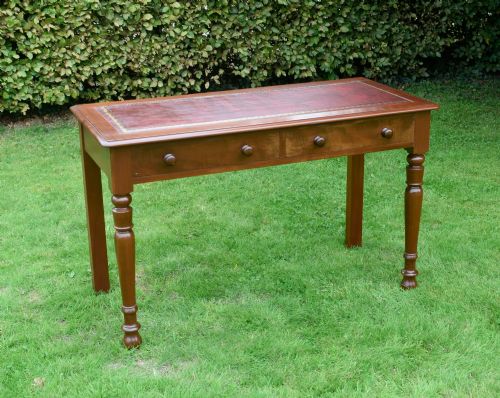
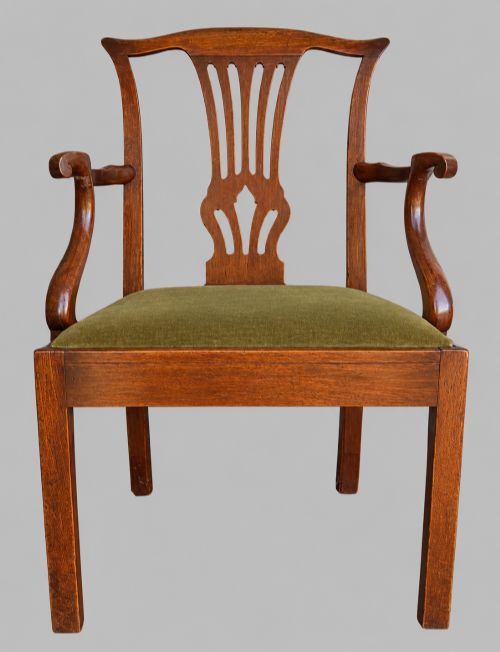
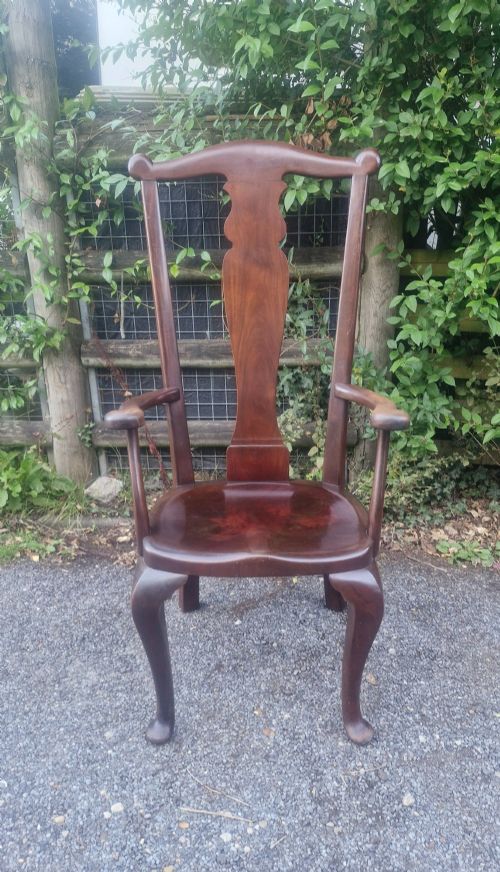
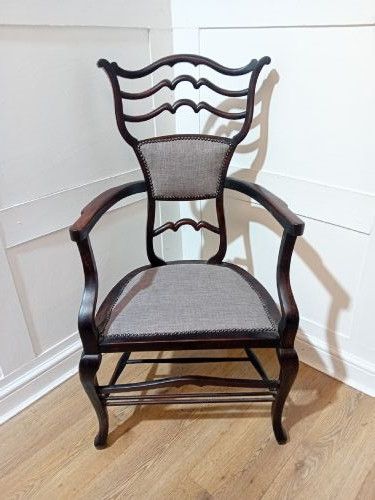
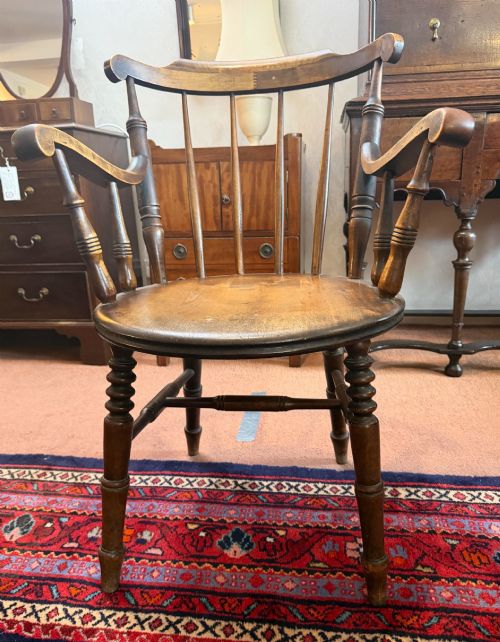
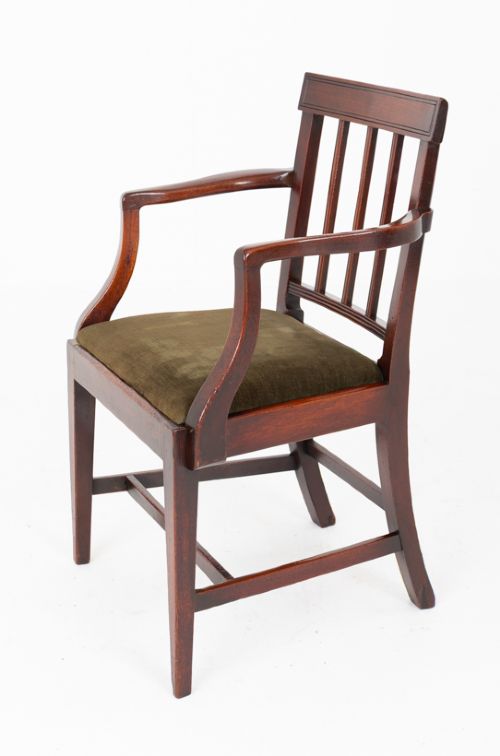
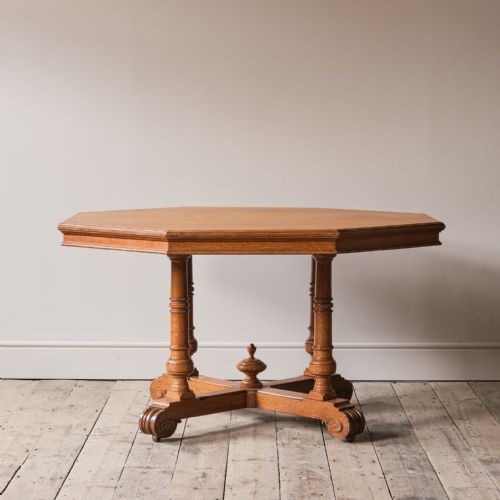
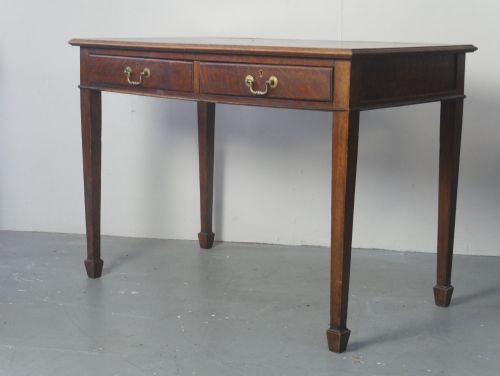
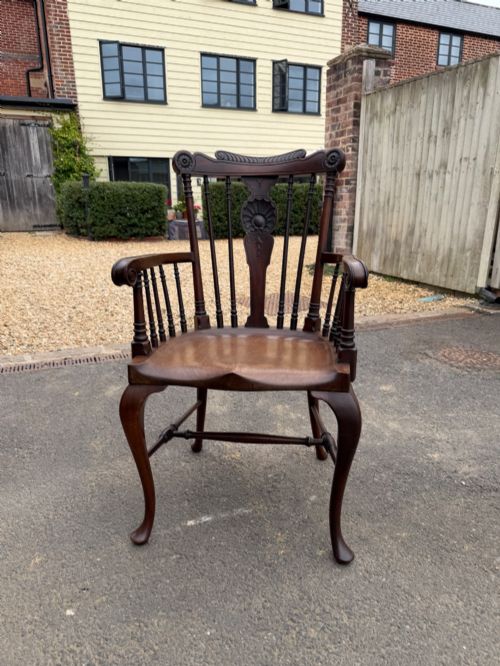

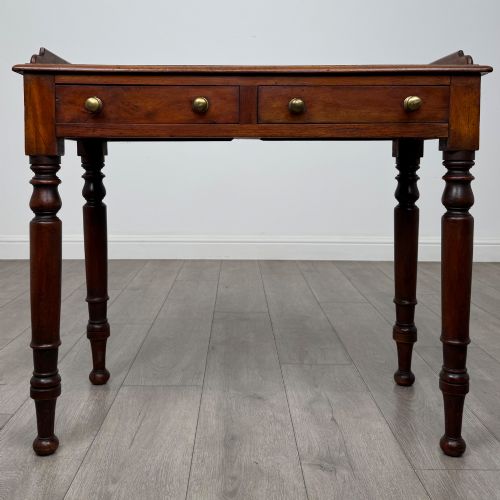
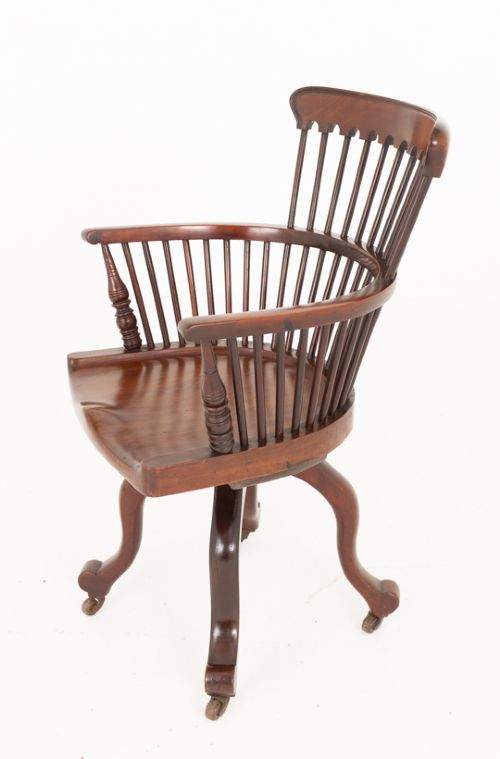
Wooden Library Desk
A wooden library desk brings solidity and purposeful proportion to a room, offering a functional writing surface rooted in traditional cabinet-making.
Wooden Library Desk
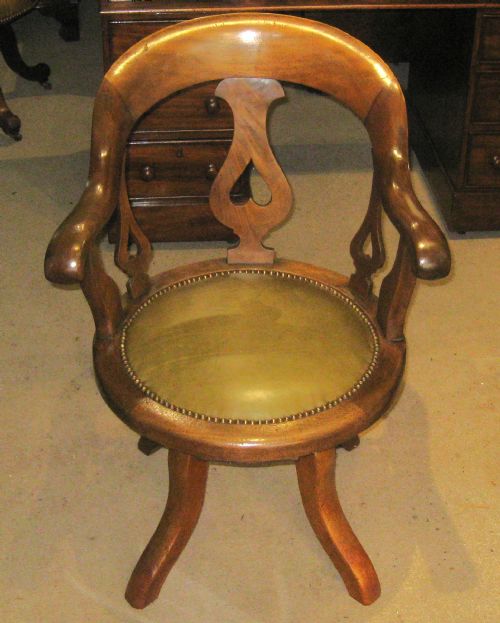
A wooden library desk encompasses writing tables, pedestal desks, and occasional tables designed for study or clerical work, often accompanied by related seating and fittings.
The versions most commonly met on this page date from the nineteenth century and the Edwardian period, built primarily in mahogany or oak with occasional walnut and ash examples.
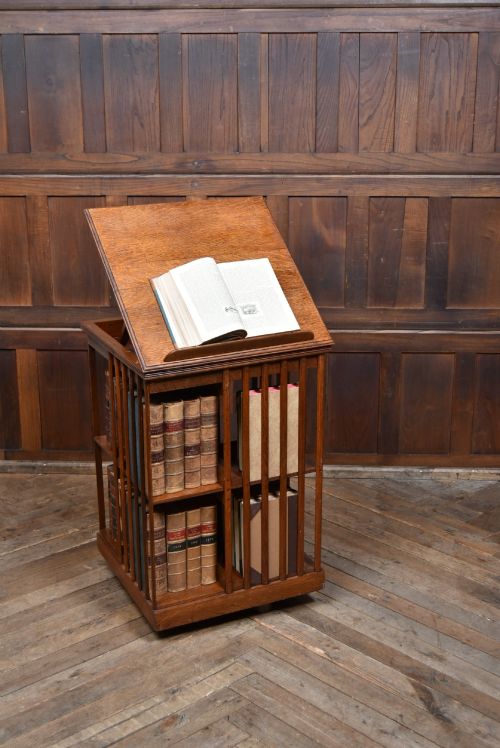
These pieces range from compact writing surfaces with drawers to substantial centre tables and pedestal forms intended for domestic studies or institutional libraries.
Materials and construction
Makers utilised dense hardwoods such as mahogany and oak, frequently selecting figured veneers like burr walnut or birds eye maple for visual depth on primary surfaces.
Writing areas often incorporate inset panels of leather, velvet, or fabric, providing a tactile surface suited to daily use.
Structural integrity relied on traditional joinery, complemented by brass hardware for handles, castors, and fittings.
Materials appearing across these pieces include mahogany, oak, walnut, ash, brass, leather, velvet, glass, and fabric.
Evaluating craftsmanship
Quality rests upon the selection of timber and the precision of the joinery, distinguishing sturdy utilitarian pieces from those with refined carvings and well-figured veneers.
The treatment of secondary timbers, drawer linings, and the crispness of applied mouldings reveal the care taken by the original workshop.
Proportion and balance dictate the success of a piece, separating harmonious domestic furniture from heavier or altered examples.
Hindley & Sons
The Wooden Library Desk Glossary
- Pedestal desk
- A form comprising two banks of drawers supporting a single top, providing enclosed storage alongside the writing surface.
- Writing table
- A freestanding table with one or more drawers beneath the top, built primarily for correspondence and light reading.
- Centre table
- A piece finished on all sides so it can stand independently in the middle of a room rather than against a wall.
- Campaign chair
- A folding or portable seating form designed for easy transport, often utilising clever joints and durable timbers.
- Fusee
- A conical pulley used in clock movements to maintain equal power as the mainspring unwinds.
Wooden Library Desk: Frequently Asked Questions
How do I care for a leather desk top?
Keep leather surfaces clean with a dry or barely damp cloth, avoiding harsh chemical cleaners that strip the original finish. Nourish the material periodically with an appropriate leather balsam to prevent cracking.
Position the desk away from direct sunlight and strong heat sources to preserve both the leather inset and the surrounding wooden frame.
Are these desks suitable for daily computer use?
Many nineteenth-century and Edwardian writing tables and pedestal desks offer ample surface area for modern laptops and paperwork. Their sturdy wooden construction easily accommodates daily workspace demands.
Check the kneehole clearance and drawer dimensions beforehand to ensure comfortable seating and adequate legroom for prolonged work.
How can I tell a Victorian desk from an Edwardian one?
Victorian pieces frequently employ dense, dark mahogany or solid oak with heavier proportions and robust carvings reflecting Gothic or Renaissance revivals. Edwardian examples often display lighter finishes, satinwood banding, or simpler neoclassical styling.
Examine the secondary woods inside the drawers and the style of the brass hardware for further clues regarding the date of manufacture.
Where should a centre table be placed?
A centre table is finished on all four sides, making it ideal for the middle of a library, study, or drawing room. It acts as a focal point when surrounded by open space rather than pushed against a wall.
Ensure there is sufficient clearance around the table for movement and seating access.