





Antique Board Room Table
An antique board room table provides an imposing centrepiece for large gatherings, built from heavy timbers to seat numerous guests.
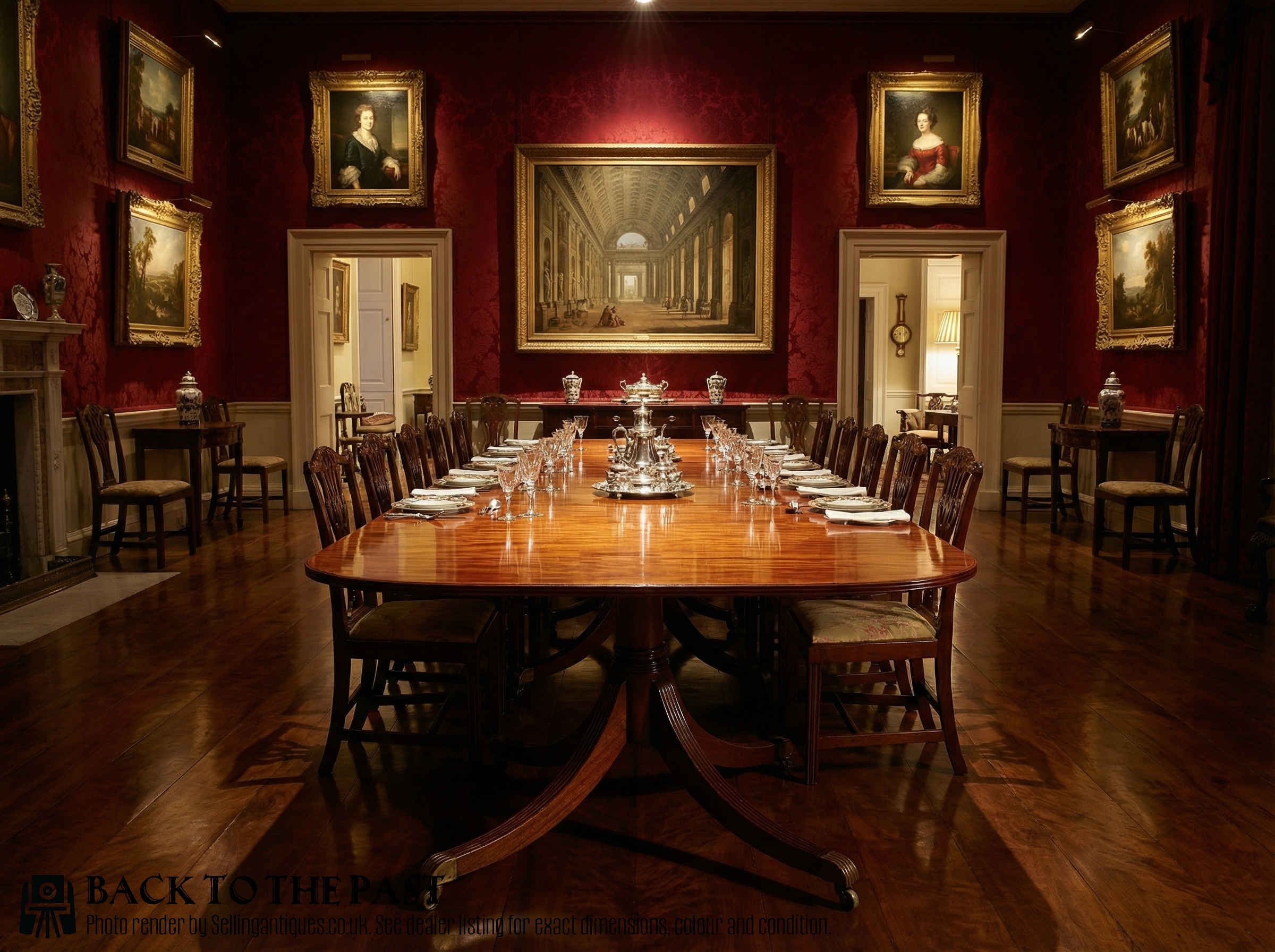
Antique Board Room Table
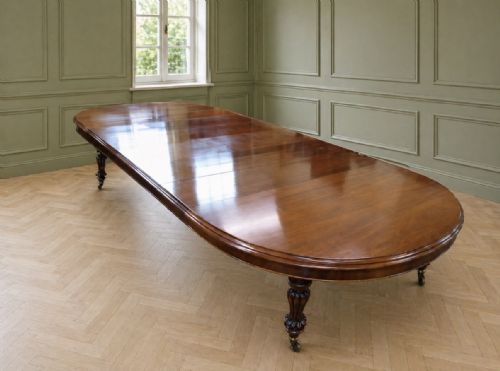
An antique board room table is a substantial piece designed for formal assemblies, often taking the form of an extending dining table or a large library table. These pieces accommodate large numbers of people comfortably, reflecting the scale required for historic business and institutional settings.
The examples found here span several periods including Georgian, William IV, Victorian, and Edwardian eras. Mahogany and oak dominate the construction, often utilising multi-pillar designs to support considerable length.
How They Were Made
Cabinet makers utilised dense hardwoods such as mahogany, walnut, and oak to construct these large frames, ensuring durability under heavy daily use. Timber selection prioritised stability, particularly for extending mechanisms that needed to support multiple leaves.
Secondary materials like brass frequently appear in the hardware, including castors and locking mechanisms for extending leaves. Inlays in satinwood and other contrasting timbers add refined detail to the surface borders.
Antique Board Room Table Retail Price Guide 2026
Typical asking prices for board room table among the pieces listed under this phrase on Sellingantiques today, from the lower quarter to the upper quarter. They describe what is for sale here now, not the wider market.
Billiards scoreboards and walnut score cabinets sit alongside the tables, ready for the end of the meeting.
What Varies in Quality
The quality of an antique board room table rests on the grade of timber selected for the top and the engineering of its pedestals or legs. Superior pieces feature well-figured mahogany or quarter-sawn oak that has aged evenly across all extending sections.
Construction methods determine how smoothly multi-pillar tables handle heavy loads and repeated extensions. Finer examples maintain structural integrity and alignment across extensive lengths without sagging at the joints.
Gillows·Warings·Thurston
The Antique Board Room Table Glossary
- Pedestal
- A central support column, often branching into multiple carved feet, used to hold up large table tops. Multiple pedestals distribute weight evenly across extending tables.
- Extending table
- A dining or board room table fitted with a mechanism and removable leaves to adjust its overall length. This design allowed furniture to adapt for different numbers of guests.
- Library table
- A large freestanding table with a finished top and often drawers beneath, used in institutional or domestic studies. Many share the scale and presence of board room furniture.
- Inlay
- A technique where pieces of contrasting wood or other materials are inserted into depressions in the base wood to form decorative patterns. Satinwood is frequently used for this purpose on dark timbers.
- Quarter-sawn
- A method of cutting logs that produces boards with straight grain lines and increased stability. This cut minimises warping in large timber surfaces.
Antique Board Room Table: Frequently Asked Questions
How many people can sit at these tables?
These tables are built on a grand scale, frequently accommodating sixteen to twenty-six people depending on the number of extending leaves in place.
Their substantial length makes them suitable for large dining rooms and conference spaces.
What woods were used for these tables?
Makers relied on durable hardwoods including mahogany, oak, and walnut to withstand heavy daily use and support long spans.
Secondary decorative elements often incorporated satinwood for contrast and brass for operational hardware.
How do multi-pillar dining tables work?
Multi-pillar tables use two, three, or more heavy column supports beneath the top to distribute weight evenly across an extended surface.
This design prevents sagging and allows the table to be shortened or lengthened by adding or removing leaves.
Are these tables suitable for modern offices?
The generous proportions and solid timber construction make them ideal for contemporary board rooms requiring a historic centrepiece.
Their durable surfaces handle documents and electronics while providing an imposing architectural presence.