
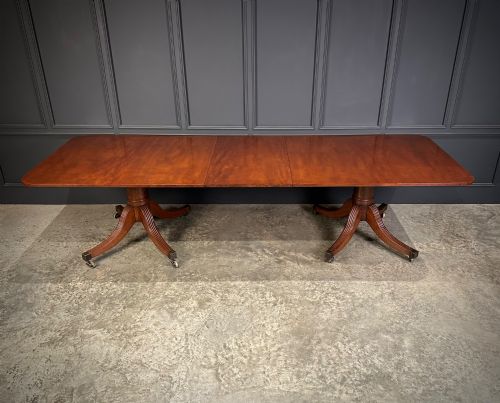


Reddish Brown Dining Table
A reddish brown dining table anchors the room with deep, warm timber and practical scale for daily meals and gatherings.

Understanding the reddish brown dining table
A reddish brown dining table brings rich timber tones to the interior, drawing on centuries of cabinet-making tradition. These pieces serve as the central gathering place in a home, combining robust construction with refined presence.
The selection here encompasses various forms, from early nineteenth-century examples to twentieth-century designs. Pieces range from large banquet tables with extending leaves to centre tables and twin pillar formats.
Origins span Georgian, Regency, William IV, Victorian, Edwardian, and Anglo-Indian Colonial styles. Irish and Burmese pieces also appear among the offerings, reflecting diverse craftsmanship within the period.
Construction and materials
Construction relies heavily on mahogany and padauk wood, selected for deep grain and durability. These timbers provide the characteristic reddish brown hue that defines the surface appearance of each board.
Metal components such as brass and steel appear in mechanisms and fittings, supporting extending leaves and pillar structures. Joinery techniques connect heavy timber frames to withstand daily use over generations.
Retail Price Guide 2026
Typical UK retail prices for reddish brown dining table, calculated from the Sellingantiques database of over a million retail prices indexed since 2003. This retail price guide relies exclusively on Sellingantiques data; no external sources or auction records are used, so the figures do not describe the wider market.
Some tables retain the original winding handles, tiny metal keys that have survived decades of family banquets without getting lost.
Assessing quality
Quality rests in the selection of timber figures and the precision of extending mechanisms. Finer examples show careful matching of grain across leaf additions, creating a unified surface when fully opened.
Proportion and carving detail distinguish standard production from exceptional workshops. Subtle turnings on pillars and well-integrated brass details elevate the overall presence of the table.
The Reddish Brown Dining Table Glossary
- Mahogany
- A durable tropical hardwood known for its deep reddish brown colour and fine grain. It forms the primary material for the majority of these tables.
- Padauk wood
- An exotic hardwood yielding vibrant red and brown tones, often found in colonial furniture. It offers exceptional stability and rich surface depth.
- Extending leaves
- Removable timber sections stored separately or wound out on runners to increase surface length. They allow the table to adapt for larger gatherings.
- Twin pillar
- A base configuration featuring two vertical pedestals supporting the tabletop, often resting on splayed legs. This design provides robust support while leaving leg room clear.
- Centre table
- A freestanding piece designed to be viewed from all sides rather than pushed against a wall. These smaller tables share the same material palette as larger dining formats.
Frequently Asked Questions
How do extending leaves work on these tables?
Extending mechanisms typically utilise wooden runners or independent leaf insertions to expand the central surface area. This allows the furniture to adapt easily from everyday family meals to larger dinner parties.
Owners insert additional timber boards into the middle of the top, secured by wooden pins or brass clips. Proper alignment ensures the grain matches across the expanded surface.
What is the difference between Georgian and Victorian tables?
Georgian tables tend to feature restrained classical proportions with clean lines and understated timber framing. They reflect an aesthetic of balanced geometry and functional elegance.
Victorian and William IV pieces often display bolder carving, heavier pillar supports, and darker patination. These later styles emphasise substantial presence and elaborate decorative detailing.
How should I care for a mahogany dining surface?
Regular dusting with a soft, dry cloth preserves the polished sheen of the timber. Avoid placing hot dishes or wet glasses directly onto the bare wood to prevent surface marks.
Applying quality beeswax periodically nourishes the grain and enhances the natural reddish brown depth. Keep the table away from direct heat sources and strong sunlight to prevent warping.