


Antique D End Table
An antique d end table offers flexible dining and console arrangements, bringing solid mahogany construction and Georgian proportion into modern rooms.
Antique D End Table
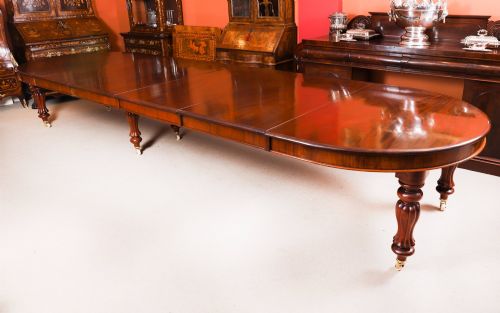
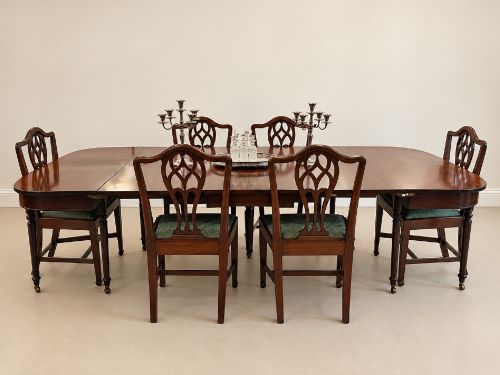
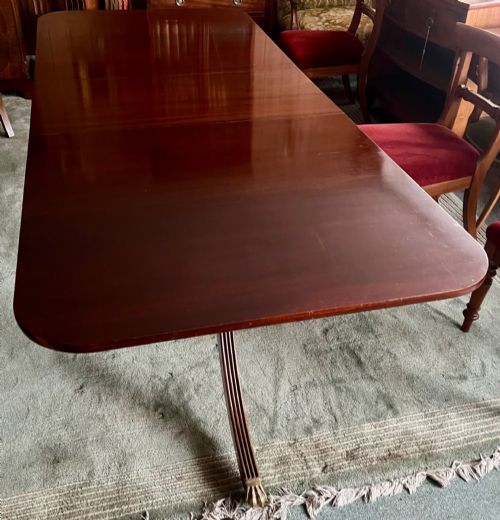
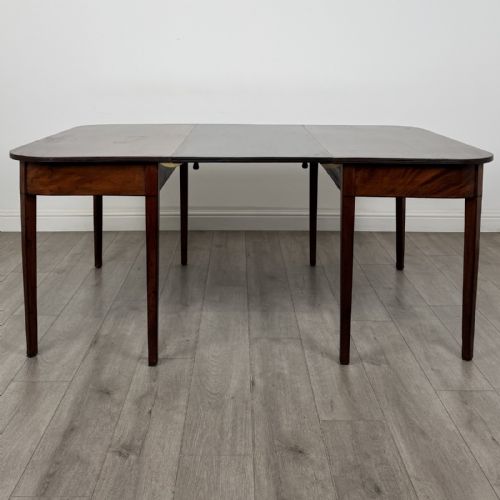
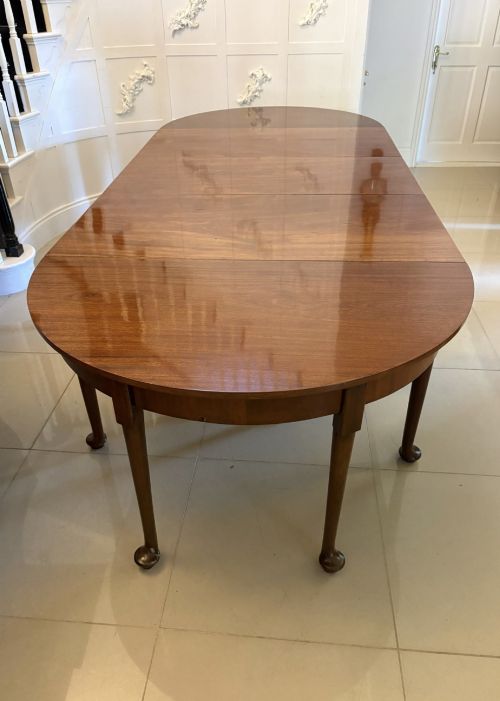
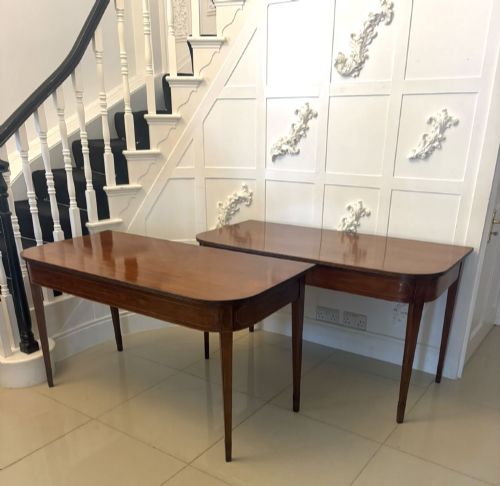
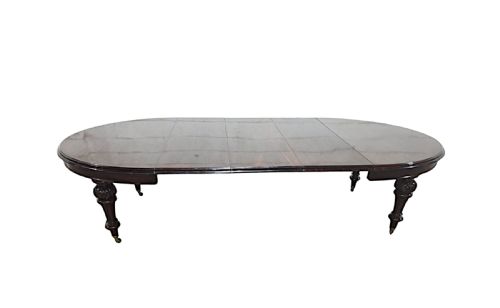
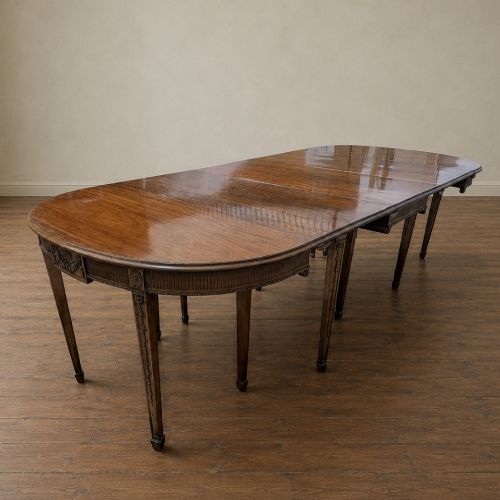
An antique d end table comprises modular dining sections with semicircular ends that function independently as side consoles or combine to form long dining boards. The pieces available here draw from the eighteenth and nineteenth centuries, spanning Georgian and Regency periods. Mahogany remains the dominant timber across these examples.
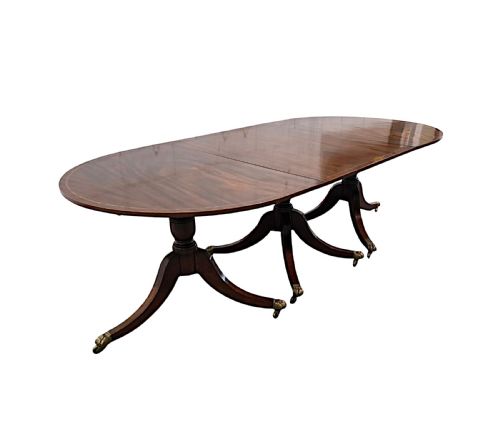
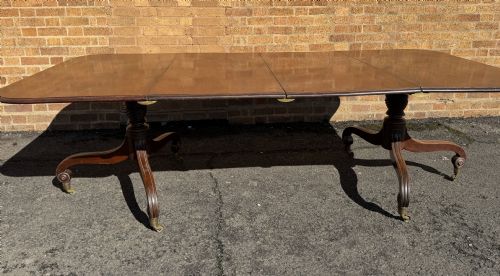
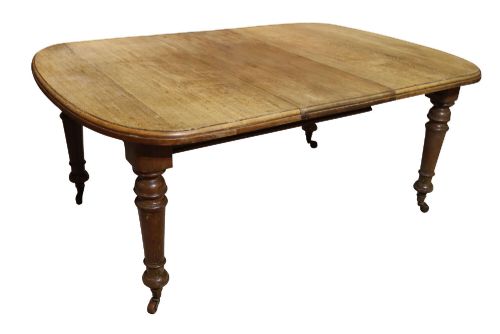
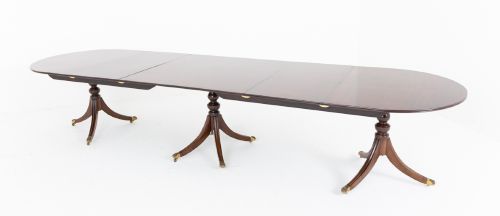
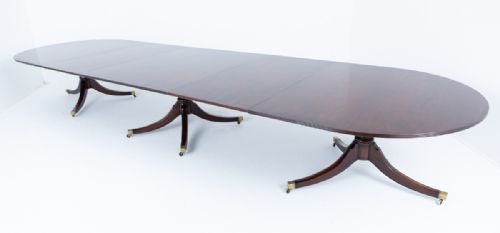
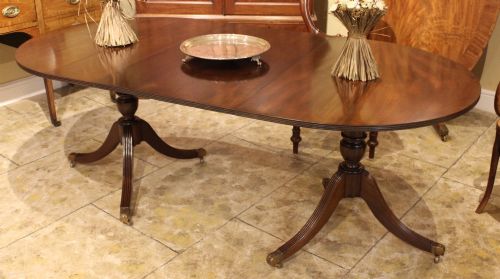
Makers designed these dining tables to expand using central leaves supported by pillars or additional legs, adapting a room from a compact side arrangement to a large seating layout. The archive shows single D-ends, twin-pillar variants, and multileaf formats accommodating up to eighteen people. Console and side table configurations appear alongside extendable dining formats.
Materials and technique
Cabinetmakers built these tables primarily in solid mahogany, often selecting figured timber for top surfaces and incorporating contrasting boxwood inlay. Timber selection dictated how well the grain caught the light once polished.
Construction methods relied on drop-leaf mechanisms, pull-out extending frames, and pillar supports to manage heavy timber leaves. Joinery focused on stability during extension, ensuring sections aligned cleanly whether closed against a wall or opened for dining.
Antique D End Table Retail Price Guide 2026
Typical asking prices for d end table among the pieces listed under this phrase on Sellingantiques today, from the lower quarter to the upper quarter. They describe what is for sale here now, not the wider market.
Some D-ends spent their weekdays quietly holding silver teapots against the parlour wall before transforming into multi-pillar banquet boards by Sunday.
Quality distinctions
Superior examples display carefully matched figured mahogany veneers across multiple extension leaves, ensuring consistent grain patterns when the table opens to full length. Lesser pieces use plain timber or show visible discrepancies between added leaves and the primary D-ends.
The sophistication of the pillar supports and the precision of the extension mechanism dictate the tier of craftsmanship. Finer tables maintain rigid alignment and smooth movement across multi-pillar formats, whereas standard versions rely on simpler drop-leaf folding frames.
The Antique D End Table Glossary
- D-End
- A table end shaped like a half-circle, resembling the letter D. These sections stand against walls as console tables when the dining leaves are removed.
- Extension Table
- A dining table designed to increase in length through the addition of central leaves. Mechanism types include pull-out frames and multi-pillar supports.
- Figured Mahogany
- Mahogany timber exhibiting attractive grain patterns such as flame or fiddleback. Cabinetmakers reserved this wood for prominent top surfaces.
- Boxwood Inlay
- Contrasting light wood inserted into darker timber surfaces to create geometric or linear borders. This decorative technique appears on select Georgian and Regency pieces.
- Pillar Support
- A heavy central column resting on branching legs that holds the weight of extending dining boards. Multiple pillars provide stability for larger seating layouts.
Antique D End Table: Frequently Asked Questions
How do D-end tables work?
A D-end table consists of semicircular ends that detach or fold down to function as side consoles. When joined with intermediate leaves, they form an extended dining surface.
This modular design allowed Georgian and Victorian households to alter room layouts easily between meals and formal gatherings.
Can I use them as side tables?
The semicircular ends sit flush against a wall, making them effective console or side tables when not extended for guests. Many pieces function daily in this compact form.
Separating the sections provides two distinct console tables for a hallway or living space.
How do I date an antique table?
Dating relies on timber choices, leg styles, and construction methods characteristic of periods like the Georgian and Victorian eras. Mahogany and boxwood inlay point towards eighteenth and nineteenth-century workshops.
Examining the undercarriage and extension mechanisms reveals the technological standards of the manufacturing period.
What timber was used?
Mahogany is the primary timber found in these listings, frequently utilised for its durability and rich dark grain. Figured variations and boxwood inlay add decorative contrast to the primary surfaces.
Cabinetmakers valued mahogany for its ability to hold crisp joinery details and polished finishes.