

19th Century Banquet Table
A 19th century banquet table provides generous seating and solid timber construction for large gatherings.

19th Century Banquet Table
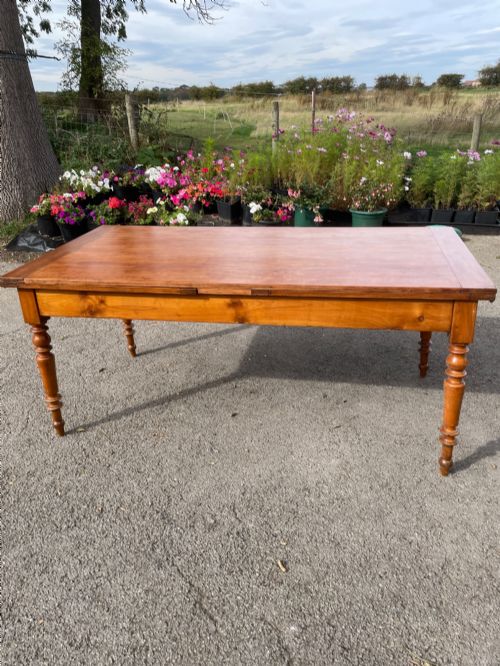
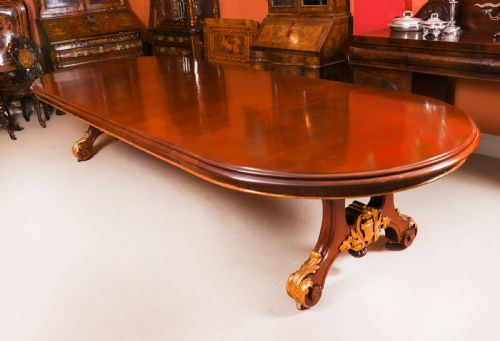
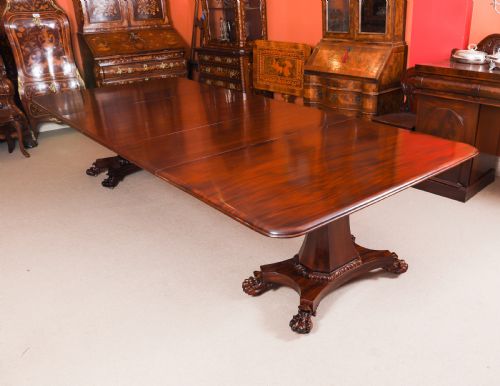
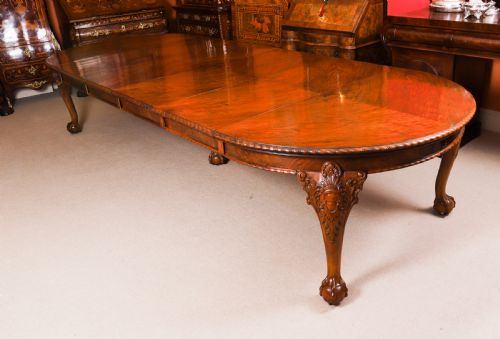
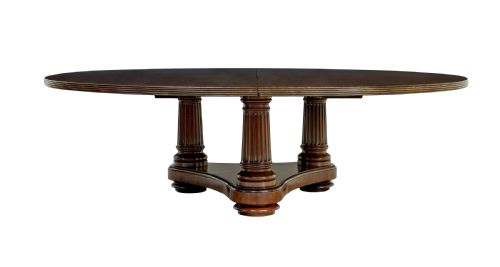
A 19th century banquet table is a substantial dining piece designed to accommodate numerous guests for large meals and gatherings. These tables typically feature long timber tops supported by multiple pedestals or sturdy legs, allowing them to extend significantly.
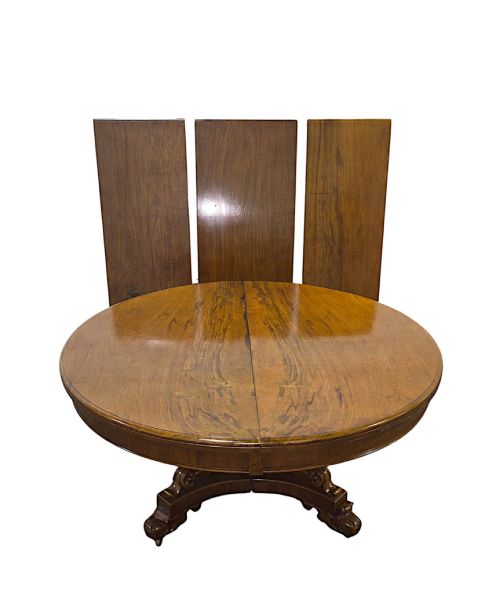
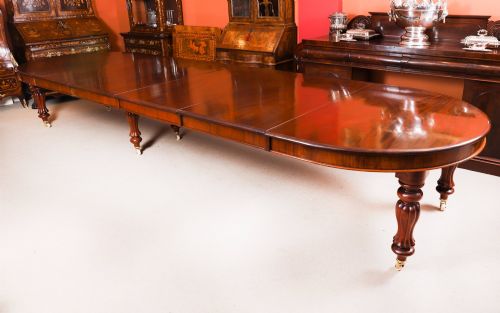
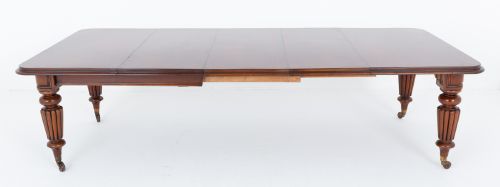
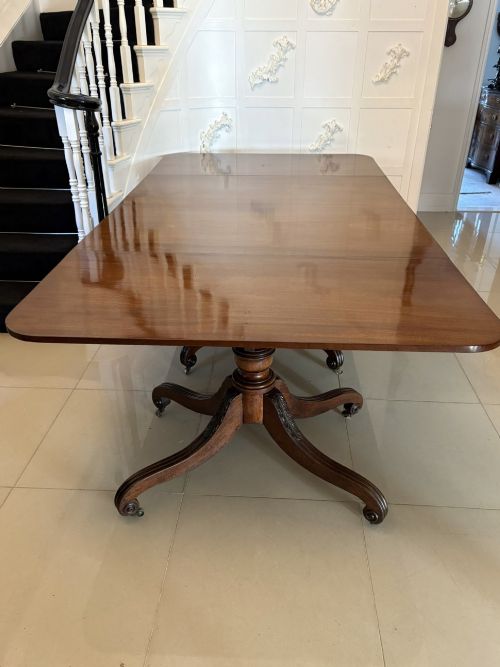
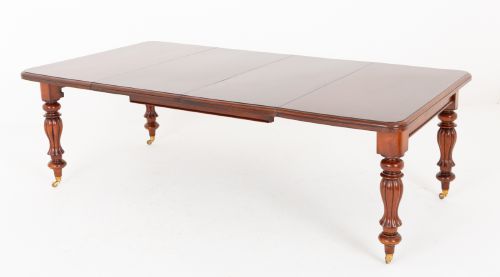
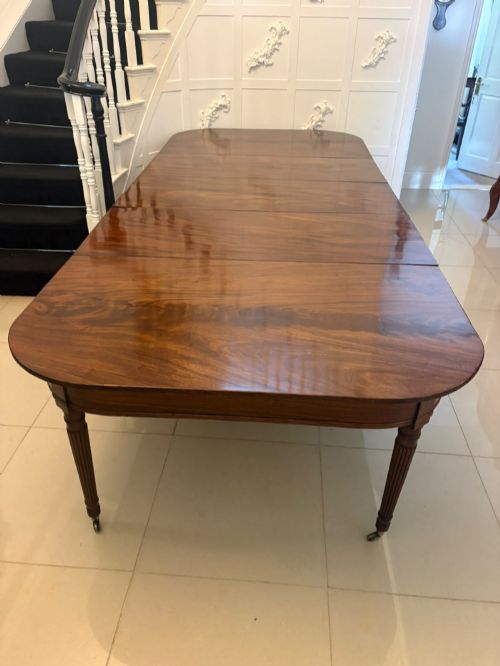
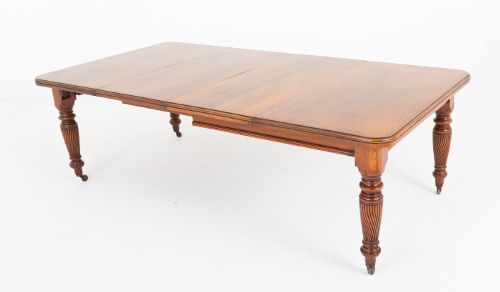
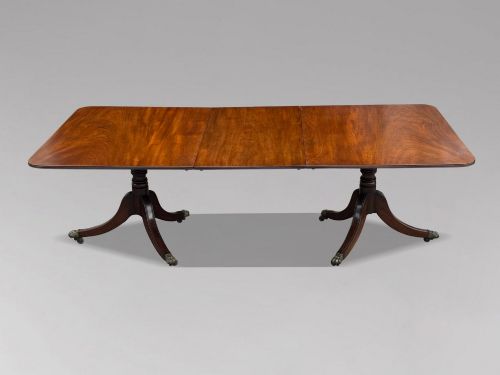
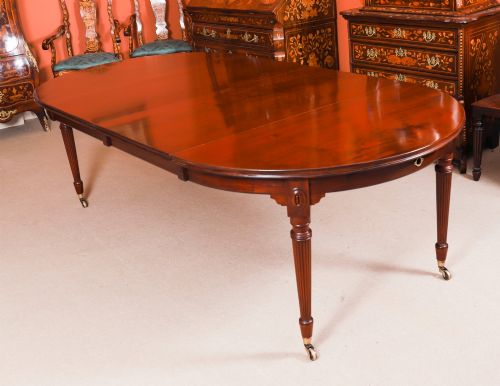
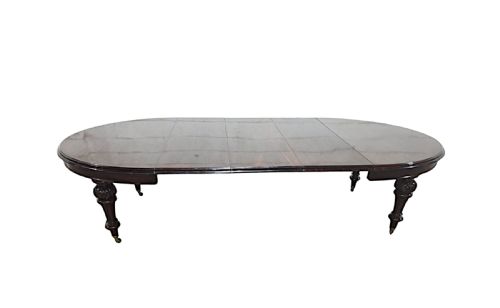
The versions most commonly met on this page are Victorian and William IV mahogany extending tables, alongside Regency examples. Many include extra leaves that alter the overall length to suit different dining occasions.
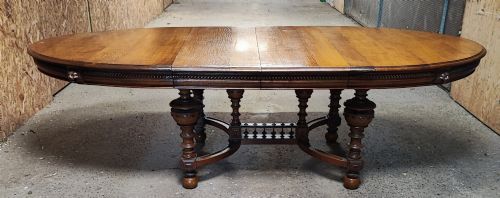
Makers and workshops constructed these large boards in oak, walnut, and various forms of mahogany to serve formal dining rooms and boardrooms. Their robust architecture reflects the heavy entertaining requirements of the period.
How they were made
Cabinet makers utilised dense timbers such as mahogany, Cuban mahogany, pollard oak, and burr walnut for the primary surfaces and structural frames. Planks were selected for strong grain patterns and joined securely to withstand the weight of extended leaves.
Mechanical systems such as wind-out actions and pedestal bases were developed to support heavy timber sections safely. Brass fittings and castors often aided movement on large dining tables that needed adjustment during room reconfigurations.
19th Century Banquet Table Retail Price Guide 2026
Typical asking prices for 19th century banquet table among the pieces listed under this phrase on Sellingantiques today, from the lower quarter to the upper quarter. They describe what is for sale here now, not the wider market.
Some tables stretch past twenty feet, requiring serious teamwork and a very long room just to set the cutlery.
What varies in quality
The choice of timber grain and the matching of veneers across multiple extension leaves distinguish finer examples from standard production. Superior tables display consistent figure in the mahogany or walnut across every inserted section.
Engineering precision in the extending mechanism and the stability of the pedestals dictate the daily utility of the piece. Well-made tables maintain a level surface and smooth operation across significant lengths.
Wylie and Lochead·Maple and Co·Gillows
The 19th Century Banquet Table Glossary
- Extending table
- A dining table designed with a mechanism or removable leaves to increase its surface length. This allows hosts to seat larger dinner parties.
- Pedestal base
- A central support column resting on splayed feet, commonly found on twin or triple pillar tables. It provides stable legroom beneath the top.
- Wind-out mechanism
- A geared mechanical system operated by a handle that separates the table halves to insert leaves. This metal hardware enables smooth expansion of heavy boards.
- D-end table
- A dining table whose ends form a semi-circular or D shape when separated from the central section. These terminals often stand alone as side tables.
- Flame mahogany
- Timber cut from the fork of the mahogany tree to produce a flickering, flame-like grain pattern. Cabinet makers reserved this veneer for prominent surfaces.
19th Century Banquet Table: Frequently Asked Questions
How do I operate the extending mechanism?
Most large tables utilise a winding handle that turns internal metal gears to pull the table halves apart. Once opened, you drop the loose timber leaves into the centre and wind the structure back together.
Ensure the brass clips or alignment pins beneath the rim engage properly before locking the table in place. Regular maintenance of the internal metal screw keeps the movement smooth over long sections of timber.
How many people can these tables seat?
These large boards commonly seat anywhere from ten up to twenty-six guests depending on the number of inserted leaves. Lengths often range between ten and twenty feet to accommodate large dining rooms.
When calculating seating capacity, allow sufficient legroom around the pedestal bases or legs placed along the length of the table. Multiple pillars help distribute weight and prevent obstruction for diners.
How do I care for the polished timber surface?
Clean the surface with a soft, dry cloth to remove dust and avoid placing hot dishes directly onto the polished wood. Use mats and coasters to protect the antique finish from moisture and heat rings.
Apply a traditional beeswax polish occasionally to nourish the mahogany or walnut grain. Avoid positioning the table near direct heat sources or strong sunlight to prevent timber movement.
How can I tell a Regency table from a Victorian one?
Regency examples typically date from the early part of the century, displaying restrained lines, brass inlay, and saber legs. Victorian tables often feature heavier proportions, carved pedestals, and darker figured mahogany.
Construction details like the complexity of the pedestal carving and the thickness of the top help differentiate the design phases. Examining the secondary timbers underneath also assists in confirming the production period.