
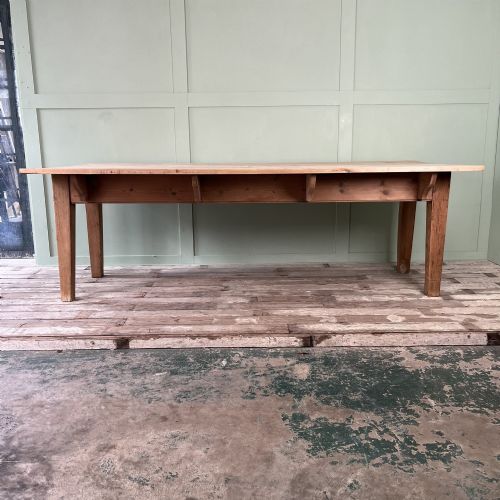
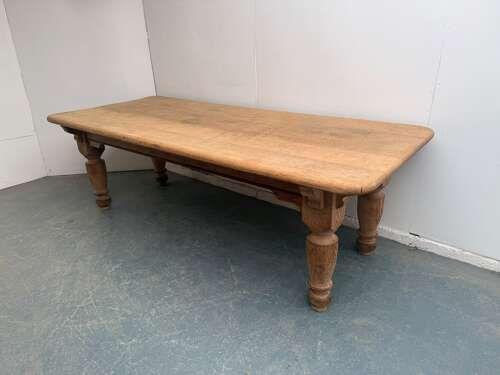
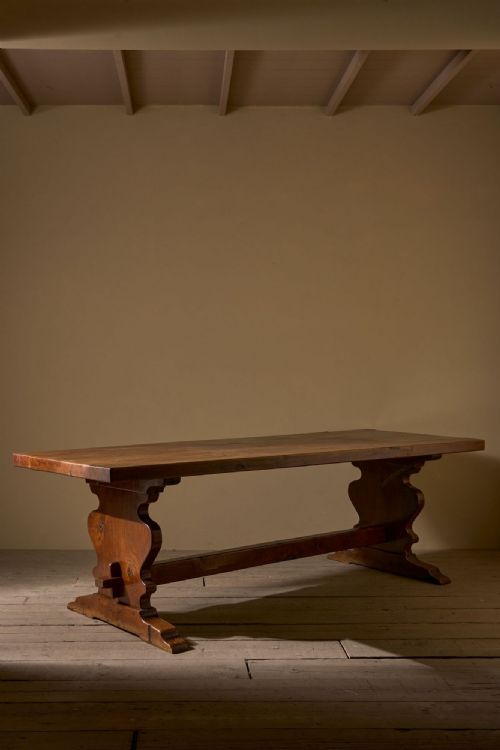
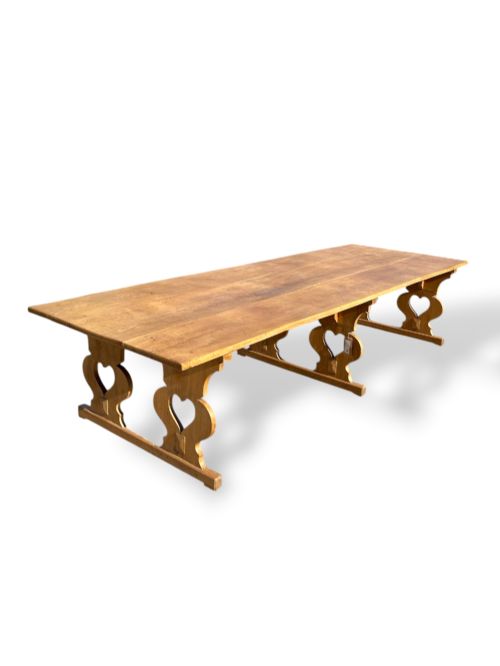
Large Country House Table
A large country house table provides monumental scale and historic character, anchoring expansive dining rooms and kitchens with enduring presence.
Large country house table
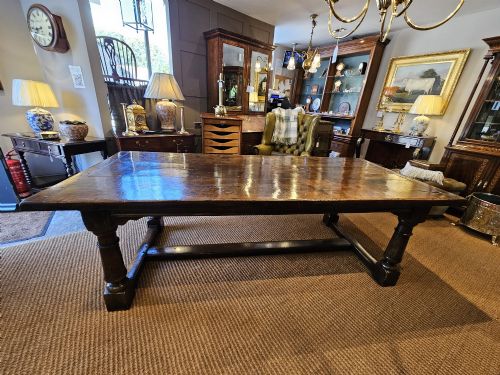
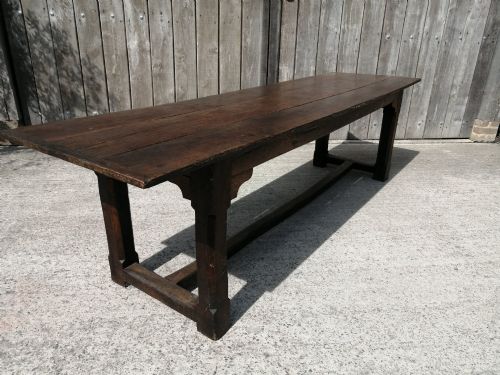
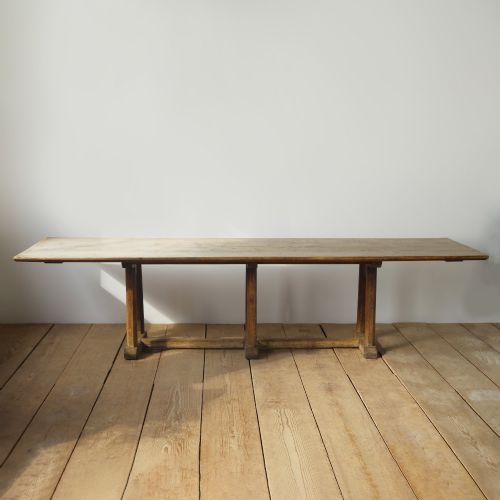
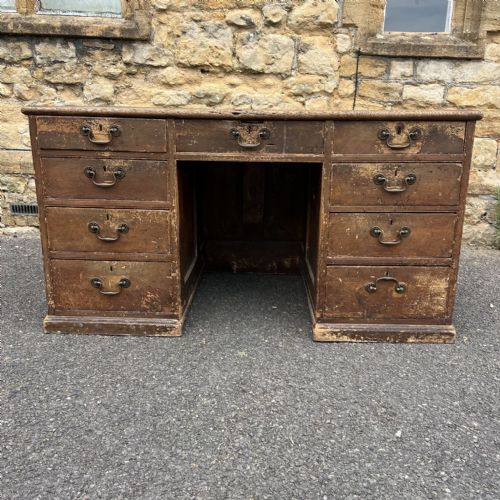
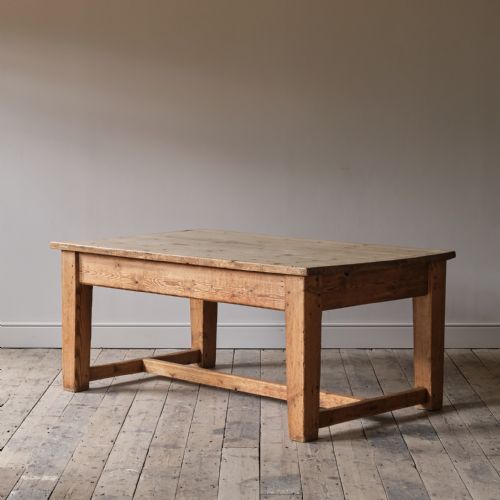
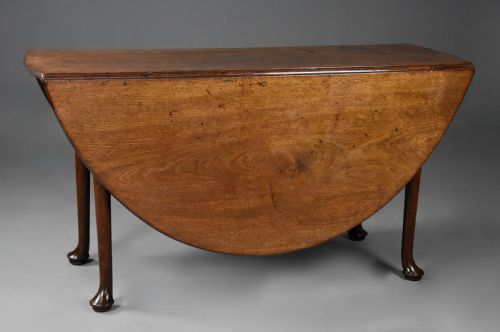
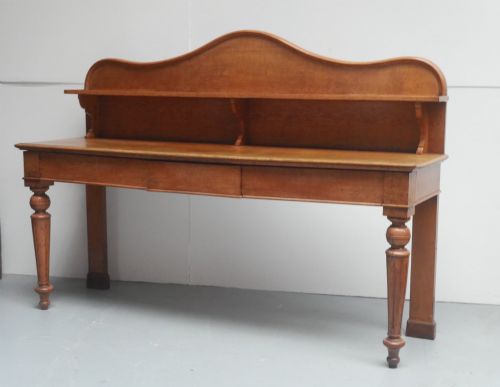
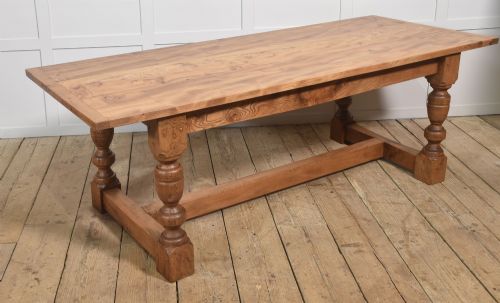
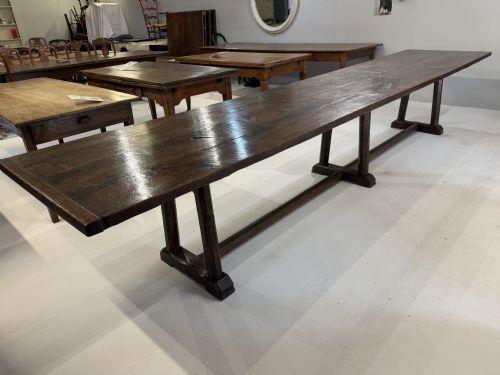
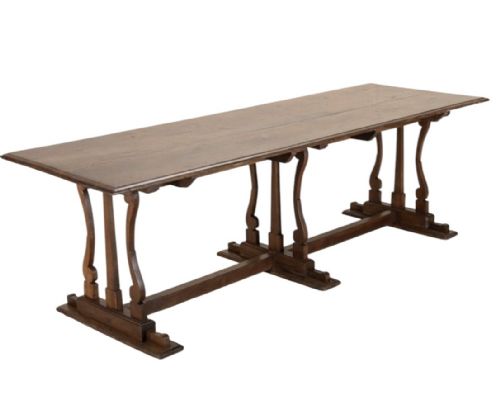
A large country house table is built for scale, accommodating extensive seating for communal dining or heavy kitchen preparation. The forms span robust refectory and farmhouse formats to formal extending dining designs and serving tables.
Evidence shows examples originating across the nineteenth century, including George III, William IV, Victorian, and Elizabethan Revival periods. These surfaces served domestic staff, large families, and grand entertaining in domestic interiors.
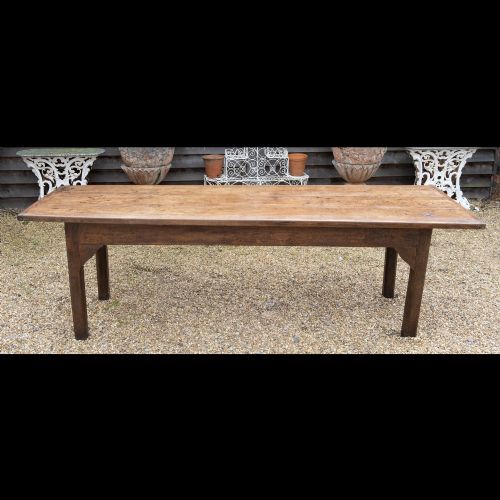
The most common versions met on this page are substantial pine kitchen tables, extending mahogany dining tables, and oak refectory boards. Their dimensions frequently exceed standard domestic proportions to suit vast interiors.
Construction and Materials
Makers utilised heavy timbers such as oak, mahogany, walnut, pine, elm, and ash, sometimes pairing pollard oak or flame mahogany veneers with solid framing. Secondary woods like pear wood, sycamore, and original paint surfaces appear across kitchen and serving formats.
Structural engineering relied on thick tops supported by pillars, multiple legs, or trestle bases to bear heavy loads. Extending mechanisms utilised winding systems and removable leaves, while hardware incorporated brass components.
Retail Price Guide 2026
Typical UK retail prices for large country house table, calculated from the Sellingantiques database of over a million retail prices indexed since 2003. This retail price guide relies exclusively on Sellingantiques data; no external sources or auction records are used, so the figures do not describe the wider market.
One twenty-eight-seater table required six support pillars to keep its enormous six-metre length steady.
Assessing Quality
Quality rests in the selection of timber, such as figured pollard oak or flame mahogany, against utility pine or mixed hardwoods. Superior examples demonstrate thoughtful proportion across monumental lengths, integrating stability with refined cabinetmaking.
Originality of surface finish - whether mellow polish, original paint, or unpretentious scrubbed timber - differentiates pieces. Mechanical sophistication in extending dining tables, including robust winding mechanisms and matching leaf sets, marks higher execution.
Gillows
The Large Country House Table Glossary
- Refectory table
- A long, narrow dining table traditionally used in communal halls and large kitchens. They often feature sturdy stretcher bases for added stability.
- Wind out table
- An extending dining table operated via a mechanical screw mechanism hidden beneath the top. Turning a handle separates the halves to insert extra leaves.
- Pollard oak
- Timber taken from trees that have been pollarded, producing a dense, highly figured grain pattern. It was utilised for decorative surfaces on formal revival pieces.
- Gothic Revival
- A nineteenth-century design style drawing on medieval architectural motifs such as pointed arches and heavy tracery. This aesthetic appears on substantial oak tables.
Frequently Asked Questions
How do I clean a large pine kitchen table?
Scrub the surface gently using warm water and mild soap along the grain of the wood. Avoid harsh chemical cleaners that strip the historic patina.
Allow the timber to dry naturally away from direct heat sources. Regular maintenance preserves the character built up over generations of use.
Can extending dining tables seat extra guests?
Extending mechanisms allow the top to pull apart so additional leaves can be inserted into the centre. This flexibility accommodates large gatherings while saving space daily.
Ensure leaves are stored in dry conditions to maintain consistent moisture levels with the main table top.
What is a refectory table used for?
Refectory tables provide long, stable surfaces originally designed for communal meals in large households. Their narrow proportions encourage conversation across the width.
Today they function effectively as statement dining tables or large work surfaces in spacious kitchens.
How do I identify a Victorian pine table?
Victorian pine tables typically exhibit simple, utilitarian construction with thick plank tops and turned or square legs. The timber often shows deep honey tones and historical wear from domestic labour.
Examine the underside and joints for hand-cut joinery markers typical of nineteenth-century workshop production.