


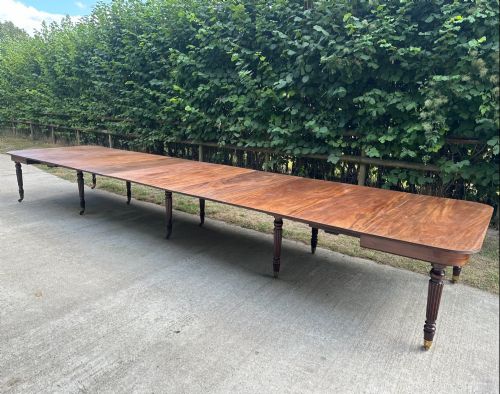
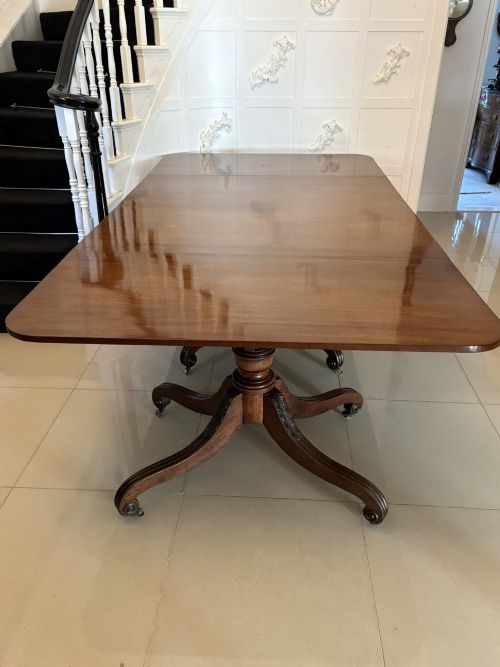
Large Banqueting Table
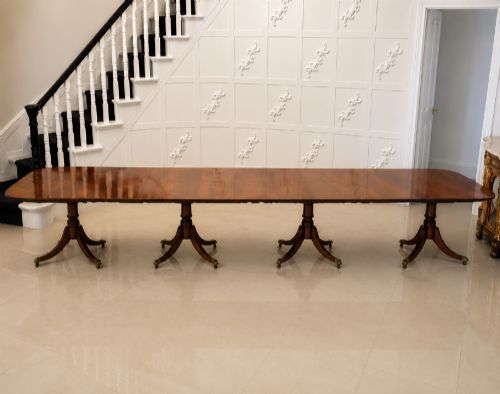
A large banqueting table provides vast timber surfaces built to seat dozens for historic feasts.
Large Banqueting Table
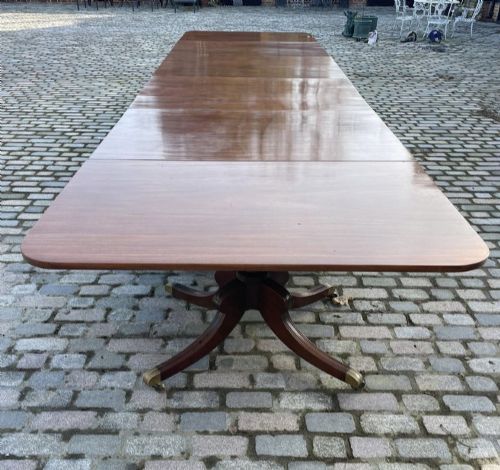
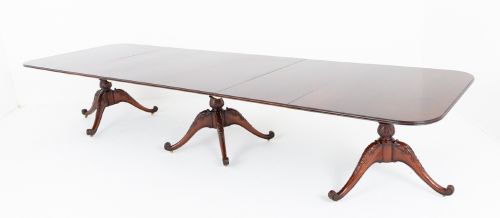
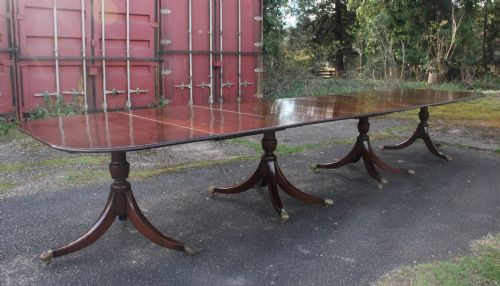
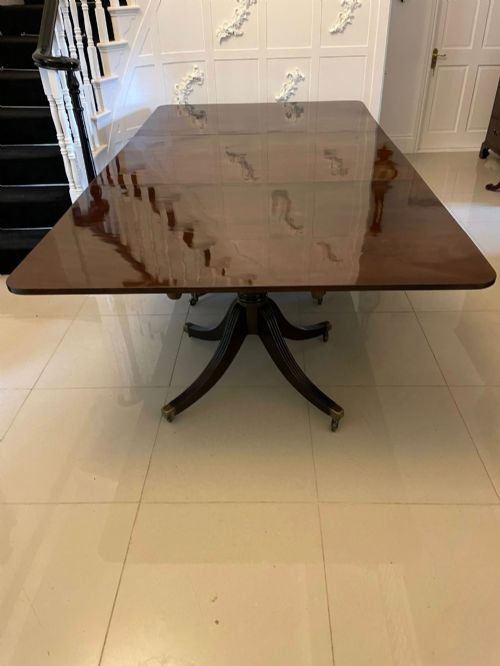
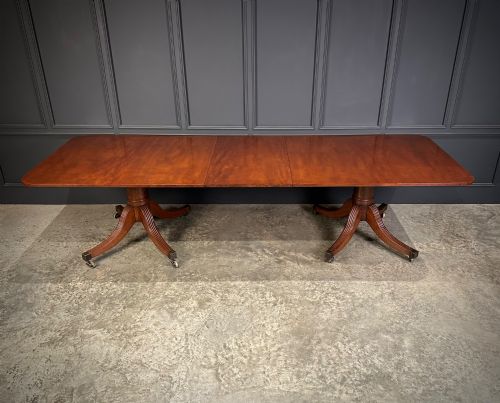
A large banqueting table is a substantial dining surface designed to accommodate extended family gatherings and formal hosting on a grand scale. When searching for a large banqueting table, one meets multi-pillar extending formats most frequently.
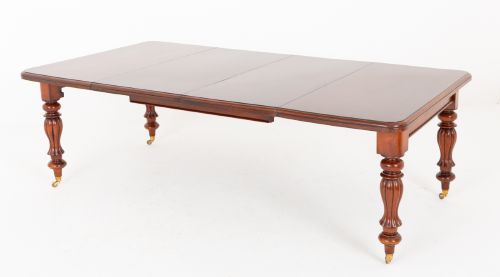
The pieces on this page span the Georgian, Regency, and Victorian eras, alongside later revival styles from the twentieth century. Mahogany dominates the selection, shaped into pedestal bases or refectory forms with multiple insertion leaves.
How they were made
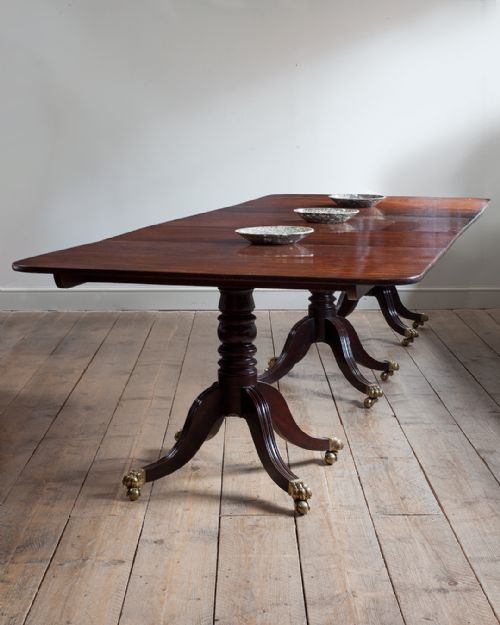
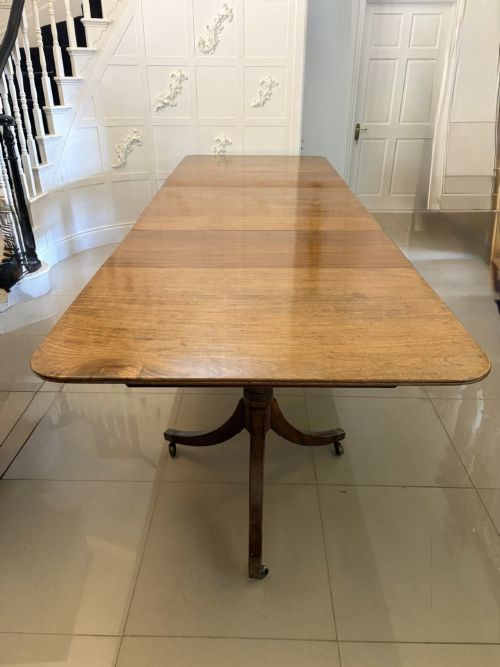
Cabinet makers built these frames primarily from solid mahogany and oak, often selecting figured timber veneers for the table tops to display rich grain patterns. Brass castors frequently support the heavy pedestals, allowing these large pieces to move across floors.
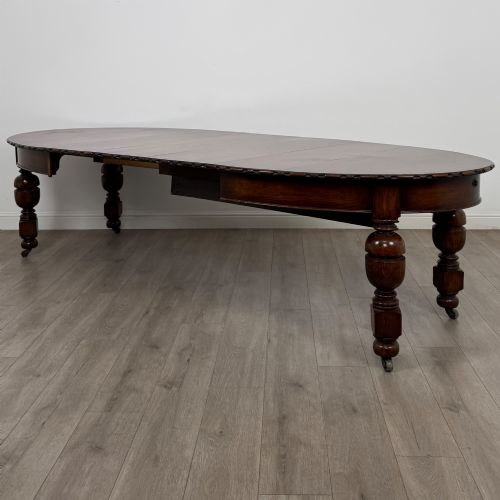
Extending mechanisms rely on wooden runners and winding systems that house removable extra leaves. Joinery techniques such as mortise and tenon secure the structural integrity needed to span multiple metres without sagging.
Some tables require an army of guests just to test the wind-out extension mechanism.
What varies in quality
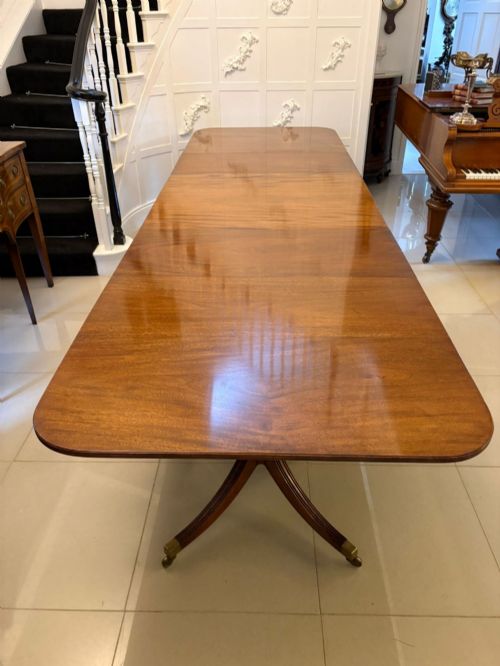
The quality of a large banqueting table rests on the selection of timber and the precision of its pedestal mechanism. Superior examples feature dense, highly figured mahogany with matched leaves that maintain consistent colour across the entire span.
Heavier brass work, robust pillar turnings, and smoothly operating extension tracks separate workshop masterpieces from standard production pieces. The proportion of the legs and the subtlety of edge moulding distinguish fine cabinet work from simpler output.
Gillows·William and Gibton·Wylie and Lochead·Maple and Co·Whytock and Reid
The Large Banqueting Table Glossary
- Pedestal
- A central column support resting on splayed legs, commonly used in multiple numbers to hold long dining tops.
- Extending table
- A dining surface fitted with internal runners and removable leaves to alter its overall length.
- Refectory table
- A long, narrow dining board with fixed legs connected by low stretchers, originating in monastic dining halls.
- D-end
- A table end shaped in a semi-circle, often joined to central sections to form a long rectangular surface with rounded ends.
- Draw-leaf
- An extending design where secondary leaves slide out from beneath the main top.
Large Banqueting Table: Frequently Asked Questions
How many people can sit at a large banqueting table?
These large dining surfaces frequently accommodate anywhere from ten to twenty-eight diners depending on the insertion of multiple leaves. The length determines the seating capacity along each flank.
Pedestal arrangements allow chairs to fit around the ends and sides without obstructive legs hitting knees.
How do the extending leaves work?
Extending mechanisms rely on sliding wooden runners beneath the top that pull apart to accept separate loose leaves. Brass pins or clips often secure the sections together in alignment.
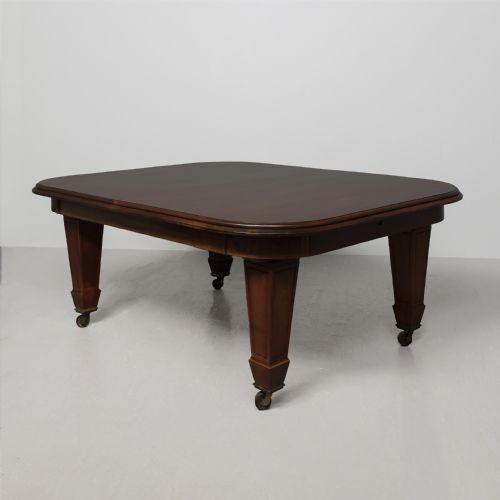
Wind-out mechanisms operated by a crank handle appear in later nineteenth-century pieces to ease the opening process.
Are these tables suitable for daily use?
These substantial pieces handle regular family dining and large gatherings with ease due to their heavy hardwood construction. Protective pads help preserve the polished mahogany or oak surface during meals.
Maintenance involves regular waxing to nourish the timber grain and protect against moisture.
How do I identify the period of the table?
Period identification relies on observing leg styles, timber choice, and the complexity of the undercarriage construction. Regency and Georgian examples display refined reeded legs and brass castors.
Victorian and Edwardian versions often present heavier proportions, carved details, or revival styling such as Jacobean oak.