

Large Wooden Conference Table
A large wooden conference table provides substantial surface area and seating capacity, serving as the physical centrepiece for meetings and gatherings.
Large Wooden Conference Table
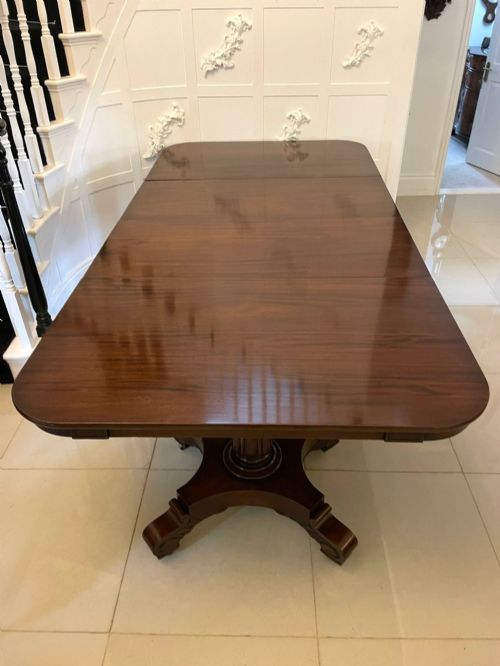
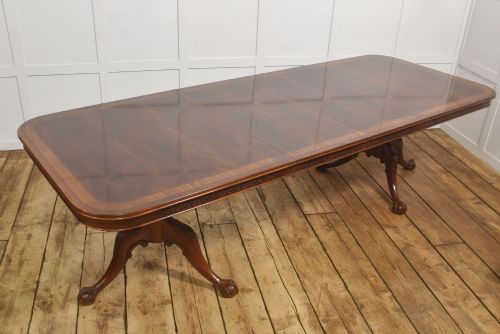
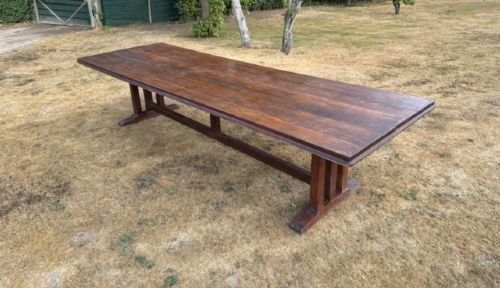
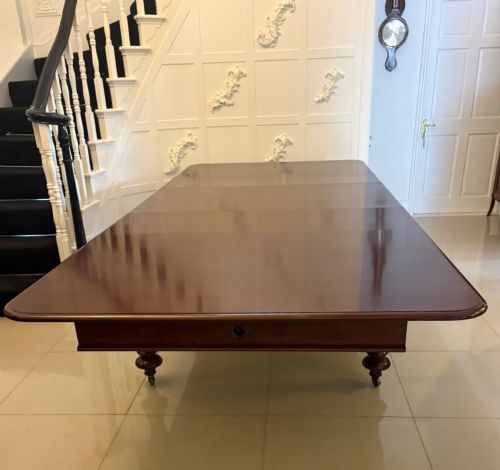
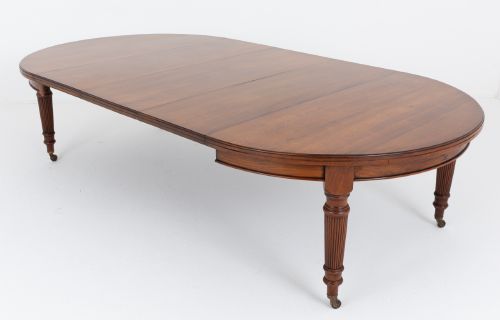
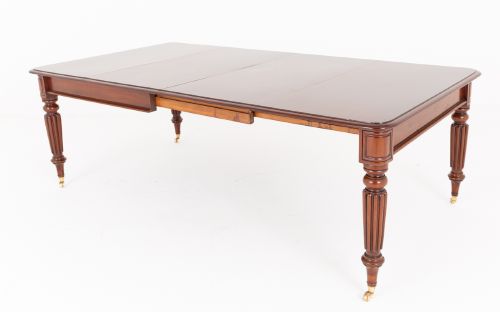
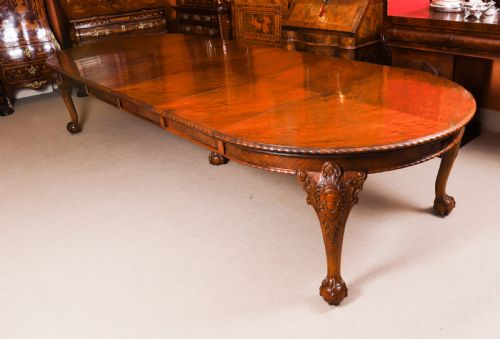
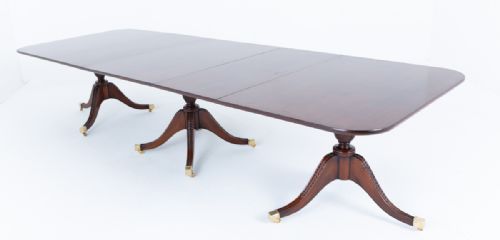
A large wooden conference table serves as a central surface for meetings, often appearing on this page in the form of extended dining tables, twin-pillar designs, and refectory formats. These pieces originate from various periods including the Georgian, Regency, William IV, Victorian, and Edwardian eras.
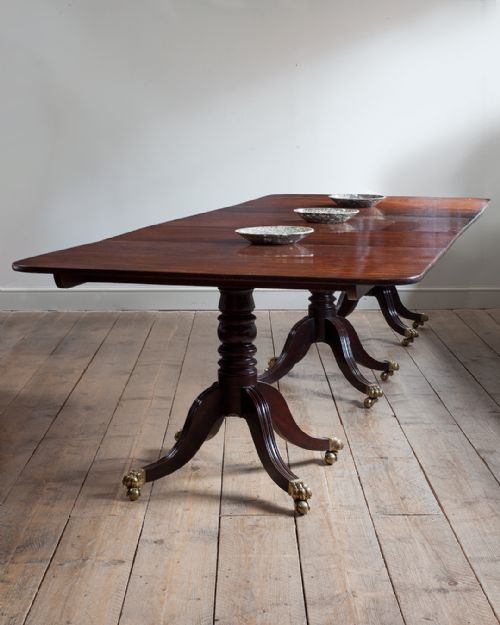
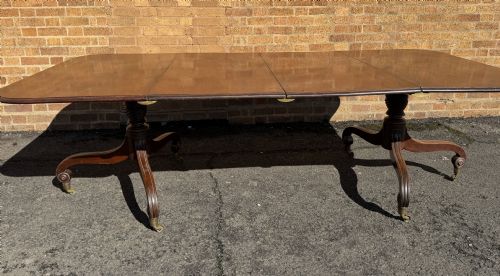
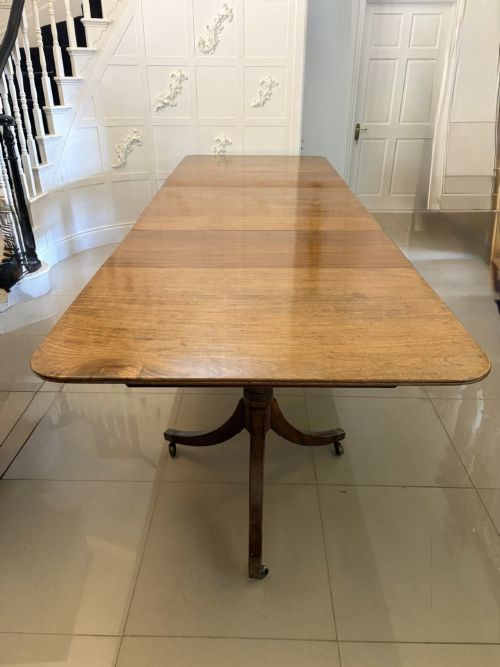
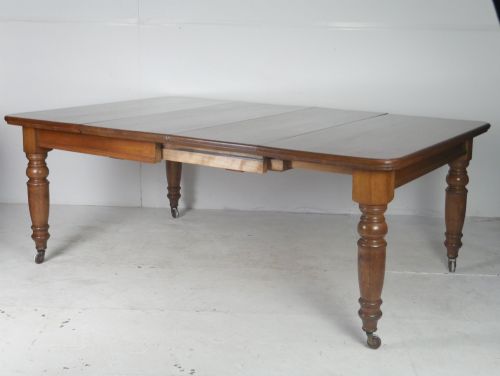
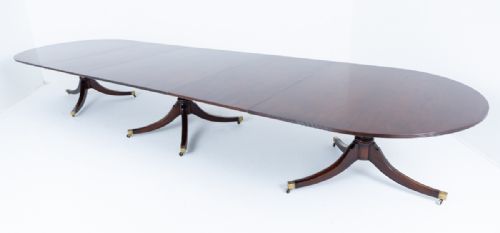
Buyers seeking a large wooden conference table frequently encounter multi-pedestal configurations, wind-out mechanisms, and removable leaves designed to accommodate large seating capacities ranging from ten up to twenty-two people. The selection spans formal mahogany designs with multiple pedestals down to sturdy oak and walnut kitchen or refectory formats.
Materials and Construction
Makers constructed these tables primarily from solid and figured timbers, utilising mahogany, walnut, oak, and satinwood, occasionally accented with brass inlay or supported by ceramic elements and fabric upholstery.
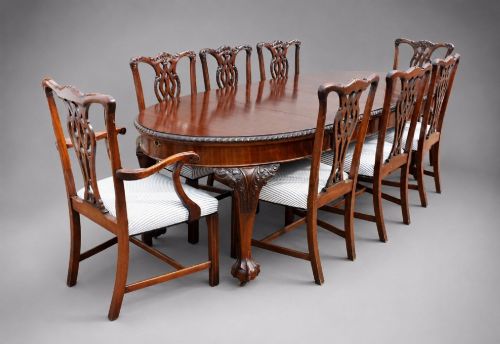
Extension systems rely on internal runners, screw wind-out mechanisms, and pillar supports, while structural integrity is reinforced through reeded legs, carved claw and ball feet, and multi-pedestal bases.
Several tables stretch past twenty seats, requiring a surveyor's eye and a very long room to host dinner properly.
Craftsmanship and Proportion
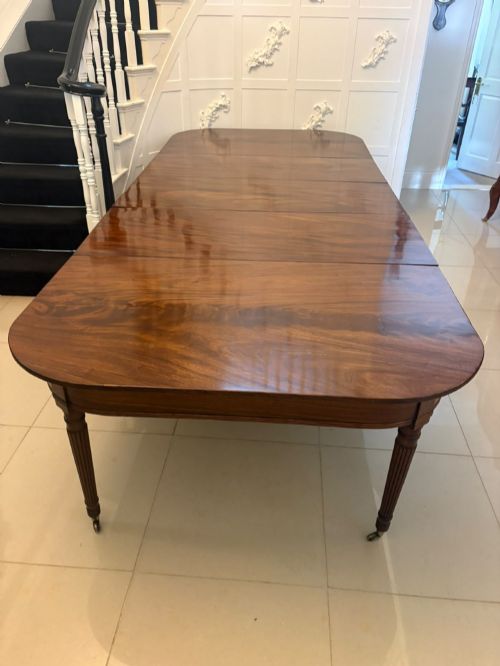
The distinction between tiers rests upon timber selection, such as figured or Cuban flame mahogany veneers, matched against standard stock. Superior examples demonstrate careful grain alignment across multiple extension leaves and precision in mechanical wind-out systems.
Carving detail on pedestals, legs, and feet further separates standard workshop production from exceptional commissions, alongside the overall balance and stability achieved when a table is extended to its maximum length.
Gillows·Maple and Co·Whytock and Reid
The Large Wooden Conference Table Glossary
- Pedestal
- A central supporting column, usually single or multiple, that holds up the tabletop and often branches into carved legs. Multi-pedestal formats allow long tables to maintain stability across extended lengths.
- Wind-out
- A mechanical extension system operated by a crank handle that separates the table halves to insert additional leaves. This mechanism enables smooth adjustment of seating capacity.
- Refectory
- A long, narrow table style traditionally utilised for communal dining but adapted for boardroom and meeting use. These pieces often feature simplified timber framing rather than pillar supports.
- Reeded
- A decorative moulding comprising parallel convex curves cut into table legs or borders. This detail provides textural relief on Regency and Victorian framework.
- Flame mahogany
- Timber veneer cut to reveal a flickering, flame-like grain pattern prized by cabinetmakers. It appears on the top surfaces of high-status tables.
Large Wooden Conference Table: Frequently Asked Questions
How do wind-out tables operate?
These tables utilise a concealed internal screw mechanism operated with a removable crank handle. Turning the handle drives the framework apart to create a gap for insertion leaves.
Once the leaves rest securely in position, the mechanism draws the sections back together to lock the surface flat. This design allows a single person to expand a heavy table smoothly.
What defines a pedestal dining table?
A pedestal table rests its weight on one or more central wooden columns rather than four corner legs. These columns typically branch out into three or four carved feet for stability.
This configuration prevents corner legs from obstructing chairs, making it practical for large seating arrangements. Multiple pedestals are added underneath longer tops to support extended lengths.
How do I identify a Regency period table?
Regency pieces often display classical proportions, dark mahogany timbers, and polished brass inlay or reeded woodwork. The style leans towards architectural simplicity combined with refined decorative details.
Pedestals from this era frequently feature brass paw feet or castors. Proportions remain balanced even when extended to accommodate twelve or more guests.
What is a refectory table?
A refectory table is a long, narrow board supported by heavy trestles or straight wooden legs connected by stretchers. Originally built for communal dining halls, the format provides an unobstructed leg span underneath.
Examples in oak or walnut present a robust alternative to pillar-supported designs. Their straightforward geometry suits large boardroom settings.