
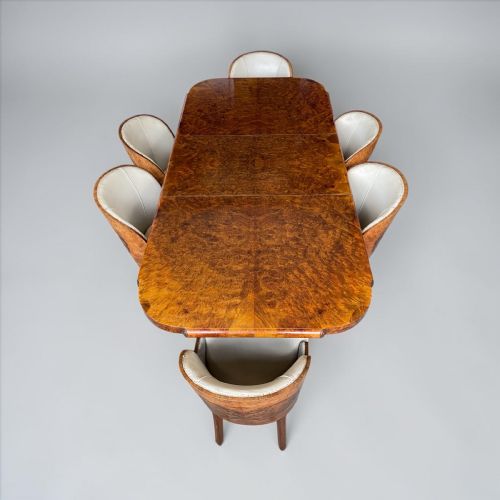


Vintage Executive Table
A vintage executive table provides a commanding workspace, bringing period character and substantial timber construction into a study or office.
Vintage Executive Table
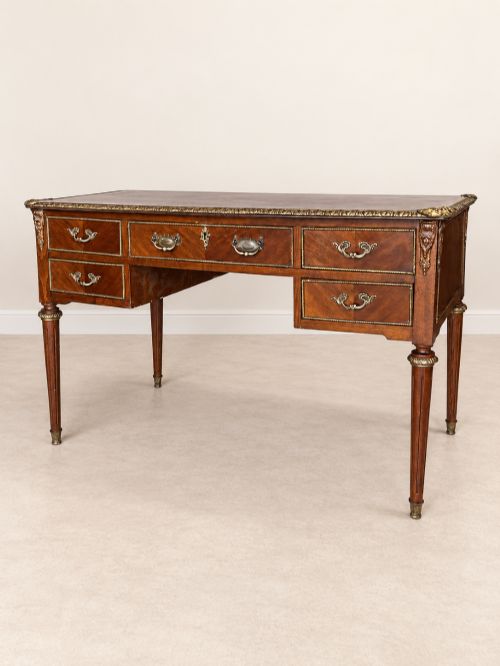
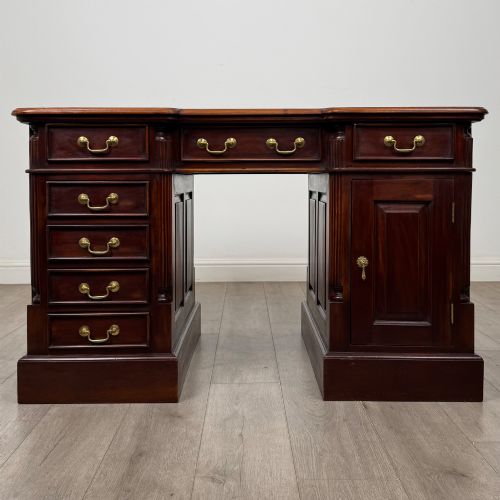
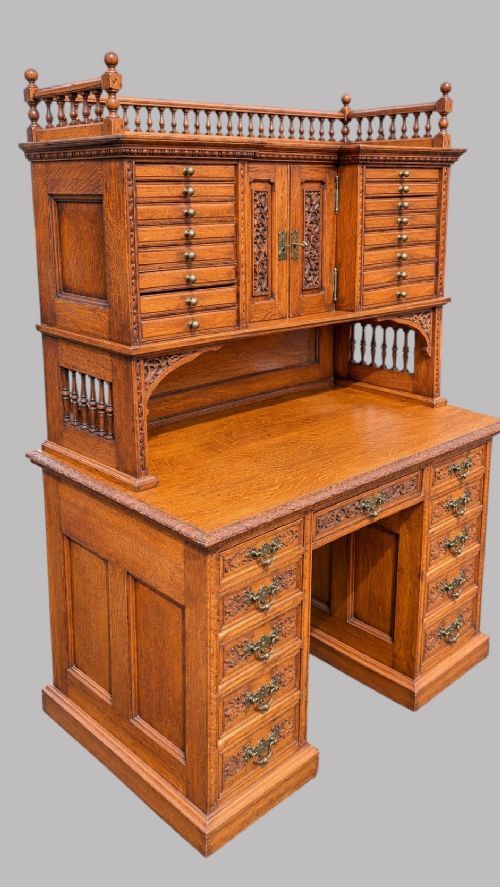
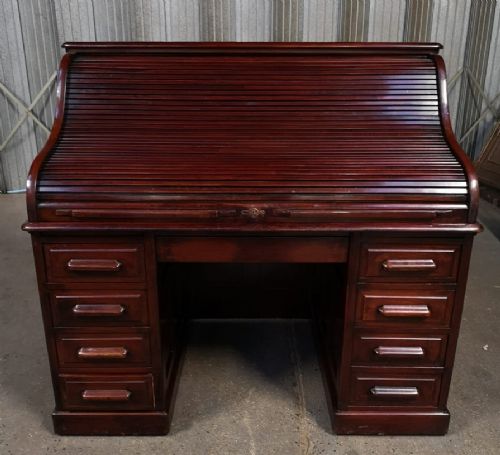
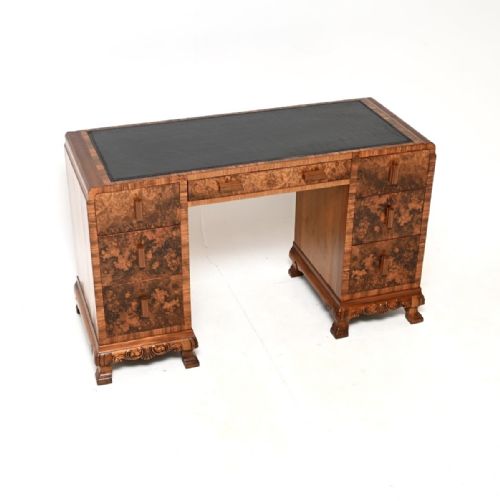
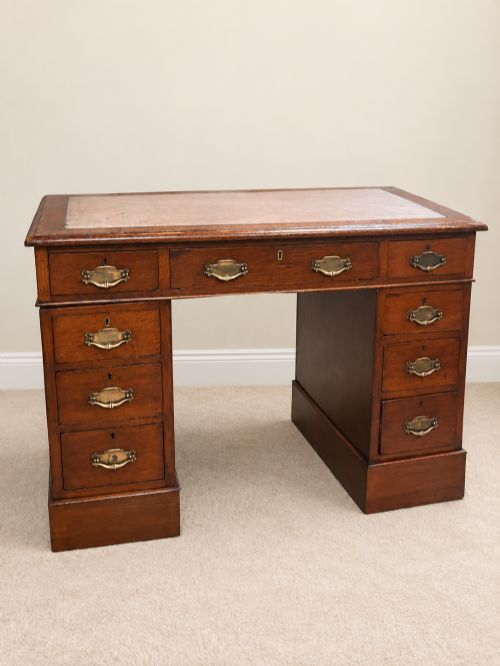
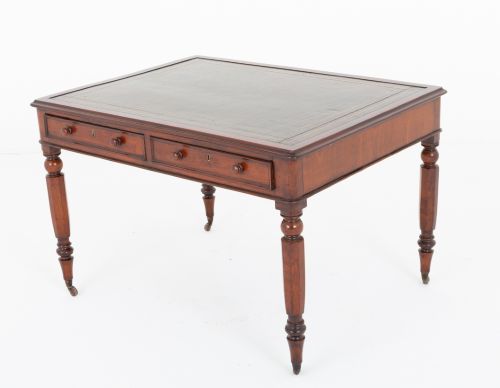
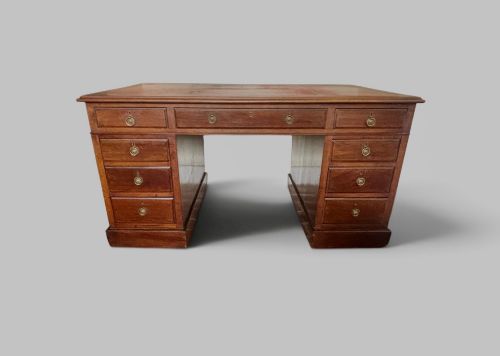
A vintage executive table encompasses large-scale desks and writing tables suited for professional rooms and studies. These pieces appear primarily as pedestal desks, kneehole desks, and partners desks designed for use from multiple sides.
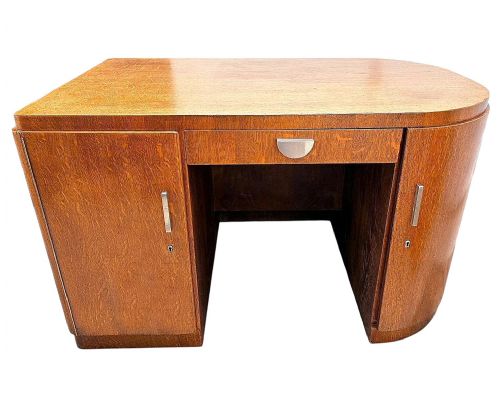
The selection ranges from Victorian and Edwardian examples to Art Deco and mid-century designs. Form follows function through banks of drawers, leather writing surfaces, and substantial timber frameworks.
Materials and Technique
Cabinetmakers constructed these pieces using dense hardwoods like mahogany, oak, and walnut, frequently applying burr walnut or rosewood veneers to primary surfaces. Brass hardware, including handles and drawer pulls, complements the robust timber construction.
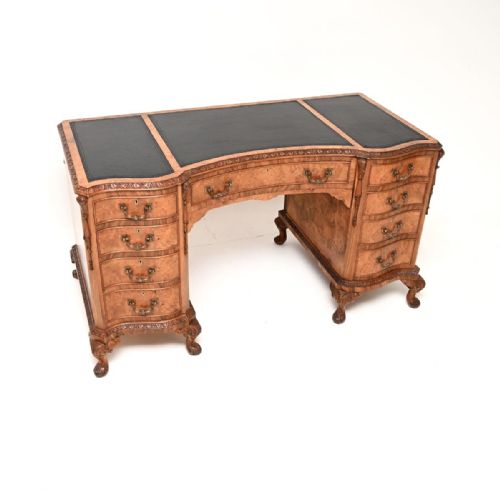
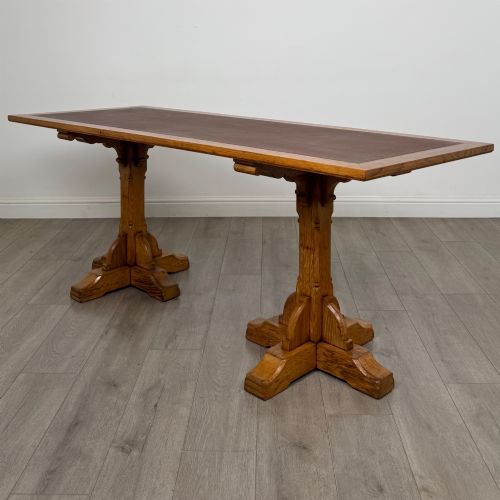
Inlaid leather writing surfaces form a central component of many desks, surrounded by crossbanded borders. Joinery techniques such as dovetailed drawers ensure structural longevity across heavy everyday use.
Periods represented span from the 19th century through the Edwardian era and into Art Deco designs of the 1930s.
Distinctions in Execution
Quality rests upon the selection of timber veneers, the precision of internal drawer construction, and the integrity of the original hardware. Finer examples display matched burr walnut figures and subtle carved or inlaid details rather than plain surfaces.
The execution of secondary woods, the finish of the leather insert, and the reputation of the workshop dictate the standing of an individual piece within its period.
Maurice Adams·Trollope & sons·Edwards & Roberts·Maple and Co·Hobbs & Co.
The Vintage Executive Table Glossary
- Pedestal desk
- A form comprising two independent pedestals of drawers supporting a single top. This layout provides generous storage and a stable base.
- Partners desk
- A large double-sided desk designed for two people to work opposite one another. Drawers and cupboards are duplicated on both long sides.
- Kneehole desk
- A compact desk featuring a central recess for the sitter's legs, flanked by smaller pedestals of drawers. It offers a tidy footprint compared to larger partners tables.
- Burr walnut
- A highly figured wood veneer taken from the growth growths of a walnut tree. It produces intricate, swirling patterns across desk tops and drawer fronts.
- Dovetail
- A joinery method interlocking wedge-shaped fingers of wood. This joint resists pull-apart forces in drawer construction.
Vintage Executive Table: Frequently Asked Questions
What is a partners desk?
A partners desk is a large, double-sided writing table built to accommodate two people working face-to-face. These pieces feature drawers and cupboards accessible from both long sides.
They originated in professional and domestic libraries where business partners or clerks shared a single workspace. Their freestanding nature allows them to sit centrally within a room rather than against a wall.
How do I care for a leather desk top?
Leather desk inserts require gentle maintenance to prevent drying and cracking over time. Regular dusting with a soft cloth keeps abrasive particles away from the surface.
Conditioning balms formulated for antique leather help retain suppleness. Direct sunlight and excessive heat should be avoided to prevent the leather from fading or shrinking.
Are these desks suitable for modern offices?
These tables provide generous surface areas and substantial storage drawers well-suited for contemporary administrative tasks. Their robust construction handles daily use comfortably.
Placing one in a modern room introduces rich timber tones and historical character. Their freestanding designs allow flexible placement away from walls.
How do I date a pedestal desk?
Dating relies on examining the timber species, construction methods, and stylistic details. Victorian and Edwardian examples often display specific hardware designs and drawer lining materials. Nooks, crannies, and drawer dovetails reveal the period of manufacture, while maker stamps or labels provide definitive attribution.