

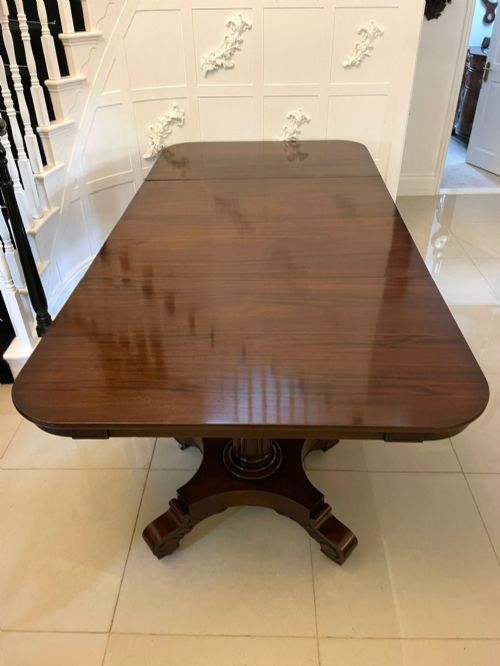
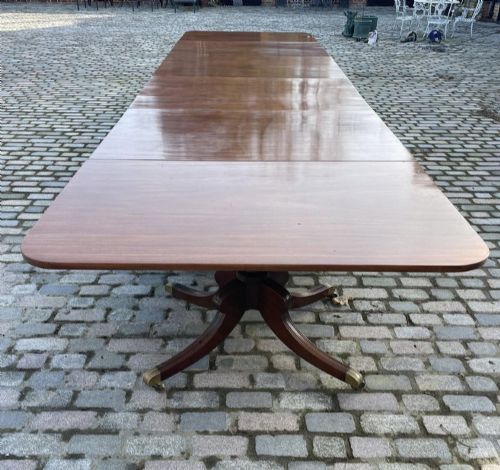
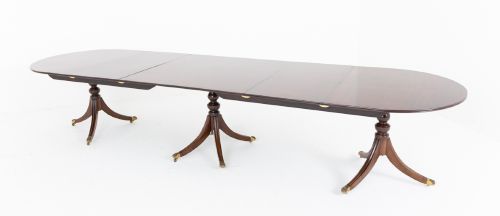
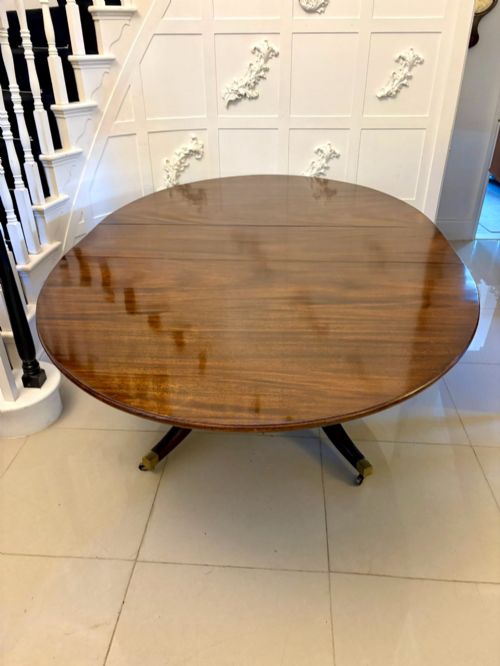

Dark Mahogany Banquet Table
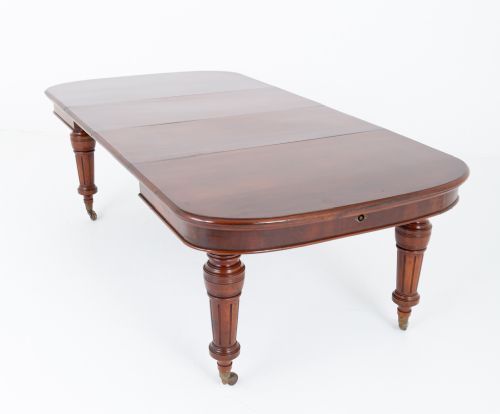
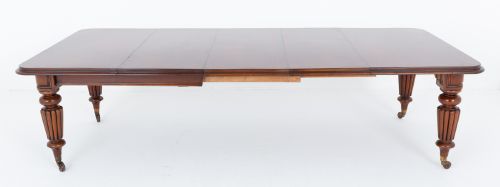
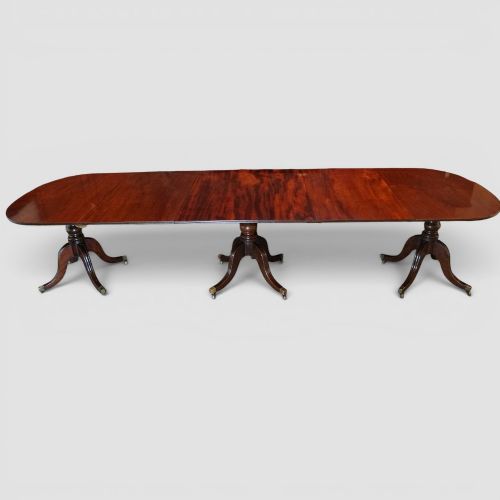
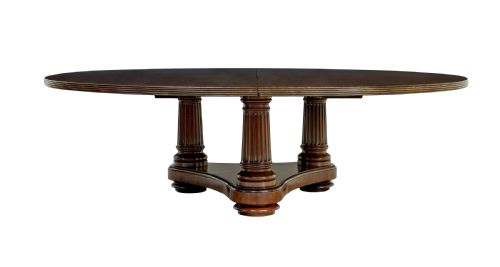
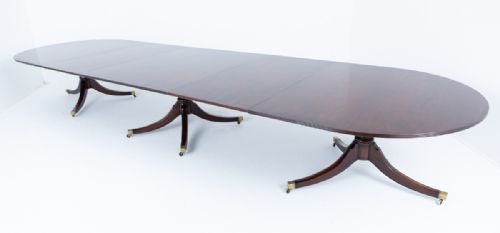
A dark mahogany banquet table anchors a room with deep timber tones and expansive proportions built for gathering large companies.

Dark Mahogany Banquet Table
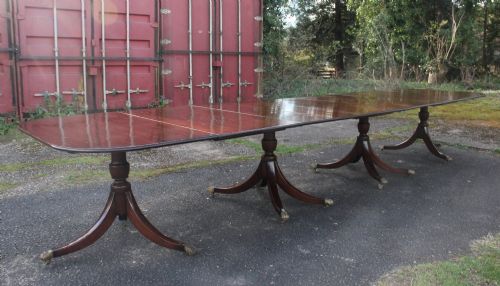
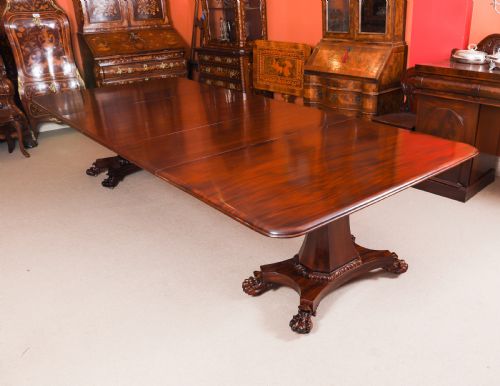
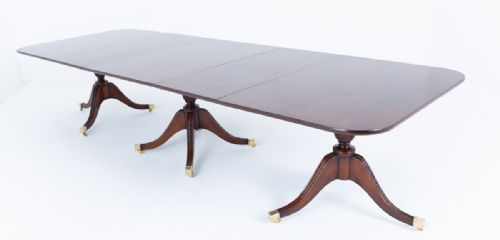
A dark mahogany banquet table brings together substantial dining furniture designed for large gatherings, spanning George III, Regency, William IV, and Victorian periods. You will frequently encounter multi-pedestal extending formats here, often accompanied by multiple original leaves to accommodate substantial seating capacities.
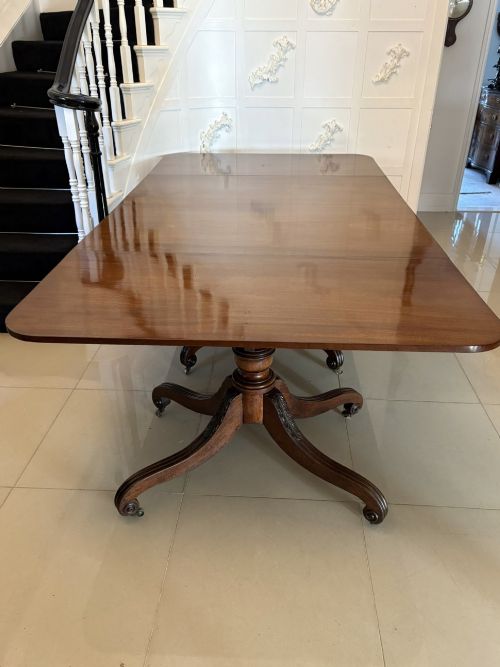
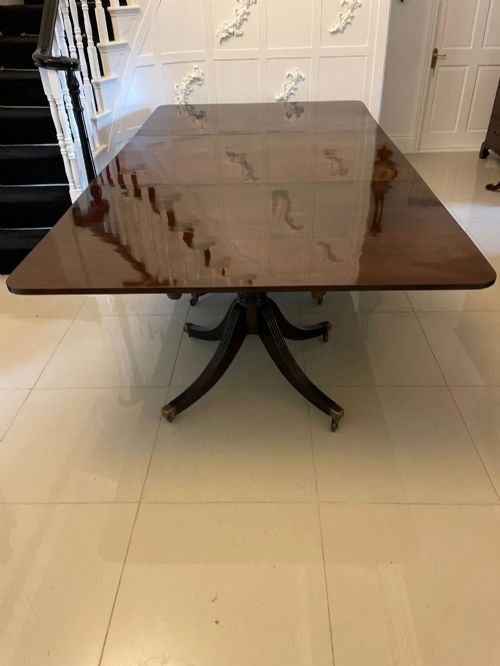
The pieces on this page range from twin-pedestal examples seating ten to massive four-pillar structures capable of hosting over twenty guests. These large dining tables utilise deep timber colours, frequently described as figured mahogany or Cuban mahogany, supported by robust pillar bases or multiple legs.
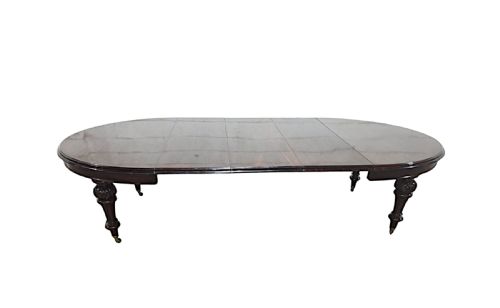
Makers such as Gillows appear alongside pieces attributed to Irish workshops or Regency Revival makers. The primary formats focus on extending mechanisms, D-ends, and wind-out systems that allow the timber surface to expand gracefully for feasts.
How they were made
Makers constructed these large dining tables primarily from solid mahogany and figured mahogany veneers, selecting timber for its rich grain patterns and deep colour. Brass components, including castors and connecting clips, frequently integrate into the heavy pedestal bases to aid movement and leaf alignment.
The structural engineering relies on multiple pedestals or robust leg frames, often paired with mechanical wind-out systems or drop-in leaves. Cabinetmakers balanced the immense weight of the timber top with stable pillar configurations and substantial plinths.
Dark Mahogany Banquet Table Retail Price Guide 2026
Typical asking prices for dark mahogany banquet table among the pieces listed under this phrase on Sellingantiques today, from the lower quarter to the upper quarter. They describe what is for sale here now, not the wider market.
The listings on this site feature mahogany, rosewood, and brass materials across George III, Regency, and Victorian periods.
What varies in quality
The distinction between standard examples and superior pieces rests in the selection of figured mahogany and the precision of the extending mechanism. Tables attributed to notable workshops like Gillows demonstrate finer cabinetmaking, superior timber matching across extra leaves, and more refined carving on the pedestals.
Proportion and structural integrity also separate the output of different periods, with genuine period pieces from the Georgian and Regency eras showing meticulous joinery compared to later revivals. The retention of original leaves matching the grain of the main table elevates the integrity of the piece.
Gillows·William and Gibton
The Dark Mahogany Banquet Table Glossary
- Pedestal
- A central column support resting on splayed legs, often fitted with brass castors to carry the weight of multi-pillar dining tables.
- Wind-out table
- An extending dining table operated by a detachable handle and internal screw mechanism that pulls the top apart to insert leaves.
- Figured mahogany
- Timber sawn to highlight complex, decorative grain patterns such as flame or fiddleback, prized for high-status furniture.
- D-end
- A table section with one curved semicircular end, frequently used in pairs or combined with central leaves to form a long banquet table.
- Extra leaves
- Additional boards stored separately and inserted into the table frame to increase surface length for larger dinner parties.
Dark Mahogany Banquet Table: Frequently Asked Questions
How do I operate the extending mechanism?
Most period examples utilise a winding handle inserted into the side skirt to operate an internal wooden or metal screw mechanism. Turning the handle separates the table halves smoothly so you can drop additional leaves into the centre.
Once the leaves are positioned, push the sections back together and secure them with brass table clips underneath to ensure a stable, level surface.
How many people can these tables seat?
Seating capacity ranges widely depending on the number of pedestals and extra leaves included with the specific table. Medium twin-pedestal versions typically accommodate ten to twelve guests comfortably.
Larger triple and quadruple pedestal formats extend to seat anywhere from sixteen to over twenty-eight people for formal banquets.
How do I care for polished mahogany surfaces?
Maintain the finish by dusting regularly with a soft, dry cloth and applying a quality beeswax periodically to nourish the timber. Avoid placing hot dishes or wet glasses directly onto the polished wood to prevent marking the surface.
Keep the table away from direct sunlight and strong heat sources like radiators to prevent the mahogany timber from drying out or splitting.
How do I distinguish Regency from Victorian tables?
Regency tables generally display cleaner classical lines, crisper brass inlay, and finer reeded pillar supports dating from the early nineteenth century. Victorian versions tend to be heavier in proportion, featuring bolder carved details, darker Cuban mahogany, and later mechanical winding systems.
Examining the construction methods underneath, the type of screws used, and the secondary timbers will also help indicate the correct manufacturing period.