

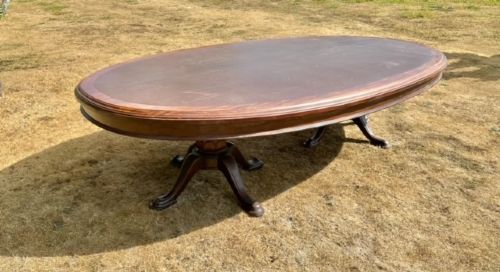
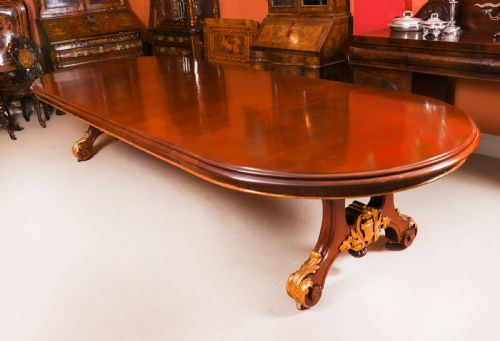
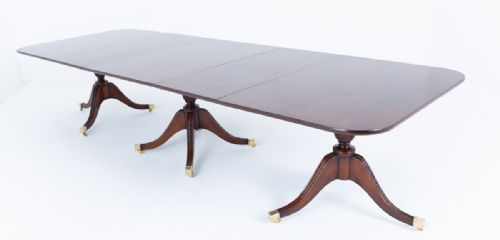
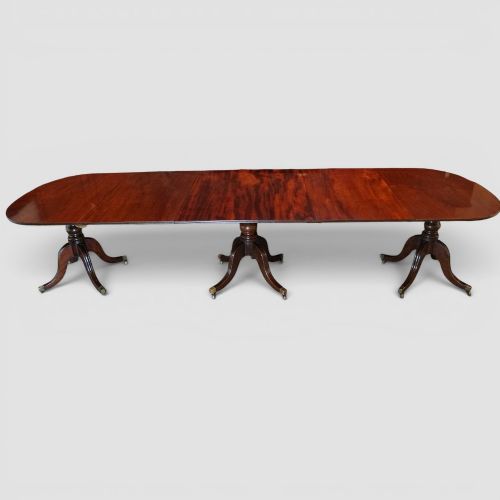


Large Boardroom Table
A large boardroom table anchors a serious interior, offering immense scale and solid timber presence.

Large Boardroom Table
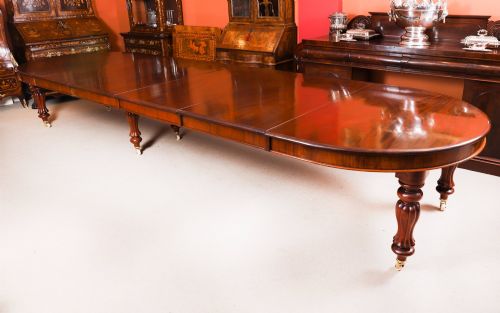
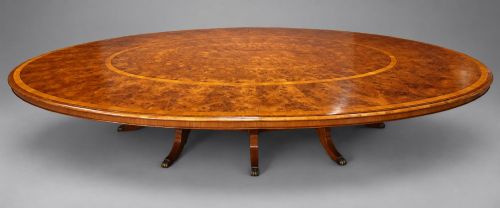
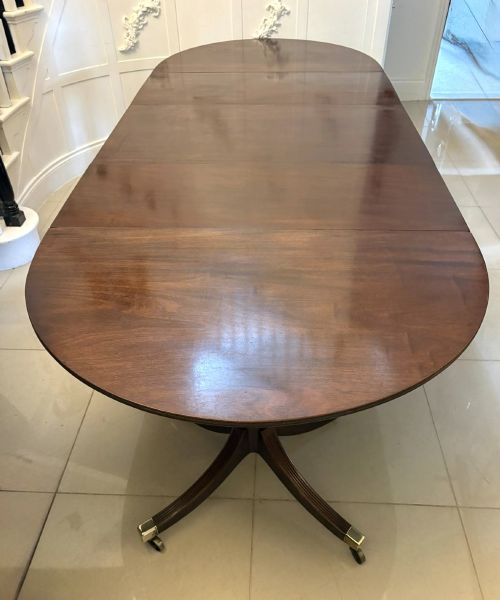
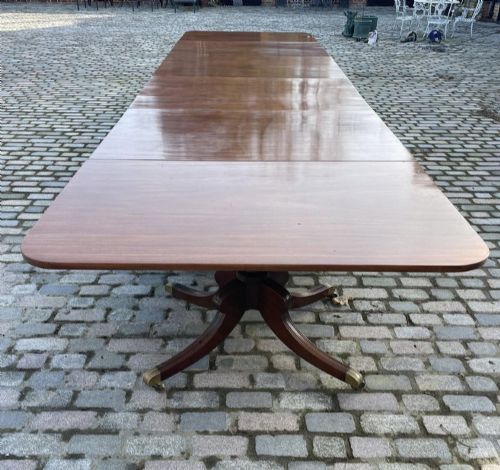
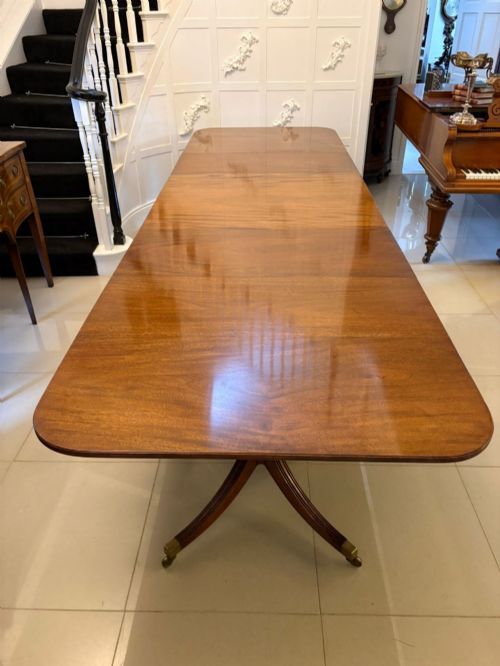
A large boardroom table provides monumental scale for meetings and communal dining, typically appearing as substantial extending dining tables or heavy library tables. These substantial pieces easily accommodate large numbers of people, ranging from ten guests up to twenty-eight diners.
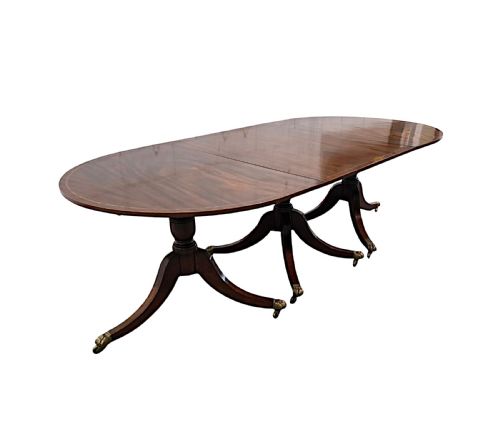
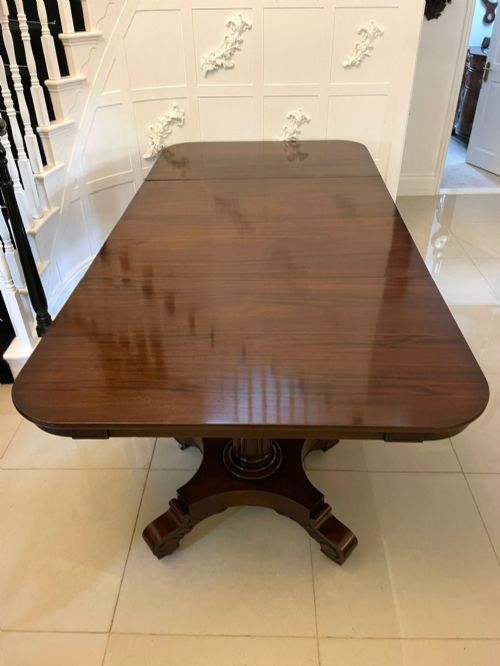
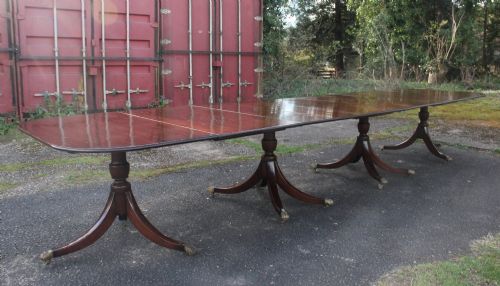
The versions met most frequently on this page stem from the Georgian, Victorian, and Edwardian eras, constructed primarily to serve grand municipal, corporate, or domestic functions. Pedestal configurations dominate the landscape, allowing maximum legroom around the perimeter of the timber top.
Makers often built these tables with modular leaves, enabling the surface to contract or expand according to immediate needs. This adaptability explains why many examples retain their mechanical winding mechanisms and extra supporting pillars.
How they were made
Carpenters constructed these large boardroom tables using dense hardwoods such as mahogany, walnut, and maple, frequently complemented by burr walnut veneers. Timber selection focused heavily on grain figure and structural stability across vast expanses.
Makers integrated brass castors, claw feet, and heavy turned pillars to support the considerable weight of the extending tops. Joinery methods relied on robust pegging, rule joints, and solid mahogany bearer rails beneath the surface.
Large Boardroom Table Retail Price Guide 2026
Typical asking prices for large boardroom table among the pieces listed under this phrase on Sellingantiques today, from the lower quarter to the upper quarter. They describe what is for sale here now, not the wider market.
The listings show mahogany as the dominant timber used across these large tables, alongside walnut, maple, and brass fittings.
What varies in quality
The division between standard workshop production and superior cabinet-making rests upon the continuity of the timber grain across added leaves and the weight of the underlying pedestal structure. Finer pieces maintain uniform colour and precise column turning.
Mechanisms also dictate tier, where smooth-running brass winding actions and stable pillar mounts separate master construction from utilitarian assembly. The thickness of the solid timber top and the precision of the brass toe fittings further distinguish high-grade examples.
Norwich Union
The Large Boardroom Table Glossary
- Pedestal
- A central column support resting on splayed legs, usually fitted with brass castors to allow movement. Multiple pedestals are necessary to support tables of exceptional length.
- Extending leaf
- A removable section of timber inserted into the centre of the table to increase its seating capacity. These panels are stored separately when the table is shortened.
- Library table
- A heavy, wide table traditionally used in institutional or domestic studies. Many large examples double functionally as boardroom tables due to their generous proportions.
- Refectory table
- A long, narrow communal table originating in monastic dining halls. Gothic style examples utilise this robust form with heavy structural timber stretchers.
Large Boardroom Table: Frequently Asked Questions
How many people do they seat?
These large tables commonly seat anywhere from ten up to twenty-eight people depending on the number of inserted leaves. Lengths often exceed six metres on the largest examples.
Arranging chairs around pedestal versions remains straightforward because the vertical columns sit away from the corners, maximising leg room for every guest.
Are leaves original to the table?
Many extending tables retain their matching set of extra leaves, cut from the same timber plank during initial construction. This ensures the grain pattern flows continuously across the entire surface.
Slight variations in fading can sometimes occur if extra leaves spent decades stored away in darkness while the main table sat in sunlight.
How do you date a pedestal table?
Cabinet makers altered pillar profiles, leg shapes, and timber choices across successive periods. Georgian and Regency pieces favour sabre legs with brass claw feet, whereas Victorian versions often display heavier carved scrolled bases.
Internal runners, screw mechanisms, and secondary woods underneath the top offer further physical evidence for determining the exact manufacturing decade.
Can these tables be dismantled?
Large boardroom tables separate into manageable components for transport, usually dividing into independent pedestals and a multi-part top. The heavy timber leaves lift away from bearer rails once any wooden or brass clips are released.
Professional installation is strongly advised due to the dense weight of the mahogany or walnut timbers involved in these oversized formats.