

Traditional Extendable Dining Table
A traditional extendable dining table offers practical adaptability for hosting dinners through clever mechanisms hidden within classic timber frames.
Traditional Extendable Dining Table
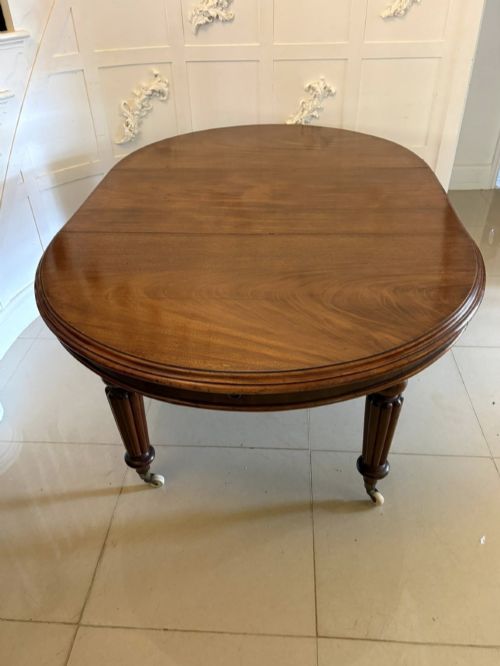
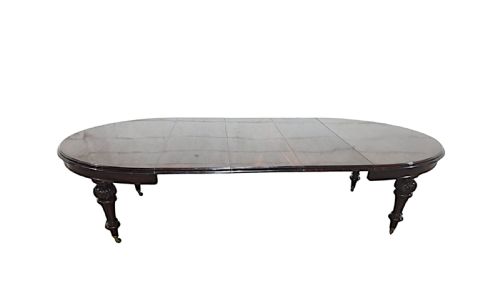
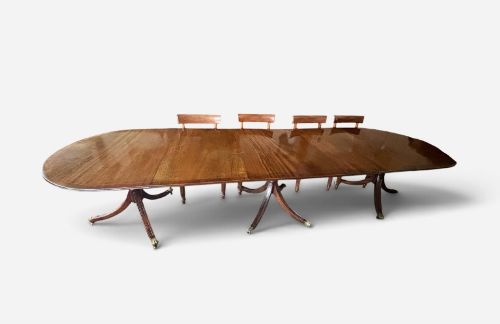
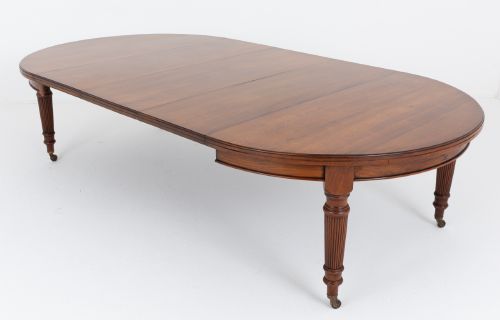
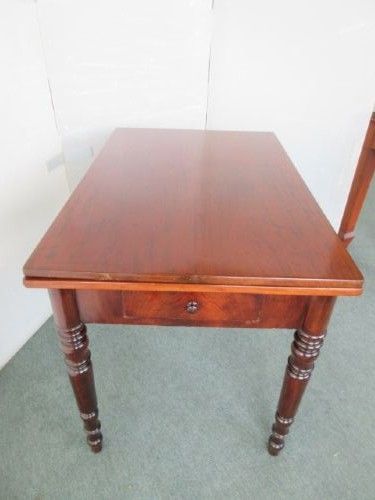
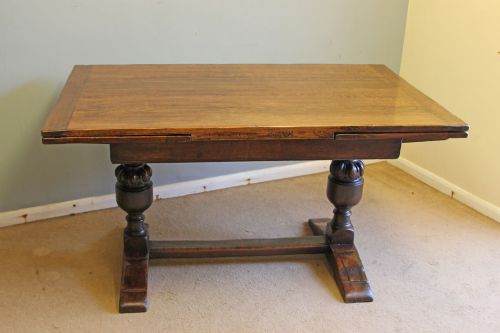
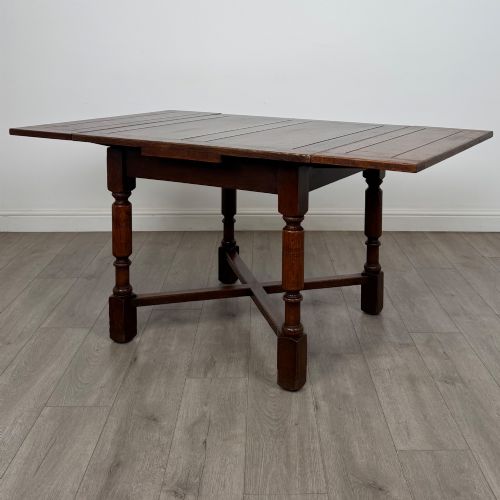
A traditional extendable dining table is a functional centrepiece designed to accommodate gatherings of varying sizes through internal leaves, draw-leaf systems, or drop-leaf configurations. Buyers seeking a traditional extendable dining table will find numerous examples rooted in the Victorian, Edwardian, and Regency periods alongside revival styles.
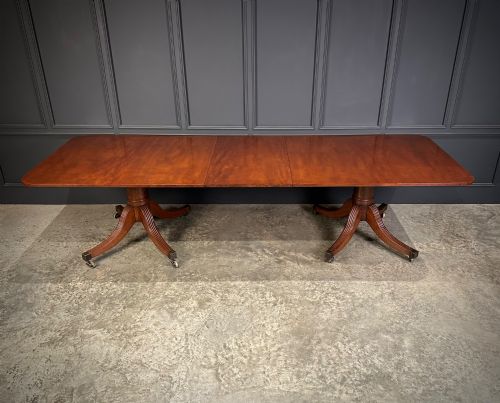
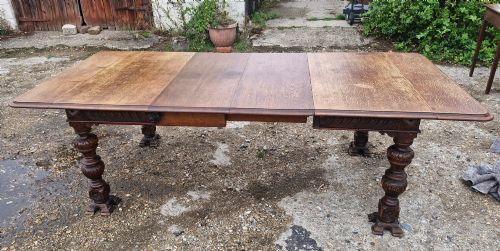
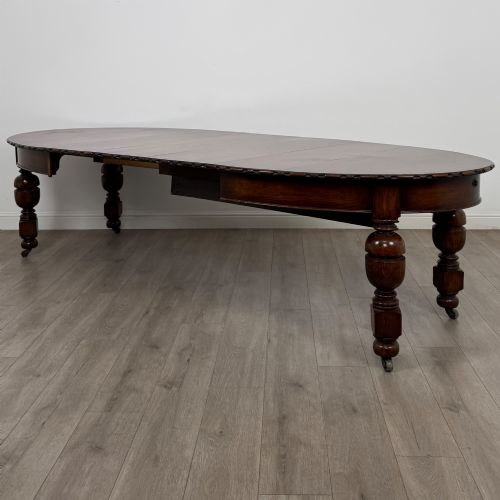
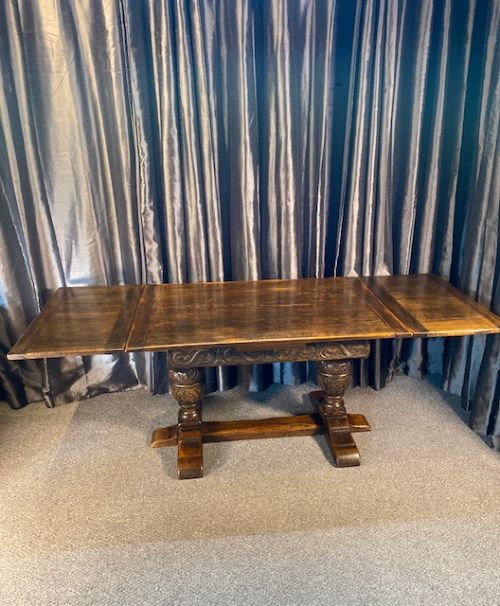
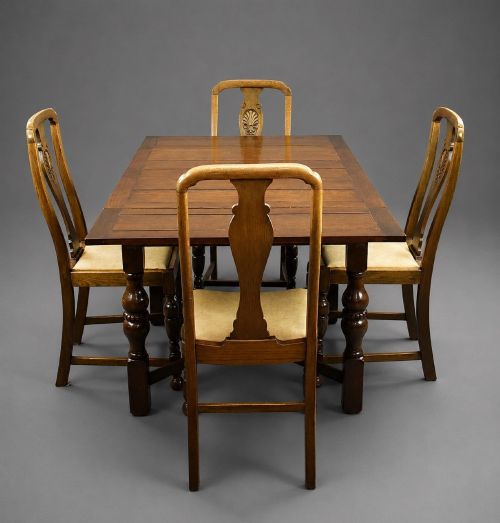
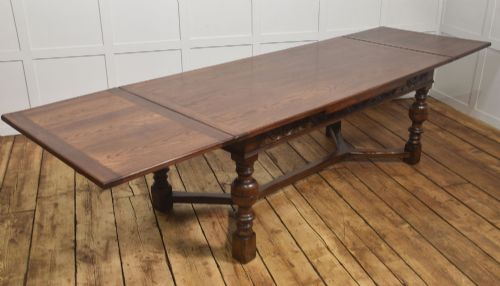
The selection on this page relies heavily on nineteenth-century mahogany pieces equipped with wind-out mechanisms, as well as early twentieth-century oak draw-leaf tables. Pillar and pedestal formats, twin or triple configurations, and D-end designs dominate the offerings, providing flexible seating capacities from intimate family meals up to large twenty-seater dining suites.
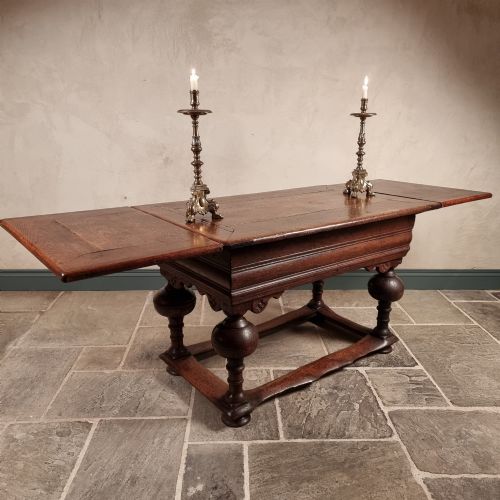
Earlier roots appear in seventeenth-century and eighteenth-century oak gateleg and farmhouse refectory forms, bringing substantial character and historic timber into domestic dining spaces. Whether utilising walnut, mahogany, or oak, these tables combine period craftsmanship with daily utility.
How they were made
Makers constructed these dining tables using dense hardwoods, predominantly rich mahogany, durable oak, and warm walnut, selected for both structural stability and visual grain. Solid timbers formed the primary frames, legs, and gatelegs, while finely figured veneers occasionally surfaced on tabletops and borders.
Mechanical ingenuity defined the extending formats, incorporating brass winding mechanisms, castor wheels, and smooth-sliding draw-leaf tracks that allowed a single person to expand the surface. Secondary elements included ceramic components within castor fittings and structural iron brackets to support multiple removable leaves.
Traditional Extendable Dining Table Retail Price Guide 2026
Typical asking prices for traditional extendable dining table among the pieces listed under this phrase on Sellingantiques today, from the lower quarter to the upper quarter. They describe what is for sale here now, not the wider market.
Listings feature woods including mahogany, oak, and walnut, alongside materials like brass, ceramic, and upholstery.
What varies in quality
Quality in these dining tables rests on the selection of timber, the integrity of the structural joinery, and the precision of the extending mechanism. Superior examples utilise dense, well-figured mahogany or quarter-sawn oak with harmonious grain matching across added leaves.
The engineering of the winding gear or draw-leaf tracks dictates daily usability, where smooth operation without sagging separates standard production from finer cabinetmaking. Well-proportioned pedestals, solid brass castors, and original turning add substantial merit to a piece.
Maple and Co·William and Gibton
The Traditional Extendable Dining Table Glossary
- Draw Leaf
- A table design featuring two hidden leaves stored beneath the main top that pull out from each end to extend the surface area. This mechanism allows quick expansion without removing loose leaves.
- Wind Out
- An extending table mechanism operated by inserting a crank handle into a socket that turns an internal screw thread to pull the table halves apart. It allows extra leaves to drop neatly into the centre gap.
- Gateleg
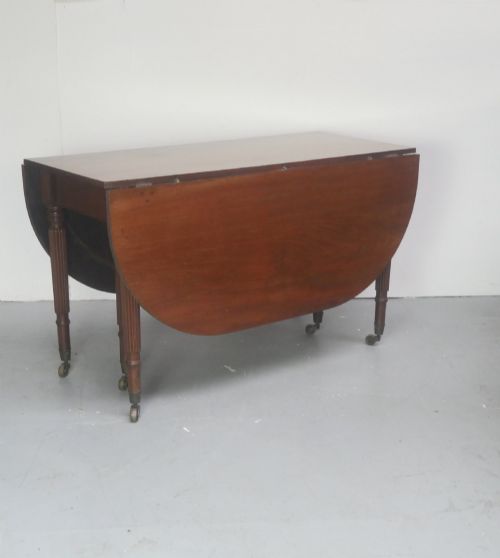
- A table style featuring hinged legs that swing outward like a gate to support drop-down flaps on either side. It provides a compact footprint when folded and a large oval or circular surface when opened.
- D-End
- A dining table form where the end sections curve in a semi-circle resembling the letter D, often separating from a central section or console. These ends frequently join with additional leaves to form a long banquet table.
- Pedestal
- A central upright support, often single, double, or triple, that branches into reeded or splayed legs terminating in castors. This configuration frees up legroom around the perimeter of the table.
Traditional Extendable Dining Table: Frequently Asked Questions
How do wind out tables work?
Wind out tables rely on an internal metal screw mechanism operated by a removable crank handle inserted into the side apron. Turning the handle drives the two halves of the table apart to create a central gap.
Once the gap is wide enough, additional timber leaves drop securely into place before the mechanism winds back to lock everything tight.
How do draw leaf tables operate?
Draw leaf tables use a clever under-top track system where two auxiliary leaves rest just beneath the main surface. Lifting the main top slightly allows the hidden leaves to slide out smoothly from each end.
As the leaves pull fully outward, the main surface drops down flat to lock the extended tabletop into a seamless, unified board.
Can I seat ten people comfortably?
Many Victorian and Edwardian extending tables easily accommodate ten or more guests, particularly those featuring multiple extra leaves or twin and triple pedestal configurations. Tables measuring past standard lengths often require pedestal supports to maintain structural stability along the centre.
Checking the length with all leaves inserted ensures adequate legroom and chair clearance for every diner.
How do I identify a Regency style table?
Regency style tables frequently display dark mahogany timbers, brass castors, reeded legs, and central pillar supports influenced by classical antiquity. Double and triple pedestal arrangements are especially common in this aesthetic.
They often incorporate drop-leaf or D-end designs built to accept multiple removable leaves for formal dining.