


Irish Victorian Furniture
Irish Victorian furniture brings substantial mahogany, burr walnut and architectural form into a room.

Irish Victorian furniture
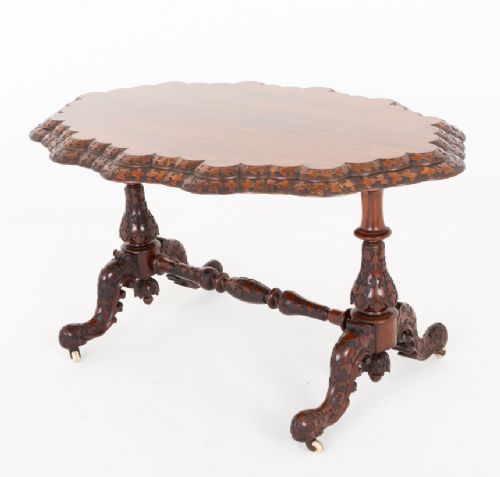
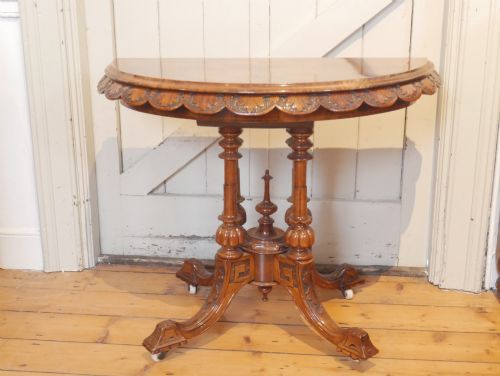
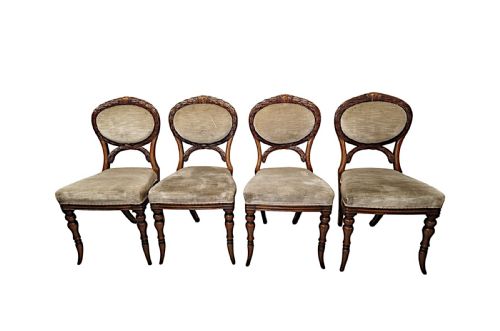
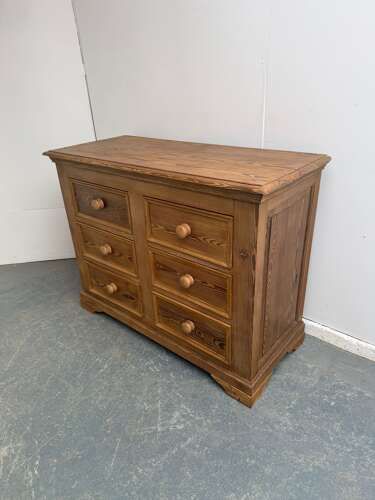
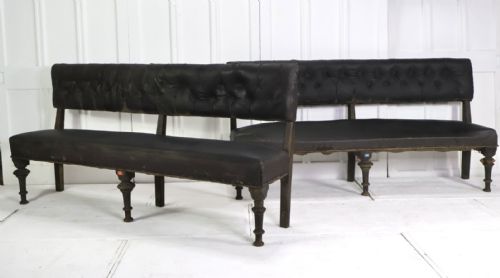
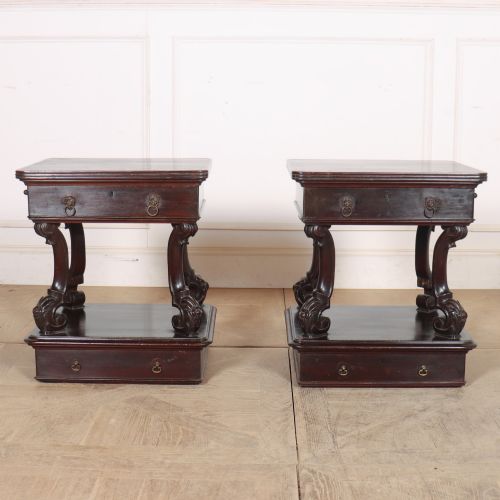
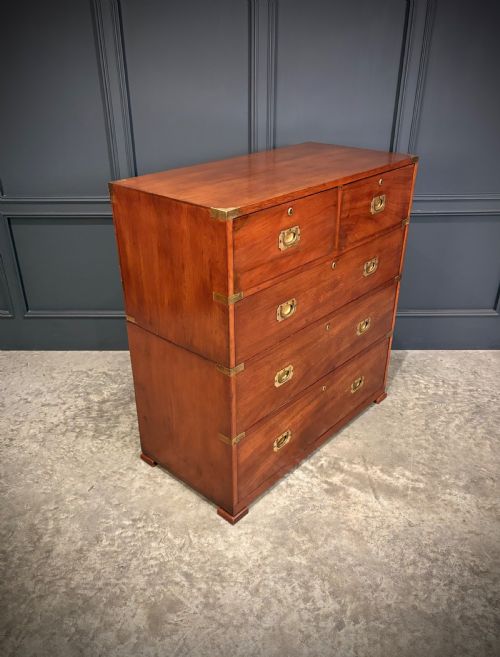
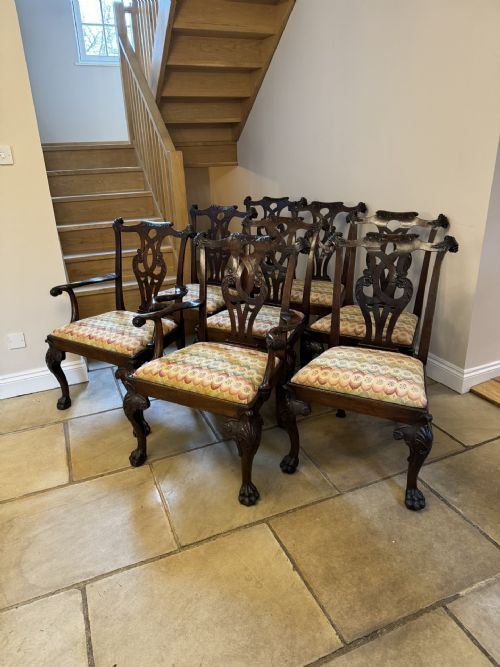
When buyers search for Irish Victorian furniture, they encounter substantial seating, storage and display pieces dating through the nineteenth century. These items include dining tables, dining chairs, bookcases, wardrobes, card tables, whatnots and fireplace screens.
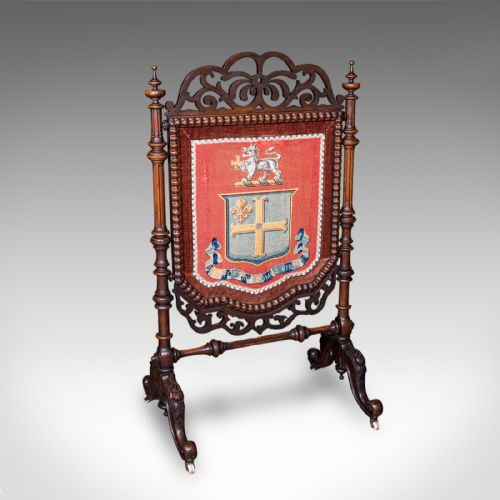
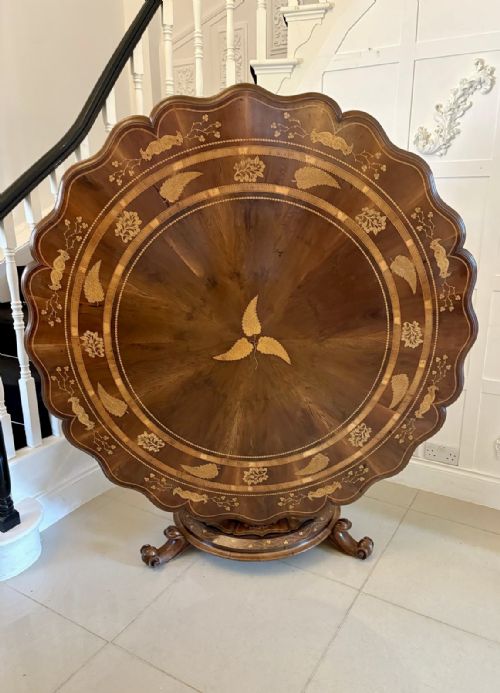
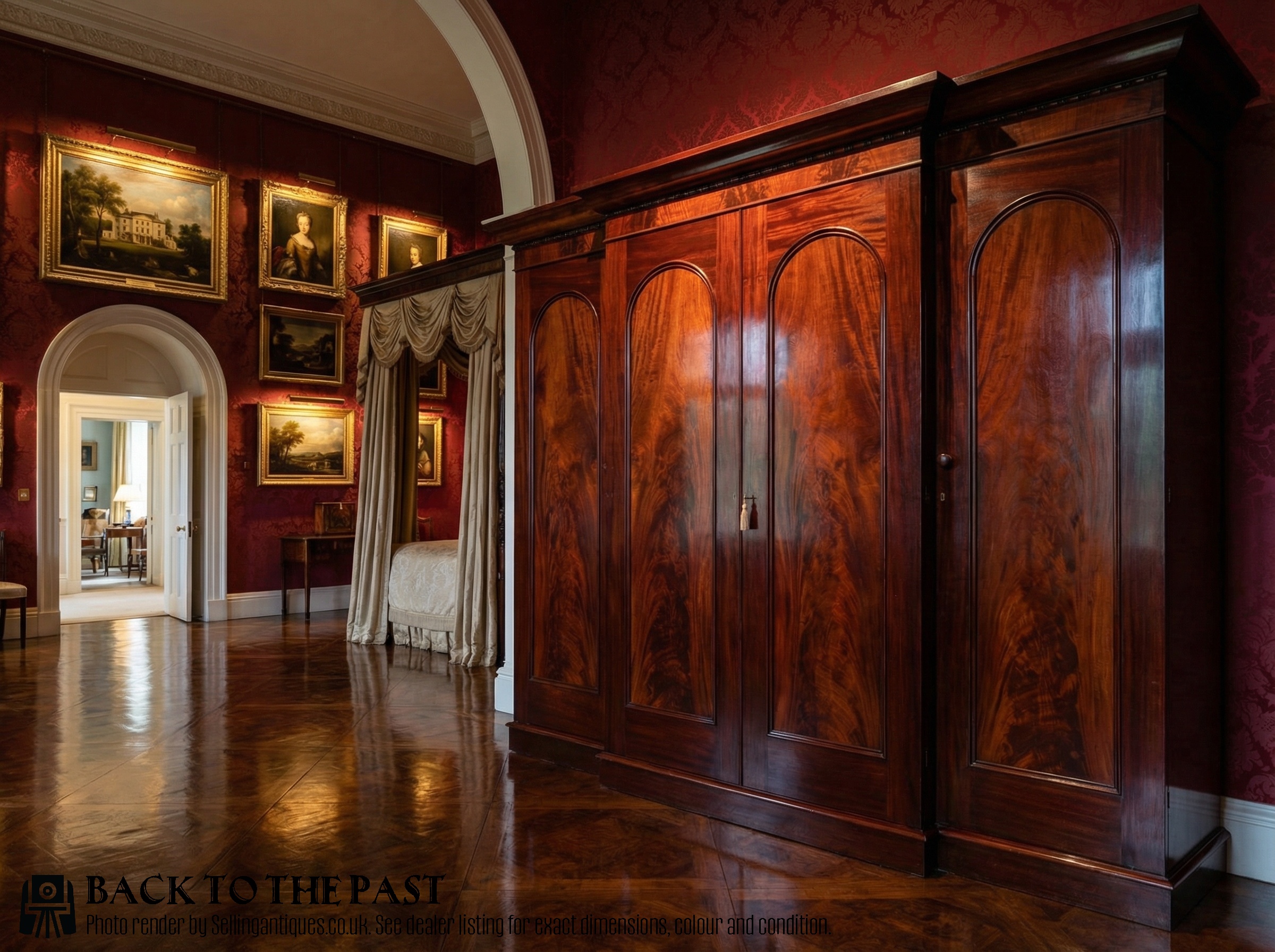
Mahogany and burr walnut dominate the selection, often worked into substantial forms such as breakfront wardrobes and extending dining tables. Smaller decorative items appear alongside these grander functional pieces, notably carved whatnots and needlepoint screens.
The objects present clear nineteenth-century construction methods, utilising dense timbers and robust joinery typical of Irish workshops of the period.
Materials and construction
Makers utilised solid mahogany and burr walnut for framing and primary surfaces, pairing dense timber with brass hardware and steel components where structural reinforcement was required. Textile elements such as wool, silk and fabric appear on upholstered chairs and embroidered panels.
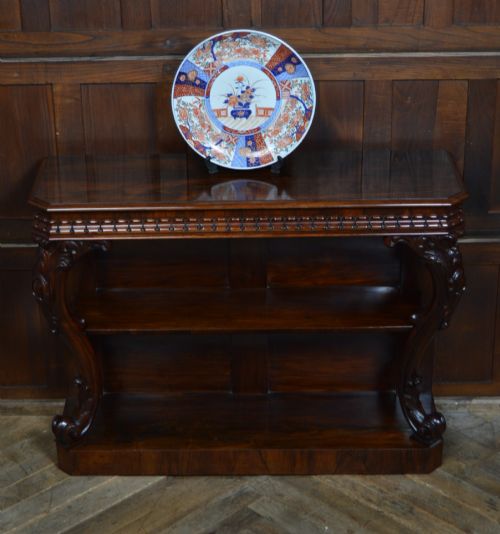
Carved ornament is integrated directly into the timber structure of larger items like whatnots and dining tables, reflecting nineteenth-century cabinet-making techniques. Timber selection prioritises dramatic grain patterns, particularly in burr walnut veneers applied to carcases.
Retail Price Guide 2026
Typical UK retail prices for irish victorian furniture, calculated from the Sellingantiques database of over a million retail prices indexed since 2003. This retail price guide relies exclusively on Sellingantiques data; no external sources or auction records are used, so the figures do not describe the wider market.
Needlepoint panels preserve hours of nineteenth-century hand stitching behind protective glass and wooden frames.
Judging quality
Distinctions in quality rest upon the selection of timber and the ambition of the carving rather than mere age. Pieces designated as exhibition quality display superior figure in the burr walnut and more complex, deeply undercut carving on structural elements.
Attribution to documented makers such as Robert Strahan elevates a piece beyond standard production, linking the item to identifiable Dublin workshops. The integration of functional hardware, such as brass mechanisms on extending tables and card tables, further distinguishes finer examples.
Robert Strahan
The Irish Victorian Furniture Glossary
- Breakfront
- A cabinet or wardrobe whose central section projects forward from the flanking wings. This architectural arrangement creates depth and visual weight in large storage pieces.
- Whatnot
- An open set of tiered shelves designed for displaying ornaments or books. These freestanding pieces rely on slender turned or carved supports.
- Burr walnut
- Timber taken from a walnut tree's growth excrescence, yielding intricate, swirling grain patterns. Cabinet-makers applied this wood as veneer to prominent surfaces.
- Needlepoint
- Stitched canvas embroidery executed in wool or silk. These panels frequently decorate nineteenth-century fireplace screens and upholstered furniture.
Frequently Asked Questions
What defines Irish Victorian furniture?
These pieces comprise nineteenth-century tables, seating, wardrobes and display items constructed from mahogany and burr walnut in Irish workshops.
They reflect the domestic requirements of the period through robust utility and distinctive timber selection.
How do I care for burr walnut?
Burr walnut surfaces require stable indoor humidity and protection from direct sunlight to prevent veneer splitting and fading.
Gentle cleaning with a dry cloth maintains the timber without stripping the historic finish.
Where were these pieces made?
Production centred in Irish workshops and cabinet-making establishments, with specific pieces linked to Dublin makers such as Robert Strahan.
Workshops utilised locally available hardwoods alongside imported exotic timbers.
How are card tables used?
Card tables feature folding tops designed to open for games or writing, revealing a baize or timber surface inside.
In a modern interior, they function as console tables against a wall when closed.