

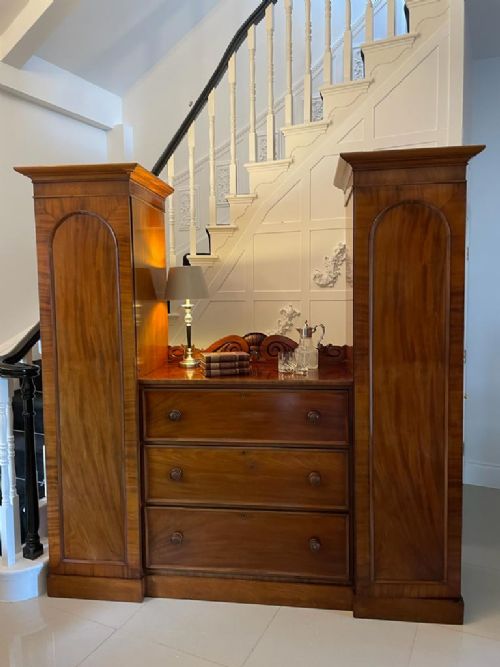
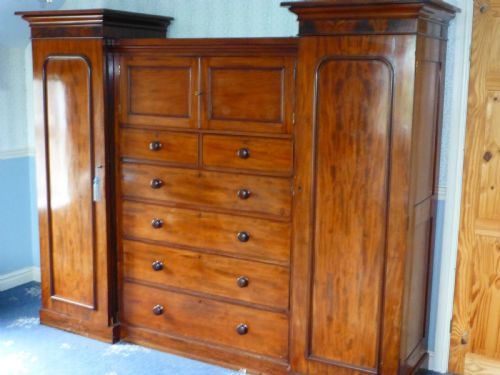


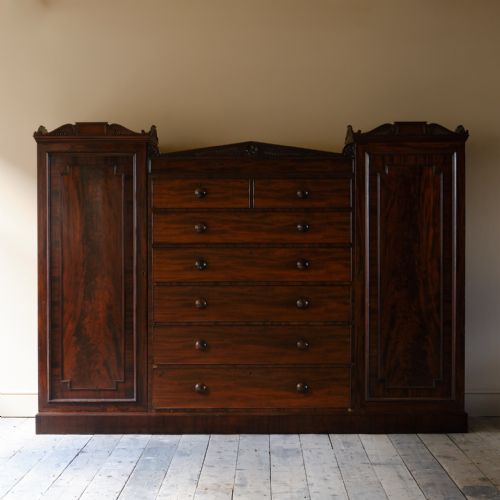


Mahogany Breakfront Wardrobe
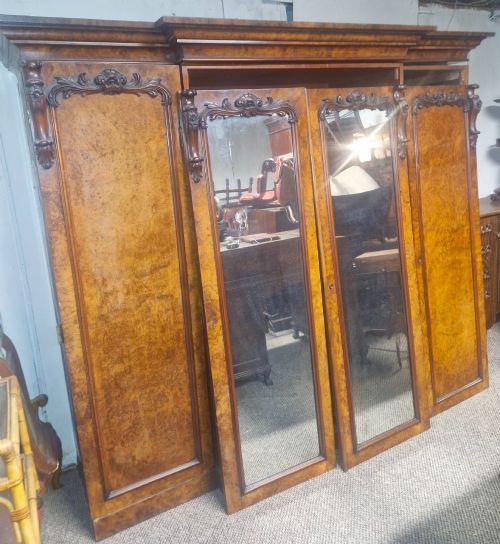
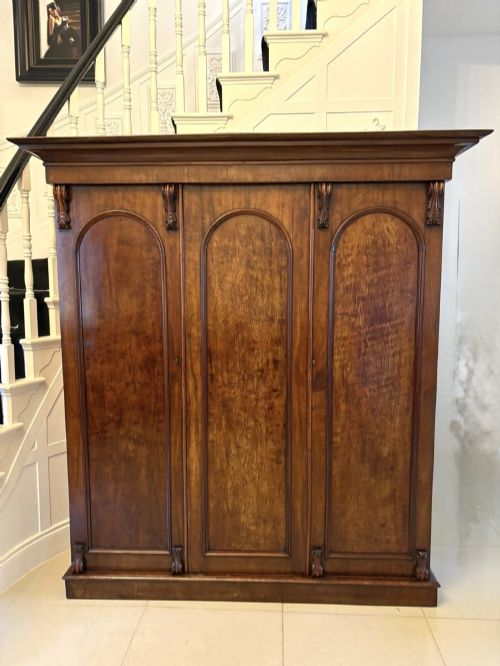
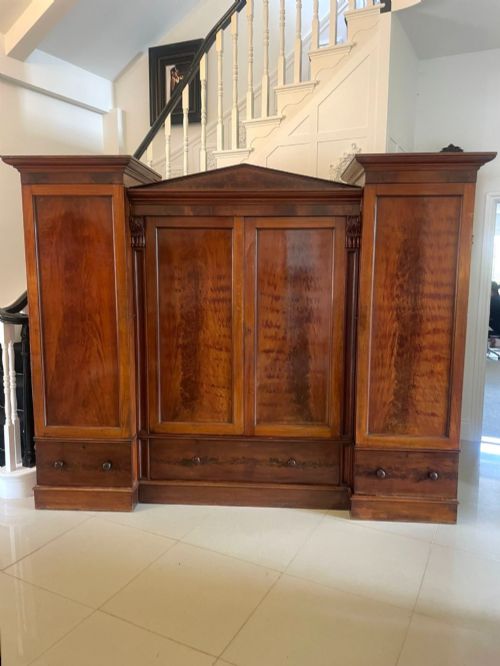
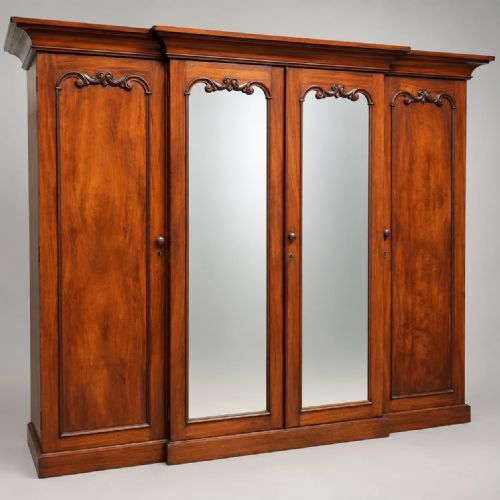
A mahogany breakfront wardrobe delivers serious architectural presence to a bedroom while offering immense hanging space and internal drawers.
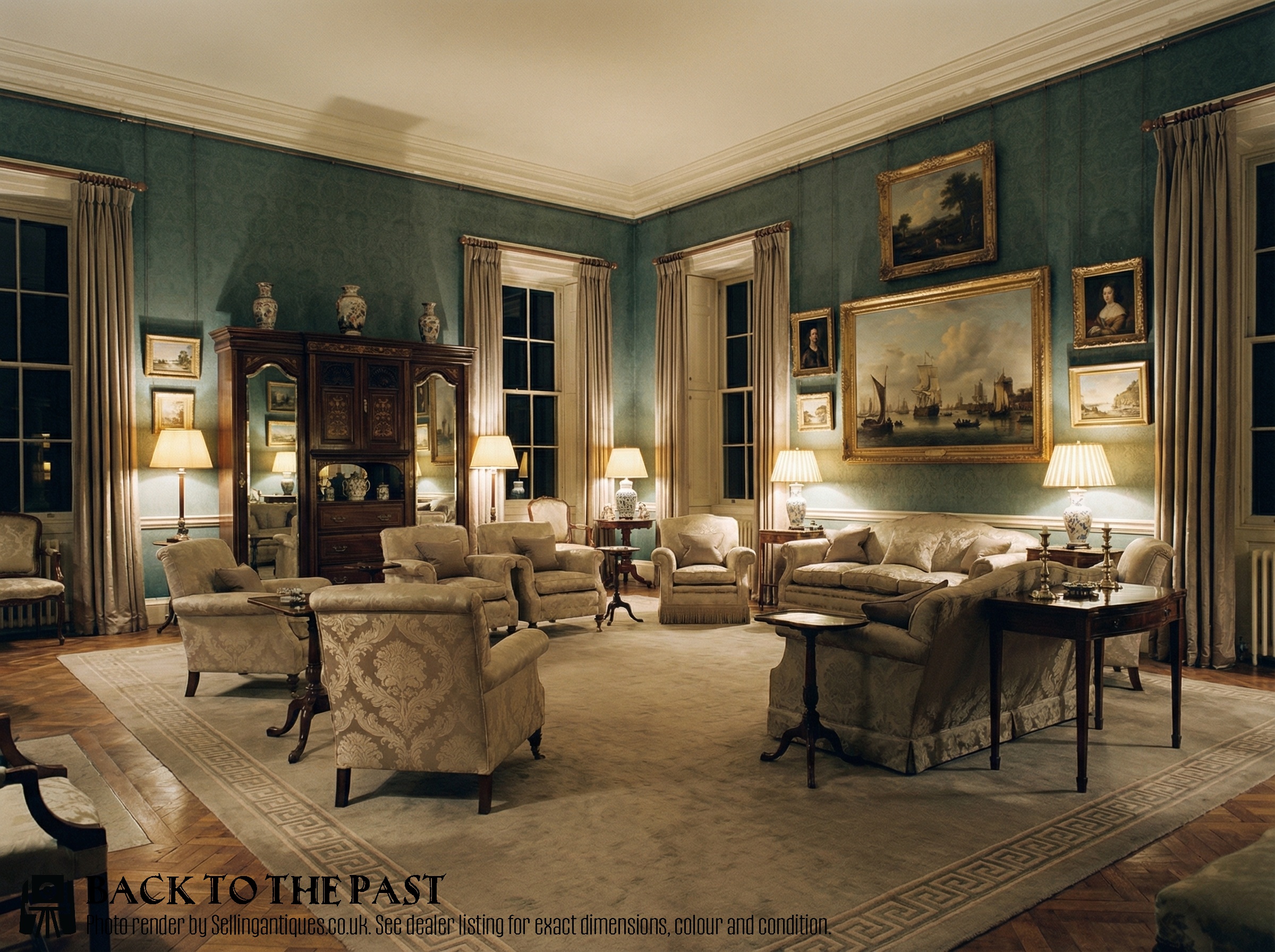
Mahogany Breakfront Wardrobe
A mahogany breakfront wardrobe is a large piece of bedroom furniture defined by its projecting central section, which stands forward from the flanking wings. When searching this phrase, a buyer encounters substantial multi-door pieces designed to dominate a substantial chamber.
The evidence shows examples spanning from the George III period through the Victorian and Edwardian eras, with Victorian and 19th-century interpretations appearing most frequently. These pieces often incorporate compactum layouts or linen press configurations alongside traditional hanging space.
Makers such as Gillows, Edwards & Roberts, Maples & Co, and Robert Strahan of Dublin produced notable versions, reflecting the enduring appeal of the form across different decades.
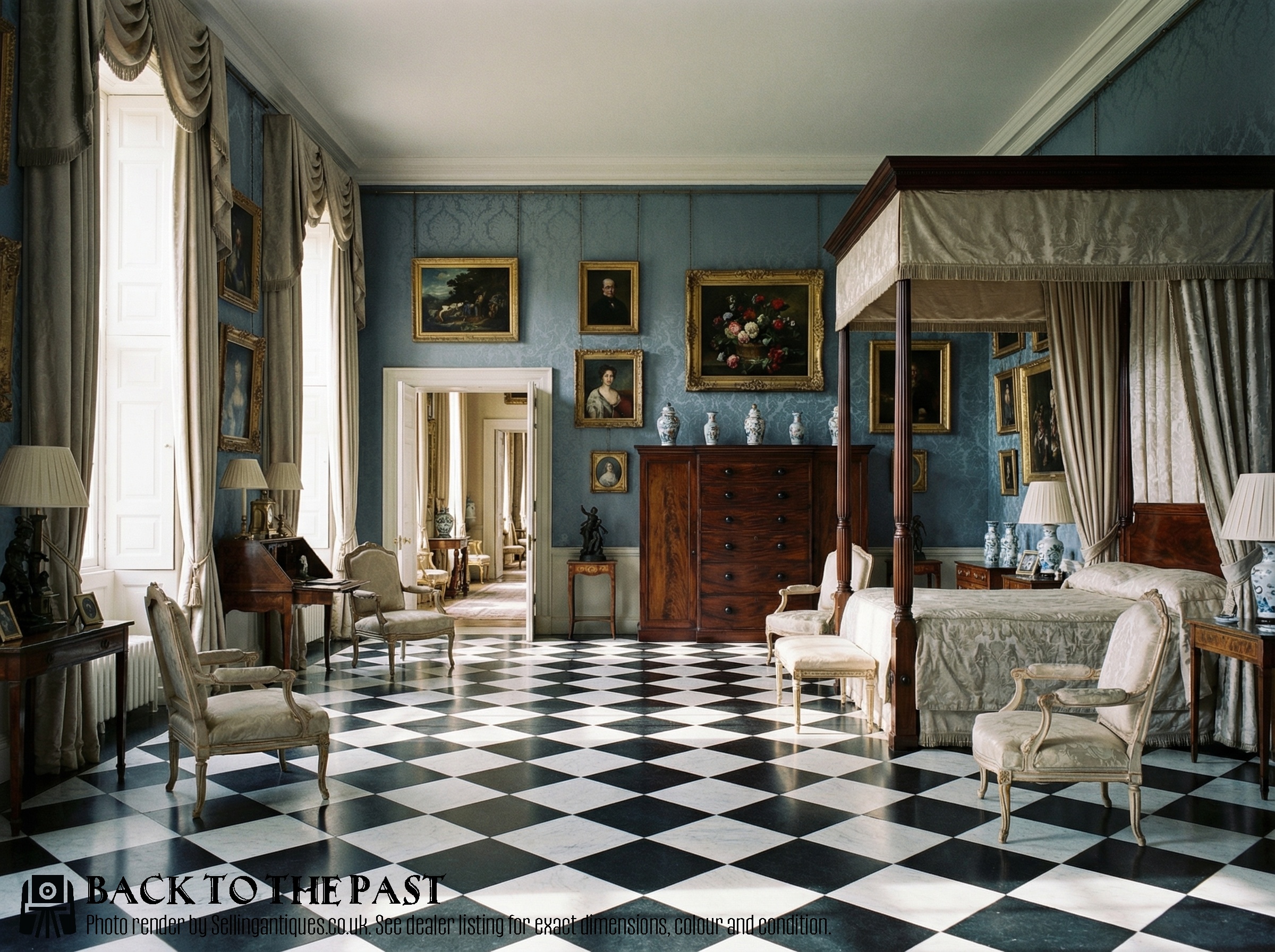
Distinctions in craftsmanship
The hierarchy of quality rests primarily on the selection of timber, with highly figured flame mahogany veneers and intricate marquetry commanding greater appreciation. Subtleties in architectural proportion and the integration of secondary woods reveal the competency of the workshop.
Internal configuration also dictates distinction, distinguishing simple hanging compartments from elaborate fitted compactums with specialised drawers, sliding linen trays, and secretaire sections.
Mahogany Breakfront Wardrobe Retail Price Guide 2026
Typical asking prices for mahogany breakfront wardrobe among the pieces listed under this phrase on Sellingantiques today, from the lower quarter to the upper quarter. They describe what is for sale here now, not the wider market.
Listings feature mahogany breakfront wardrobes spanning the George III, Victorian, William IV, and Edwardian periods, alongside Edwardian Neo-Classical and Victorian Gothic Revival styles.
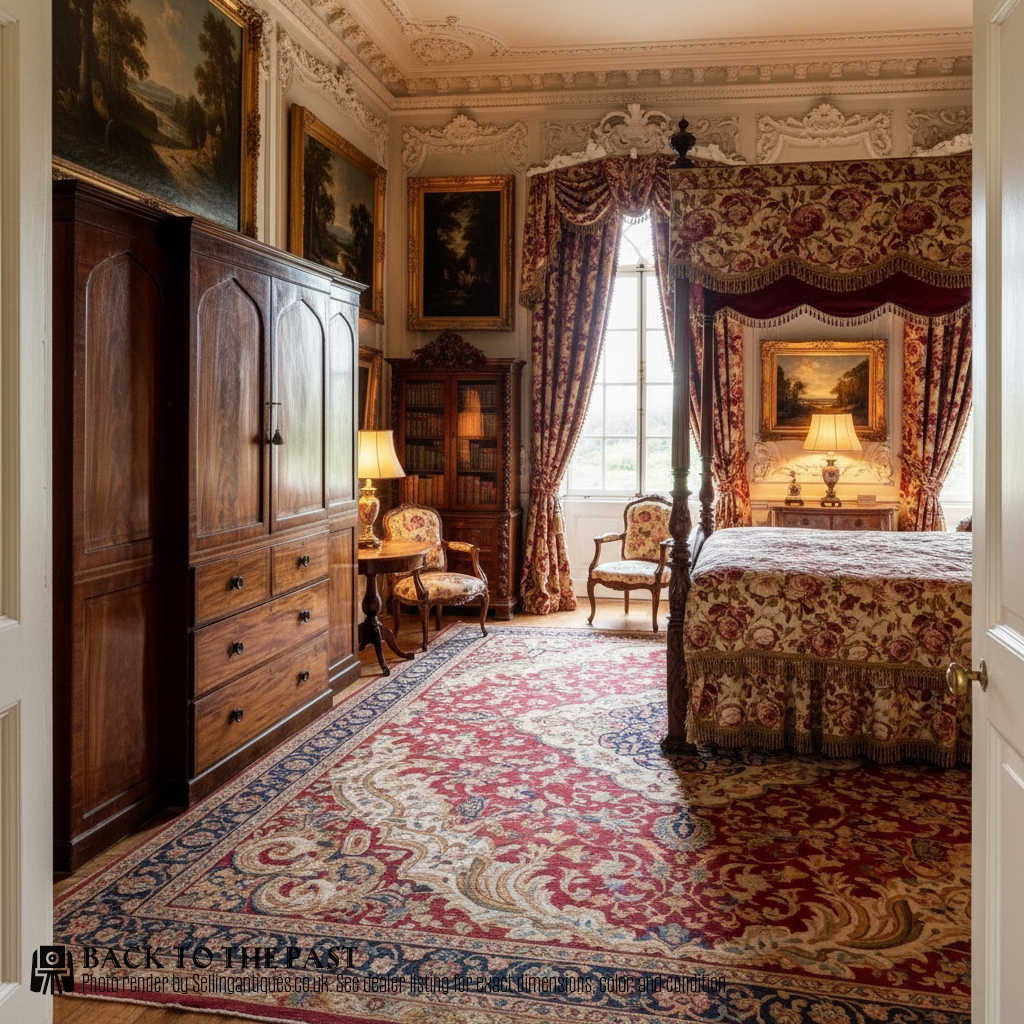
Gillows·Edwards & Roberts·Robert Strahan of Dublin·Maples & Co·Heal and son
The Mahogany Breakfront Wardrobe Glossary
- Breakfront
- A piece of furniture whose front facade projects forward in the centre section. This architectural device creates visual depth and breaks up the long plane of large wardrobes.
- Compactum
- A multi-functional wardrobe combining hanging space with internal drawers, shelves, and sometimes shoe racks or sliding trays. It offers comprehensive clothing storage within a single carcass.
- Flame mahogany
- A veneer cut from timber where the branches join the main trunk, producing a rippling, flame-like pattern. Cabinetmakers reserved this decorative grain for the most prominent door panels.
- Linen press
- A tall piece of furniture originally designed for storing folded textiles on internal sliding trays, often enclosed by upper doors above a chest base. Many large period examples incorporate this storage style into the wardrobe design.
- Marquetry
- The art of forming decorative patterns using thin veneers of different coloured woods and materials. Edwardian and Sheraton Revival pieces frequently employ this technique for floral or geometric motifs.
Mahogany Breakfront Wardrobe: Frequently Asked Questions
How do I assemble a breakfront wardrobe?
Many period breakfront wardrobes were constructed to dismantle into several distinct modules, including a central section, two side wings, a plinth, and a cornice.
Assembly typically involves aligning these carcases and securing them with internal bolts before placing the heavy cornice on top.
What is a compactum wardrobe?
A compactum is a specialised multi-door wardrobe that integrates comprehensive internal storage beyond simple hanging rails.
These interiors frequently combine linen slides, banks of drawers, and dedicated compartments within the same architectural frame.
How do I date a mahogany wardrobe?
Dating relies on observing stylistic markers, such as the straight lines and satinwood inlay of George III and Sheraton Revival pieces versus the heavy mouldings and Gothic revival details of the Victorian era.
Construction methods inside the drawers and the choice of secondary timbers also provide reliable chronological indicators.
Will a large wardrobe fit in a modern bedroom?
These pieces possess significant physical scale and height, originally designed for high-ceilinged country houses and grand Victorian chambers.
Measuring both the ceiling clearance and the overall depth is essential, as the projecting breakfront requires substantial floor space.