
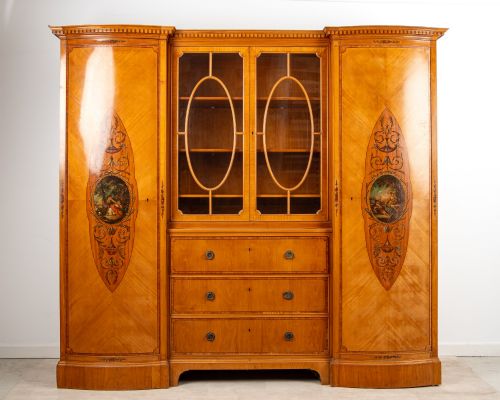


Sheraton Revival Wardrobe
These sheraton revival wardrobe pieces bring late nineteenth and early twentieth century elegance to a bedroom, offering substantial storage with classic neoclassical detailing.
Sheraton Revival Wardrobe
When a buyer searches for a sheraton revival wardrobe, they encounter large bedroom storage furniture spanning the late Victorian and Edwardian eras. These pieces typically take the form of double or triple wardrobes, breakfront designs, and compactums.
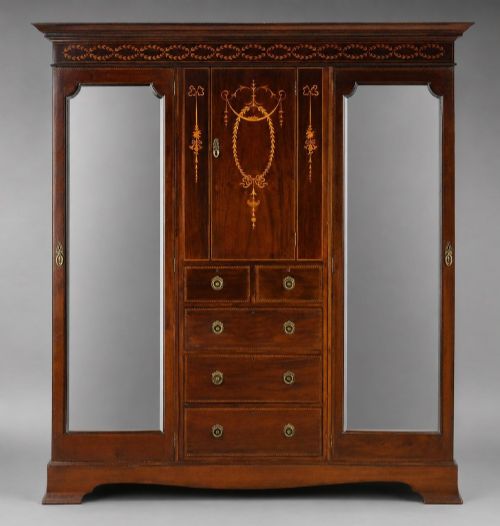
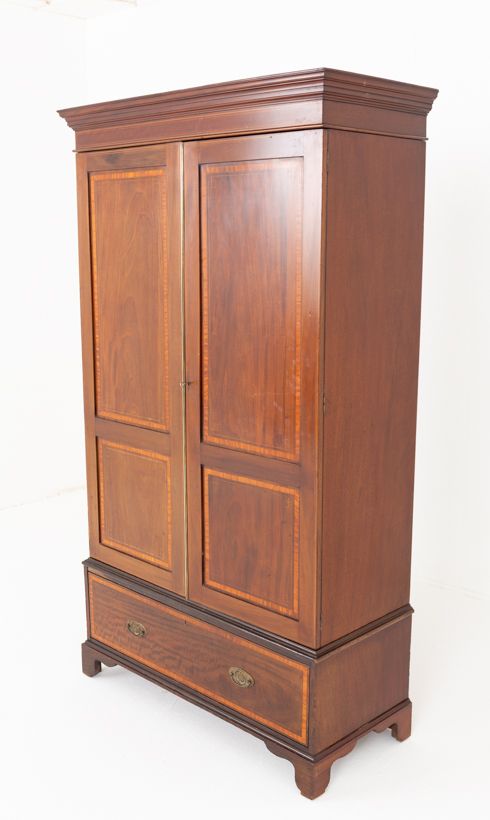
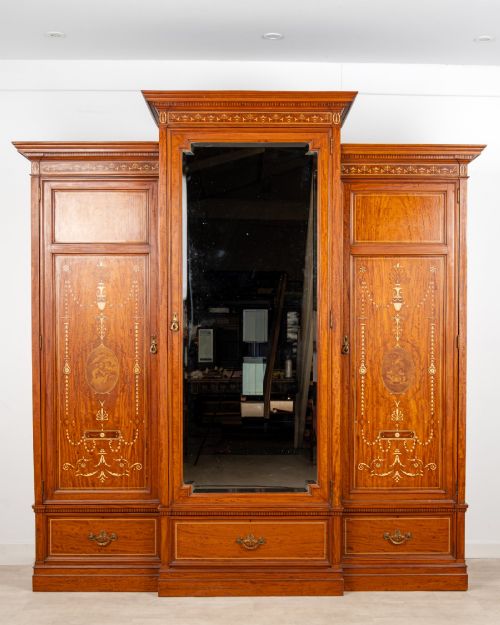
The most common form met on this page is the mahogany or satinwood wardrobe, often featuring inlaid decoration and mirrored doors. Large combination and triple pieces appear alongside standard two-door formats, reflecting the varied scale of period domestic interiors.
Materials and Construction
Makers constructed these wardrobes primarily using mahogany and satinwood timbers, frequently embellished with boxwood and rosewood stringing or marquetry. Brass hardware secures the doors and interior fittings, while bevelled glass panels feature in the mirrored door options.
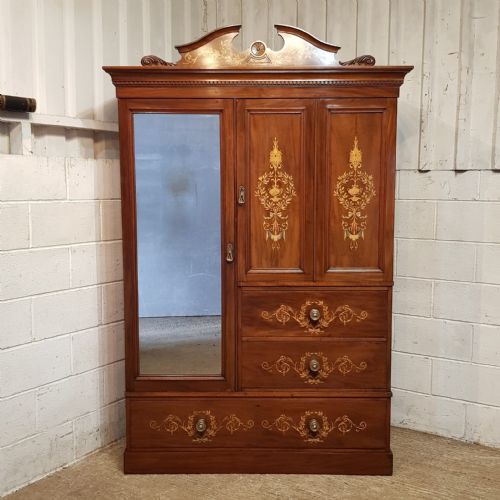
Inlaid decoration defines the decorative technique across these pieces, utilising contrasting wood veneers to create neoclassical motifs. Painted panels and hand-painted details also appear on select satinwood examples from the Edwardian period.
Sheraton Revival Wardrobe Retail Price Guide 2026
Typical asking prices for sheraton revival wardrobe among the pieces listed under this phrase on Sellingantiques today, from the lower quarter to the upper quarter. They describe what is for sale here now, not the wider market.
Several wardrobes arrive with enough internal compartments to lose a pair of socks for a decade.
Judging Quality and Execution
The sophistication of the marquetry and the precision of the boxwood inlay separate standard examples from finer commissions. Cabinetmaking quality shows in the depth of the timber selection and the complexity of breakfront or architectural carcase forms.
Scale and configuration also dictate the character of the piece, with large triple wardrobes and compactums offering elaborate internal fittings alongside expansive exterior facades. The integration of painted panels or substantial brass mounts elevates the overall execution.
Maples & Co·Gillows·Warings·Harrods
The Sheraton Revival Wardrobe Glossary
- Compactum
- A multi-section wardrobe combining hanging space with drawers, shelves, and sometimes a writing surface or small compartments. This fitted approach maximises storage within a single footprint.
- Breakfront
- A piece of furniture where the central section projects forward from the flanking wings. This architectural arrangement creates depth and shadow across the facade.
- Marquetry
- Decorative veneer work arranged in pictorial or geometric patterns using various coloured woods. Craftsmen assemble these veneers before applying them to the carcase.
- Stringing
- Thin lines of contrasting wood inlaid into the surface to create geometric borders and panels. Boxwood is frequently utilised for this linear detailing against darker mahogany.
Sheraton Revival Wardrobe: Frequently Asked Questions
How do I fit a large wardrobe?
These large wardrobes often require careful measurement of ceiling heights and stairway clearances before delivery to the bedroom. Many period examples feature modular or knock-down construction to facilitate transport.
Positioning the piece away from direct heat sources helps protect the polished mahogany or satinwood surfaces and delicate boxwood inlays from drying out.
What is a compactum wardrobe?
A compactum is a specialised multi-section wardrobe that includes internal drawers, sliding shelves, and hanging compartments within one unified cabinet. It served as a complete bedroom storage solution in late nineteenth and early twentieth century homes.
These configurations allow users to store folded garments alongside hanging attire without needing separate chests of drawers.
How do I distinguish Edwardian from Victorian?
Victorian examples tend to use deeper mahogany timbers and heavier proportions, reflecting the stylistic weight of the late nineteenth century. Edwardian pieces often favour brighter satinwood finishes and more delicate painted panels or lighter inlay work.
Both periods draw heavily on eighteenth-century neoclassical Sheraton motifs, making the overall timber choice and hardware style the primary indicators of age.
Are mirrors original on these?
Bevelled glass mirrors frequently appear on the central doors of double and triple wardrobes from this era. Original mirrors often show subtle signs of age in the silvering behind the glass.
Replacement glass does occur during restoration, though the bevel style and securing beads generally match the construction methods of the original cabinet.