


Satinwood Mirrored Wardrobe
A satinwood mirrored wardrobe brings a luminous warmth and a practical full-length reflection to a bedroom.
Satinwood Mirrored Wardrobe
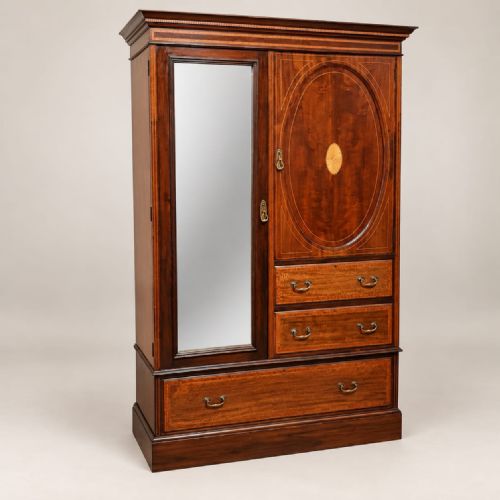
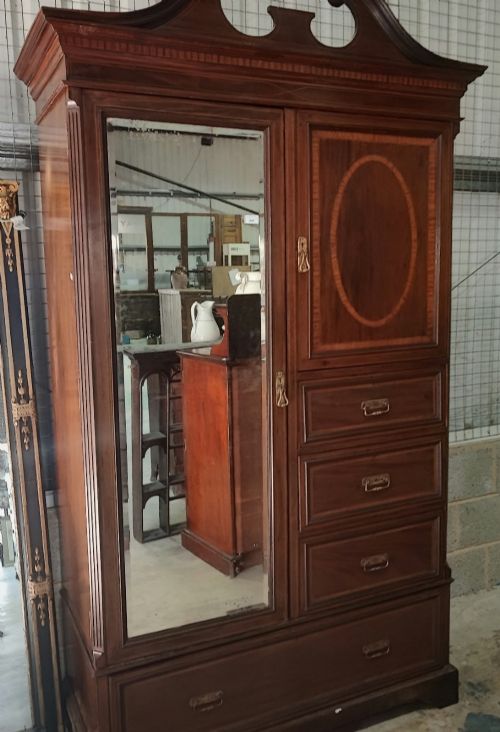
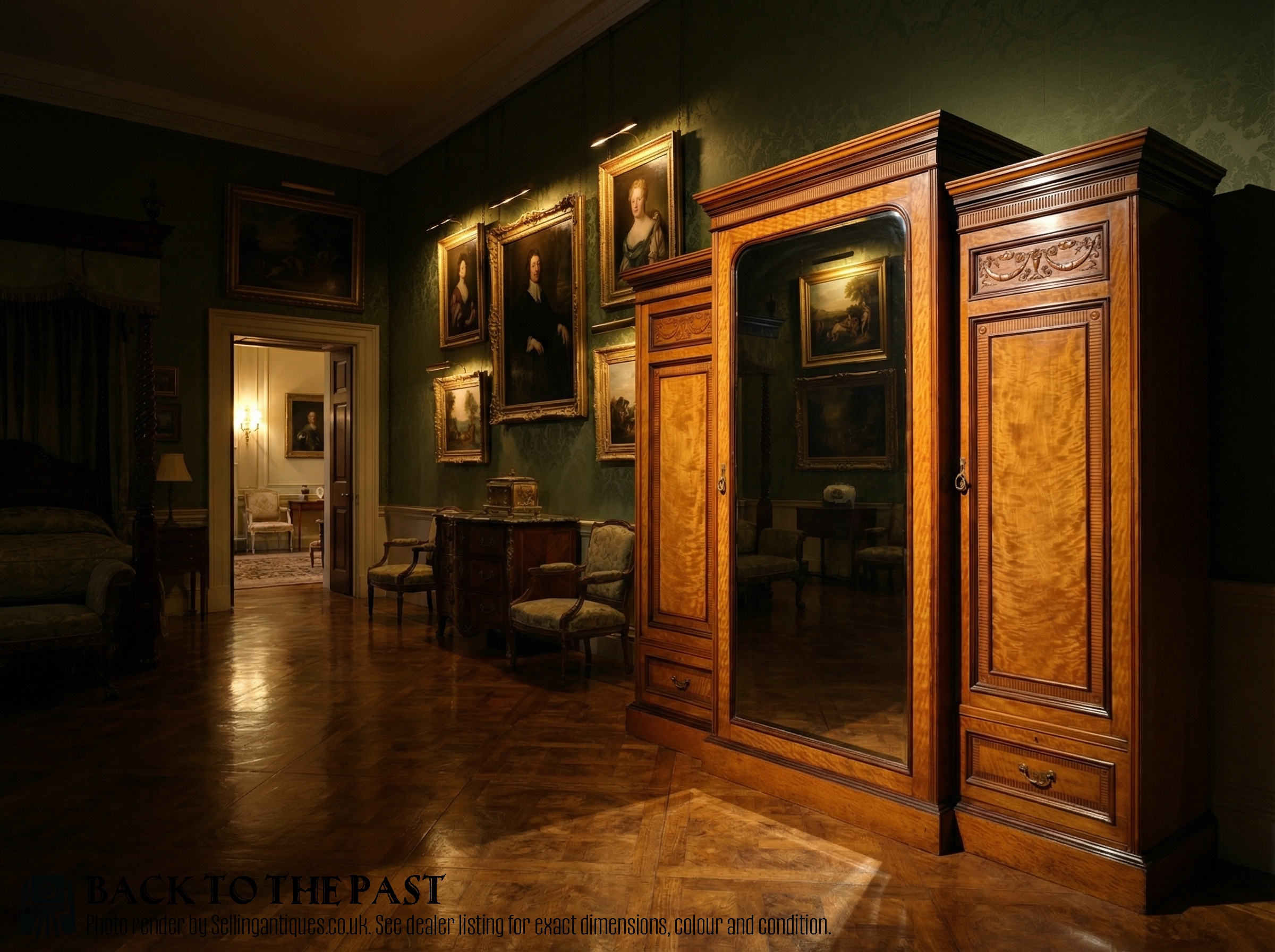
A satinwood mirrored wardrobe combines the pale, shimmering grain of satinwood with the undeniable utility of a full-length glass door. You are looking at large pieces of bedroom furniture designed to house hanging garments, often incorporating internal drawers or compartments.
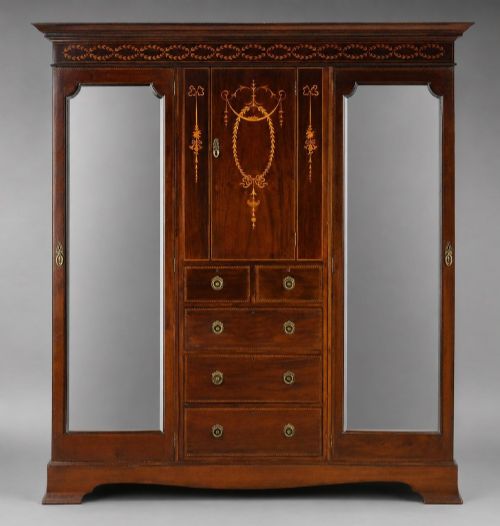
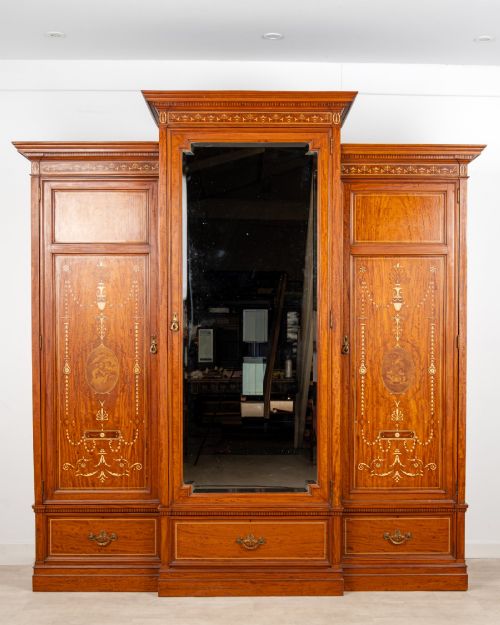
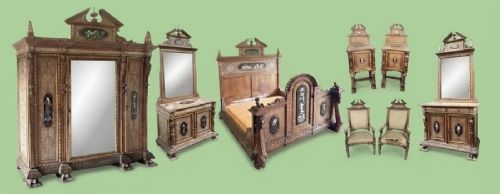
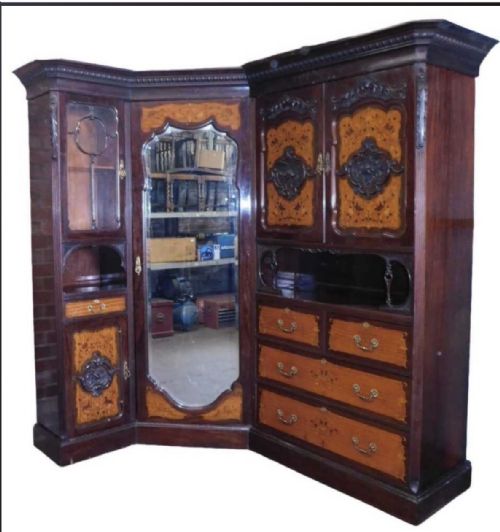
The versions you are most likely to meet on this page hail from the Edwardian era and the Victorian period, frequently embellished with delicate inlay work. Some examples take the form of compactum wardrobes or triple sections, offering substantial storage capacity alongside their decorative frontage.
These pieces draw upon Sheraton Revival and Aesthetic Movement traditions, bringing lighter tones into Victorian and Edwardian interiors where darker timbers had previously dominated. The inclusion of mirror glass serves both a practical dressing purpose and a clever optical trick to bounce light around a room.
Materials and construction
Makers utilised fine veneers of satinwood over secondary timbers like mahogany or pine, often framing the panels with boxwood, rosewood, or ebony stringing. This technique allowed cabinetmakers to display the chatoyant grain of the satinwood while maintaining structural stability across large doors.
Mirrors were painstakingly bevelled at the edges and set securely into heavy wooden frames, sometimes accompanied by brass hanging rails, hooks, and lock escutcheons. Internal drawer carcasses were commonly constructed from solid mahogany or oak with hand-cut dovetail joints.
Opening a heavy mirrored door reveals hidden rows of brass hooks that have held morning waistcoats since the reign of Edward VII.
Judging the work
The distinction between ordinary production and finer cabinetmaking rests upon the crispness of the marquetry inlay and the choice of timber cuts. Superior examples display symmetrical grain matching across large triple doors and tightly fitted cornices.
The integration of the mirror glass within the door frame and the quality of the internal fitments, such as linen slides and brass hardware, signal the original workshop standard. Maker attribution, through stamped drawer linings or plaques, also marks out pieces of greater distinction.
Edwards and Roberts·Waring & Gillows·Jean Faure·Maples & Co
The Satinwood Mirrored Wardrobe Glossary
- Satinwood
- A hard, durable timber known for its golden colour and reflective, satin-like sheen. It was frequently used as a veneer on high-end Edwardian and Victorian furniture.
- Compactum
- A multi-functional wardrobe featuring a combination of hanging space, shelves, and internal drawers within a single fitted unit. These pieces were designed to maximise bedroom storage efficiency.
- Bevelled glass
- Glass with edges ground and polished at an angle to create a framed, prism effect. This technique was standard on quality Victorian and Edwardian wardrobe mirrors.
- Marquetry
- Decorative woodwork where pieces of veneer are fitted into a ground to form floral or geometric patterns. It appears frequently on the panels of inlaid wardrobes.
- Breakfront
- A piece of furniture with a central section that projects forward from the side sections. This architectural form adds depth and shadow to large bedroom wardrobes.
Satinwood Mirrored Wardrobe: Frequently Asked Questions
How do I clean satinwood?
Dust gently with a soft, dry cloth and avoid modern aerosol polishes that contain silicone. A microfibre cloth is ideal for keeping the smooth surface free of marks.
For deeper cleaning, use a slightly damp cloth with mild soap, drying the wood immediately afterwards to protect the delicate veneer.
How do I spot a compactum?
A compactum differs from a standard wardrobe by incorporating a central tower of linen drawers or sliding trays flanked by hanging cupboards. This layout provided a complete individual storage system.
The presence of internal compartmentalisation behind separate doors is the key identifier for this form.
What is Sheraton Revival style?
Sheraton Revival furniture draws inspiration from the late eighteenth-century neoclassical designs of Thomas Sheraton. It relies on symmetrical proportions, satinwood veneers, and subtle painted or inlaid decoration.
This style enjoyed immense popularity during the Edwardian period, resulting in light and refined bedroom suites.