
Inlaid Wooden Wardrobe
An inlaid wooden wardrobe brings architectural presence to a bedroom while offering substantial storage through finely figured timbers and contrasting boxwood or satinwood stringing.
Inlaid Wooden Wardrobe
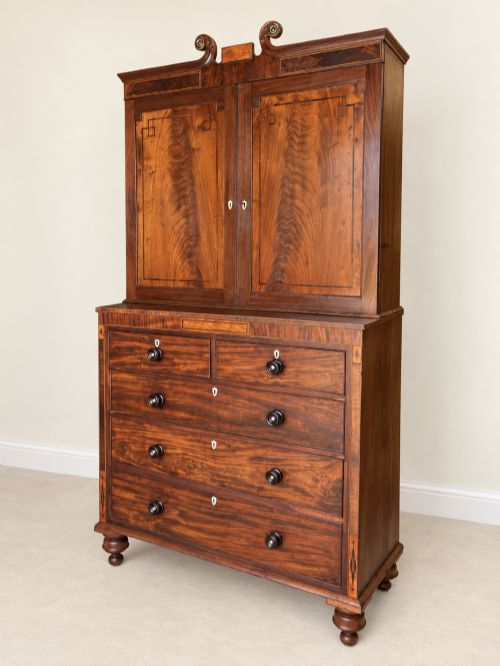
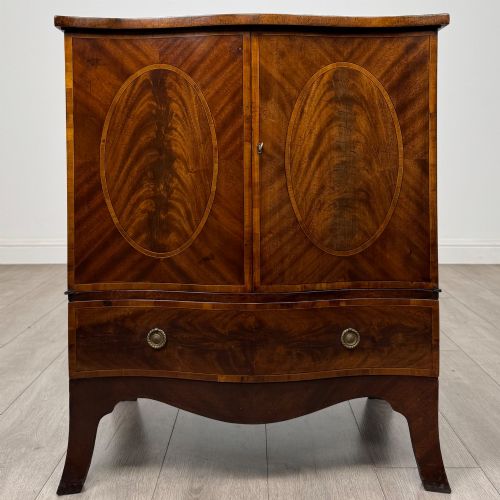
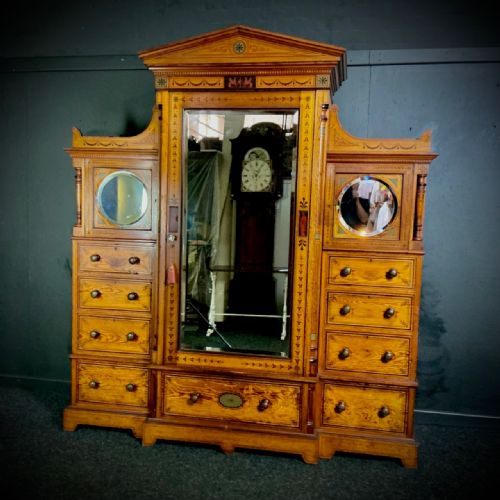
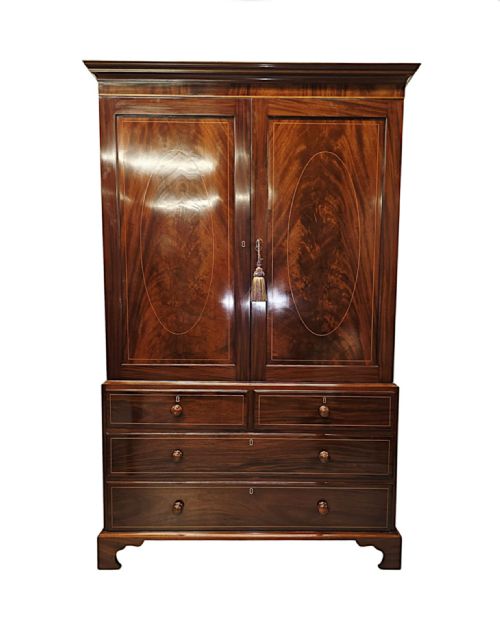
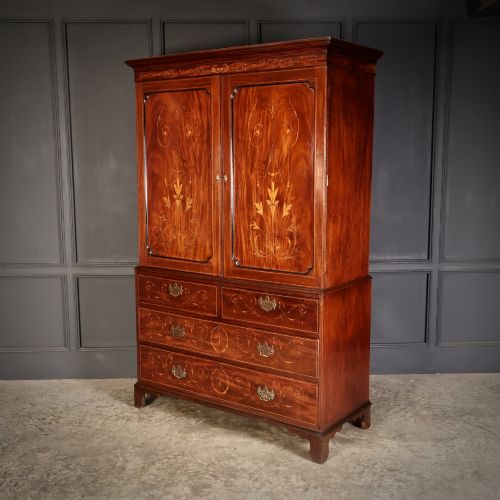
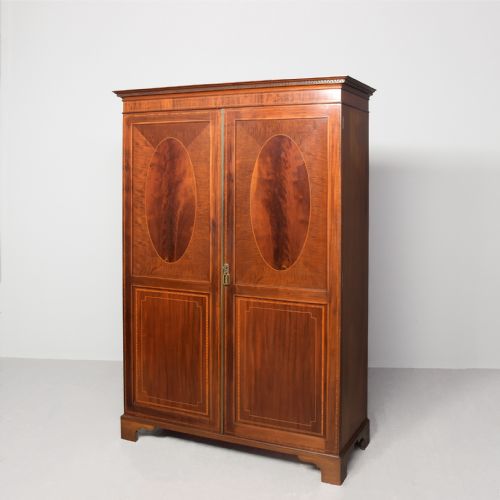
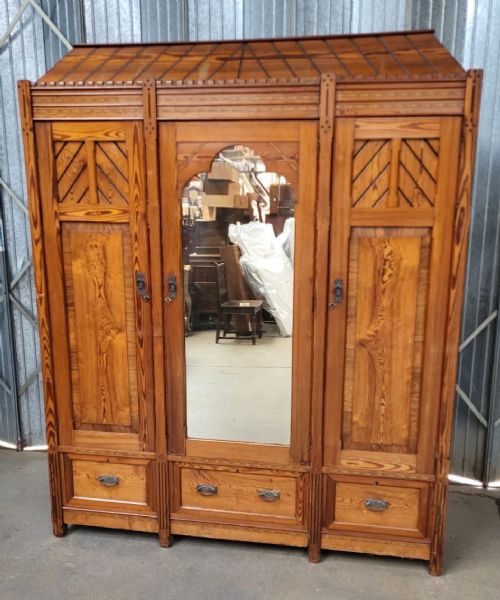
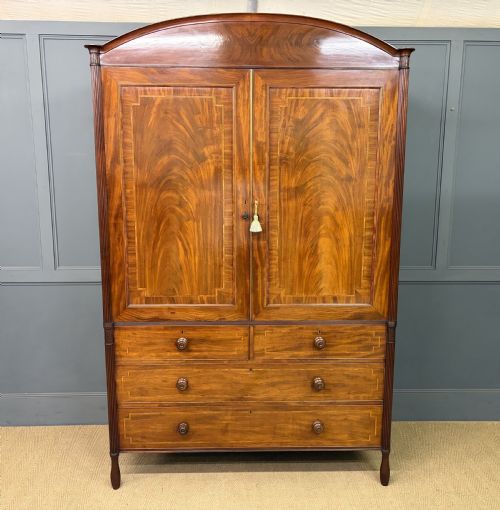
When you search for an inlaid wooden wardrobe, you encounter large storage furniture spanning the Georgian, Victorian, and Edwardian eras. These pieces take the form of traditional wardrobes, compactums, and linen presses designed to hold garments and household textiles.
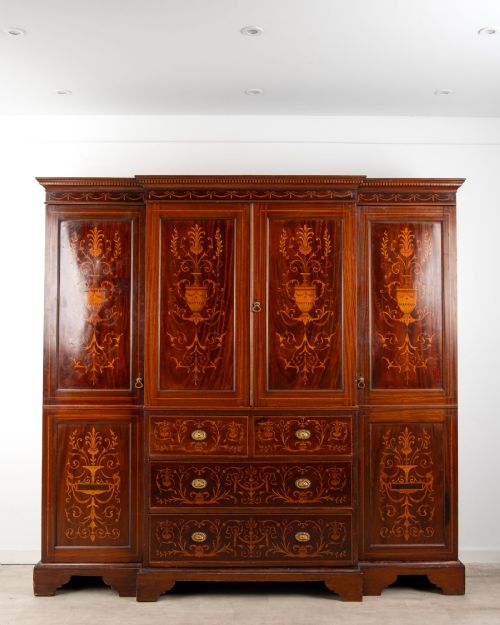
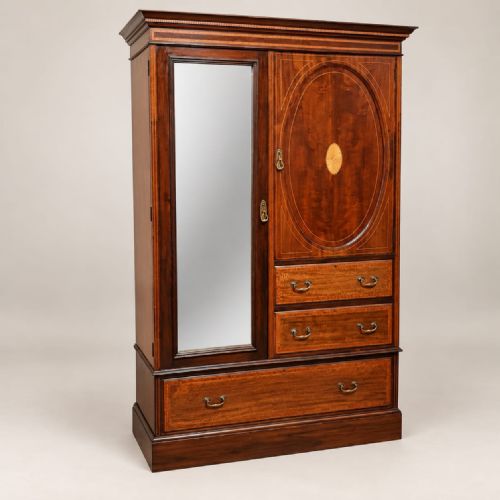
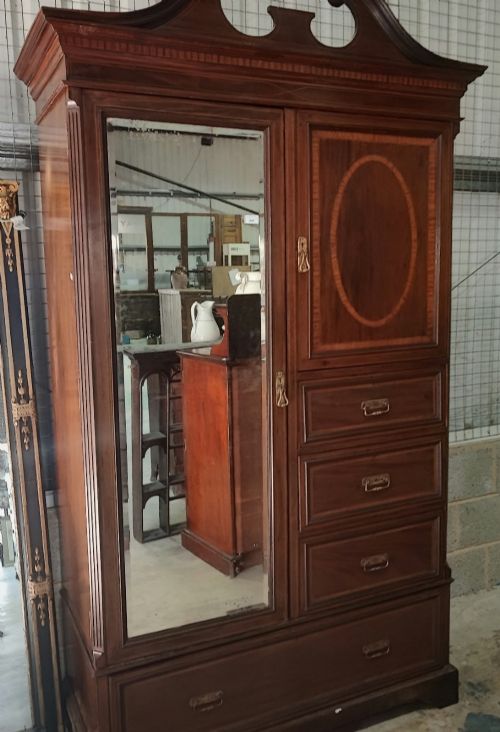
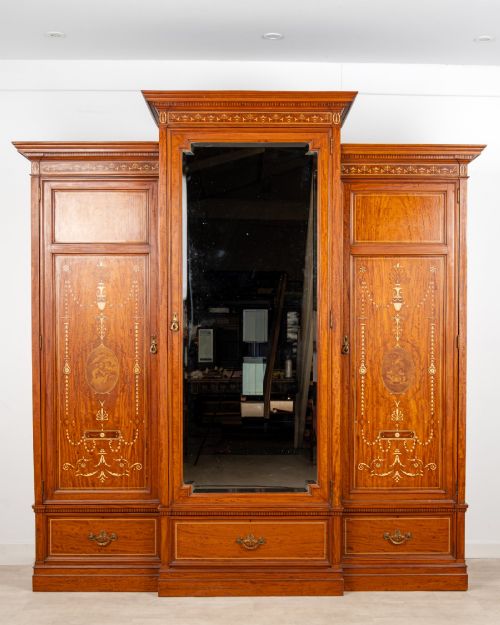
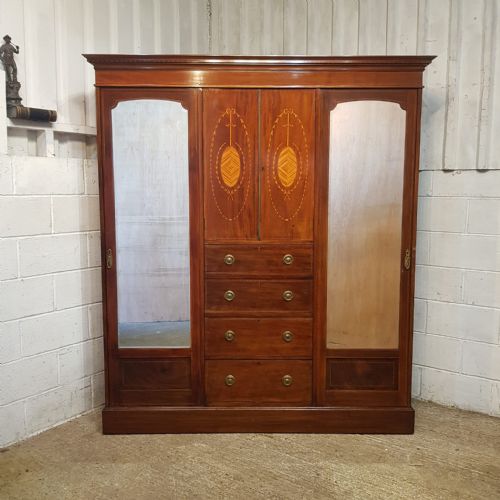
The Edwardian examples and Sheraton Revival interpretations appear most frequently on this page, often combining multiple mirrored doors, hanging sections, and internal drawers within a single facade.
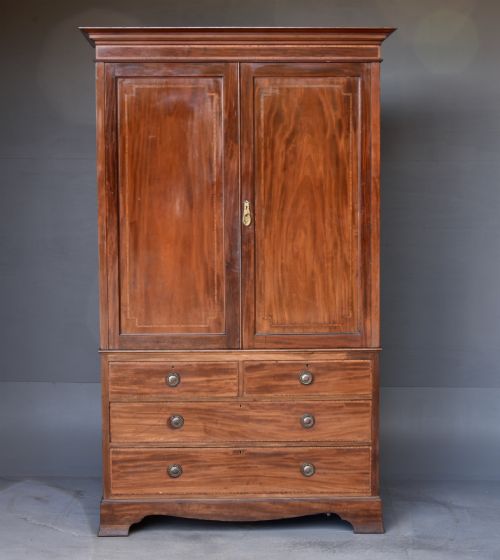
Earlier Georgian and nineteenth-century pieces lean towards substantial linen presses and breakfront configurations, where upper sliding trays sit above chest bases.
Materials and Construction Techniques
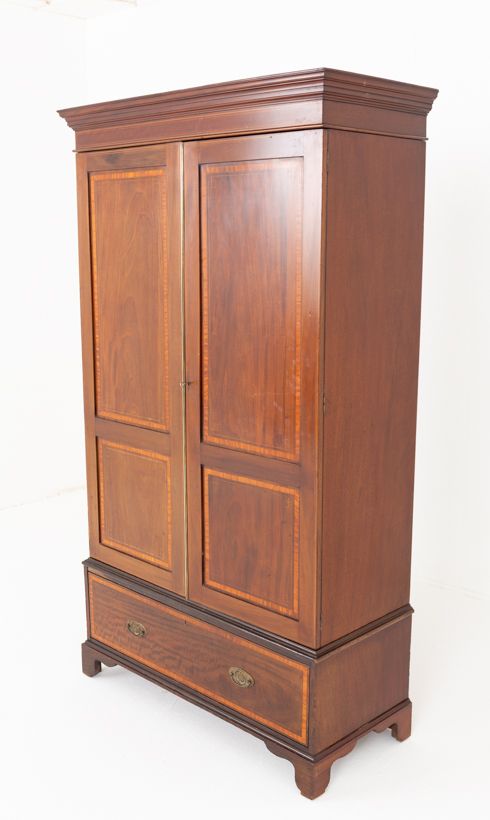
Cabinet makers utilised solid timbers and veneers of mahogany, walnut, oak, and satinwood, frequently selecting flame mahogany and ash for primary surfaces. These woods provide deep figuring that catches light across large panel doors.
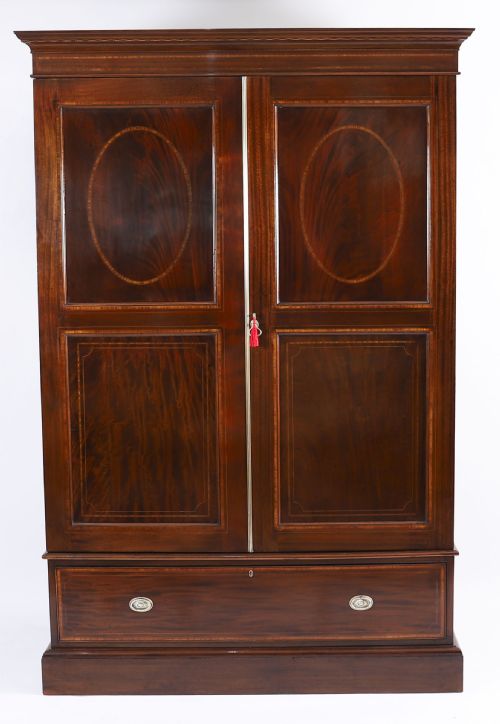
Detailing relies on boxwood inlay and marquetry panels, often set within geometric stringing lines or neoclassical motifs. Brass handles, escutcheons, and mirrored door plates finish the structural assembly.
Inlaid Wooden Wardrobe Retail Price Guide 2026
Typical asking prices for inlaid wooden wardrobe among the pieces listed under this phrase on Sellingantiques today, from the lower quarter to the upper quarter. They describe what is for sale here now, not the wider market.
Some gentlemen's wardrobes managed to hide entire social lives behind mirrored doors and sliding linen trays.
Judging Quality and Execution
The distinction between tiers rests upon the precision of the marquetry and the choice of primary timber. Finer pieces display crisp, hand-cut boxwood inlay against dense flame mahogany, whereas simpler versions rely on plain panels with minimal stringing.
Internal organisation also dictates standing, with fitted linen press trays, sliding shelves, and original brass hardware indicating superior workshop origin.
maples & co·Edwards and Roberts·Wylie Lochhead·Edwards & Roberts
The Inlaid Wooden Wardrobe Glossary
- Compactum
- A multi-section wardrobe combining hanging space, drawers, and linen shelves in a single unit. This layout maximises internal storage capacity.
- Linen Press
- A tall cabinet featuring upper doors enclosing sliding trays above a chest of drawers. Originally built for storing flat textiles.
- Marquetry
- The art of forming decorative patterns using fitted pieces of various coloured woods and veneers. These pictorial or geometric designs adorn doors and friezes.
- Stringing
- Thin lines of contrasting wood inlay used to outline panels and drawers. Boxwood often provides the pale tone against dark mahogany.
- Breakfront
- A piece of furniture where the central section projects forward from the flanking wings. This configuration creates visual depth on large wardrobes.
Inlaid Wooden Wardrobe: Frequently Asked Questions
How do I fit a large wardrobe in a modern bedroom?
Many Edwardian and Victorian examples arrive as modular or breakfront sections that dismantle for transport and reassembly. Check overall ceiling heights and door swing clearances before placing them in smaller rooms.
Positioning the piece away from direct heat sources protects old timber and prevents veneer movement over time.
What is the difference between a wardrobe and a linen press?
A wardrobe primarily provides vertical hanging space behind full-length doors for coats and dresses. A linen press divides its interior between hanging compartments and horizontal sliding trays designed for folded garments.
Earlier Georgian presses typically emphasise the upper tray section above a chest base.
How do I care for antique wood finishes?
Maintain timber surfaces by dusting with a dry lint-free cloth and applying occasional quality beeswax to nourish the grain. Avoid chemical sprays that strip historic patination.
Keep humidity levels stable to protect delicate boxwood inlay and prevent wood shrinkage.
How can I tell the period of a wardrobe?
Examine the primary timber, hardware, and decorative motifs to determine the era of manufacture. Georgian pieces often feature flame mahogany with subtle stringing, while Edwardian versions frequently incorporate satinwood panels, mirrors, and lighter ash.
Construction methods inside drawers and back panels also reveal the period of the workshop.