
Inlaid Mahogany Armoire
An inlaid mahogany armoire combines rich timber with delicate stringing to anchor a bedroom with presence.
The Nature of Inlaid Mahogany Armoires
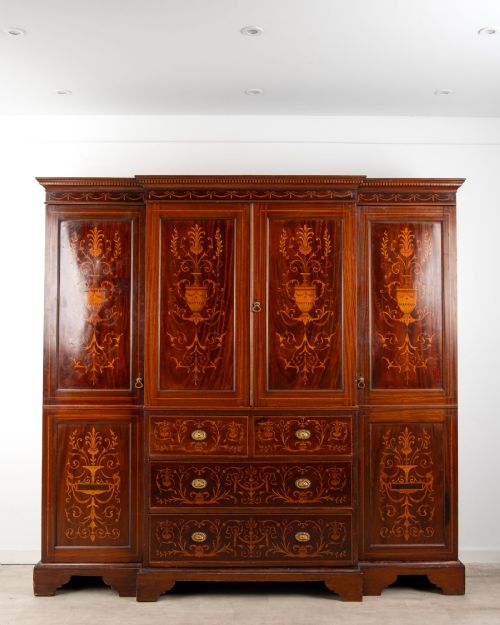
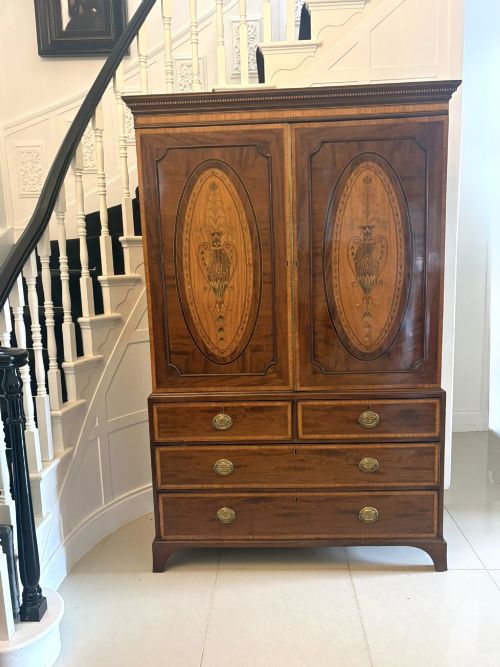
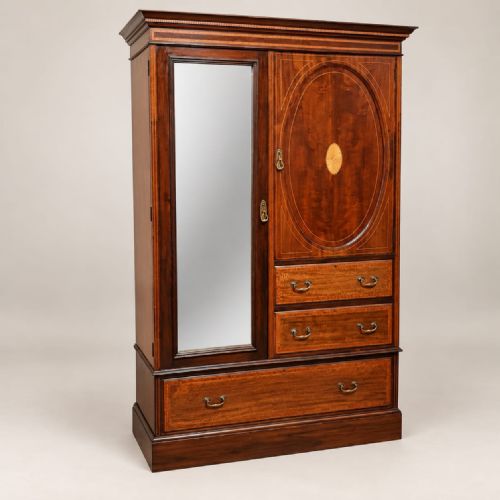
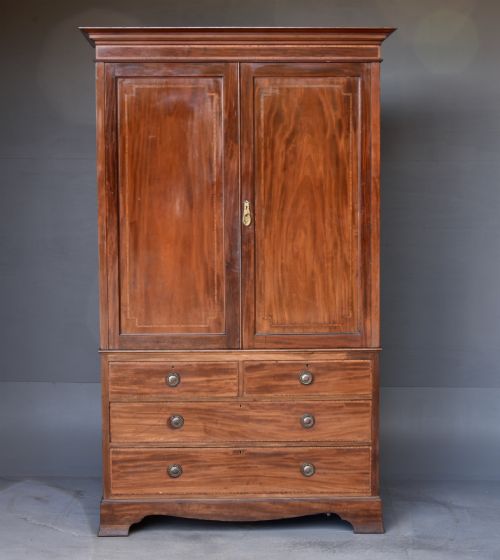
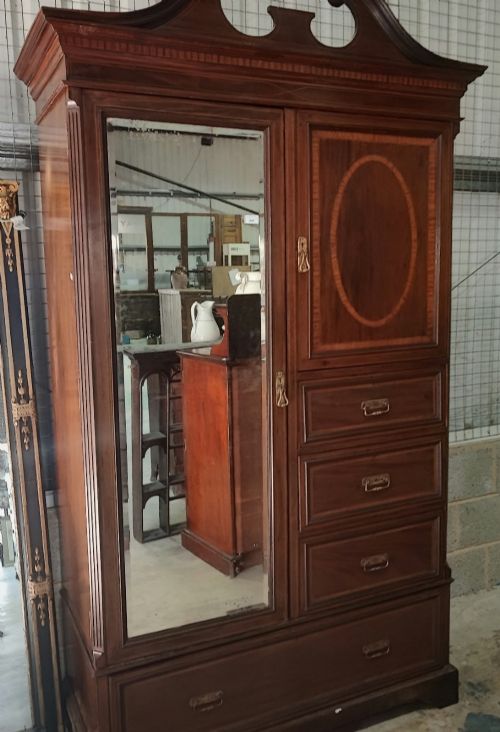
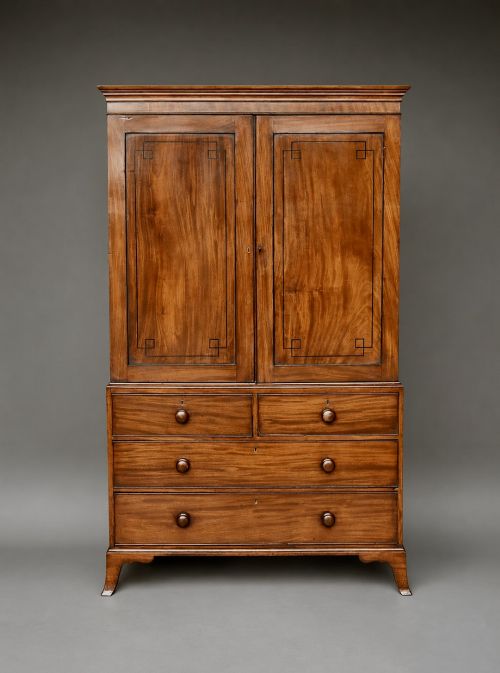
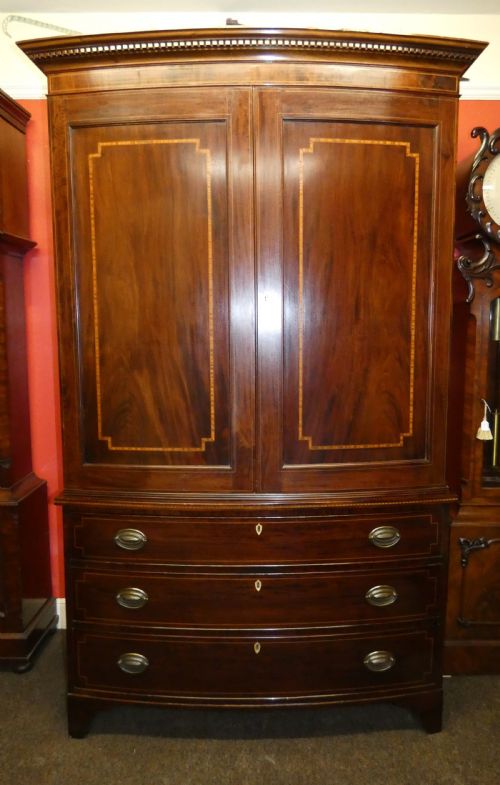
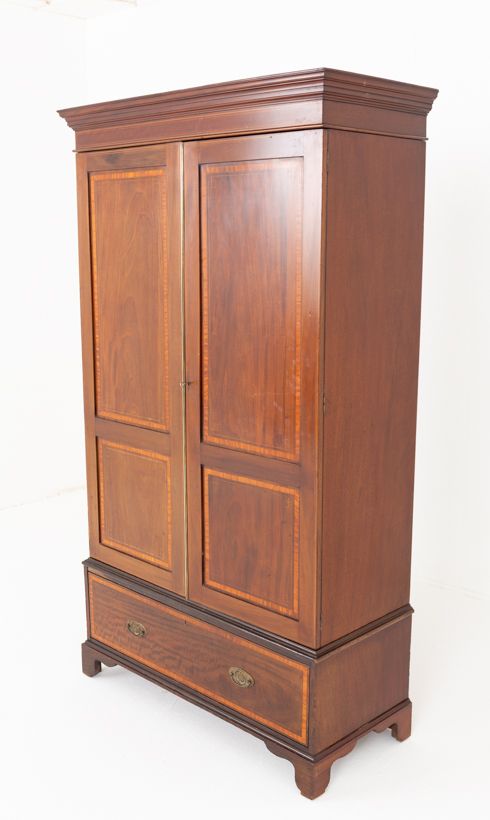
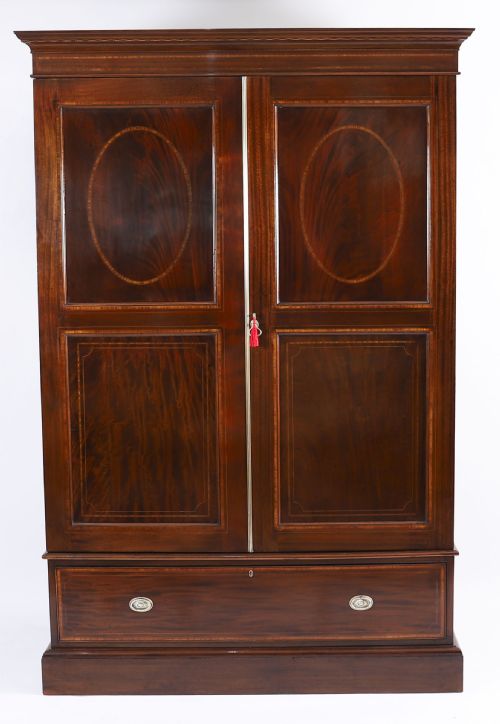
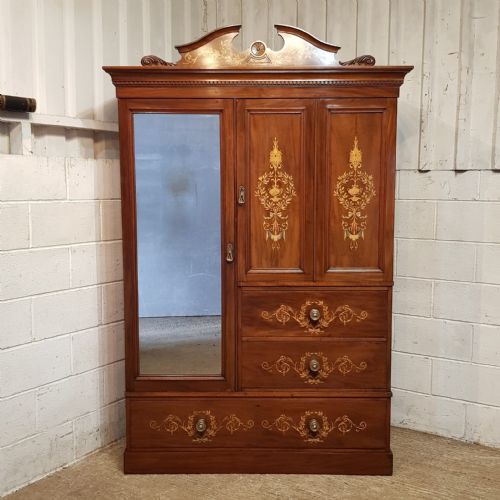
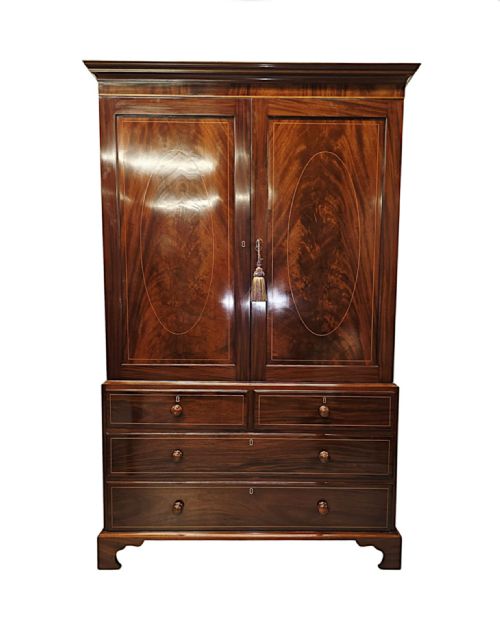
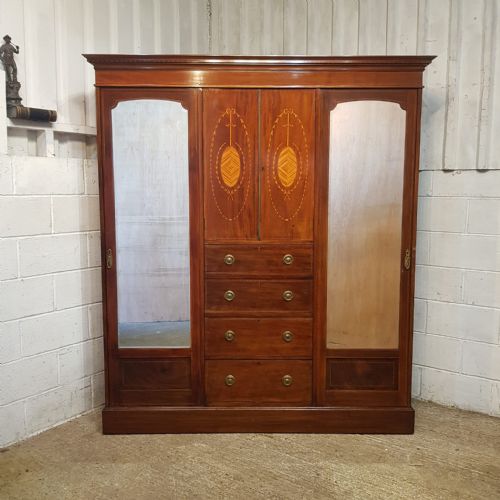
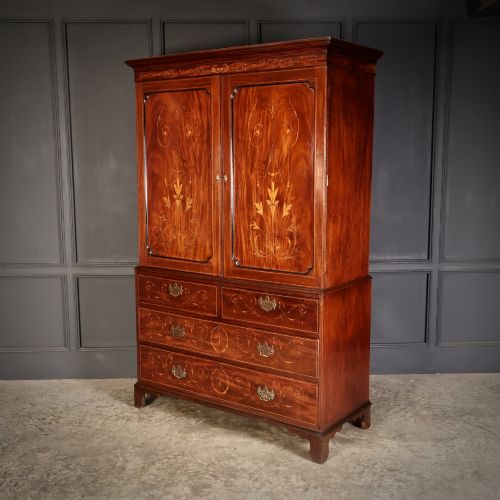
An inlaid mahogany armoire represents large-scale bedroom storage, encompassing traditional wardrobes, compactums, and linen presses. Pieces meeting this description span the Georgian, Victorian, and Edwardian eras, incorporating revivals such as Sheraton and George III styles alongside Glasgow School interpretations.
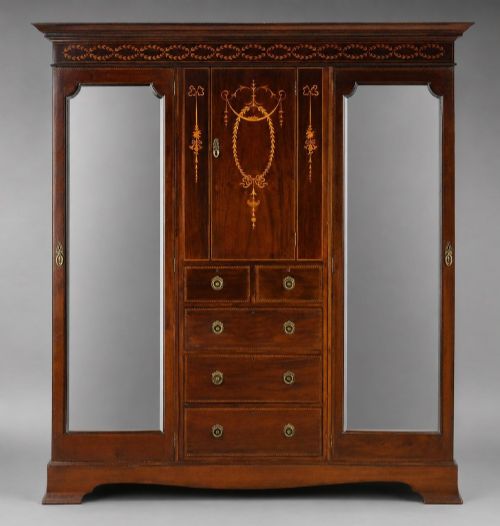
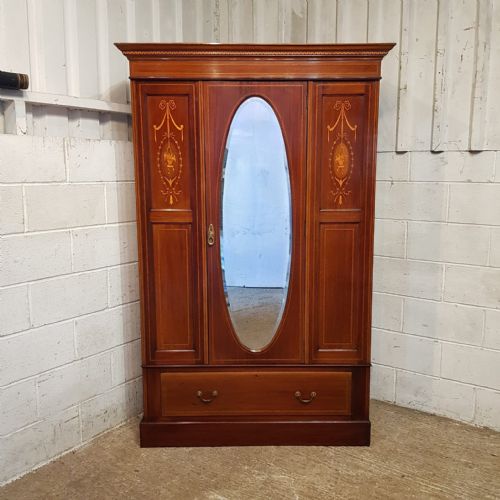
The format ranges from single hall robes to expansive double and triple door breakfront cabinets, occasionally featuring corner designs or internal drawers. Mahogany provides the primary carcass, enriched by contrasting lighter wood inlays and occasional brass fittings.
Origin points vary across English workshops, regional Channel Island makers, and Scottish studios, demonstrating diverse interpretations of cabinet-making traditions from the nineteenth and early twentieth centuries.
Materials and Construction
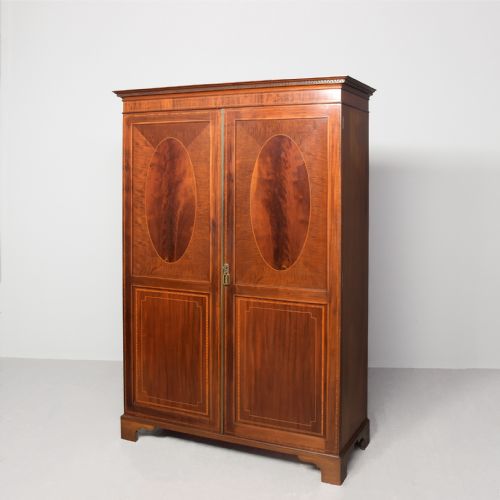
Makers constructed the primary carcass using solid mahogany and flame mahogany veneers, supported by secondary timbers like oak. Surfaces received meticulous inlay work using satinwood and boxwood, creating geometric lines, urns, and botanical motifs.
Structural hardware relied upon brass handles, escutcheons, and hinges, while specialised pieces integrated bevelled glass door panels. Cabinet makers utilised traditional joinery techniques to stabilise large doors and internal linen slides or hanging spaces.
Retail Price Guide 2026
Typical UK retail prices for inlaid mahogany armoire, calculated from the Sellingantiques database of over a million retail prices indexed since 2003. This retail price guide relies exclusively on Sellingantiques data; no external sources or auction records are used, so the figures do not describe the wider market.
Some nineteenth-century armoires still retain faint traces of lavender scent trapped inside their linen presses for over a century.
Distinctions in Quality
Quality reveals itself in the selection of timber figures, where rich flame mahogany veneers demonstrate superior visual depth compared to plain boards. The precision of the satinwood and boxwood inlay work distinguishes refined craftsmanship from simpler production.
Structural integrity and the retention of original brass hardware and glass panels elevate certain examples above standard utility pieces. The complexity of the internal configuration, such as compactum shelving or sliding trays, indicates the ambition of the original commission.
Wylie Lochhead of Glasgow·E. A. Taylor
The Inlaid Mahogany Armoire Glossary
- Armoire
- A tall wardrobe or cupboard used primarily for hanging garments and storing folded textiles. These pieces often feature double doors and generous internal depths.
- Compactum
- A multi-functional wardrobe combining hanging space, drawers, and shelving within a single unit. This design maximises storage efficiency in period bedrooms.
- Flame mahogany
- A veneer cut from timber where the branch meets the trunk, producing a distinctive, fiery grain pattern. Cabinet makers reserved this material for prominent door panels.
- Satinwood
- A durable, yellowish timber utilised extensively for contrasting inlay work and stringing on dark mahogany furniture. Its bright tone highlights geometric borders.
- Linen press
- A tall piece of furniture featuring upper sliding trays for textiles above a chest of lower drawers. These cabinets predate modern hanging wardrobes.
Frequently Asked Questions
How do I date an inlaid mahogany armoire?
Dating relies upon stylistic markers, construction methods, and secondary timbers visible within the carcass. Georgian and Victorian examples display distinct proportions and revival motifs characteristic of their respective decades.
Later Edwardian and Glasgow School pieces introduce different aesthetic priorities, such as stylised botanical inlays or simplified linear forms. Examining the interior fittings and backboards provides further clues regarding the manufacturing period.
Will a large armoire fit in my bedroom?
These pieces require careful measurement of both floor space and ceiling height before acquisition. Many historic wardrobes were designed to dismantle into sections to facilitate transport and installation in period homes.
Checking clearance for opening doors and internal hanging depth ensures the cabinet functions practically within your room layout. Consulting the specific dimensions listed for each wardrobe prevents placement issues upon delivery.
How should I care for mahogany and inlay?
Maintenance involves dusting with a soft, dry cloth and avoiding direct exposure to strong sunlight or heat sources. Consistent indoor humidity prevents timber movement and protects delicate boxwood and satinwood inlays from lifting.
Applying traditional wax polish periodically nourishes the mahogany grain without building up heavy chemical residues. Gentle handling of original brass hardware preserves the integrity of the hinges and locks.
What is the difference between a wardrobe and an armoire?
The terms are often used interchangeably to describe tall storage furniture, though 'armoire' frequently denotes Continental European origins or particularly decorative French pieces. British examples are typically catalogued as wardrobes, hall robes, or compactums.
Both forms serve the primary function of garment storage, varying mainly in regional nomenclature and stylistic detailing. The internal configuration of hanging space and shelves generally dictates the daily utility of the piece.