




Satinwood Linen Press
These satinwood linen press pieces offer grand storage for the bedroom, combining figured timbers with sliding trays for linens.

Satinwood Linen Press
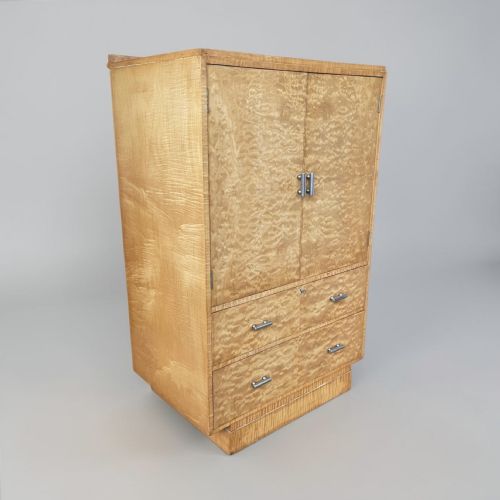
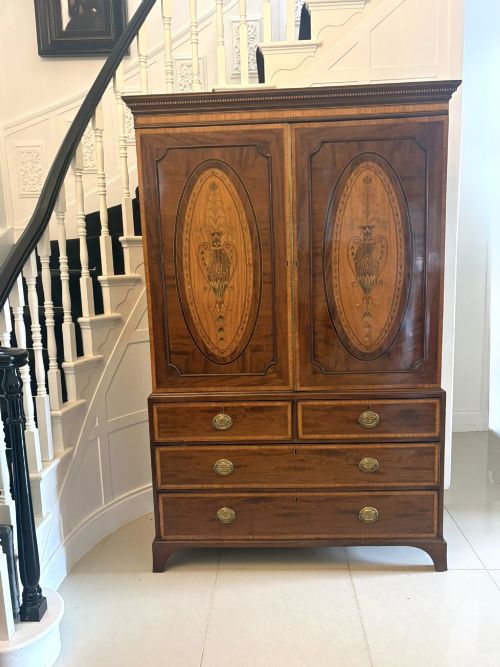
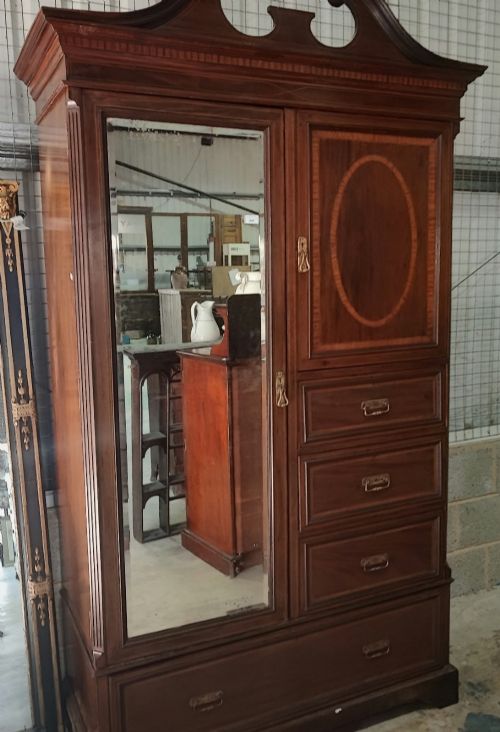
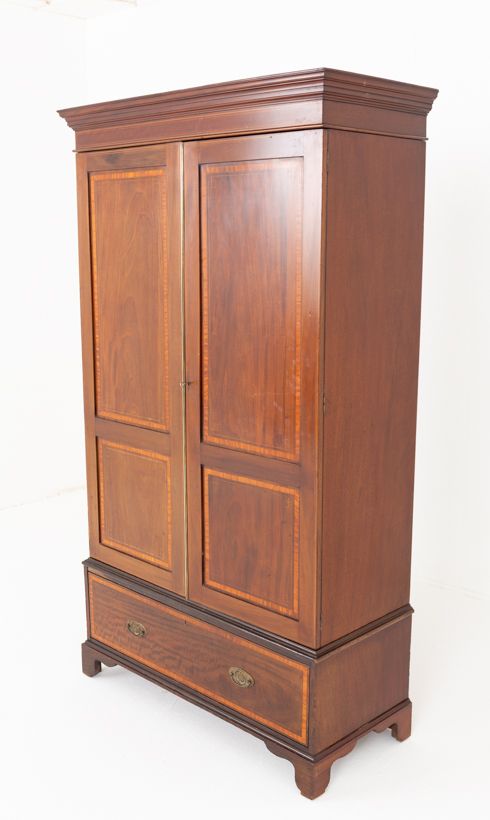
A satinwood linen press provides compartmentalised storage, typically pairing upper doors enclosing sliding trays with lower drawer chests. These tall pieces stand as substantial bedroom furniture from periods including the Georgian era, the Victorian age, and the Edwardian decades.
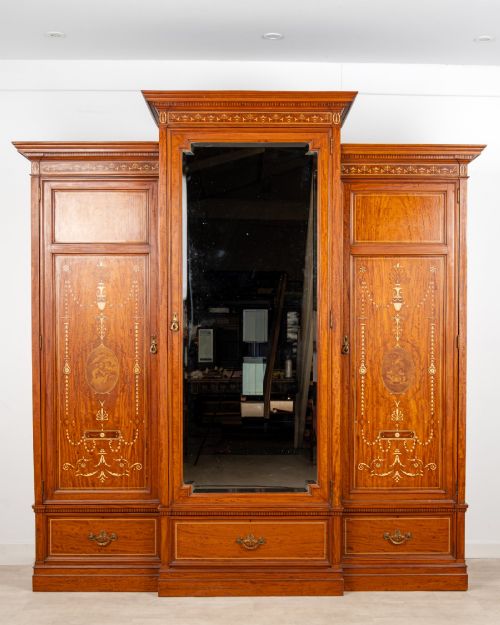
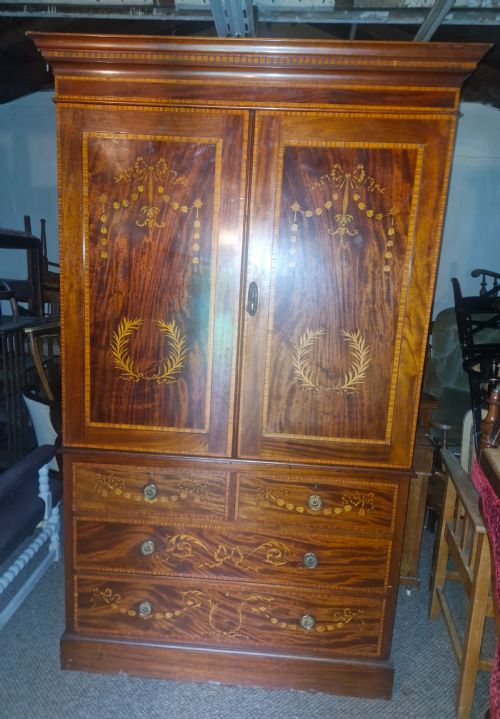
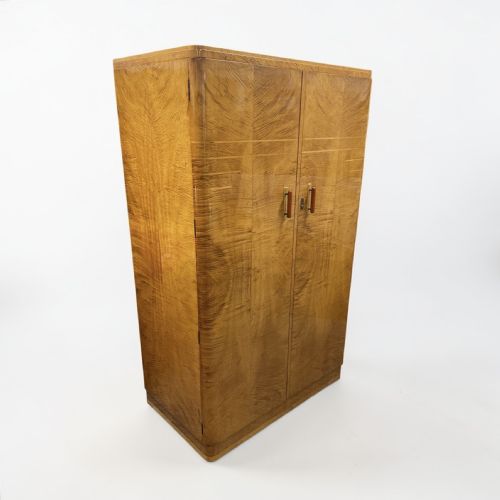
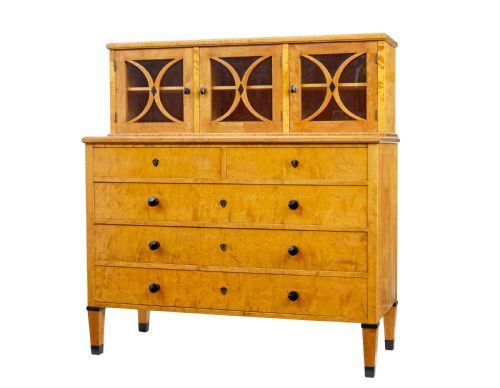
The version most commonly met on this page combines mahogany frameworks with satinwood banding, stringing, or full veneers. Makers also fashioned these large storage pieces in solid satinwood or satin birch, often incorporating mirrored doors and panelled sides.
Materials and construction
Cabinet makers utilised dense native and exotic timbers, laying striking satinwood veneers over sturdy mahogany carcases. Boxwood and darker hardwoods formed intricate inlaid lines, floral marquetry, and contrasting crossbanding around door panels and drawer fronts.
Brass hardware, including escutcheons, drop handles, and locking mechanisms, secured the heavy doors and drawers. Interior pull-out linen slides required precise joinery so the wood moved smoothly within the housing frames through seasonal humidity changes.
Satinwood Linen Press Retail Price Guide 2026
Typical asking prices for satinwood linen press among the pieces listed under this phrase on Sellingantiques today, from the lower quarter to the upper quarter. They describe what is for sale here now, not the wider market.
One low press bears the stamp of Lamb of Manchester, proving that even northern cabinet makers could not resist showing off a bit of pale veneer.
Judging quality
The sophistication of the timber figure and the precision of the marquetry dictate the distinction between standard and superior pieces. Finer cabinets display meticulously matched flame mahogany or radiant satinwood grains that wrap continuously across the front elevation.
Structural integrity rests on the original internal linen slides remaining intact behind the upper doors. Master workshops distinguished their output through refined proportions, crisp brass fittings, and secondary timbers of uncompromised substance.
Edwards and Roberts·Druce and Co·Waring and Gillow·Lamb of Manchester·Maples and Co
The Satinwood Linen Press Glossary
- Satinwood
- A hard, yellow timber valued for its lustrous, light-reflecting grain and smooth texture. Cabinet makers prized it for decorative veneers and stringing.
- Linen press
- A tall storage cabinet featuring internal sliding trays designed to keep folded textiles flat and neat. Later iterations frequently integrated hanging wardrobe space alongside the trays.
- Compactum
- A multi-compartment wardrobe combining drawers, hanging sections, and linen slides within a single unified structure. These large pieces maximised bedroom storage capacity.
- Marquetry
- The art of forming decorative patterns using thin veneers of different coloured woods and materials. Craftsmen pieced these elements together meticulously onto the carcase surface.
- Banding
- A narrow strip of contrasting wood veneer applied around the border of drawer fronts or door panels. This technique created a defined architectural frame for the figured primary wood.
Satinwood Linen Press: Frequently Asked Questions
What is a satinwood linen press?
A satinwood linen press is a tall storage cabinet designed for textiles and garments, featuring light, lustrous satinwood veneers or solid construction. The upper section typically conceals pull-out wooden slides, while the base contains a chest of drawers.
These pieces served as primary bedroom furniture for storing folded linens and apparel before fitted wardrobes became standard. Their decorative wood figures and inlaid details made them prominent furnishings in fine homes.
How do I use a linen press today?
Modern homes utilise linen presses as generous bedroom or landing wardrobes for folded jumpers, bedding, and towels. The internal sliding trays keep stacks accessible without the tumbling associated deep shelves.
Alternatively, removal of interior slides allows some larger presses to function as television cabinets or general wardrobe storage. Their substantial presence suits spacious rooms requiring architectural storage solutions.
How do I distinguish Georgian from Edwardian presses?
Georgian presses display classical architectural proportions, often featuring flame mahogany carcases with subtle satinwood banding and swan-neck pediments. Their construction relies on hand-cut dovetails and heavy timber framing characteristic of the eighteenth century.
Edwardian pieces tend to use brighter, more extensive satinwood veneers, frequently incorporating painted floral motifs, mirrored door panels, and lighter framing. These later cabinets reflect the lighter aesthetic preferences and production methods of the early twentieth century.
What is the difference between a press and a wardrobe?
A traditional linen press specifically centres on internal sliding trays behind upper doors for storing folded items flat. Wardrobes are dedicated primarily to hanging garments on rails within full-length vertical compartments.
Many pieces listed as presses or compactums blend both functions, offering hanging space alongside traditional linen slides. This hybrid design evolved to accommodate changing clothing fashions over the nineteenth century.