


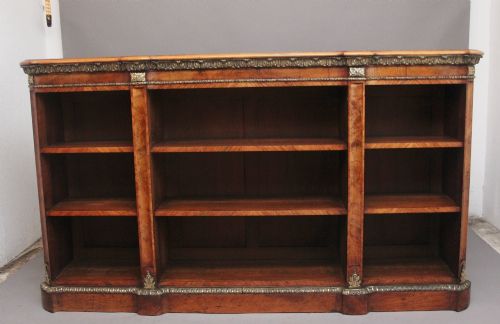
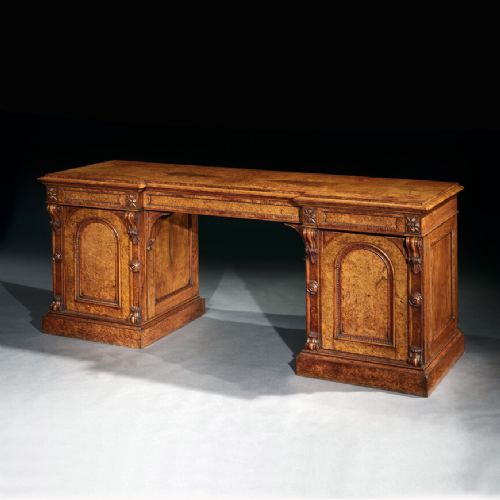
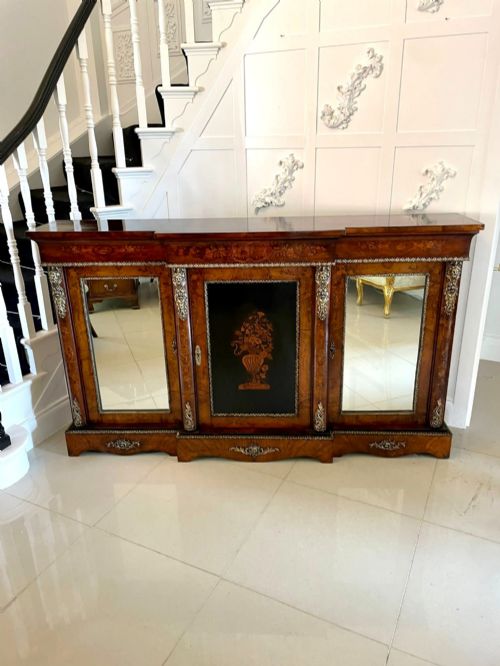
Victorian Breakfront Cabinet
When you search for a victorian breakfront cabinet, you seek a stately nineteenth-century focal point built to display books or display wares.

Victorian Breakfront Cabinet
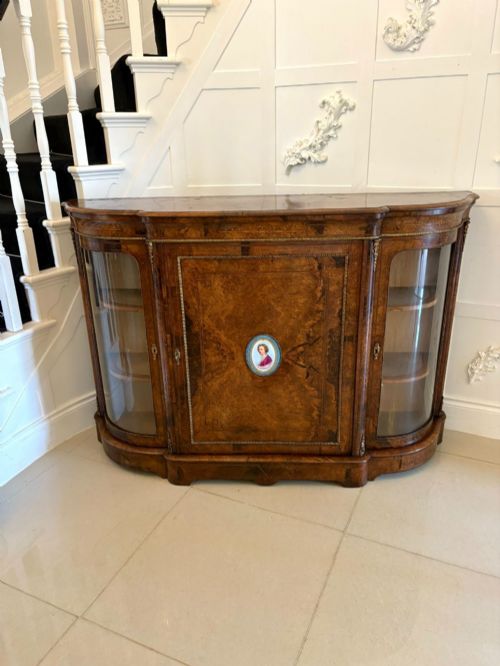
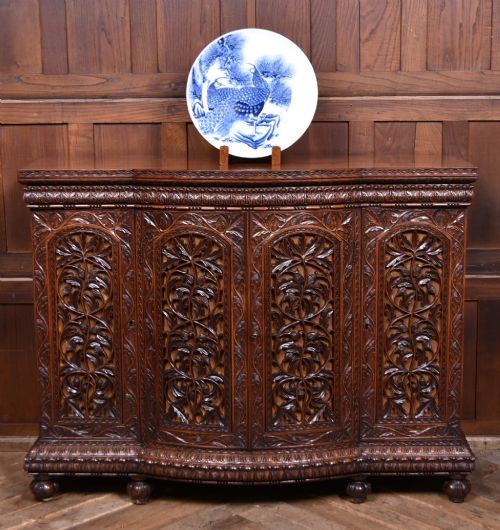
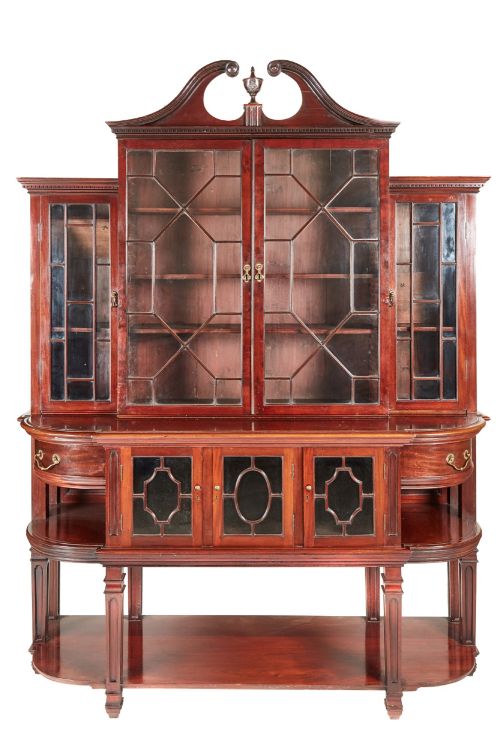
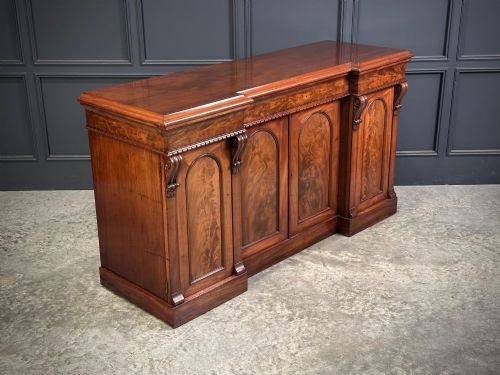
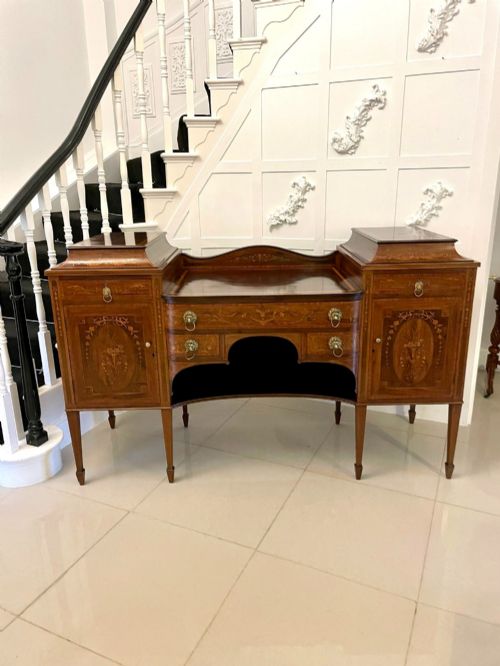
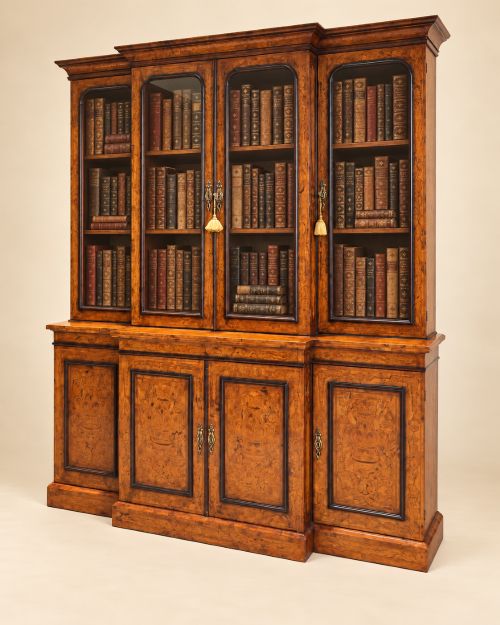
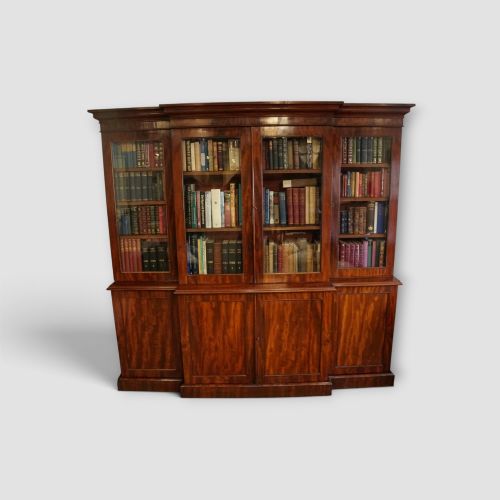
A victorian breakfront cabinet projects forward in sections, with a central portion flanked by recessed wings that create architectural depth. These large forms served principal rooms as bookcases, display cabinets, sideboards, or credenzas.
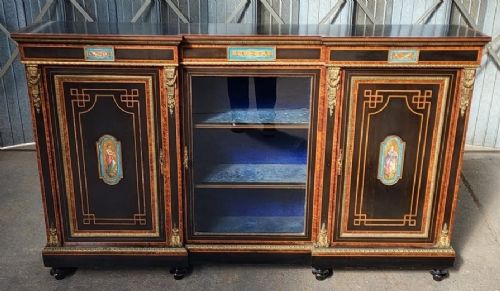
The materials span rich timbers like burr walnut, flame mahogany, rosewood, and pollard oak, often accented with glass, brass, marble, and porcelain plaques. Pieces emerge from nineteenth-century workshops, ranging from simpler utilitarian library cupboards to exhibition-grade reception furniture.
Most examples date from the Victorian era, spanning the decades between eighteen-fifty and nineteen-hundred, with styles encompassing Sheraton Revival, Gothic Revival, and Aesthetic Movement designs alongside French revival influences.
How they were made
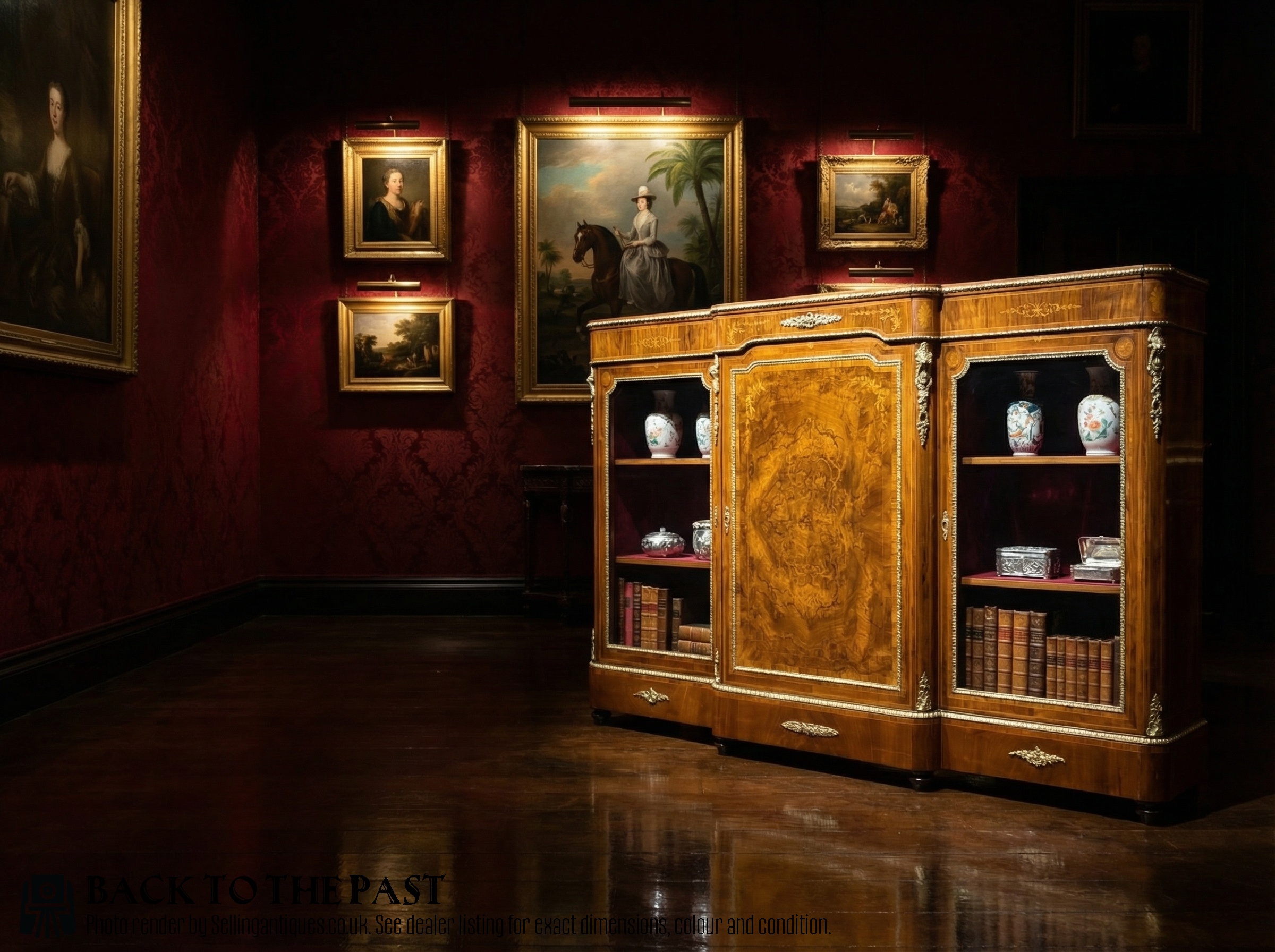
Cabinet makers constructed carcass frames in solid timbers such as mahogany and oak, applying fine veneers like burr walnut, amboyna, satinwood, and kingwood to prominent surfaces. Marquetry inlay, brass stringing, and hand-carved details embellished the exterior panels and friezes.
Ormolu mounts, porcelain plaques, and brass grilles were fitted to doors and pillars on higher-status reception furniture. Glazing utilised astragal bars or plain glass panels to house libraries and display collections safely.
Victorian Breakfront Cabinet Retail Price Guide 2026
Typical asking prices for victorian breakfront cabinet among the pieces listed under this phrase on Sellingantiques today, from the lower quarter to the upper quarter. They describe what is for sale here now, not the wider market.
Listings feature nineteenth-century furniture built from burr walnut, mahogany, rosewood, and oak, incorporating glass, brass, and porcelain elements.
What varies in quality
The selection of timber grain defines much of the distinction, where symmetrical burr walnut or heavily figured flame mahogany elevates a cabinet's visual presence. Depth of carving, precision of marquetry inlay, and the crispness of ormolu mounts mark the distinction between standard workshop output and exhibition-grade commissions.
Interior construction, such as adjustable shelving systems, secondary softwood linings, and the weight of the glass, reveals the original maker's intent. Attributions to known cabinet-making firms through stamps or signatures often reflect superior tier craftsmanship.
Hewetsons London·Johnstone And Jeanes·Jas Shoolbred·Collinson And Lock·Edwards And Roberts·Gillows·Lamb Of Manchester
The Victorian Breakfront Cabinet Glossary
- Breakfront
- A cabinet design where the central section projects further forward than the flanking side sections. This layout introduces three-dimensional depth to large library bookcases and credenzas.
- Credenza
- A low cabinet, frequently featuring glass doors or open shelving, used historically for serving food or displaying ornaments. Nineteenth-century versions often incorporate extensive ormolu mounts and porcelain plaques.
- Marquetry
- Decorative patterns formed by fitting together thin veneers of different coloured woods, ivories, or metals. This technique creates intricate floral or geometric designs on cabinet doors and friezes.
- Ormolu
- Gilded bronze mounts and ornaments applied to furniture frames and doors. The material adds metallic contrast and decorative richness to mid-nineteenth-century reception pieces.
- Astragal
- A small moulded bar or strip framing panes of glass within a cabinet door. These wooden divisions provide structural support while creating geometric patterns across bookcases.
Victorian Breakfront Cabinet: Frequently Asked Questions
Were these cabinets used for books?
Many large nineteenth-century examples functioned specifically as breakfront bookcases with adjustable wooden shelving behind glazed doors. They protected private libraries in drawing rooms and studies.
Other variations served as display cabinets or credenzas designed to showcase porcelain, glassware, and decorative ornaments rather than volumes.
What is the difference between a credenza and a bookcase?
A credenza is typically a lower piece of furniture, often incorporating marble tops, central cupboards, and curved side display compartments. They sat against principal dining or drawing room walls.
Bookcases rise taller with expansive vertical glass or open shelving designed primarily for storing and reading literature from the period.
How do I fit a large cabinet into a modern room?
These large nineteenth-century pieces require measuring ceiling heights and floor space carefully before placement, as many breakfronts arrive in multiple modular sections. They anchor large living spaces or home libraries as statement focal points.
Ensure placement avoids direct sunlight to protect vulnerable polished wood veneers and antique burr walnut surfaces from fading over time.