



Golden Satinwood Wardrobe
These golden satinwood wardrobe pieces bring rich grain and elegant proportions to a bedroom, offering both deep hanging space and classic period style.
Golden Satinwood Wardrobe
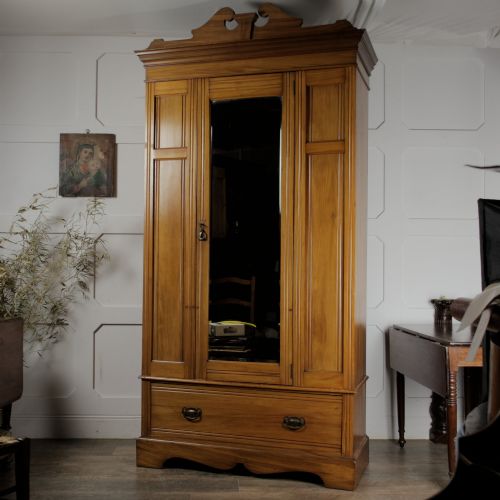
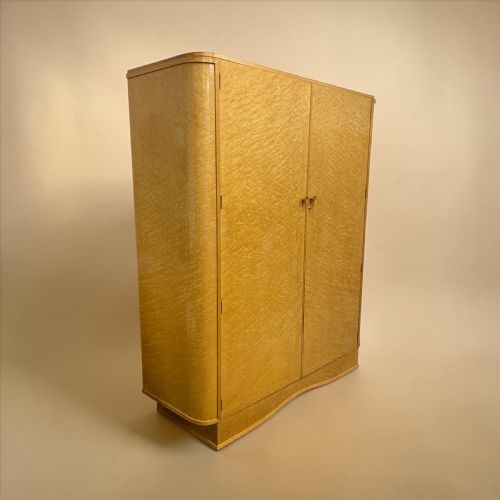
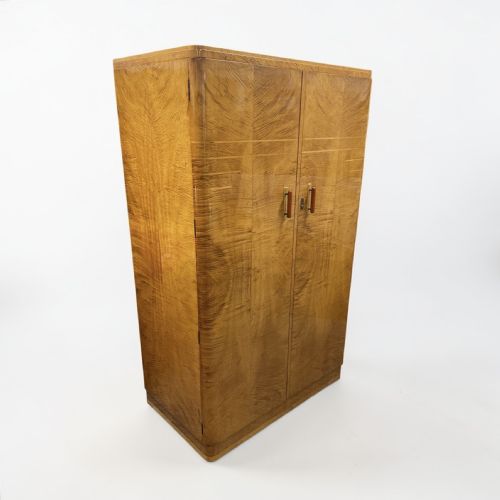
When you search for a golden satinwood wardrobe, you encounter substantial storage furniture fashioned from light, lustrous timber across several distinct design periods. The examples listed on this page span the Victorian era, the Edwardian period, Sheraton Revival interpretations, and the bold geometric lines of Art Deco.
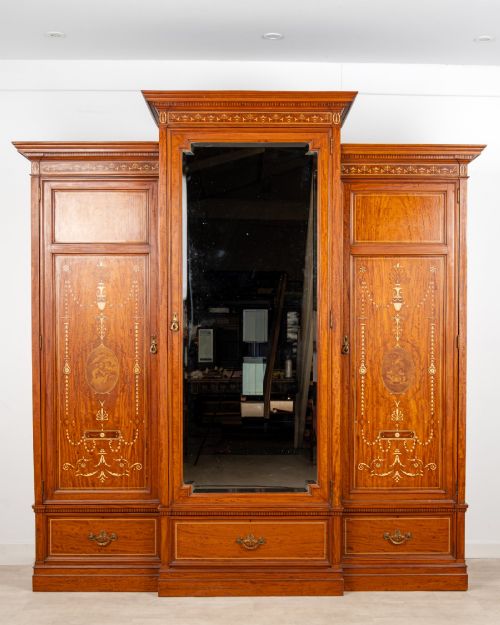
You meet both grand triple configurations with central mirrored doors and more compact two-section formats, alongside traditional linen presses. These pieces utilise satinwood as a primary surface, frequently paired with contrasting timbers or enhanced by hand-painted details and intricate inlay.
The dominant forms originate from the late nineteenth century and the early decades of the twentieth century, reflecting shifting tastes from ornate Victorian revivalism to streamlined 1930s modernism. Each version provides a striking visual presence through the natural golden shimmer of the wood.
How they were made
Cabinet makers constructed these wardrobes using solid timber frames overlaid with figured wood veneer, highlighting the natural chatoyancy of satinwood. Workshops combined this bright primary timber with contrasting darker woods such as rosewood and mahogany for borders and decorative stringing.
Structural integrity relied on traditional joinery techniques, while exterior surfaces received careful hand-polishing to accentuate the grain. Metal fittings, brass handles, and bevelled glass mirrors were integrated into the larger triple doors and armoire layouts.
Golden Satinwood Wardrobe Retail Price Guide 2026
Typical asking prices for golden satinwood wardrobe among the pieces listed under this phrase on Sellingantiques today, from the lower quarter to the upper quarter. They describe what is for sale here now, not the wider market.
Several wardrobes hide deep clothes hanging space behind gleaming mirrors that once served to reflect gaslight in formal bedrooms.
What varies in quality
The sophistication of the timber selection determines the visual impact, with highly figured grain patterns and symmetrical veneer matching creating a superior appearance. Finer examples display meticulous inlay work and painted ornamentation executed with high artistic precision rather than mechanical uniformity.
Proportion and scale also separate standard production from exceptional pieces, particularly in breakfront designs and fitted interiors where internal drawers and linen slides are constructed with equal care to the exterior.
Waring & Gillow·Jean Faure
The Golden Satinwood Wardrobe Glossary
- Satinwood
- A dense, lustrous timber with a natural golden sheen and fine texture. It forms the primary visual surface of these wardrobes.
- Linen Press
- A tall storage piece traditionally designed to hold folded textiles on interior sliding trays, often positioned above drawer sections.
- Breakfront
- A cabinet design where the central section projects forward from the flanking wings, adding architectural depth to large wardrobes.
- Sheraton Revival
- A late nineteenth and early twentieth century design movement that reinterprets the classical elegance of eighteenth century neoclassical furniture.
- Stringing
- Thin lines of contrasting wood inlaid into the surface of the cabinet to create decorative borders and geometric panels.
Golden Satinwood Wardrobe: Frequently Asked Questions
How do I care for satinwood?
Keep the timber away from direct sunlight to preserve the golden colour and prevent the polished finish from drying out over time.
Dust regularly with a soft, dry cloth and apply a quality natural wax sparingly when the surface loses its subtle lustre.
Are these wardrobes easy to move?
Most of these large pieces were built to be dismantled into modular sections, including cornices, base units, and individual wardrobes or side pillars.
Professional assembly is often recommended for triple wardrobes and breakfront armoires to ensure proper alignment of doors and heavy mirrored glass.
How do I distinguish Edwardian from Victorian pieces?
Victorian examples tend to display heavier proportions, deeper mouldings, and darker secondary woods like rosewood alongside the satinwood.
Edwardian and Sheraton Revival pieces generally feature lighter, airier painted decorations, delicate inlay work, and more restrained architectural detailing.
What is an armoire in this context?
The term describes large, freestanding vertical storage cabinets designed primarily for hanging garments behind full-length doors.
On this page, these pieces often incorporate mirrored panels and internal shelving alongside the main wardrobe compartment.