
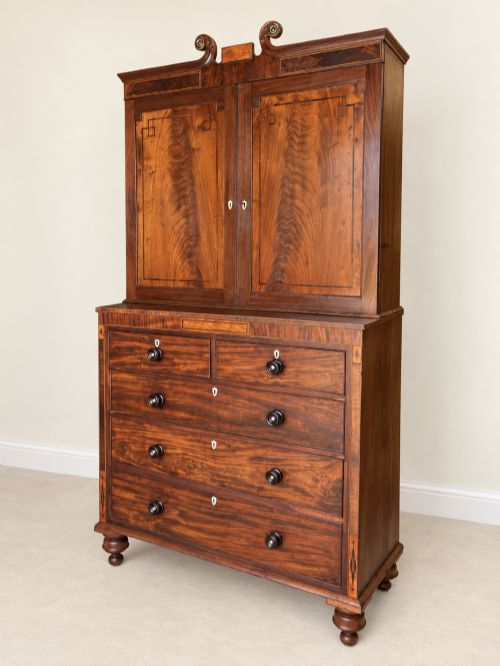
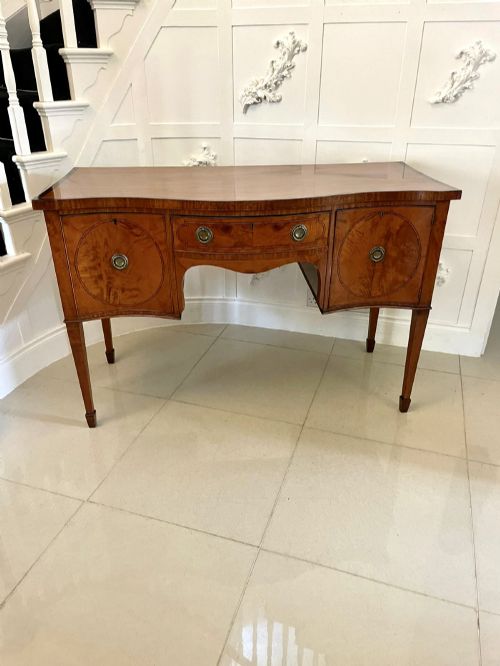
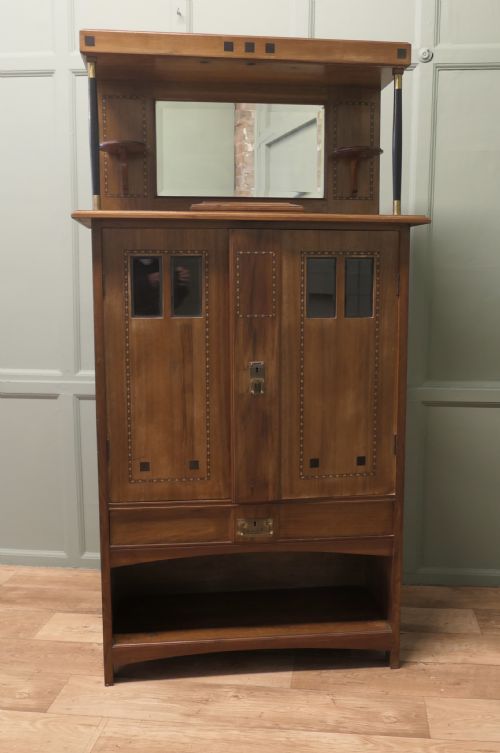
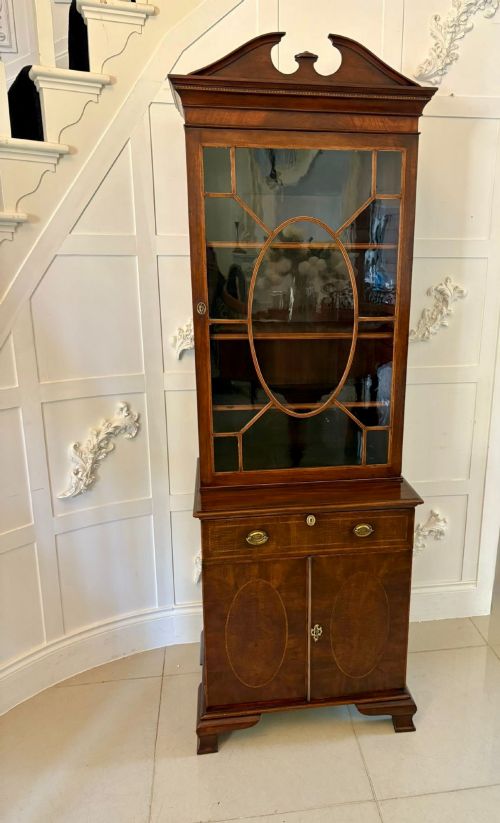
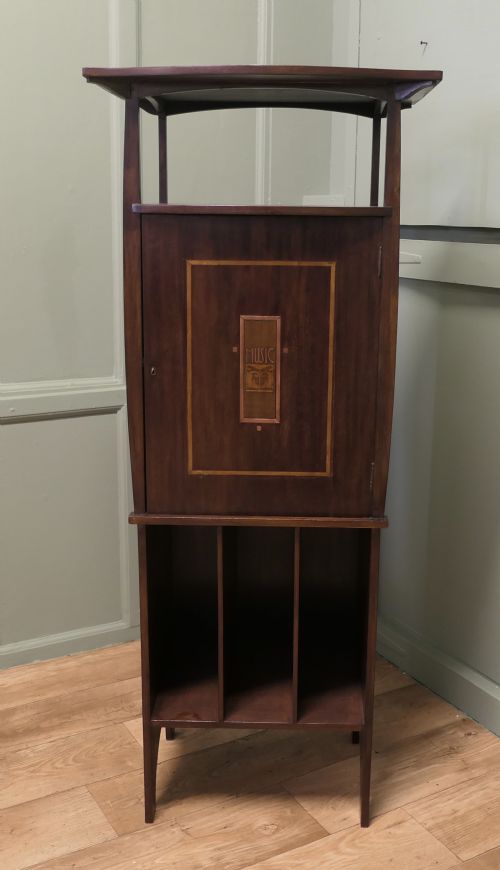
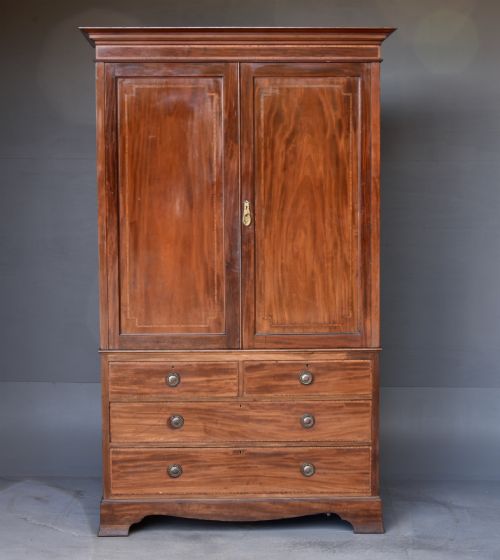
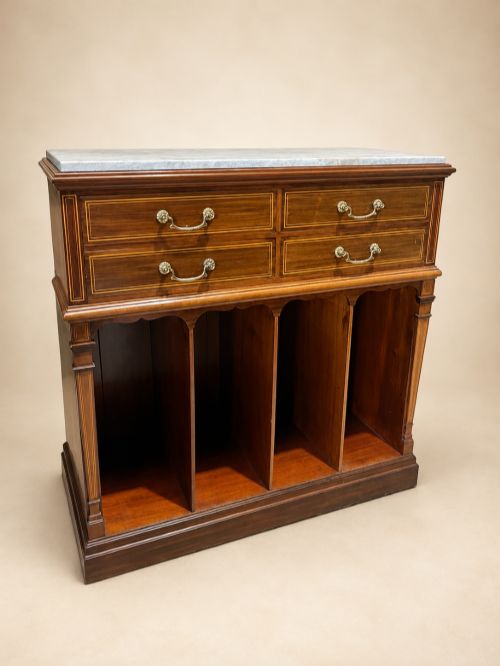
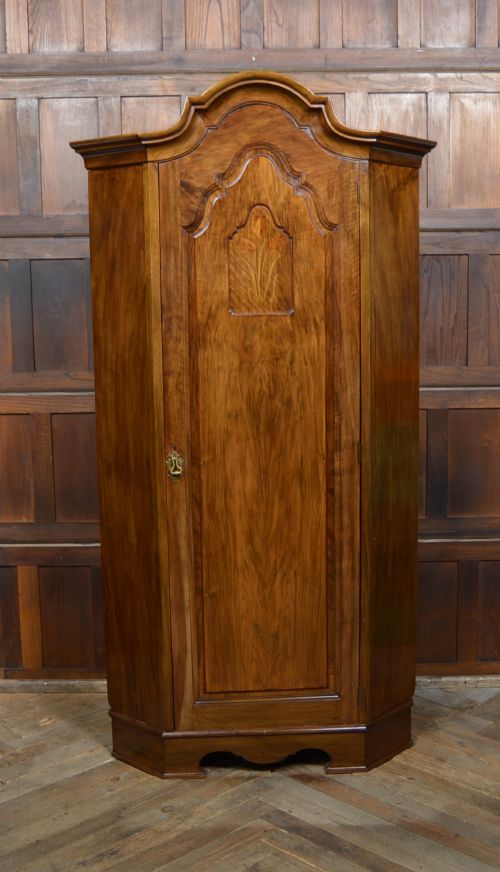
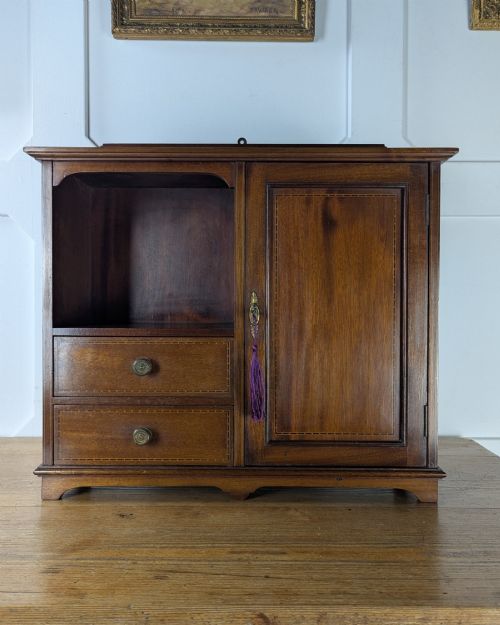
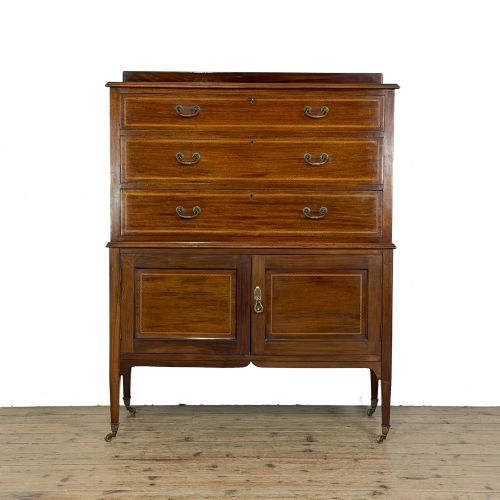
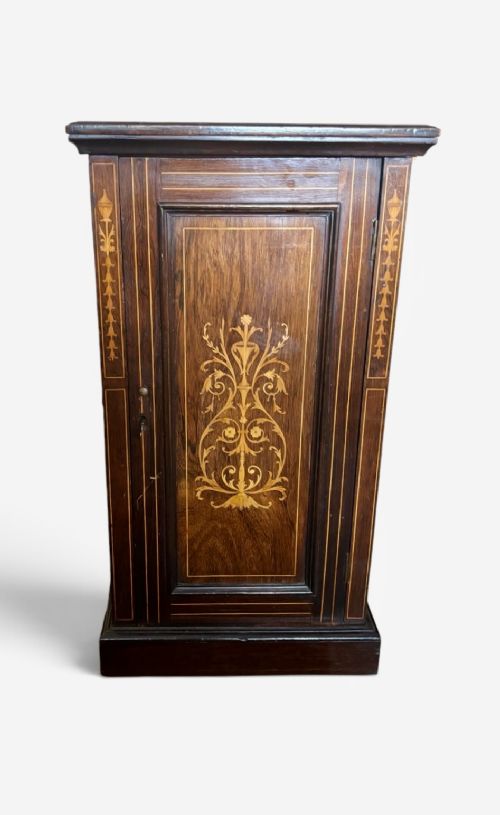
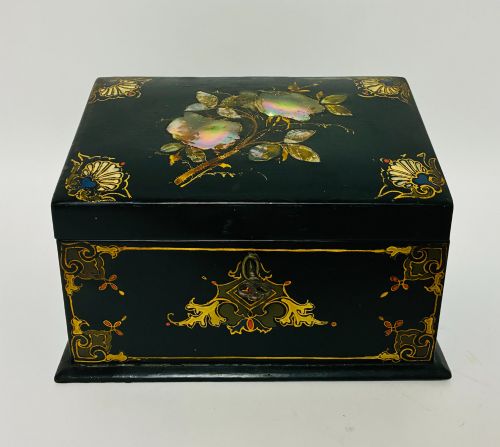

Edwardian Inlaid Storage
Edwardian inlaid storage brings together practical cabinetry and delicate contrasting wood details, offering period utility for modern rooms.
Edwardian Inlaid Storage
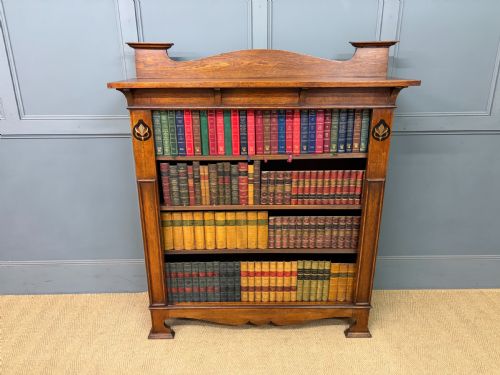
Edwardian inlaid storage encompasses a range of domestic furniture designed to keep rooms orderly while displaying refined surface ornament. Pieces bearing this description draw on Edwardian, Victorian, and Sheraton Revival idioms to create functional items for bedrooms, music rooms, and reception spaces.
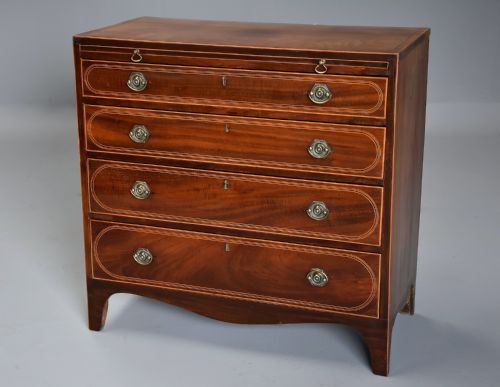
The most frequent forms met on this page include music cabinets, chests of drawers, and wardrobes, alongside specialised pieces such as bedside cabinets and linen presses. Cabinets designed for sheet music, sheet storage, and small garments predominate among the surviving examples.
Makers working within these styles drew upon Georgian and Regency proportions, adapting them for early twentieth-century homes. The resulting furniture balances upright vertical storage with lighter wood tones suited to period interiors.
Materials and Construction
Makers built these pieces primarily using solid mahogany and walnut, frequently applying veneers of satinwood and rosewood to large surfaces. Structural carcases often relied on softer secondary woods, while drawer linings utilised pine or mahogany.
Surface ornament depended on precision woodworking techniques, incorporating boxwood and satinwood inlay to form geometric lines, swags, and classical motifs. Brass hardware, including handles, hinges, and lock escutcheons, provided functional contrast to the dark and light timbers.
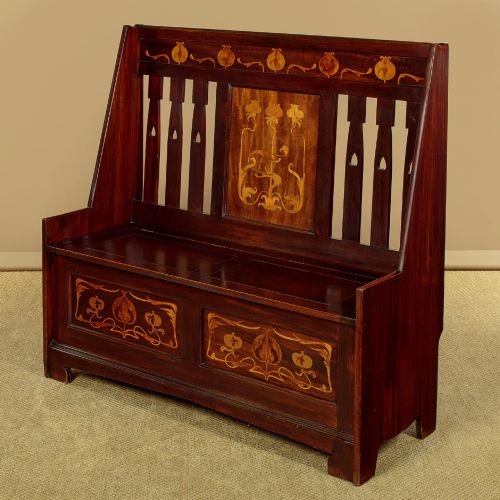
Glazing bars in display cabinets and music cupboards required careful joinery to support glass panels securely. Secondary details like marquetry panels and floral inlay added layers of ornamentation to drawer fronts and cabinet doors.
Storage forms range from music cabinets and compact bedside cupboards to large triple wardrobes and housekeepers' linen presses.
Quality and Craftsmanship
The standard of a piece rests upon the precision of its timber selection and the sharpness of its inlay work. Finer examples display tightly matched grain patterns and seamlessly fitted stringing that follows contours without gaps.
Structural integrity differentiates standard workshop output from pieces bearing maker attributions. Drawer construction utilising hand-cut dovetails and stable secondary timbers indicates higher execution levels than machine-cut alternatives.
The depth and clarity of the surface finish dictate visual success. Well-preserved French polish enhances the natural chatoyancy of mahogany and satinwood without obscuring the underlying grain structure.
GM Elwood·JS Henry·maples & co·Druce & Co·James Shoolbred & Co·Maple & Co
The Edwardian Inlaid Storage Glossary
- Inlay
- A decorative technique where pieces of contrasting wood, such as boxwood or satinwood, are inserted into recessed cavities in a solid wood surface. This method creates flat ornamental patterns without altering the primary contours of the furniture.
- Sheraton Revival
- A late nineteenth and early twentieth-century design movement inspired by the neoclassical furniture of George Sheraton. It emphasises light proportions, tapered legs, and delicate satinwood veneer.
- Compactum
- A large fitted wardrobe or multi-compartment cupboard combining hanging space, drawers, and shelving within a single carcass. These pieces offered comprehensive bedroom storage for Victorian and Edwardian households.
- Stringing
- Narrow strips of contrasting timber embedded in lines around the edges of drawer fronts, tabletops, or cabinet doors. It acts as a subtle border framing the primary wood.
- Marquetry
- The art of applying decorative veneer pieces to a structural panel to form pictorial or geometric designs. Unlike simple inlay, marquetry covers the entire surface with assembled wood veneers.
Edwardian Inlaid Storage: Frequently Asked Questions
How do I identify Sheraton Revival pieces?
Sheraton Revival furniture is recognised by its reliance on eighteenth-century neoclassical forms, light mahogany timbers, and satinwood banding. Pieces often feature tapered legs, delicate stringing, and classical motifs like urns and bellflowers.
This style gained popularity in the late nineteenth and early twentieth centuries as cabinetmakers reinterpreted Georgian designs for contemporary homes. The construction methods of this later period generally reveal nineteenth-century or Edwardian joinery practices.
Where were bedside cabinets used?
Bedside cabinets served as compact bedside storage for chamber pots, personal items, and nighttime reading materials in Edwardian bedrooms. They were frequently produced as matched pairs to flank double beds.
Their enclosed cupboards and single drawers kept necessities concealed while offering a surface for a lamp or water pitcher. The use of inlaid satinwood and mahogany matched the broader bedroom suite.
What is a linen press?
A linen press is a tall storage piece combining upper sliding trays or shelves enclosed by doors with a chest of drawers beneath. Households used them to store folded table linens, sheets, and garments.
Georgian and Victorian examples often feature panelled doors and substantial mahogany or walnut carcasses. Edwardian iterations incorporated lighter inlay work while retaining the functional double-section format.