
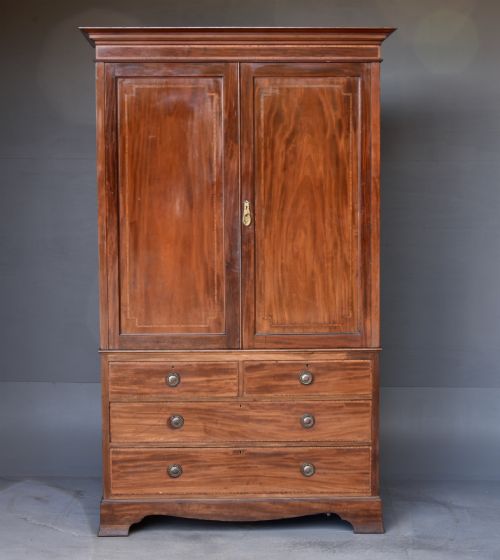
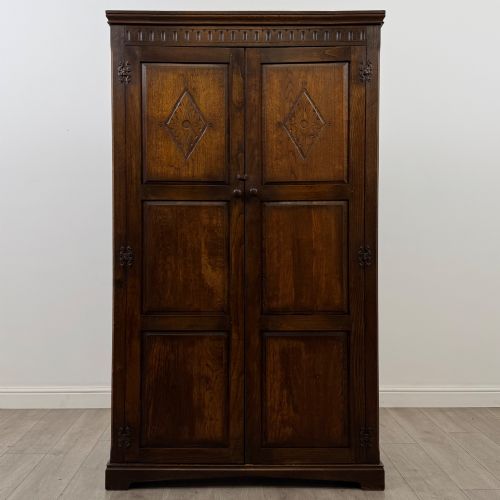
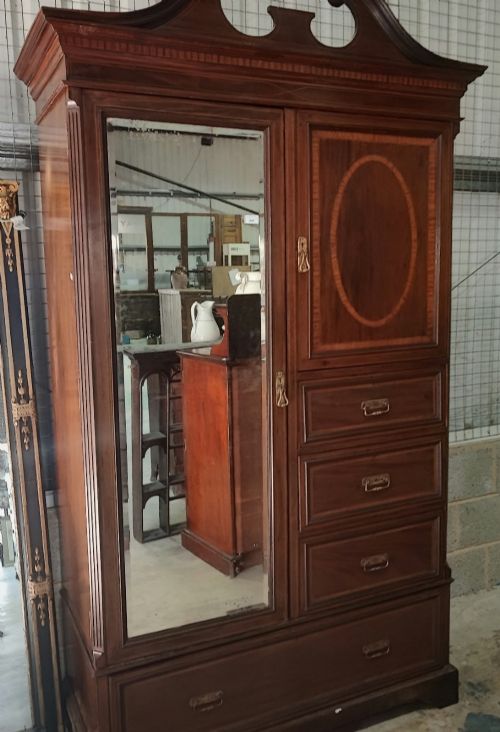
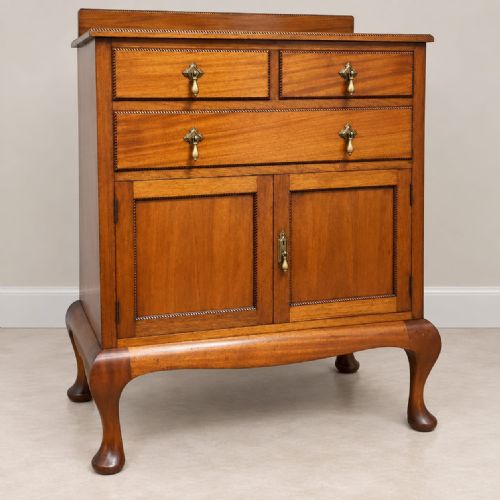
Edwardian Linen Press
An Edwardian linen press combines generous interior storage with fitted sliding trays, offering a practical solution for organising clothes.
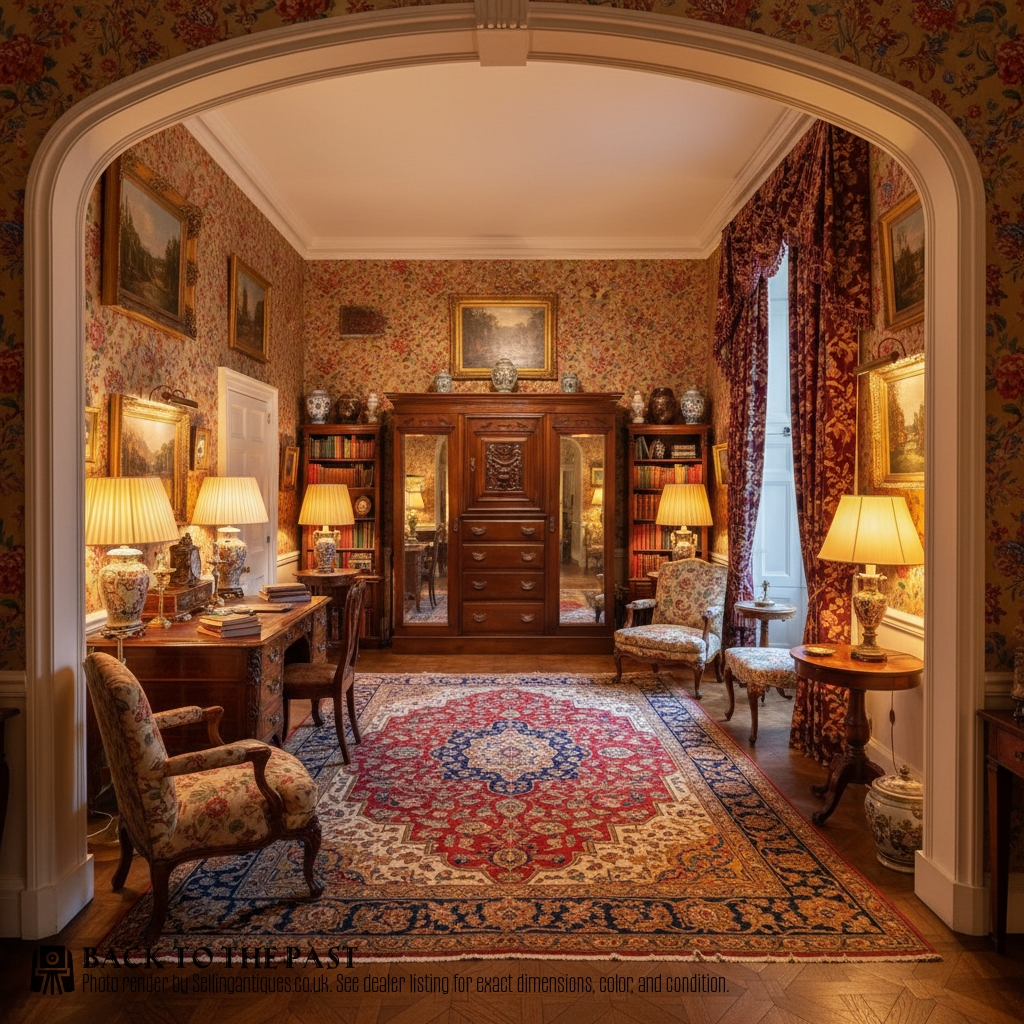
Edwardian linen press forms and origins
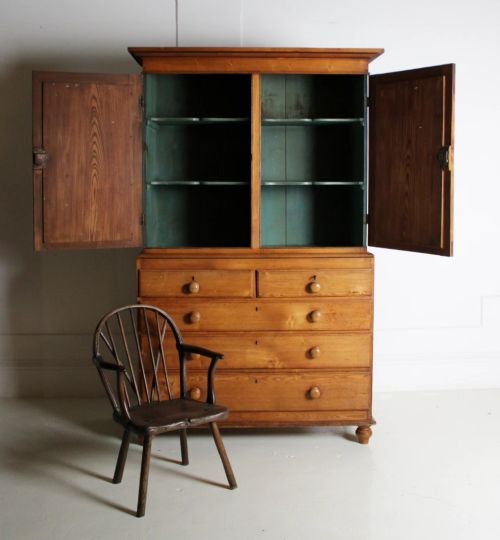
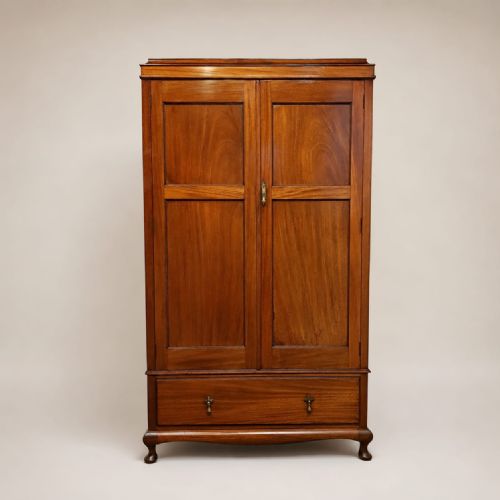
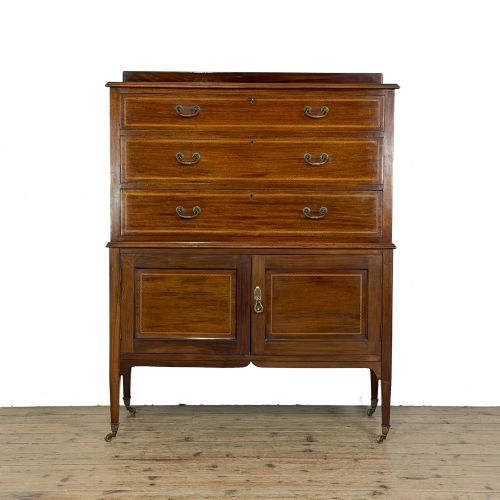
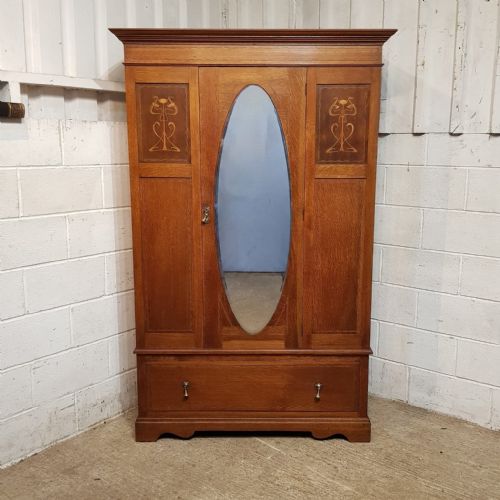
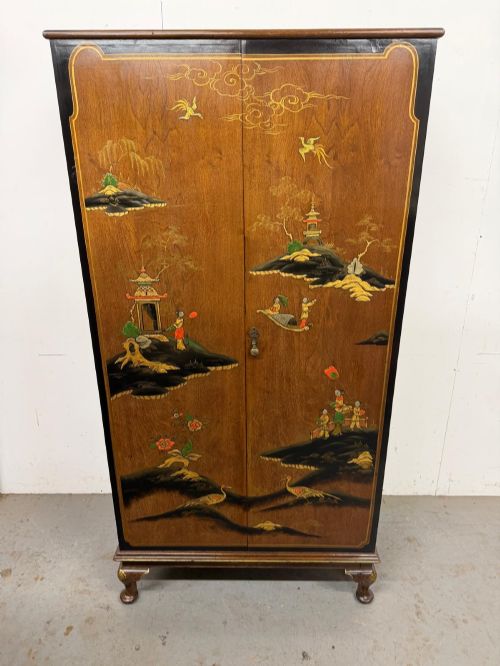
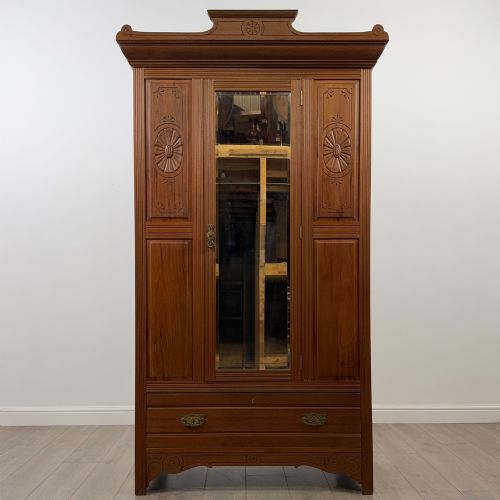
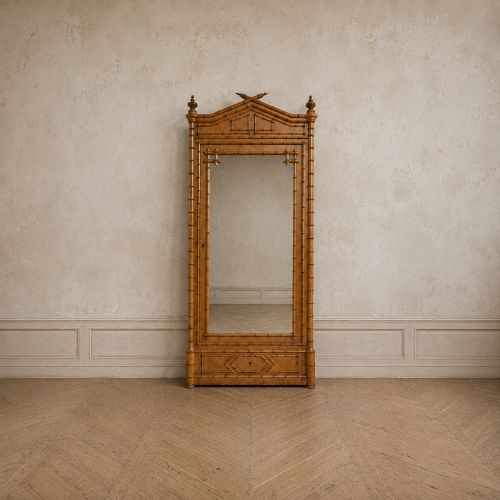
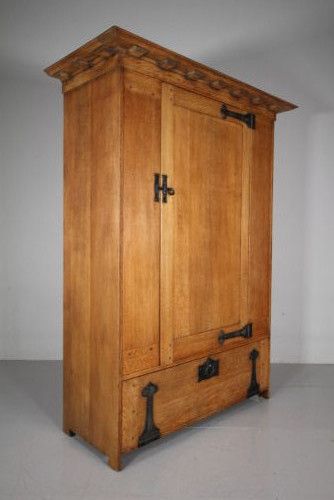
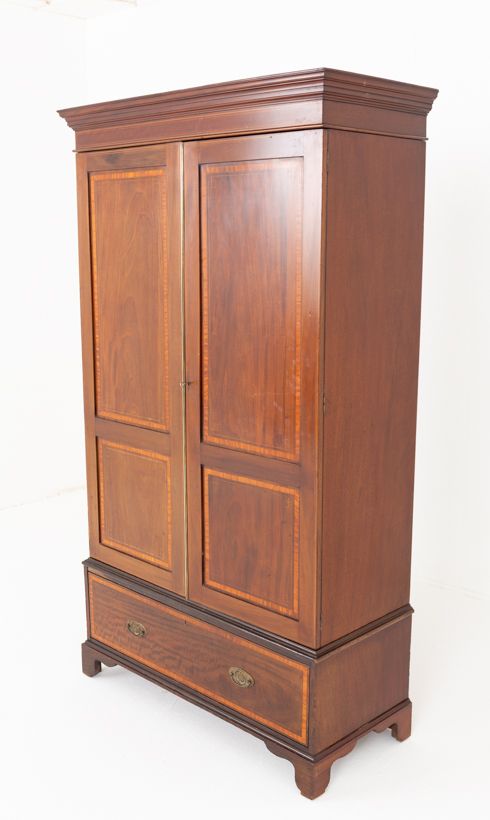
An Edwardian linen press is a substantial piece of bedroom furniture designed primarily for storing garments and textiles, often combining a linen cupboard with sliding interior trays over a chest of drawers. The pieces seen here span the Edwardian era alongside earlier 18th century George III examples and 19th century items, reflecting enduring traditions in domestic storage.
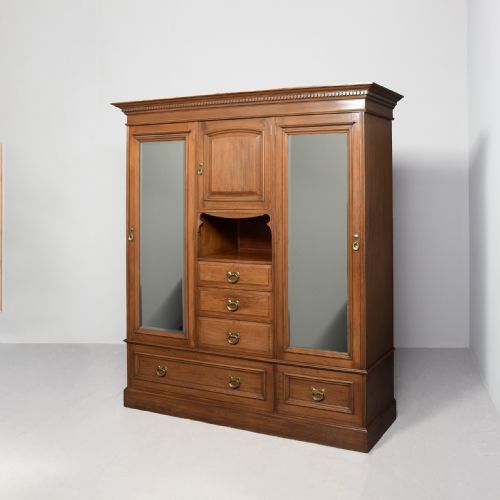
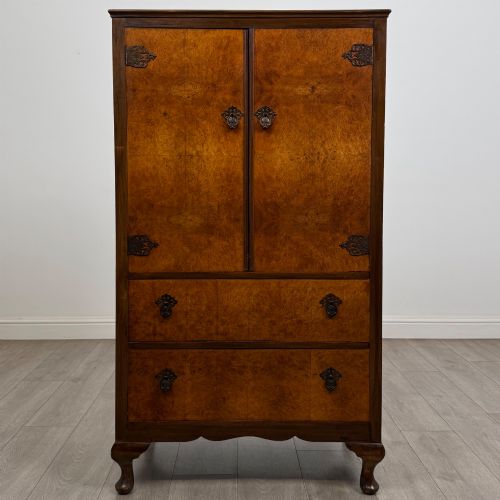
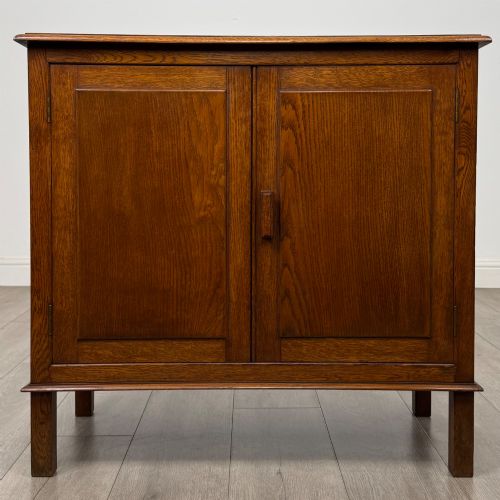
Buyers encounter various formats including tallboys, compactum wardrobes, and breakfront linen cupboards. Materials range from mahogany and satinwood to walnut, oak, ash, and pine, demonstrating the breadth of cabinet-making traditions available in this category.
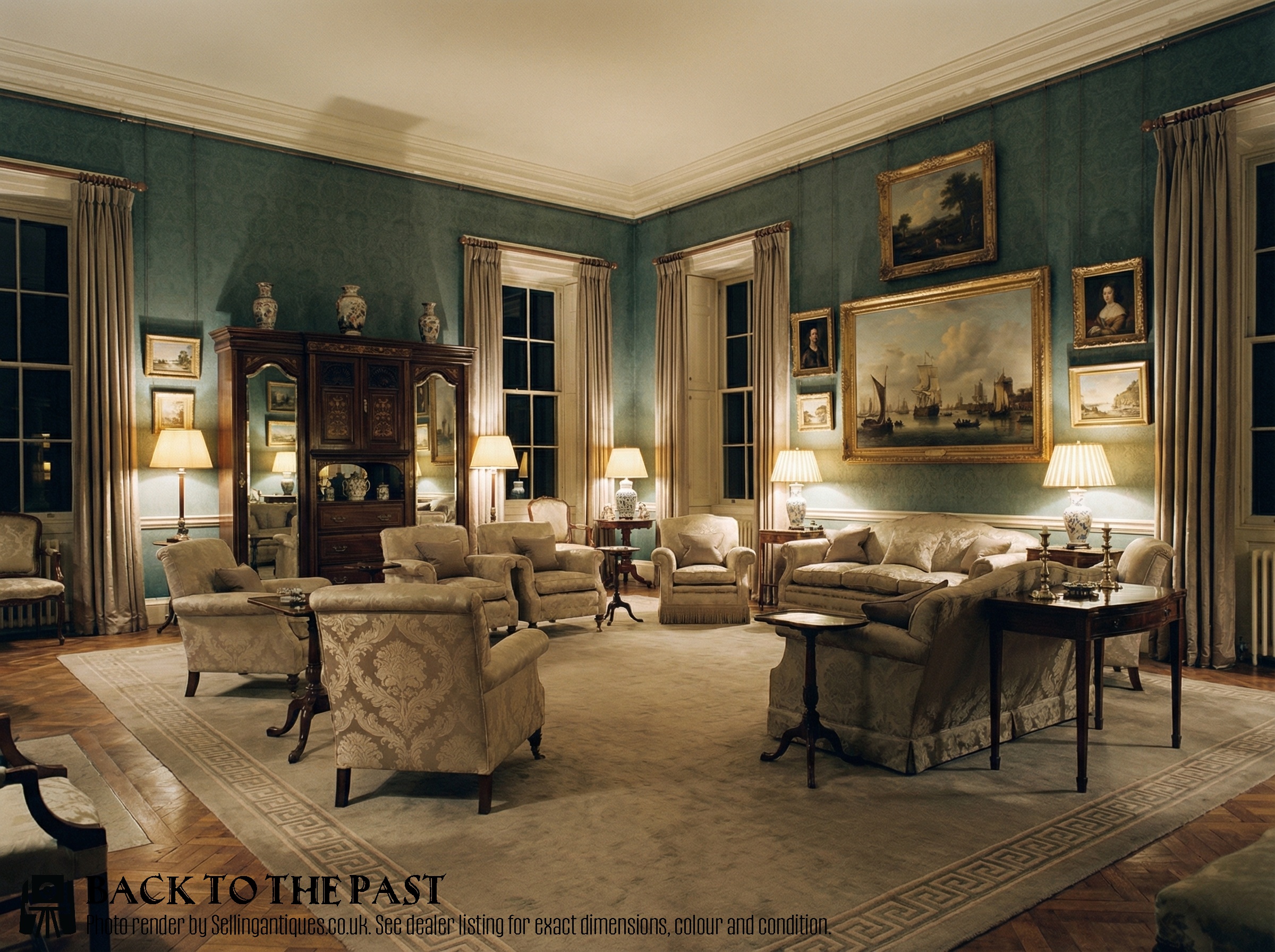
Materials and construction
Cabinet makers constructed these large pieces using solid timbers and carefully selected veneers, applying mahogany, walnut, and satinwood for visible exterior surfaces while utilising pine and oak for internal framing and drawer construction. Brass handles and escutcheons secure doors and drawers, whilst glass panels occasionally feature in associated wardrobe doors.
Surface decoration frequently involves contrasting stringing, satinwood inlay, and carved details, particularly within Edwardian Chippendale Revival pieces and inlaid compactum wardrobes.
Retail Price Guide 2026
Typical UK retail prices for edwardian linen press, calculated from the Sellingantiques database of over a million retail prices indexed since 2003. This retail price guide relies exclusively on Sellingantiques data; no external sources or auction records are used, so the figures do not describe the wider market.
Listings feature woods including mahogany, walnut, satinwood, oak, ash, pine, and brass fittings across multiple periods.
Judging quality and proportion
The standard of a linen press rests upon the choice of timber figure, the crispness of inlay work, and the structural integrity of internal sliding trays. Pieces produced by notable makers exhibit finer timber selection and more disciplined proportions than standard utility examples.
Proportion and scale dictate visual success, ranging from small-scale dwarf bow front presses to large breakfront triple wardrobes. The internal arrangement of drawers and trays must operate smoothly to retain functional appeal.
Waring and Gillow·Maples and Co·Heals of London·Jas Shoolbred and Co·Sopwith and Co·Harris Lebus
The Edwardian Linen Press Glossary
- Linen press
- A tall piece of furniture featuring upper doors enclosing sliding trays, placed above a base section fitted with drawers. Originally designed for storing household linen flat before the widespread use of modern wardrobes.
- Compactum
- A multi-compartment wardrobe combining hanging space, shelves, and linen press trays within a single unified piece. This form maximises storage efficiency in Edwardian bedrooms.
- Inlay
- A decorative technique where contrasting woods or other materials are inserted into recessed cavities on the furniture surface. Satinwood and darker timbers create geometric or floral motifs.
- Breakfront
- A cabinet design where the central section projects forward from the flanking outer sections. This configuration adds architectural depth to large wardrobes and linen cupboards.
- Tallboy
- A tall chest of drawers standing upon another chest, providing considerable vertical storage capacity. These pieces share construction traits with traditional linen presses.
Frequently Asked Questions
What is a linen press?
A linen press is a large storage cabinet containing sliding wooden trays behind upper doors, sitting above a chest of base drawers. They were built to keep textiles flat and clean.
Over time, many of these presses were converted internally by removing the trays to accommodate clothes hangers, though surviving examples retain their original sliding internal configuration.
How do I use a linen press today?
These pieces function effectively in modern bedrooms for storing folded garments, bedding, and jumpers within the sliding trays. The lower drawers accommodate smaller items of clothing.
Measuring ceiling height and doorway clearance is essential before purchase, as Edwardian presses arrive as large, heavy units that require adequate space.
Are these pieces solid mahogany?
Edwardian and earlier presses generally combine solid framing timbers with figured mahogany or walnut veneers applied to stable secondary woods. This construction method prevented warping on large doors.
Makers selected high-grade veneers specifically for door panels and drawer fronts to display rich grain patterns, while internal trays usually consist of solid oak or pine.
How do I distinguish Edwardian pieces from earlier ones?
Edwardian pieces date from the early twentieth century and frequently display lighter satinwood inlay, boxwood stringing, and machine-sawn internal components. Earlier George III examples show heavier hand-cut dovetailing and deeper patination.
Cabinet construction methods, timber choices, and secondary woods such as oak or softwoods help clarify the manufacturing period of each individual press.