
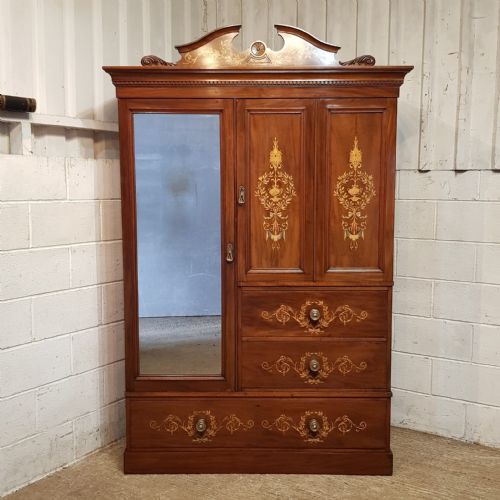
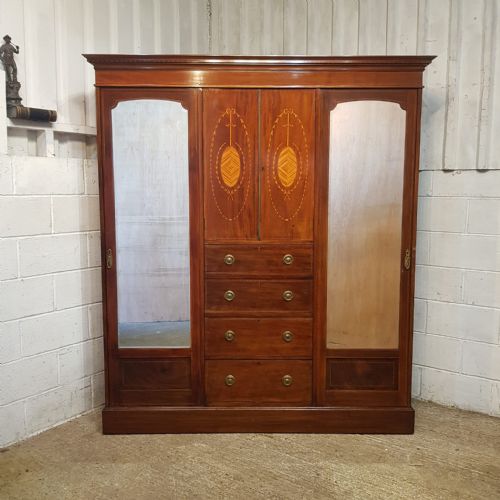
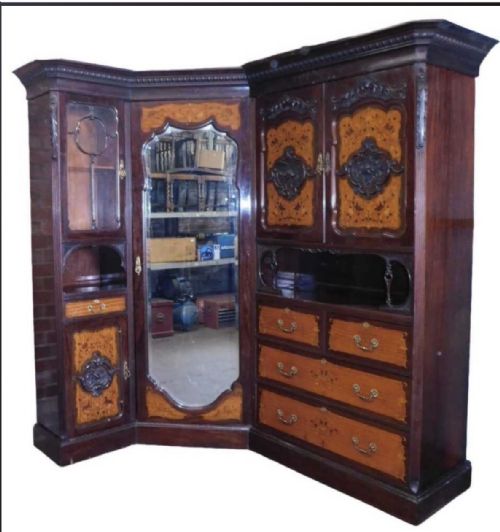


Inlaid Mahogany Compactum
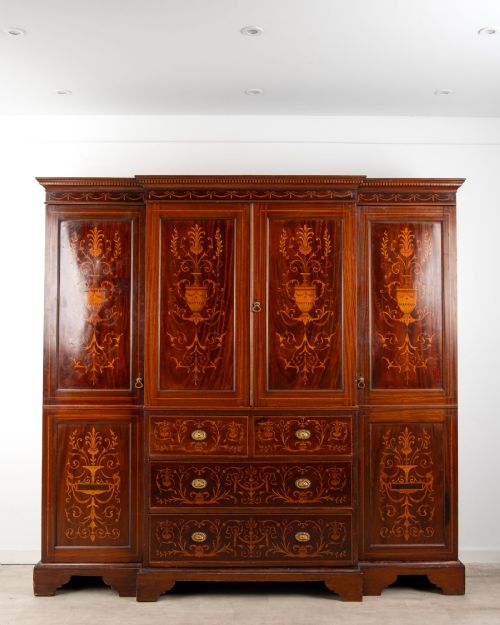
An inlaid mahogany compactum is a substantial combination wardrobe designed to organise clothing comprehensively while providing a grand architectural presence in a bedroom.
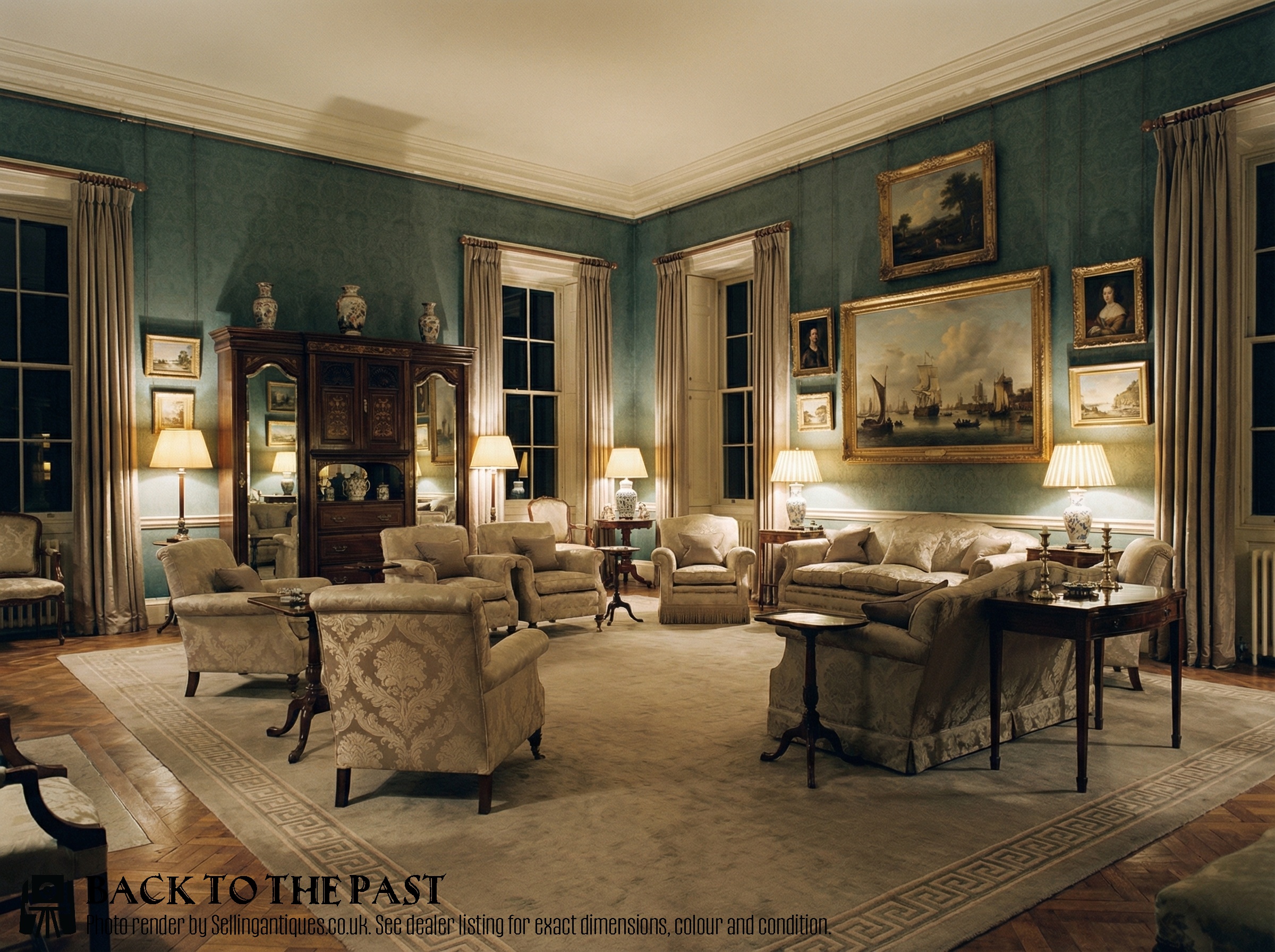
Inlaid Mahogany Compactum
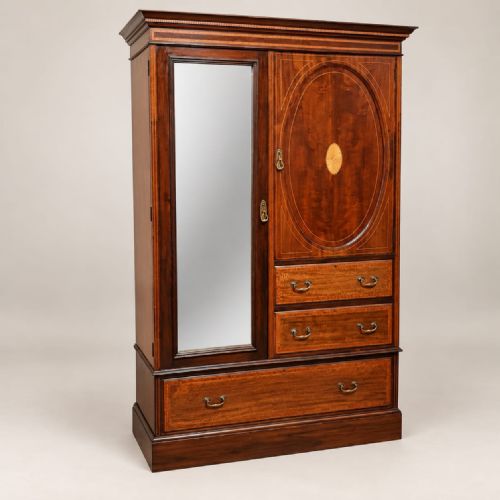
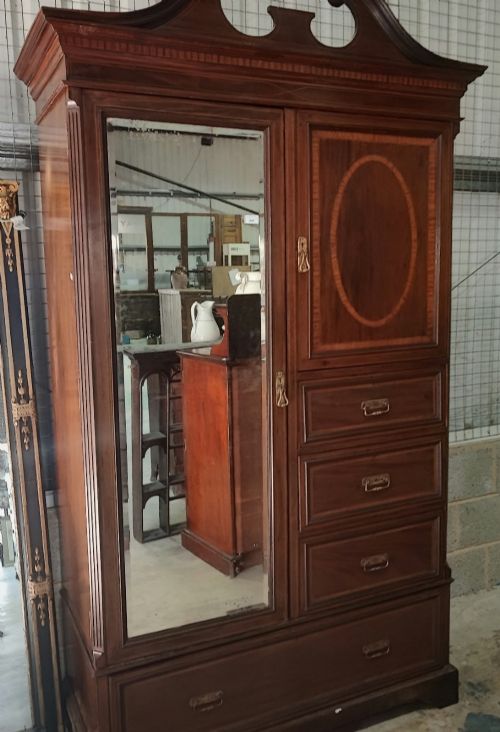
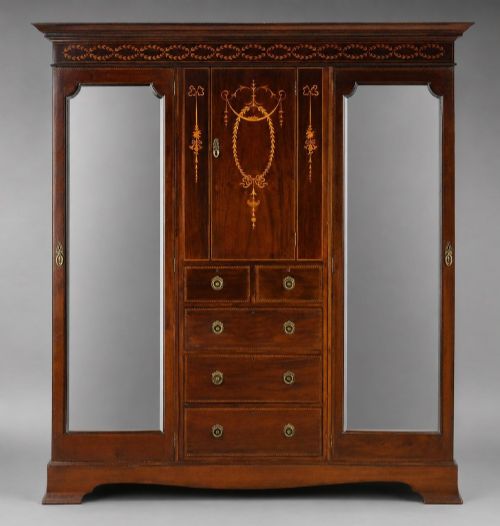
An inlaid mahogany compactum represents a sophisticated development of the nineteenth and early twentieth-century bedroom wardrobe, combining hanging space, drawers, and linen shelves within a single multi-section unit. Buyers searching for an inlaid mahogany compactum will predominantly encounter Edwardian and late Victorian examples, often spanning triple or breakfront configurations.
The Edwardian period yields the highest concentration of these pieces, alongside late Victorian interpretations dated around the 1880s and 1890s. These wardrobe variants typically incorporate central mirrored doors flanked by panelled hanging compartments and internal linen drawers, occasionally following corner or breakfront footprints.
Makers such as Edwards and Roberts, Maple and Co, and Jas Schoolbred produced notable iterations of the form. Regional variations encompass Sheraton revival styles and country house adaptations alongside more urban workshop output.
Distinctions in Quality
Quality reveals itself in the architectural proportions and the crispness of the cabinetwork rather than surface ornamentation alone. Superior examples display precise matching of mahogany veneers and finely executed satinwood inlay that remains flush with the surrounding wood.
Internal configuration and drawer construction differentiate standard production from high-tier cabinetmakers. Well-executed pieces utilise solid mahogany drawer linings with hand-cut dovetails, alongside robust cornice mouldings and stable sectional joints that allow the large wardrobe to be dismantled for transport.
The documented forms span Victorian and Edwardian wardrobes, vanity tables, and breakfront compactum cabinets.
Edwards and Roberts·Maples and Co
The Inlaid Mahogany Compactum Glossary
- Compactum
- A multi-functional wardrobe combining hanging space, drawers, and shelving within a single integrated cabinet.
- Breakfront
- A piece of furniture where the central section projects forward from the flanking wings, creating architectural depth.
- Satinwood Inlay
- Contrasting light yellow timber inserted into recessed channels within the darker mahogany surface to form decorative patterns.
- Crossbanding
- A decorative border of veneer laid so that the grain runs at right angles to the main surface of the panel.
- Bevelled Mirror
- Plate glass featuring a hand-ground and polished sloped edge around the perimeter for decorative effect.
Inlaid Mahogany Compactum: Frequently Asked Questions
How do I assemble an inlaid mahogany compactum?
These large wardrobes were historically constructed in modular sections including a cornice, a base, and flanking hanging robes that bolt around a central drawer or mirrored unit. Assembly requires two people to align the structural tongue and groove joints before securing internal bolts.
Floor levelling is critical during setup to ensure the heavy doors swing true and the internal locks engage correctly without binding against the frame.
Where should I place a compactum in a bedroom?
Due to their substantial height and multi-section footprint, these wardrobes require a dedicated wall with sufficient clearance to allow full door swing and access to internal drawers. Positioning them away from direct heat sources protects the mahogany timber and prevents veneer lifting.
Placement opposite a window also helps maximise the light reflection from any integrated bevelled mirror doors.
How do I distinguish Edwardian from Victorian examples?
Victorian examples tend to feature darker mahogany finishes, heavier architectural cornices, and robust proportions associated with late nineteenth-century cabinetmaking. Edwardian pieces often exhibit lighter satinwood stringing, Sheraton revival motifs, and slightly more restrained overall massing.
Makers' stamps or labels found inside the drawer edges or on the back panels frequently confirm the exact period of manufacture.
What is the best way to care for the wood and inlay?
Regular dusting with a dry, soft cloth prevents particle buildup on the polished mahogany and delicate satinwood stringing. Applying a traditional beeswax polish periodically helps nourish the timber and maintain the sheen of the surface.
Avoid using modern silicone-based sprays, which can penetrate porous antique finishes and degrade the surrounding veneer over time.