
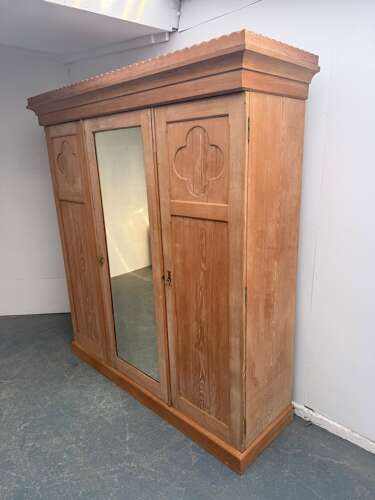
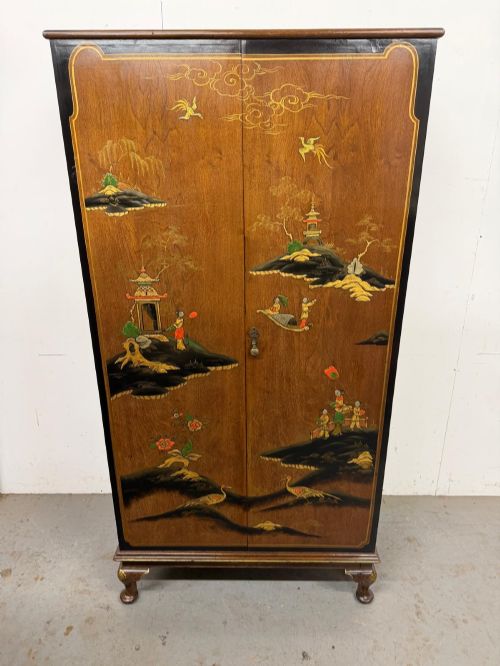
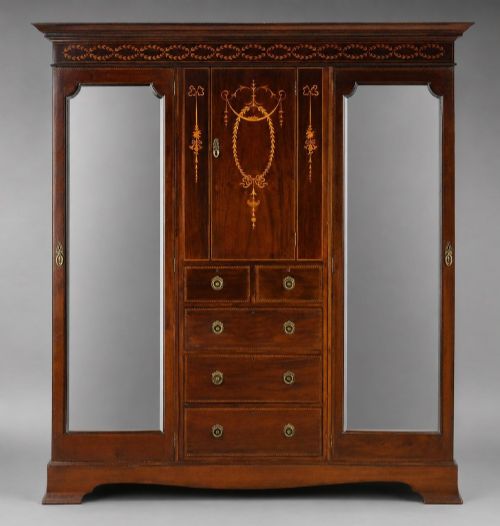
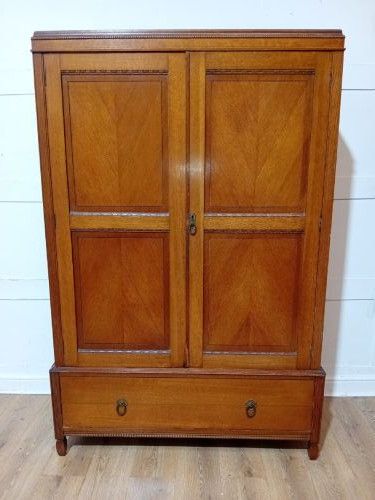
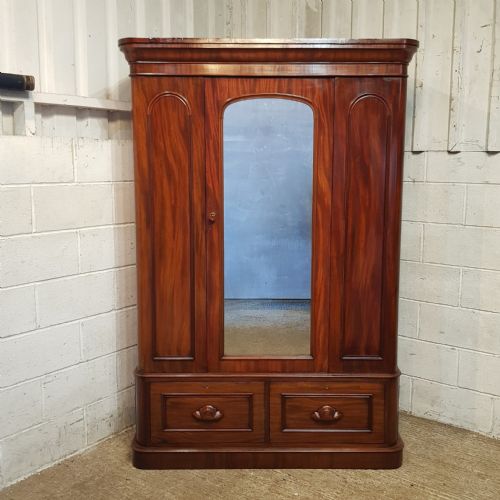
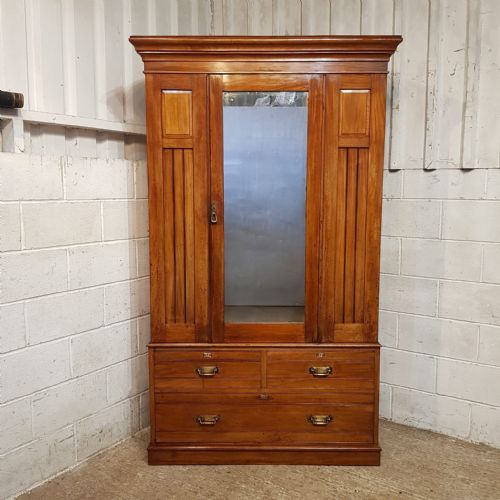
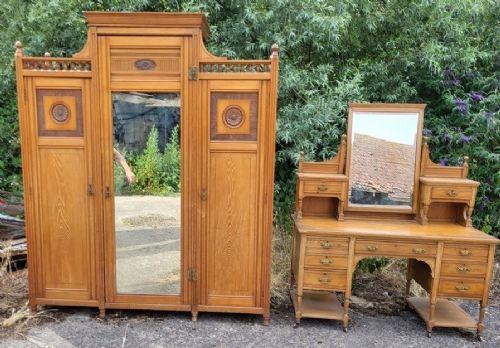
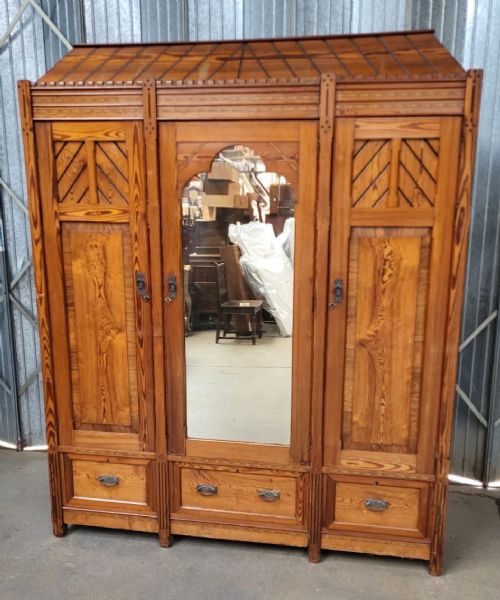
Edwardian Compactum Wardrobe
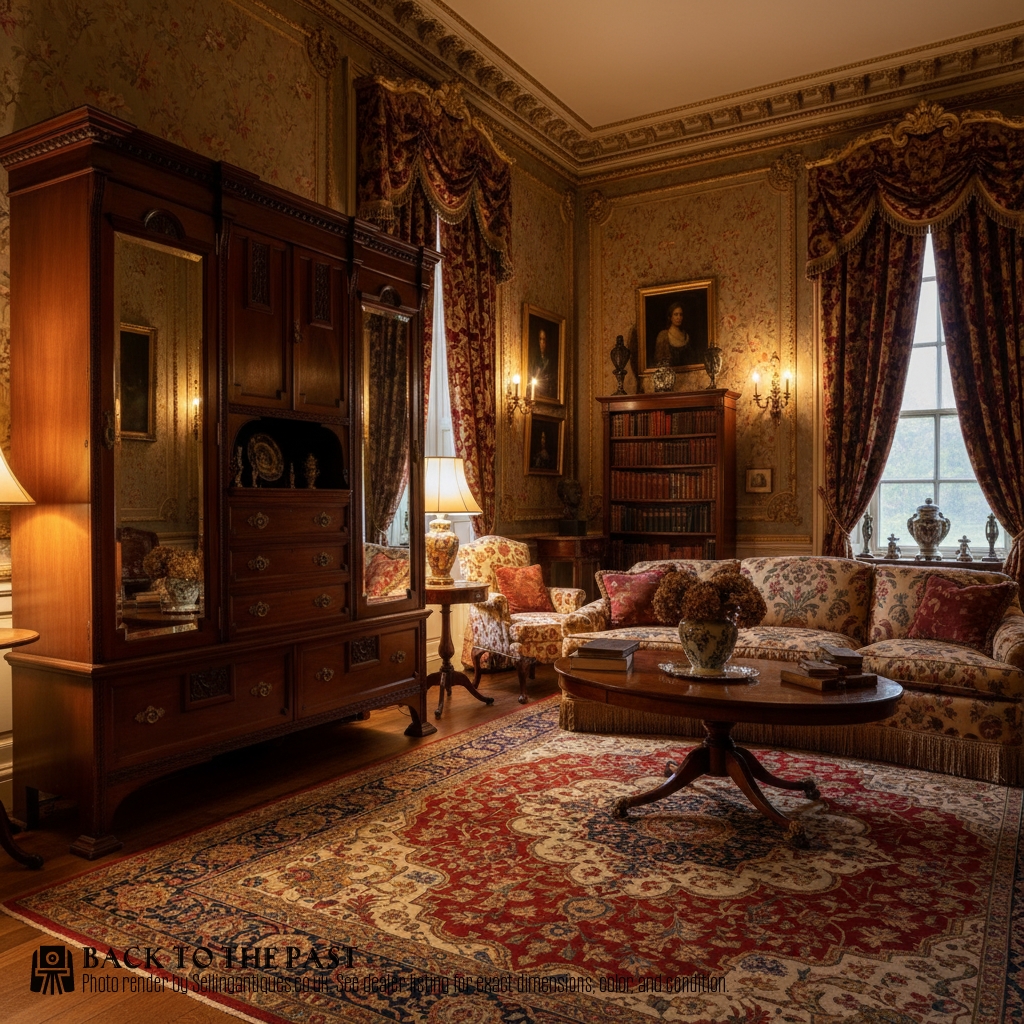
An Edwardian compactum wardrobe provides fitted bedroom storage with hanging space, drawers and shelving combined in one substantial piece of furniture.
Edwardian Compactum Wardrobe
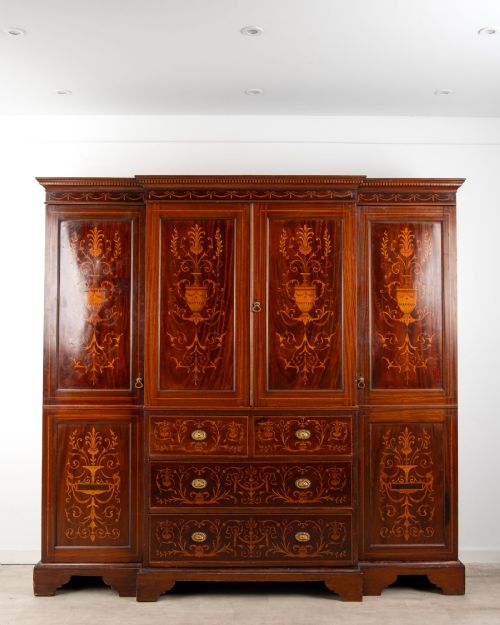
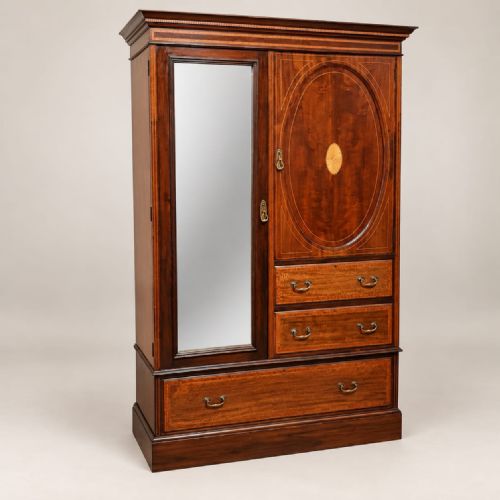
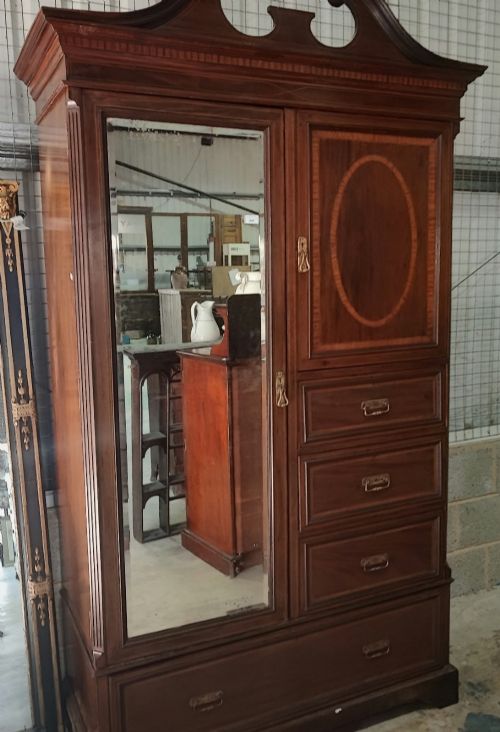
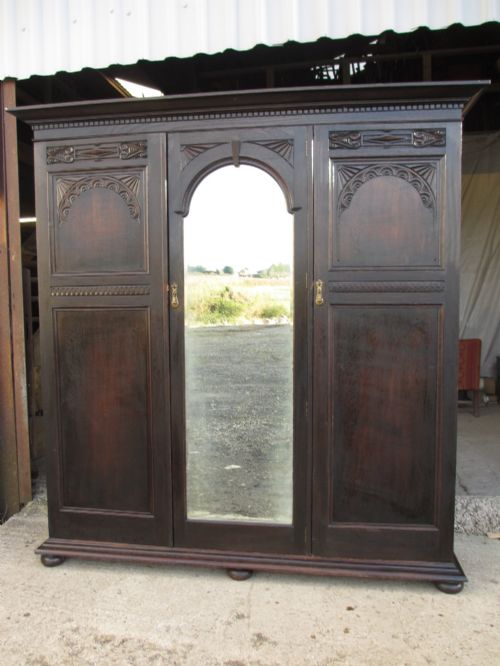
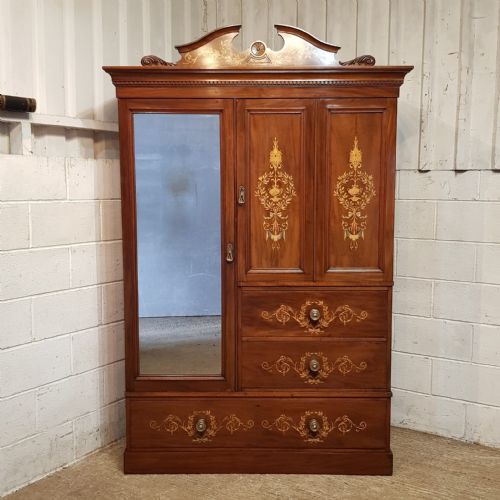
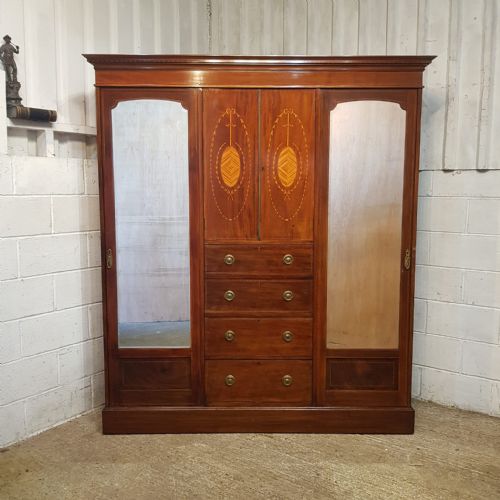
An edwardian compactum wardrobe is a large multi-compartment bedroom piece designed to maximise storage by combining hanging cupboards, linen presses, and drawers within a single architectural frame. These substantial items originate predominantly from the late Victorian and Edwardian periods, stretching from the late nineteenth century into the early twentieth century.
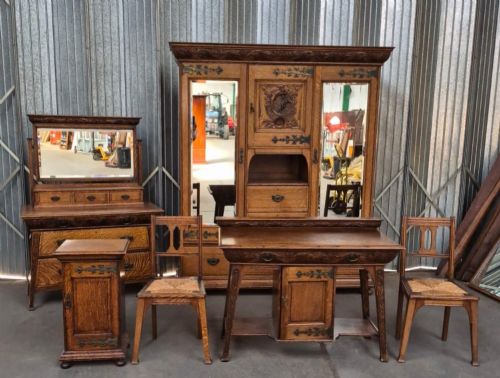
The layout typically incorporates central mirrored doors flanked by hanging sections, alongside internal sliding trays and banks of graduated drawers known as a gentleman's chest configuration. Common timber choices span rich mahogany, warm walnut, golden oak, and pale ash, frequently enhanced by decorative satinwood inlay or marquetry panels.
Makers often constructed these large wardrobes in modular sections to facilitate delivery into period bedrooms, allowing the heavy cornices, central units, and flanking robes to bolt together securely. Buyers encounter various regional interpretations and revival aesthetics, ranging from plain Arts and Crafts utility to elaborate Sheraton Revival neoclassical designs.
How they were made
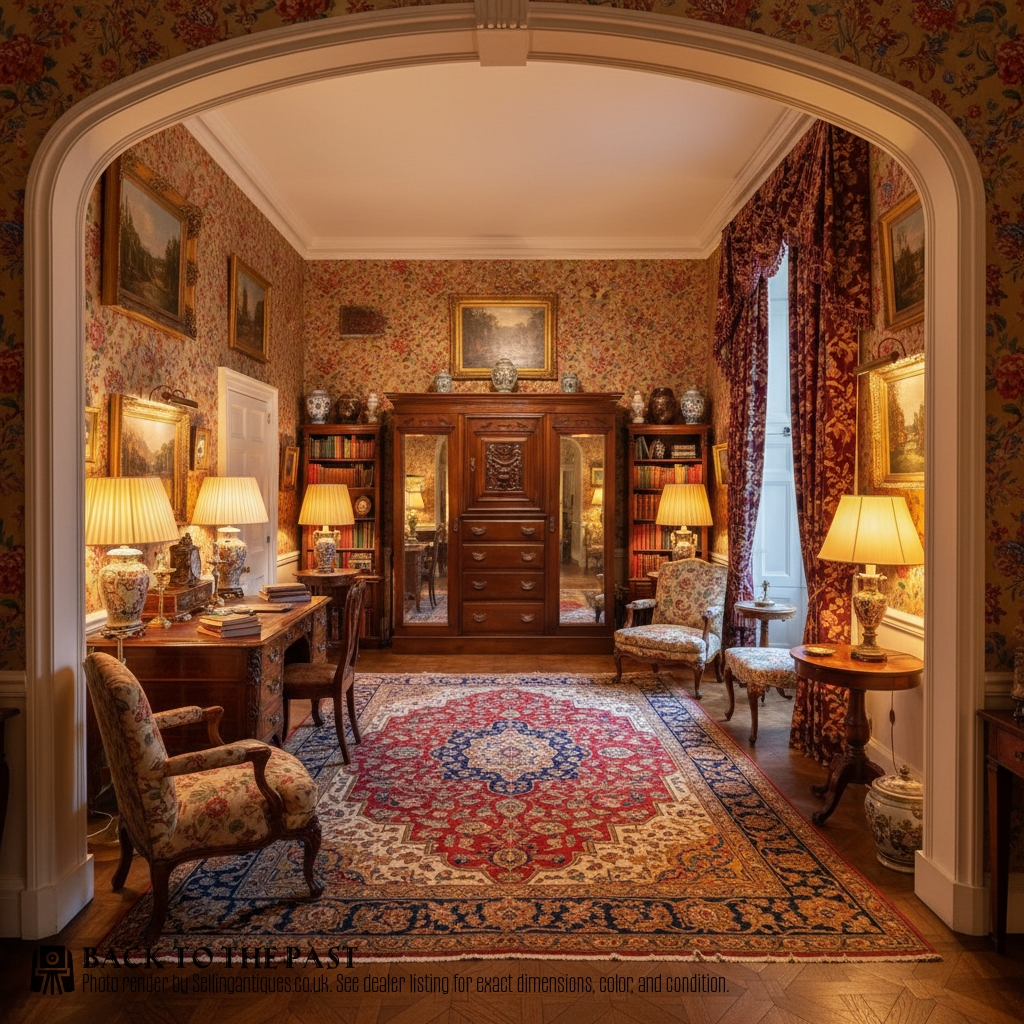
Cabinet makers utilised solid framing timbers such as oak and ash for structural integrity, applying figured mahogany, walnut, or satinwood veneers across the large expanses of doors and drawer fronts. Surfaces often received hand-polished wax finishes that accentuated the natural grain patterns and linear banding of the timber.
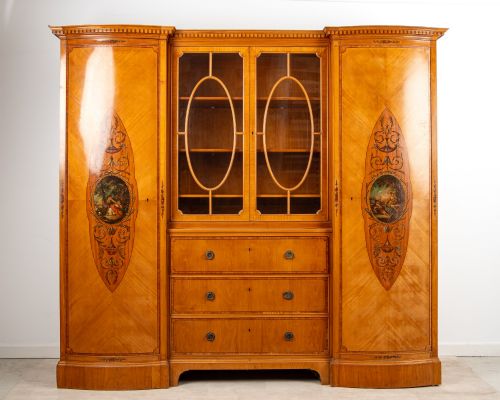
Decoration relied on fine stringing, botanical marquetry, and cross-banding in contrasting woods, alongside carved mouldings and hand-painted panels on select high-end examples. Functional hardware consisted of cast brass handles, escutcheons, and internal locking mechanisms designed to secure the multiple compartments.
Edwardian Compactum Wardrobe Retail Price Guide 2026
Typical asking prices for edwardian compactum wardrobe among the pieces listed under this phrase on Sellingantiques today, from the lower quarter to the upper quarter. They describe what is for sale here now, not the wider market.
The archive records combination wardrobes and modular bedroom suites alongside standalone compactums.
What varies in quality
Construction standards depend heavily on the choice of primary timber and the precision of the internal partitioning, with superior examples offering solid cedar or mahogany drawer linings and dust boards between sections. The complexity of the internal configuration, such as fully fitted linen slides and matching brass fittings, distinguishes standard production models from bespoke workshop commissions.
The ambition of the decorative scheme sets individual pieces apart, ranging from plain functional oak carcases to sophisticated breakfront facades with bevelled mirror glass, detailed marquetry, and hand-painted motifs signed by prominent London retailers.
Edwards and Roberts·Harris Lebus·Shapland and Petter·Maple and Co·Heals·Gillows of Lancaster
The Edwardian Compactum Wardrobe Glossary
- Compactum
- A multi-functional wardrobe combining hanging space, drawers, and shelving in a single unit. This design was patented in the nineteenth century to provide comprehensive bedroom storage.
- Marquetry
- The art of applying small pieces of veneer to form decorative patterns and pictures. Craftsmen used various tinted and natural woods to create floral or neoclassical motifs.
- Gentleman's Wardrobe
- A storage piece featuring internal sliding linen trays alongside traditional hanging space and drawers. These compartments were traditionally tailored for folded shirts and accessories.
- Breakfront
- A cabinet design where the central section projects forward from the flanking wings. This architectural arrangement creates depth and shadow on large wardrobe facades.
- Stringing
- A narrow strip of contrasting timber inlaid into a channel on a veneered surface. Cabinet makers used this technique to frame door panels and drawer fronts.
Edwardian Compactum Wardrobe: Frequently Asked Questions
How do I dismantle a compactum wardrobe?
These large wardrobes typically separate into modular sections including a heavy cornice, a central hanging or drawer tower, and two flanking side robes. Internal bolts and screws hold the side panels to the central carcass.
Marking each component during disassembly ensures the joints reassemble correctly in a new room without straining the frame.
What is the difference between an ordinary wardrobe and a compactum?
A standard wardrobe provides basic vertical hanging space behind doors, whereas a compactum integrates multiple storage formats. It includes internal drawer stacks, sliding shelves, and compartments alongside the hanging areas.
This all-in-one design eliminated the need for a separate chest of drawers in Edwardian bedrooms.
Will a triple wardrobe fit in a modern bedroom?
Triple wardrobes require substantial wall space and high ceilings due to their impressive proportions and heavy projecting cornices. Measuring the exact clearance from floor to ceiling is essential before attempting installation.
Because these pieces are deep, checking hallway turns and doorway widths prior to delivery prevents access issues.
How should I care for polished mahogany and walnut surfaces?
Maintain the timber by applying a natural beeswax polish occasionally to nourish the grain and protect against dryness. Avoid placing the wardrobe near direct heat sources or strong sunlight to prevent veneer cracking.
Dusting regularly with a soft, dry cloth preserves the historical sheen of the polished finish.