
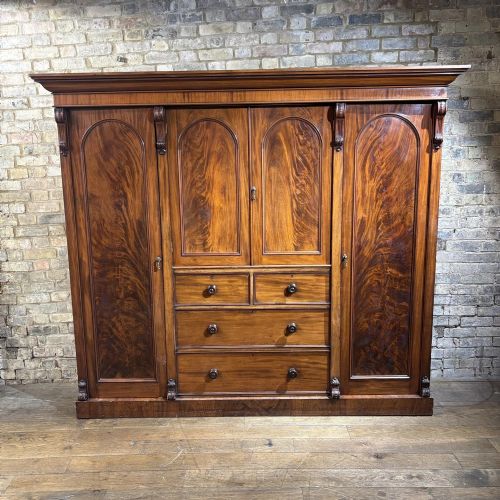
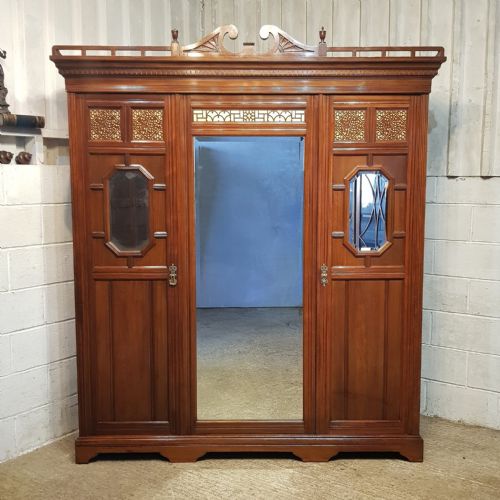
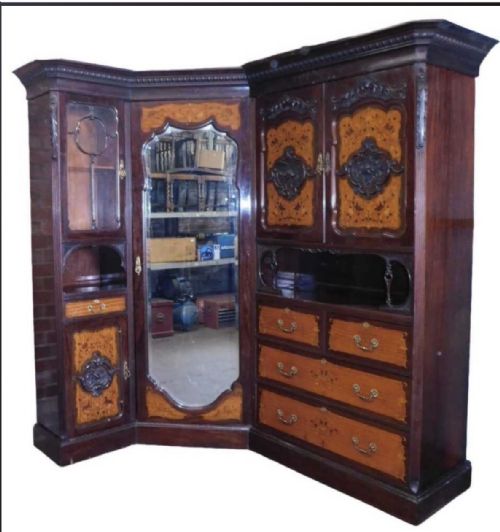

Antique Mahogany Compactum
An antique mahogany compactum offers capacious fitted storage combining hanging space, drawers and press shelves within a single architectural wardrobe.
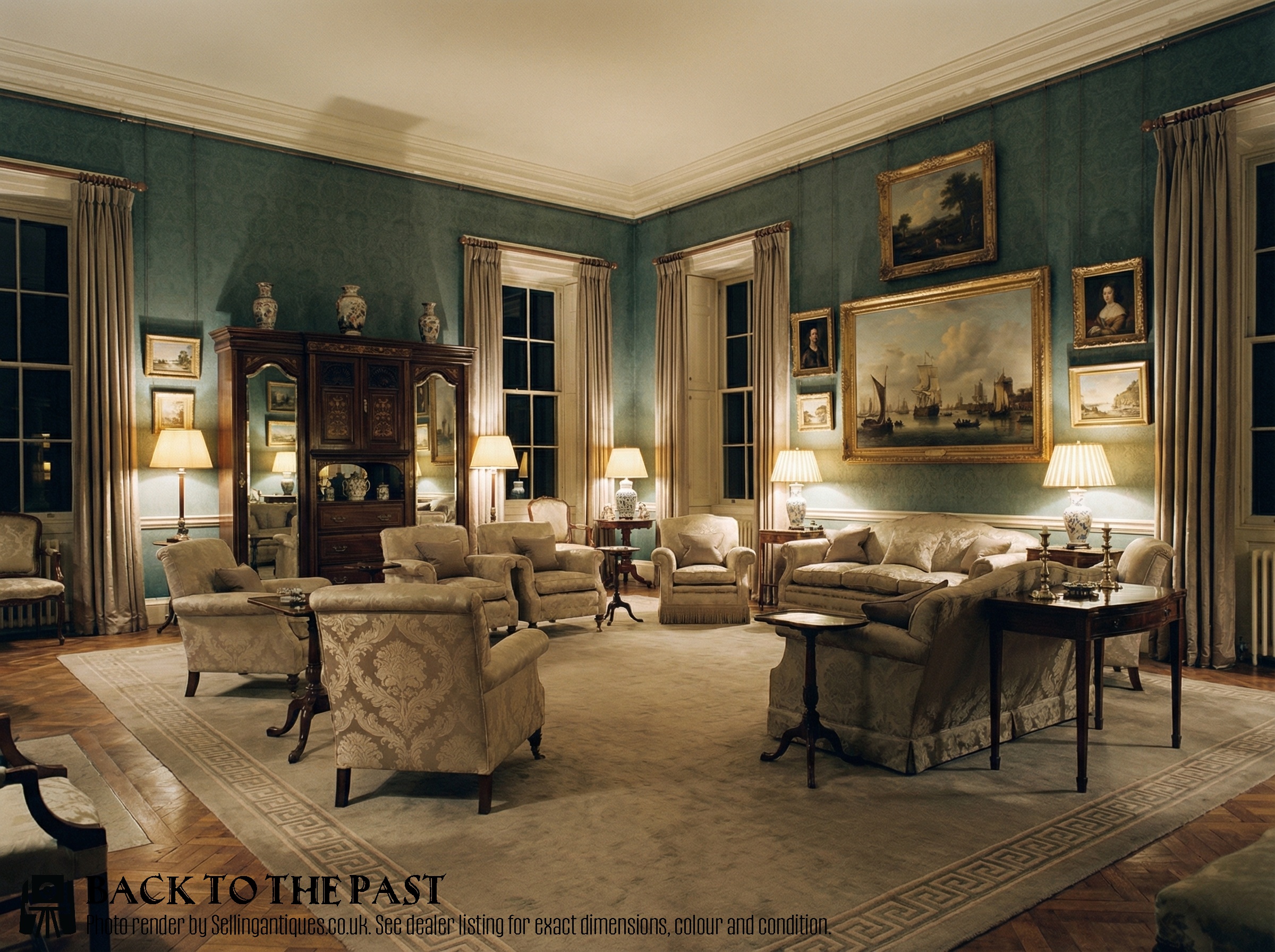
Understanding the antique mahogany compactum
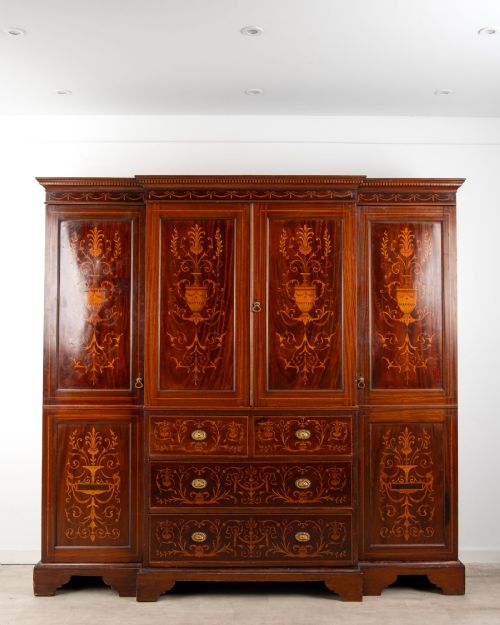
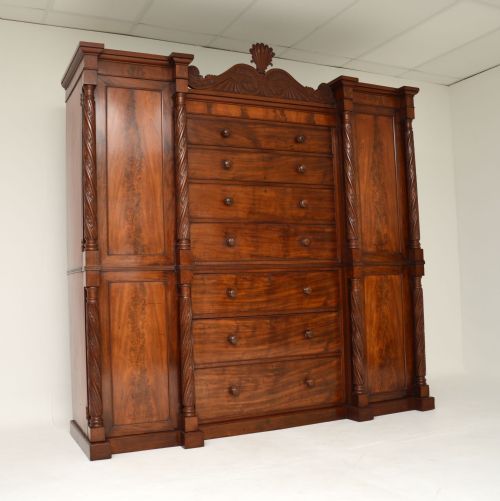
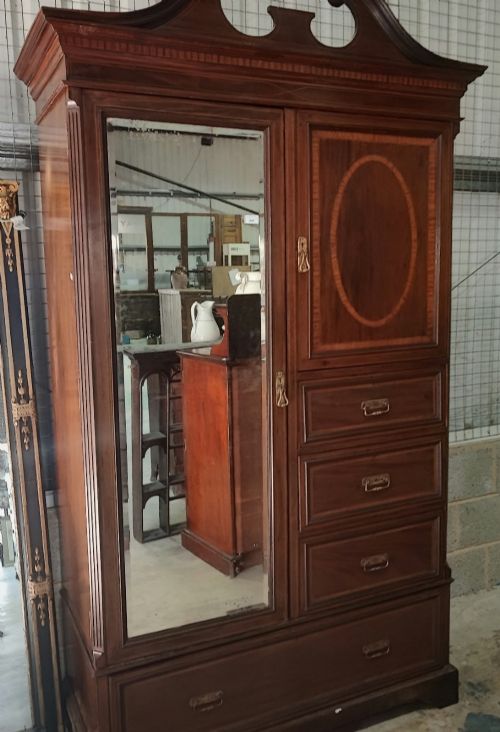
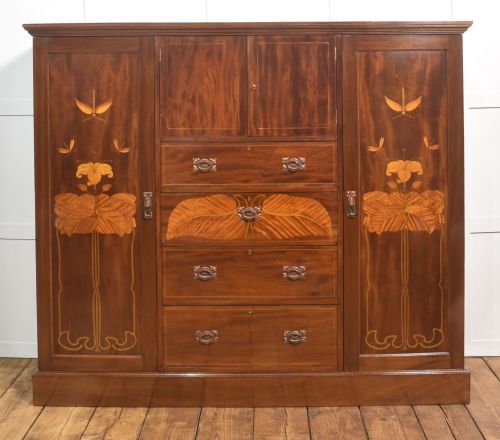
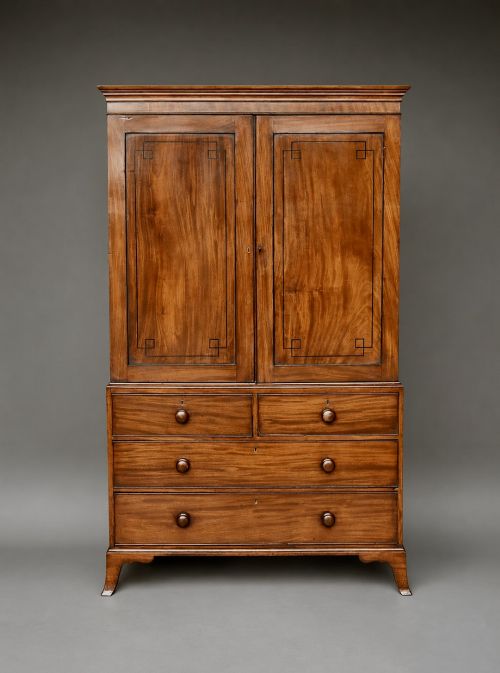
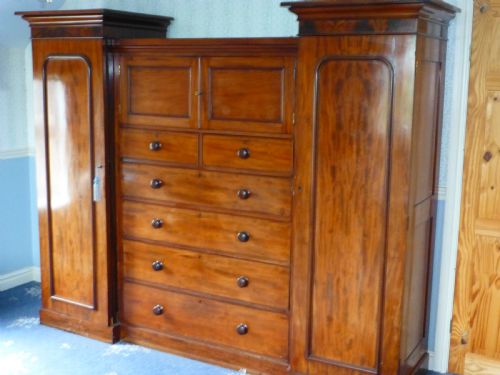
The term antique mahogany compactum describes a large fitted wardrobe designed to maximise storage by incorporating internal drawers, sliding trays and hanging sections within one unified case. These pieces frequently appear in triple or breakfront configurations, providing extensive capacity for historical wardrobes.
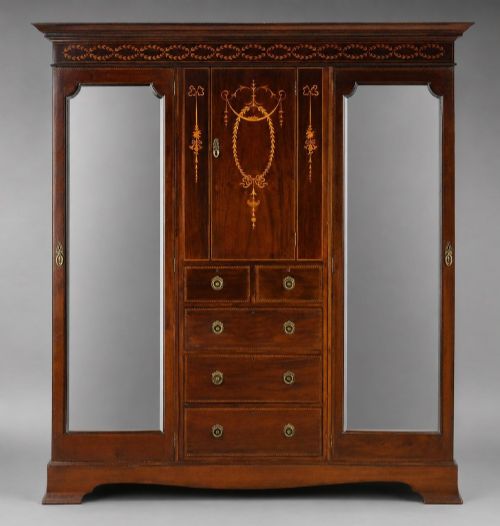
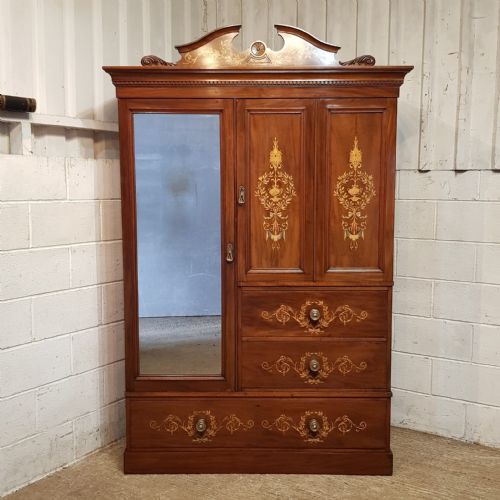
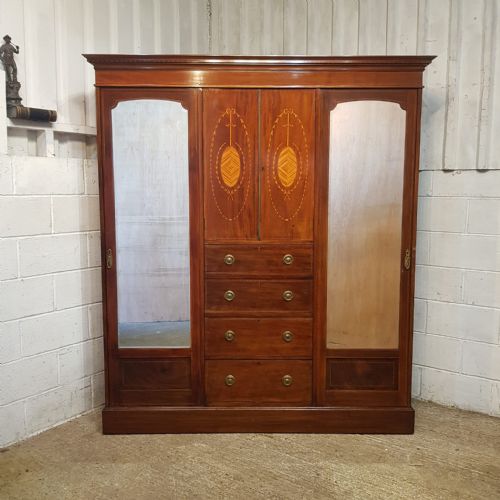
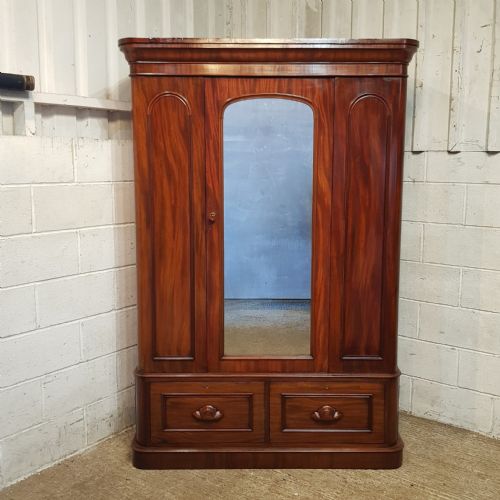
Most examples date from the Victorian and Edwardian eras, spanning the nineteenth and early twentieth centuries. Victorian pieces lean towards robust proportions in solid timber, whilst Edwardian versions often incorporate satinwood stringing and inlaid details.
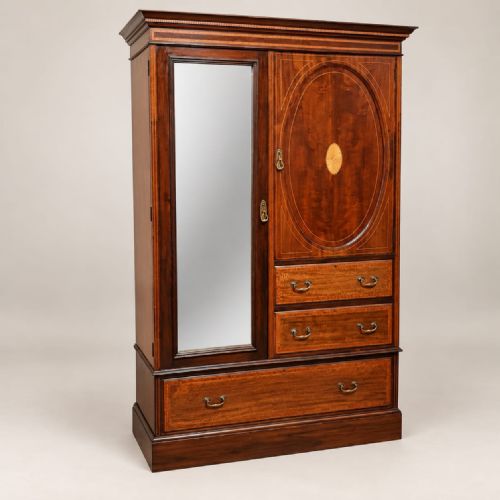
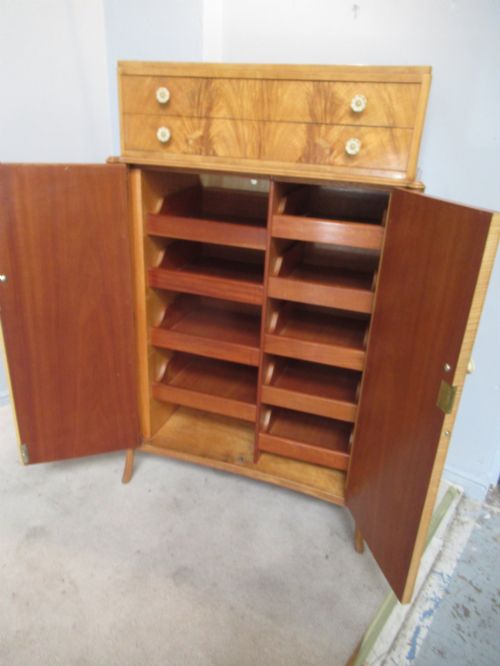
Buyers encounter variations including gents wardrobes, corner units and mirrored doors. The overarching form remains a substantial case good built to dominate a large bedroom.
Materials and construction
Cabinetmakers utilised solid mahogany and flame mahogany veneer over secondary timbers to build these large carcasses. The timber selection creates rich grain patterns across the main doors and drawer fronts.
Decorative elements involve brass hardware and delicate satinwood inlay work seen on Edwardian iterations. Glass panels appear occasionally on central mirror doors, reflecting light within the bedroom.
Construction relies on traditional joinery to support the heavy multi-section carcase. Breakfront and inverted breakfront profiles require precise timber shaping and assembly.
Retail Price Guide 2026
Typical UK retail prices for mahogany compactum, calculated from the Sellingantiques database of over a million retail prices indexed since 2003. This retail price guide relies exclusively on Sellingantiques data; no external sources or auction records are used, so the figures do not describe the wider market.
Listings feature Victorian, Edwardian, and nineteenth-century eras, utilising mahogany, flame mahogany veneer, brass, glass, and satinwood.
Distinctions in craftsmanship
Quality rests upon the selection of timber figures, where symmetrical flame mahogany veneer elevates the visual impact of the facade. Plain grain surfaces represent a more utilitarian standard of production.
The interior arrangement dictates utility and sophistication, separating basic hanging cupboards from fully fitted gentlemen's compactums featuring linen slides and partitioned drawers. Finer execution shows in the complexity of internal compartments and the integration of sliding trays.
Proportional harmony distinguishes superior breakfront forms from heavier, unarticulated triple wardrobes. Well-balanced cornices and crisp inlay work demonstrate the maker's skill.
Gillow of Lancaster·Compactom Ltd
The Antique Mahogany Compactum Glossary
- Compactum
- A multi-functional wardrobe combining hanging space, shelving and internal drawers in one piece of furniture.
- Breakfront
- A cabinet design where the central section projects forward from the flanking wings, creating architectural depth.
- Flame mahogany
- A veneer cut from the fork of the mahogany tree that produces a distinctive flickering flame pattern.
- Satinwood
- A pale, lustrous exotic timber utilised for contrasting stringing and inlay details on Edwardian furniture.
- Clothes press
- An internal storage section within a wardrobe containing sliding trays or shelves for folded garments.
- Stringing
- A narrow inlay of contrasting wood used to outline panels and drawers on cabinet furniture.
Frequently Asked Questions
What is an antique mahogany compactum?
An antique mahogany compactum is a large fitted wardrobe that combines hanging compartments, sliding press trays and internal drawers within a single architectural carcass.
These pieces were designed to provide comprehensive bedroom storage for historical garments, frequently adopting triple or breakfront proportions.
How do I date a compactum wardrobe?
Dating relies on stylistic markers and timber characteristics observed across Victorian and Edwardian periods. Victorian examples utilise rich solid mahogany and flame veneers, whilst Edwardian pieces often display satinwood inlay and mirrored doors.
Construction methods and hardware styles further help narrow the decade of manufacture between eighteen-eighty and nineteen-twenty.
Will a compactum dismantle for moving?
Most antique compactums are constructed in modular sections comprising a heavy cornice, a central base, and flanking hanging or drawer modules.
This sectional design allowed Victorian and Edwardian cabinetmakers to deliver and assemble these massive pieces in upstairs bedrooms.
What is the difference between a wardrobe and a compactum?
A standard wardrobe provides primarily hanging space behind doors, perhaps with a single long drawer beneath.
An antique mahogany compactum integrates multiple storage types into one unit, specifically incorporating banks of internal drawers and sliding linen trays alongside hanging sections.