


Walnut Fire Screen
A walnut fire screen shields ankles from open flames while bringing deep timber tones and hand-worked panels into a room.
Walnut Fire Screen
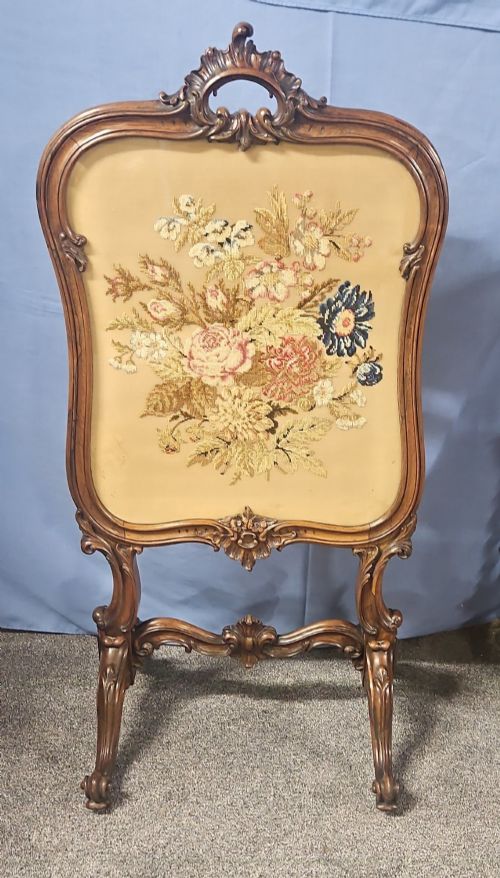
A walnut fire screen serves as a decorative shield for the hearth, most frequently encountered in Victorian and nineteenth-century designs. These pieces range from upright floor-standing frames to adjustable pole screens and clever flip-top side tables.
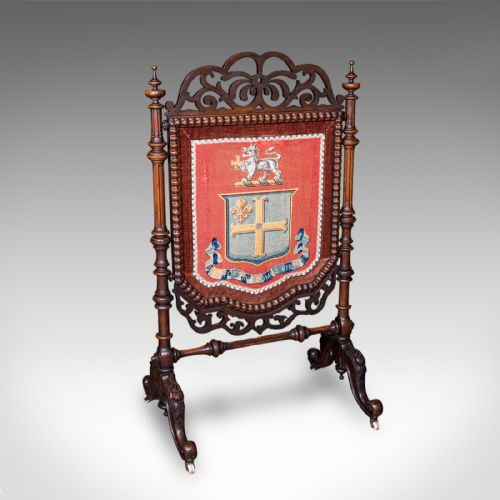
The selection includes English, Irish, and Continental examples featuring carved woodwork alongside embroidered panels, woolwork, and tapestry pictures. Buyers meet both grand baronial frames and more intimate domestic pieces designed to sit beside the grate.
How They Were Made
Frames are constructed from solid and carved walnut, occasionally enriched with brass fittings, bronze elements, or etched glass panels. The timber provides a rich brown grain that supports elaborate carved detailing, particularly in revival styles.
Internal panels display needlepoint, woolwork, silk embroidery, and hand-woven tapestry depicting pastoral scenes or armorial bearings. These textiles are stretched securely within the wooden frames, sometimes arranged with adjustable doors or sliding mounts.
Walnut Fire Screen Retail Price Guide 2026
Typical asking prices for walnut fire screen among the pieces listed under this phrase on Sellingantiques today, from the lower quarter to the upper quarter. They describe what is for sale here now, not the wider market.
Listings feature walnut combined with wool, glass, silk, brass, and carved hardwood across Victorian and Regency periods.
What Varies in Quality
The distinction lies in the depth of the timber carving and the complexity of the needlework panel. Finer examples display meticulous hand-woven tapestry or petit point needlework paired with substantial carved walnut frames.
Construction methods also set pieces apart, from simple static frames to complex adjustable pole screens and multi-panel designs with bronze and etched glass. The presence of armorial motifs or specialised pictorial work elevates the individual piece.
The Walnut Fire Screen Glossary
- Needlepoint
- Embroidery stitched onto a canvas mesh to form pictorial designs. It appears frequently on the central panels of nineteenth-century firesides.
- Pole screen
- A vertical stand holding an adjustable screen that slides up and down on a central shaft. This mechanism allows the user to block heat at varying heights.
- Tapestry
- A form of textile art woven on a loom rather than embroidered. Many nineteenth-century examples depict pastoral or historical scenes.
- Armorial
- Relating to heraldry and coats of arms. Certain military and stately home screens display these embroidered emblems.
- Petit point
- Highly detailed needlepoint worked with small stitches on a fine mesh. It allows for intricate shading in floral and figural panels.
Walnut Fire Screen: Frequently Asked Questions
How were walnut fire screens used?
They stood before domestic hearths to protect sitters from the intense radiant heat of open coal fires. Their secondary role was to hide an unlit grate during the warmer summer months.
Over time, many of these screens transitioned into purely decorative items, valued for their textile panels and timber frames.
Can I place one near a working fireplace?
Placing antique walnut and textiles very close to an active fire risks drying out the timber and damaging delicate wool or silk threads. Modern central heating presents fewer hazards than an open hearth.
Most owners position their pieces away from direct heat sources to preserve the nineteenth-century materials.
How do I date a walnut fire screen?
Dating relies on stylistic clues such as Victorian rococo revival carving or Regency framing details. The complexity of the needlework and assembly methods also point toward specific decades in the nineteenth century.
Evidence spans from the Georgian era through to Edwardian interpretations.