



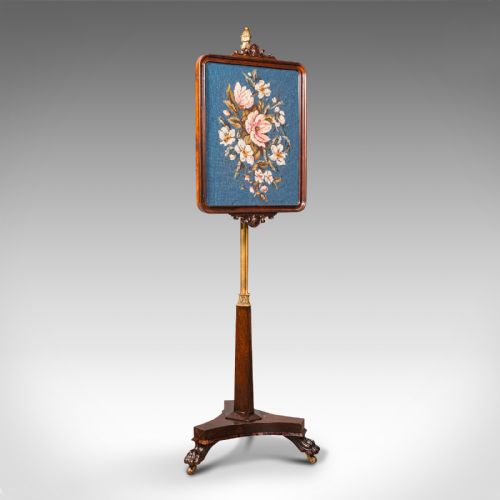
Floral Tapestry Screen
These floral tapestry screen pieces combine warmth and utility, offering collectors charming needlework panels set within sturdy wood frames.
What They Are
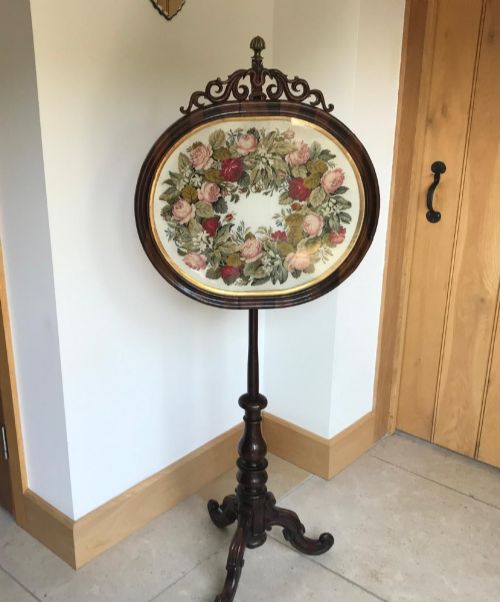
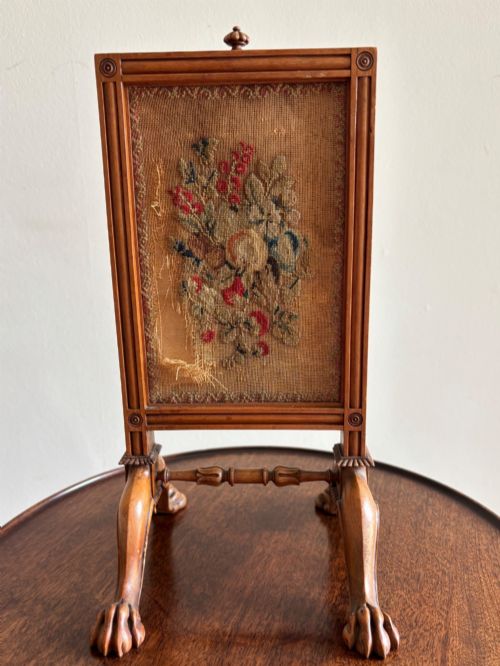
A floral tapestry screen protects a room from the fierce heat of an open hearth while adding rich textile colour to the interior. These items arrive in various formats, from freestanding tripod pole designs to folding panels and miniature desk pieces.
The Victorian and Regency eras produced the examples seen on this page, reflecting the domestic habits of the nineteenth century. Rosewood, walnut, mahogany, and oak form the primary wooden structures that support the woolwork textiles.
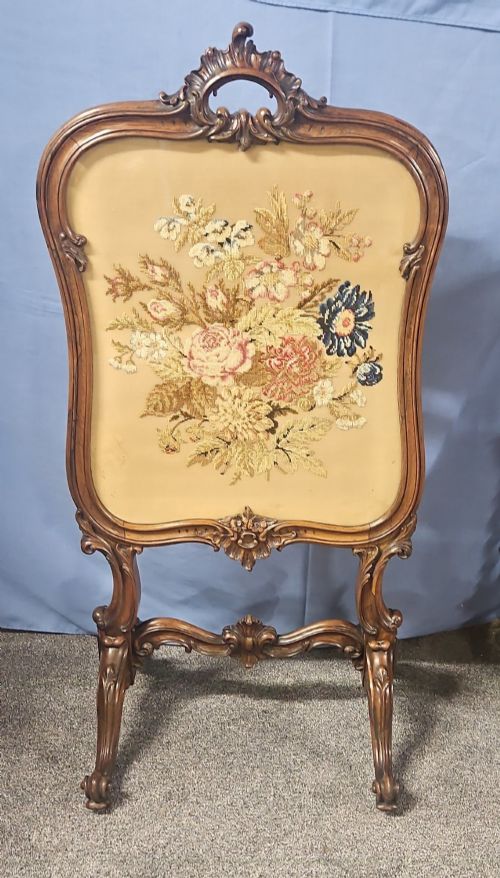
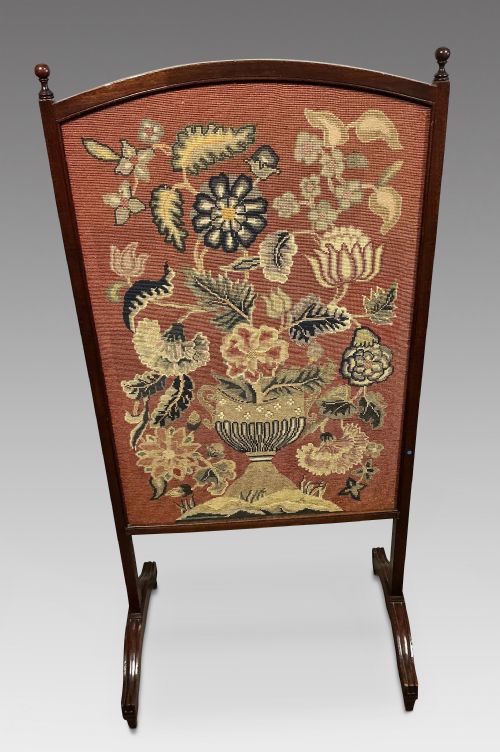
Most entries feature pole screens with adjustable needlework panels or multi-fold partitions decorated with botanical motifs. The makers built these objects to be both functional household shields and decorative displays of needlework skill.
How They Were Made
Craftsmen shaped dense hardwoods such as rosewood, walnut, and mahogany into turned supports, carved frames, and stable tripod bases. Brass fittings often secured the adjustable pole mechanisms and joints, allowing the needlework panel to slide and lock into place.
Textile artists worked wool yarns onto canvas backings to create detailed floral tapestry panels. These woolwork displays were then stretched tightly and fixed within the wooden framework to withstand the ambient heat of coal and wood fires.
Retail Price Guide 2026
Typical UK retail prices for floral tapestry screen, calculated from the Sellingantiques database of over a million retail prices indexed since 2003. This retail price guide relies exclusively on Sellingantiques data; no external sources or auction records are used, so the figures do not describe the wider market.
Listings on this site span the Regency and Victorian periods, utilising materials such as rosewood, walnut, wool, brass, and tapestry.
What Varies in Quality
Superior items display precise joinery in the wooden framework, alongside intricate carving on the tripod bases and upright poles. The handling of the wood grain, often highlighted through careful polishing, separates standard items from finer workshop productions.
The execution of the woolwork dictates visual hierarchy, with dense stitching and nuanced colour shading marking the superior textile panels. When the needlework and the timber frame achieve equal refinement, the piece represents the highest tier of the craft.
The Floral Tapestry Screen Glossary
- Pole screen
- A freestanding vertical wooden stand featuring a sliding textile panel designed to block radiant heat from a hearth. The adjustable height allows the user to shield their face while seated.
- Woolwork
- A type of embroidery using wool yarn on an open-weave canvas backing to produce pictorial or floral designs. This technique provided durable, colourful panels for nineteenth-century furnishings.
- Tripod base
- A three-legged support structure commonly found beneath nineteenth-century pole screens for stability on uneven floors. These bases often terminate in scroll or carved feet.
- Fire screen
- A portable domestic furnishing placed before a fireplace when not in use to conceal the empty grate. They range from single folding panels to sliding textile screens.
Frequently Asked Questions
What is a floral tapestry screen?
A floral tapestry screen is a nineteenth-century furnishing designed to shield a person's face from the direct heat of an open fire. These objects utilise embroidered wool panels mounted within wooden frames.
Craftsmen built them in various formats, including sliding pole designs and multi-fold room partitions. They combined practical heat protection with domestic decoration.
How were pole screens used?
Users placed pole screens near fireplaces and adjusted the height of the needlework panel to block the radiant heat. This prevented facial cosmetics from melting and kept the skin comfortable.
They also served as decorative items in the parlour when the hearth was cold. The adjustable panel could be turned to catch the light and display the needlework.
What woods were used for these screens?
Cabinetmakers utilised dense, richly coloured hardwoods such as rosewood, walnut, and mahogany for the upright poles and frames. Oak also appears in larger multi-fold panel configurations.
These timbers provided the structural strength needed to support heavy wooden bases and sliding mechanisms. The wood surfaces were typically polished to a deep lustre.
How do I date a Victorian screen?
Dating relies on stylistic clues within the woodwork and the nature of the tapestry panel. Victorian examples often feature rosewood frames, carved tripod bases, and detailed woolwork floral motifs.
Earlier Regency pieces display lighter proportions and different turning details on the upright poles. Comparing the joinery and material choices helps establish the period of manufacture.