





Dark Wood Fire Screen
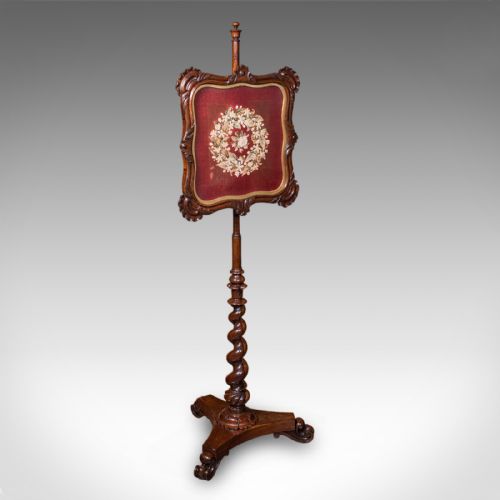
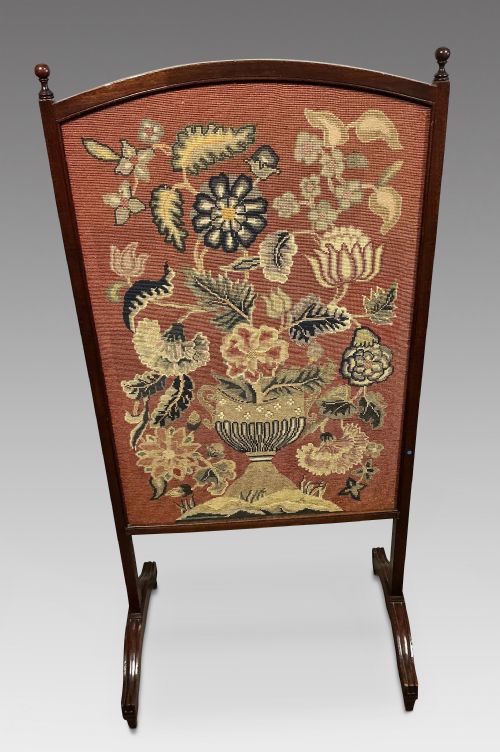
A dark wood fire screen blocks the radiated heat of an open grate whilst framing intricate needlework or brass panels.
Dark Wood Fire Screen
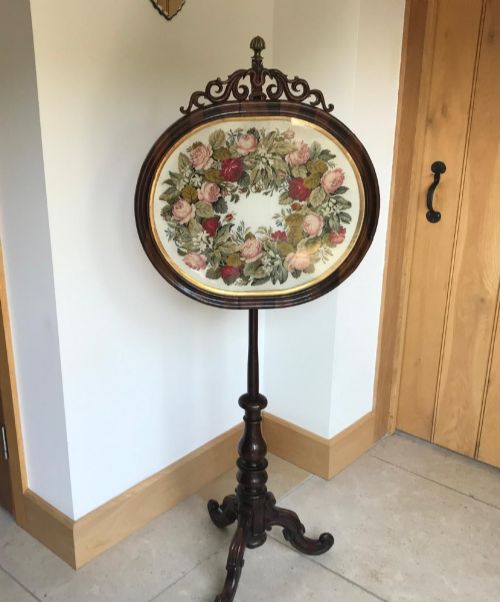
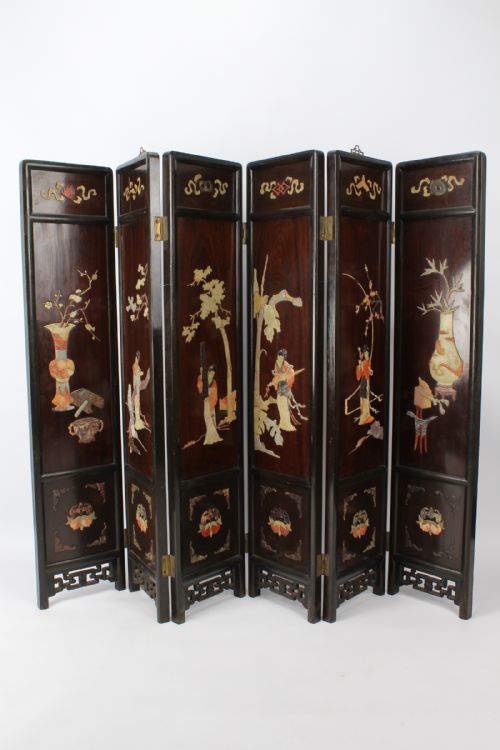
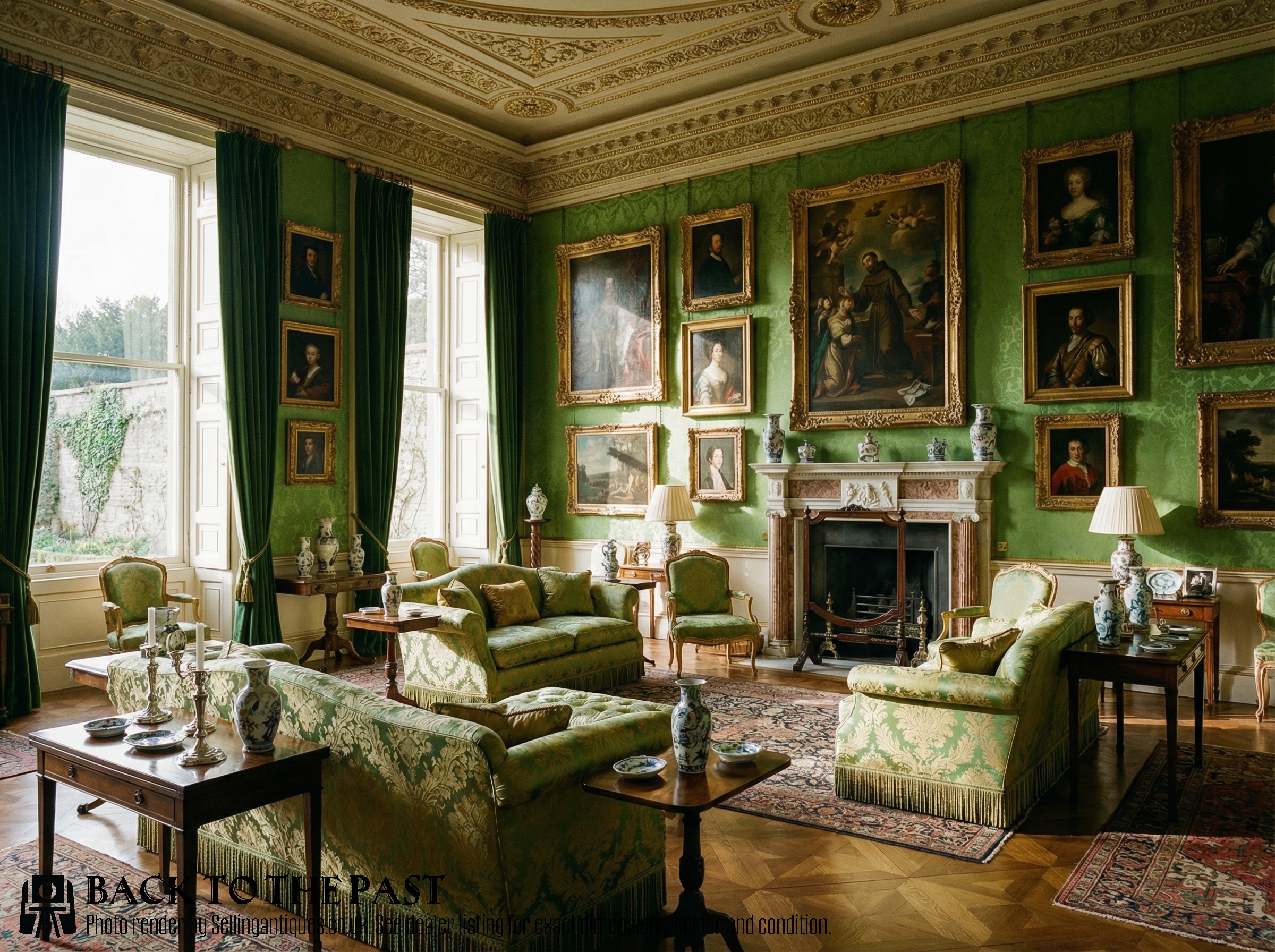
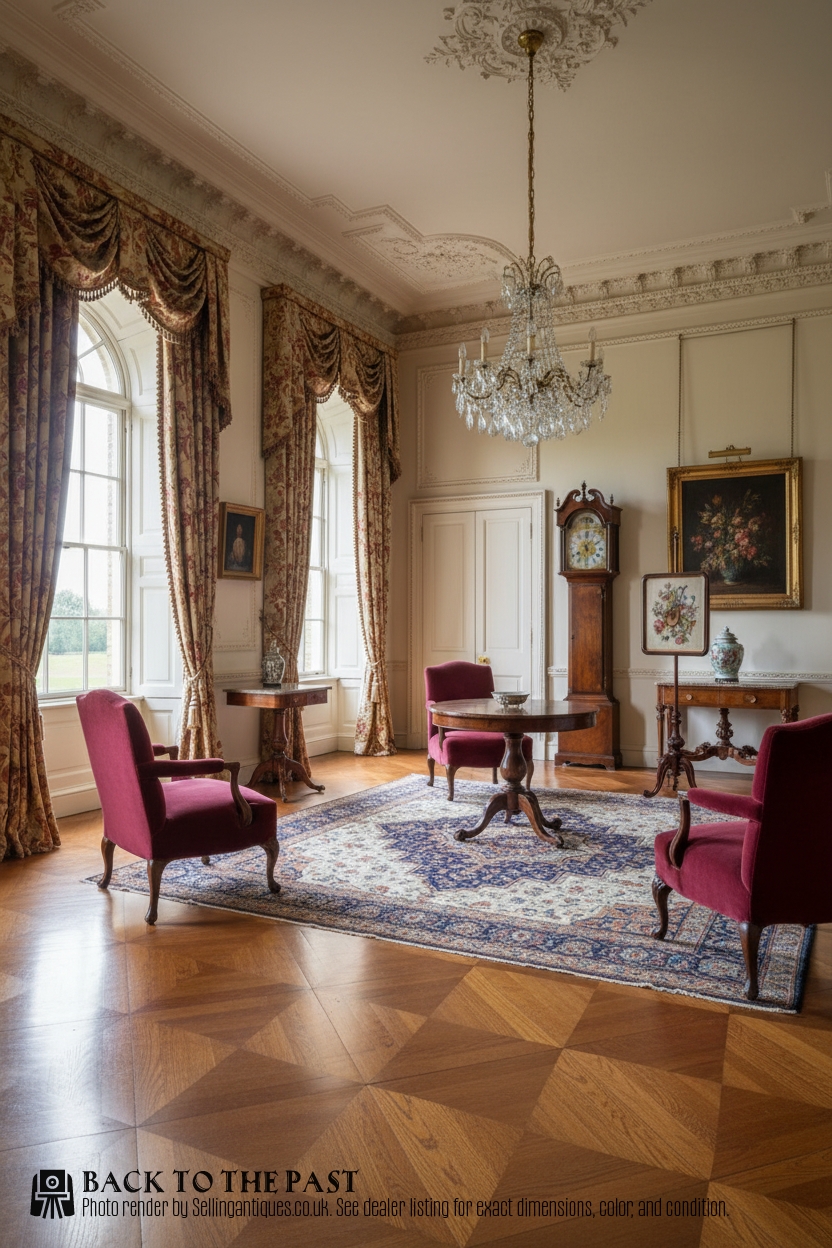
The pole screen is the most common form met on this page, featuring a vertical standard on a tripod base that supports an adjustable panel. Alternatively, fixed folding frames and heavy wooden cheval screens stand directly on the floor. Makers utilised rich dark woods to anchor these functional items within formal domestic interiors.
Materials and technique
Construction relies heavily on dense timbers including mahogany, rosewood, goncalo alves, and oak, often shaped with turnings, tripod bases, and carved details. Joinery techniques secure the upright standards and folding leaves that support the central panels.
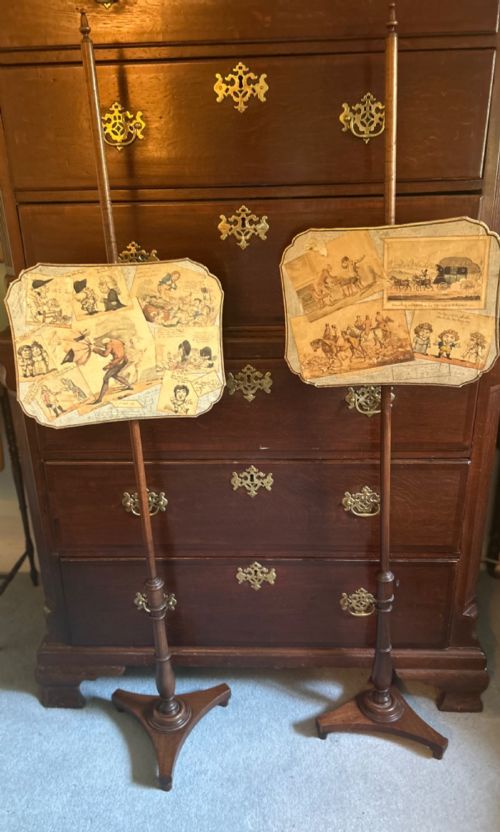
The inset panels display an array of decorative techniques, ranging from wool, silk, and needlepoint tapestry to embossed and chased brass, glass, and painted satirical prints. Skilled artisans combined cabinetmaking with textile needlework to produce these dual-purpose furnishings.
Dark Wood Fire Screen Retail Price Guide 2026
Typical asking prices for dark wood fire screen among the pieces listed under this phrase on Sellingantiques today, from the lower quarter to the upper quarter. They describe what is for sale here now, not the wider market.
Several screens protect their owners behind witty satirical prints, family coats of arms, or the Taj Mahal.
Standards of craftsmanship
Quality rests upon the crispness of the timber carving, the stability of the tripod base or folding hinges, and the integrity of the adjustable mechanism on pole screens. Finer examples display balanced proportions in the turned standards and substantial gauge in the supporting legs.
The artistic merit and execution of the central panel distinguish superior pieces from standard domestic items. Needlework executed in tight, even stitches or finely embossed brass crests elevate the visual weight of the timber frame.
The Dark Wood Fire Screen Glossary
- Pole screen
- A type of fire screen featuring an adjustable panel mounted on a vertical wooden pole with a tripod base. This design allows the user to raise or lower the screen to deflect heat from the face.
- Cheval screen
- A self-supporting floor screen held within a standing wooden frame that permits the panel to swing or tilt. These larger versions often stand independently without a central pole.
- Needlework
- Decorative sewing executed on canvas or fabric mesh using wool, silk, or metallic threads. Many fire screen panels showcase elaborate floral or heraldic needlework pictures.
- Goncalo alves
- A dense exotic hardwood with distinct figuring, utilised during the Regency period for cabinetwork and frames. It provides a heavy, dark foundation for decorative furnishings.
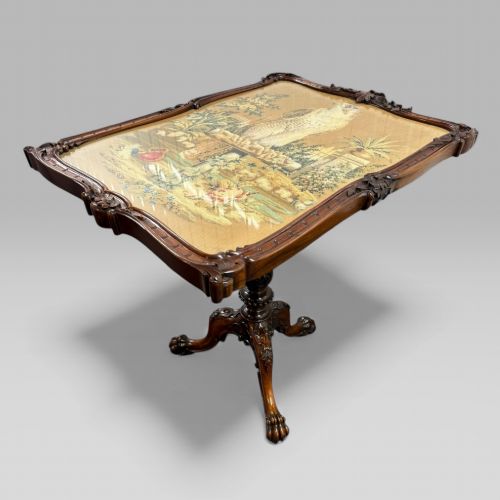
- Tilt top table screen
- A dual-purpose furnishing combining a small table top with an adjustable screen mechanism. These hybrid pieces appeared during the William IV era.
Dark Wood Fire Screen: Frequently Asked Questions
What is a pole screen?
A pole screen is an adjustable fireside accessory consisting of a vertical wooden shaft mounted on a tripod base. A sliding panel can be moved up or down the pole to shield the sitter's face from the heat of the fire.
These pieces were essential in period drawing rooms before central heating regulated indoor temperatures. The adjustable feature allowed precise control over radiated heat.
How were fire screens used?
Fire screens were positioned between the seated inhabitant and the open hearth to protect complex cosmetics and sensitive skin from excessive heat. They also served to hide the unlit grate during warmer months.
As domestic habits shifted, these screens transitioned into decorative focal points that displayed fine needlework, armorial bearings, or printed artwork.
What woods are used?
Makers utilised dark hardwoods such as mahogany, rosewood, oak, and goncalo alves for their structural strength and rich grain patterns. These timbers provided a durable frame for heavy glass, brass, or textile panels.
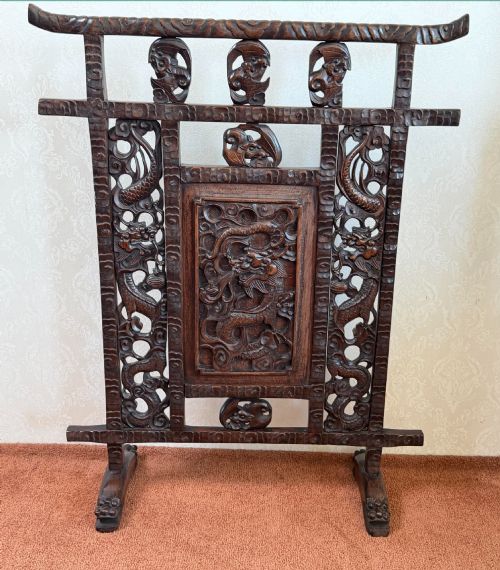
Exotic woods like Chinese hardwood also appear, reflecting global trade in domestic furnishings across the nineteenth century.
How do I date a screen?
Dating relies on stylistic clues found in the timber framing, such as Georgian tripod bases, Regency turned standards, or Victorian carved details. The construction methods and panel materials offer further chronological markers.
Needlework techniques and heraldic motifs recorded within the panels often align with the prevailing fashions of specific nineteenth-century decades.