
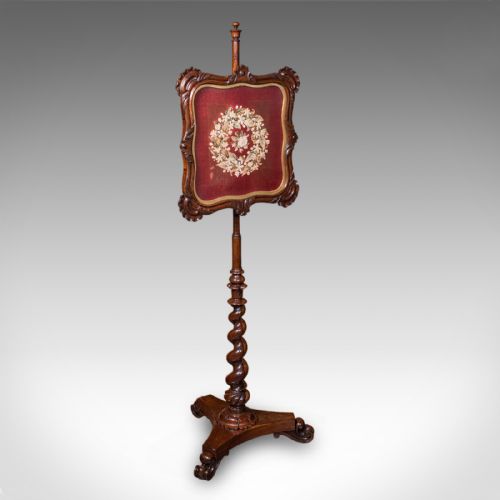


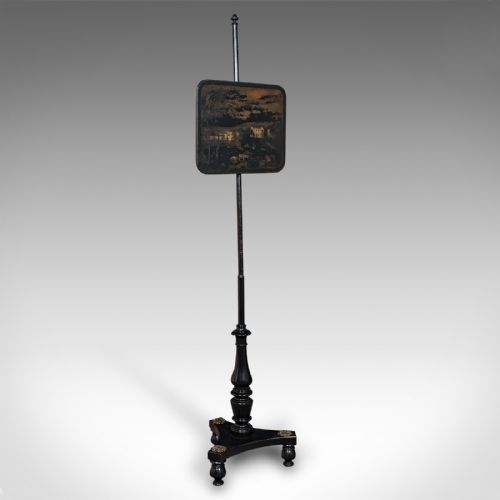


Adjustable Fire Screen
An adjustable fire screen blocks hearth heat and drafts, coming to us as a sturdy Victorian or Georgian pole screen with a sliding panel.
Adjustable Fire Screen
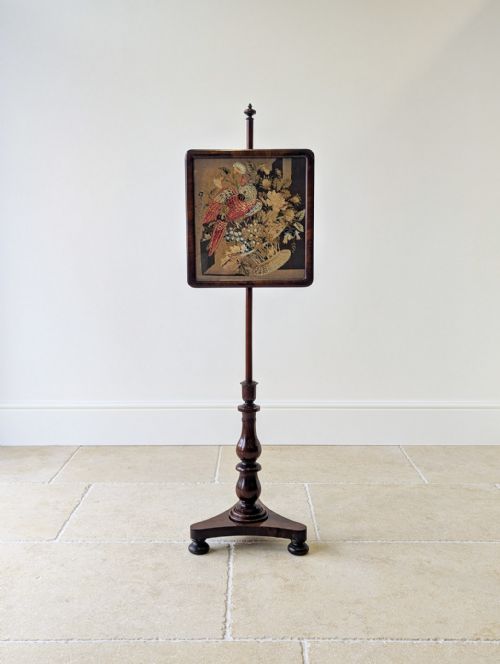
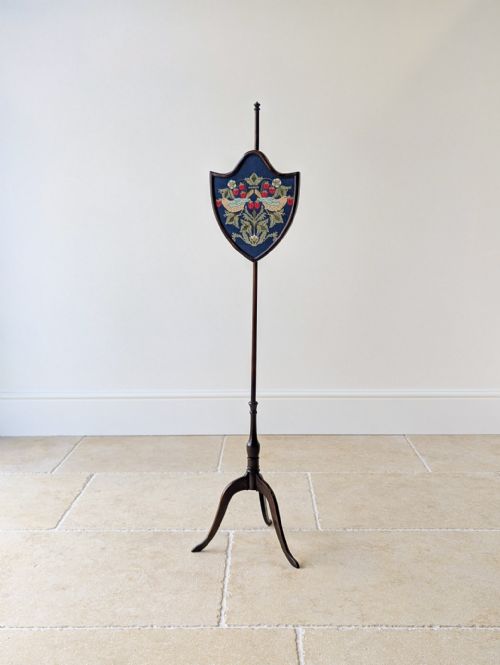
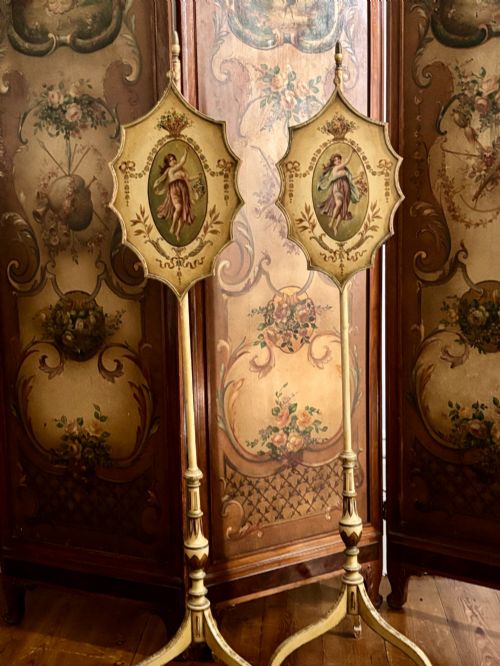
When you search for an adjustable fire screen, you find upright pieces designed to shield the face from a roaring coal or wood fire. The most common form on this page is the pole screen, featuring a vertical wooden shaft on a tripod or heavy base that holds a sliding panel.
The evidence spans from the Georgian and Regency periods through the William IV and Victorian eras. These screens served a practical purpose in period parlours where intense hearth heat could damage delicate complexions or melt heavy makeup.
Alongside timber pole screens, the selection includes brass frames, giltwood reflector panels, and glass screens with adjustable doors. Most examples rely on a central brass screw mechanism or friction collar to alter the height of the shield.
How they were made
Cabinetmakers turned timbers like mahogany, rosewood, walnut, and satinwood into slender poles and sturdy tripod bases with pad or spade feet. Heavier pieces utilised cast brass, wrought iron, or giltwood frames to support glass, bronze, and gilt brass banners.
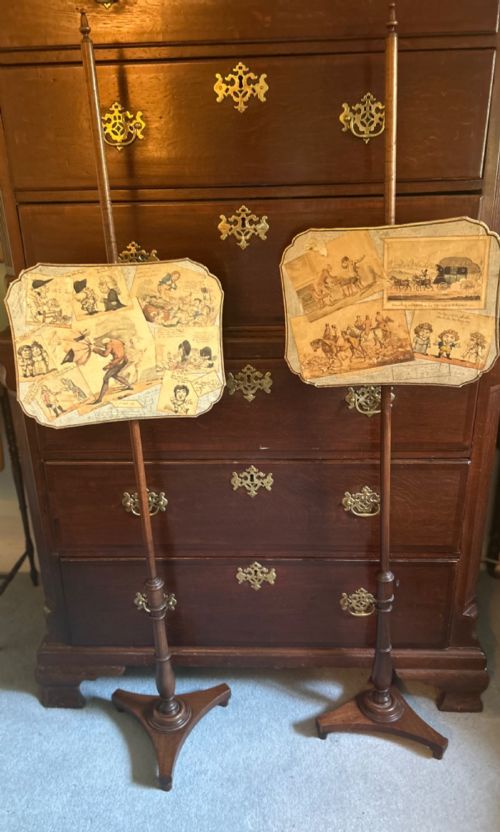
The adjustable panels frequently display intricate textile work, including wool needlepoint, silk embroidery, floral tapestry, and satirical prints. Skilled hands mounted these textiles within wooden frames or behind protective glass panes to withstand daily fireside use.
Adjustable Fire Screen Retail Price Guide 2026
Typical asking prices for adjustable fire screen among the pieces listed under this phrase on Sellingantiques today, from the lower quarter to the upper quarter. They describe what is for sale here now, not the wider market.
Sitters relied on adjustable screens to protect their skin from melting wax makeup and blushing cheeks by the hearth.
What varies in quality
Quality rests heavily on the crispness of the timber carving on the base and the stability of the central sliding mechanism. A superior pole screen retains its original brass adjustment screw and moves smoothly along the shaft without slipping.
The fidelity and condition of the textile panel also separate standard examples from finer ones. Finely worked needlepoint or crisp poker work commands attention, whereas worn or faded fabric alters the visual balance of the piece.
The Adjustable Fire Screen Glossary
- Pole screen
- A vertical fireside screen mounted on a tall wooden shaft with an adjustable sliding panel. This form dominated English parlours during the Georgian and Victorian periods.
- Tripod base
- A three-legged support providing stability to upright furniture. These often terminate in pad, spade, or carved scroll feet.
- Needlepoint
- A type of canvas work embroidery using wool or silk threads to create dense pictorial or floral patterns. It frequently forms the central panel of a firescreen.
- Poker work
- The technique of burning designs into wood using heated metal tools. It appears on select adjustable panels in place of woven textiles.
- Reflector
- A polished glass or metal panel designed to bounce light and warmth back into the room. Regency examples frequently employed these for dual illumination and heat control.
Adjustable Fire Screen: Frequently Asked Questions
What is an adjustable fire screen?
An adjustable fire screen is a nineteenth or eighteenth-century furnishing designed to protect sitters from excessive hearth heat. It typically consists of a vertical pole holding a sliding panel that raises or lowers as needed.
Craftsmen built these pieces from timbers like mahogany and rosewood, mounting them on stable tripod bases for use in period drawing rooms.
How do you adjust the height?
Most antique pole screens rely on a brass thumb screw or a friction mechanism concealed within the sliding frame. Turning the screw loosens the grip on the central wooden shaft, allowing the panel to slide freely.
Once the desired height is reached, tightening the screw secures the panel in place to block the radiant heat from the fire.
Where were they placed in a room?
These screens stood directly between the fireplace and the seating area to shield delicate complexions from the direct glare of the flames. In cooler months, people positioned them close to armchairs or sofas.
When not in use, the screens stood quietly against a parlour wall as decorative items displaying fine needlework or carved timber.
How do I date a pole screen?
Dating relies on the prevailing style of the timber base, the turning of the pole, and the framing of the screen. Georgian and Regency pieces often feature slender tripod supports, while later Victorian versions display heavier carved rosewood or walnut.
Needlework panels and specific hardware types like brass thumbscrews also offer clear stylistic clues to the manufacturing decade.