


Georgian Pole Screen
A georgian pole screen is a fireside screen with an adjustable panel on a pillar, built to deflect the fierce heat of an open hearth.
What They Are
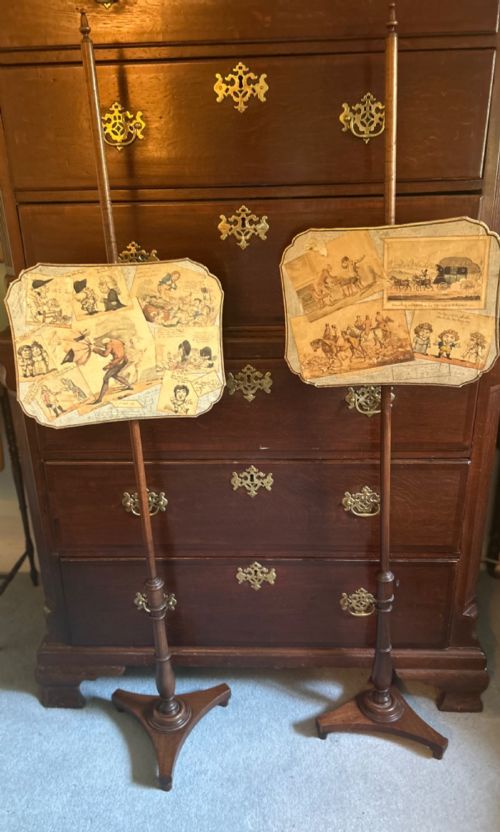
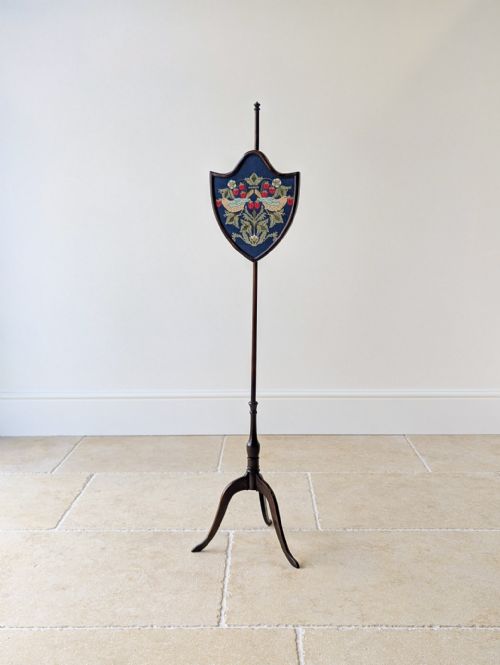
A georgian pole screen takes the form of a slender vertical standard raised on a tripod base, carrying a sliding shield that moves up and down a central rod. These stands date from the eighteenth century into the regency and william iv eras, appearing alongside later nineteenth-century examples.
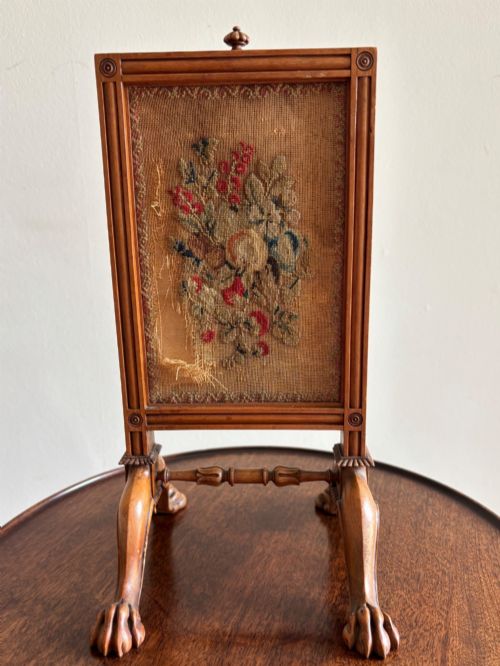
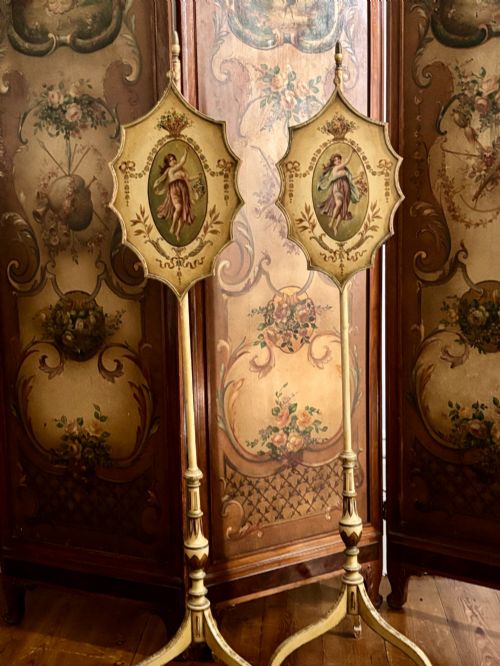
The shield itself takes several shapes, from upright rectangular needlework frames to round or scalloped wooden boards. Makers mounted these screens near the fireplace so a seated person could protect their face from the blaze.
Mahogany forms the primary timber for these stands, accompanied by rosewood, ebonised wood, and lacquered wood. Surviving panels contain textiles, wool, and glass.
How They Were Made
Joiners turned the central timber poles on a lathe and shaped three splayed legs to form a stable tripod base. The sliding mechanism relied on a brass collar or internal screw friction to hold the panel at the chosen height.
Carvers decorated the mahogany and rosewood surfaces with Chippendale or regency motifs, while cabinetmakers inserted panels of wool needlework and fabric. Some variants utilised lacquered wood and ebonised details to achieve exotic chinoiserie effects.
Retail Price Guide 2026
Typical UK retail prices for georgian pole screen, calculated from the Sellingantiques database of over a million retail prices indexed since 2003. This retail price guide relies exclusively on Sellingantiques data; no external sources or auction records are used, so the figures do not describe the wider market.
Current listings feature mahogany, rosewood, brass, glass, and textile across georgian, regency, and william iv periods.
What Varies in Quality
The distinction between standard production and finer cabinet work rests in the crispness of the timber turning and the proportion of the tripod base. Heavier mahogany and rosewood stocks provide better balance for the sliding shield above.
Panel execution defines the upper tier of these pieces, particularly where hand-worked wool needlework survives with crisp detail. The ingenuity of the brass adjustment mechanism also marks the difference between simple utility and accomplished workshop design.
The Georgian Pole Screen Glossary
- Pole screen
- A freestanding fireside screen with an adjustable panel sliding on a vertical wooden pillar. This design allowed occupants to shield their faces from coal or wood fires.
- Tripod base
- A three-legged support structure beneath the central pole. This configuration prevents the tall standard from tipping on uneven floors.
- Needlework panel
- A textile insert stitched in wool or silk held within the wooden frame of the shield. These often depict floral or pastoral scenes.
- Chippendale
- A mid-eighteenth-century design style known for carved mahogany details and solid proportions. Pieces in this manner show substantial craftsmanship.
Frequently Asked Questions
What is a pole screen used for?
A pole screen stood near the hearth to protect delicate complexions from the fierce heat of an open fire. Ladies sat behind them to prevent their makeup from melting.
The adjustable panel allowed the user to raise or lower the shield depending on where the heat struck. They served as both practical furniture and decorative room accents.
How do you adjust the panel?
The sliding shield moves vertically along the turned wooden pole, held in place by friction or a brass thumbscrew. This mechanism allows precise height placement.
Over decades of use, the internal fittings can wear. Gentle handling ensures the wood and brass components remain undamaged during adjustment.
What woods were used?
Mahogany forms the majority of surviving examples from the georgian and regency periods. Cabinetmakers also utilised rosewood, ebonised wood, and lacquered surfaces.
These dense timbers provided the necessary weight for the tripod base to support the elevated panel safely. Finer pieces often featured decorative carving along the legs and standard.
Are the needlework panels original?
Needlework panels often date from the nineteenth century even when the mahogany stand originates in the eighteenth century. Textiles wore out quickly and required replacement.
Examining the stitching and the rear of the frame helps determine the age of the fabric. Many screens show a combination of periods through later re-covering.