
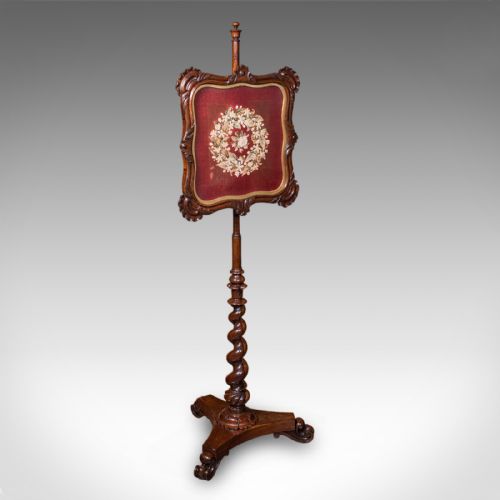


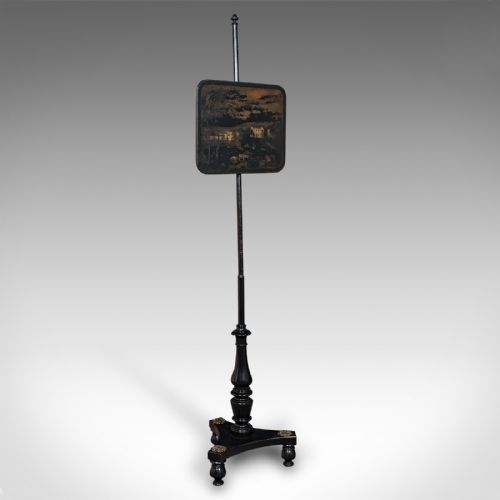


Adjustable Pole Screen
An adjustable pole screen stands ready to block the direct heat of an open grate while adding colour and movement to a room.
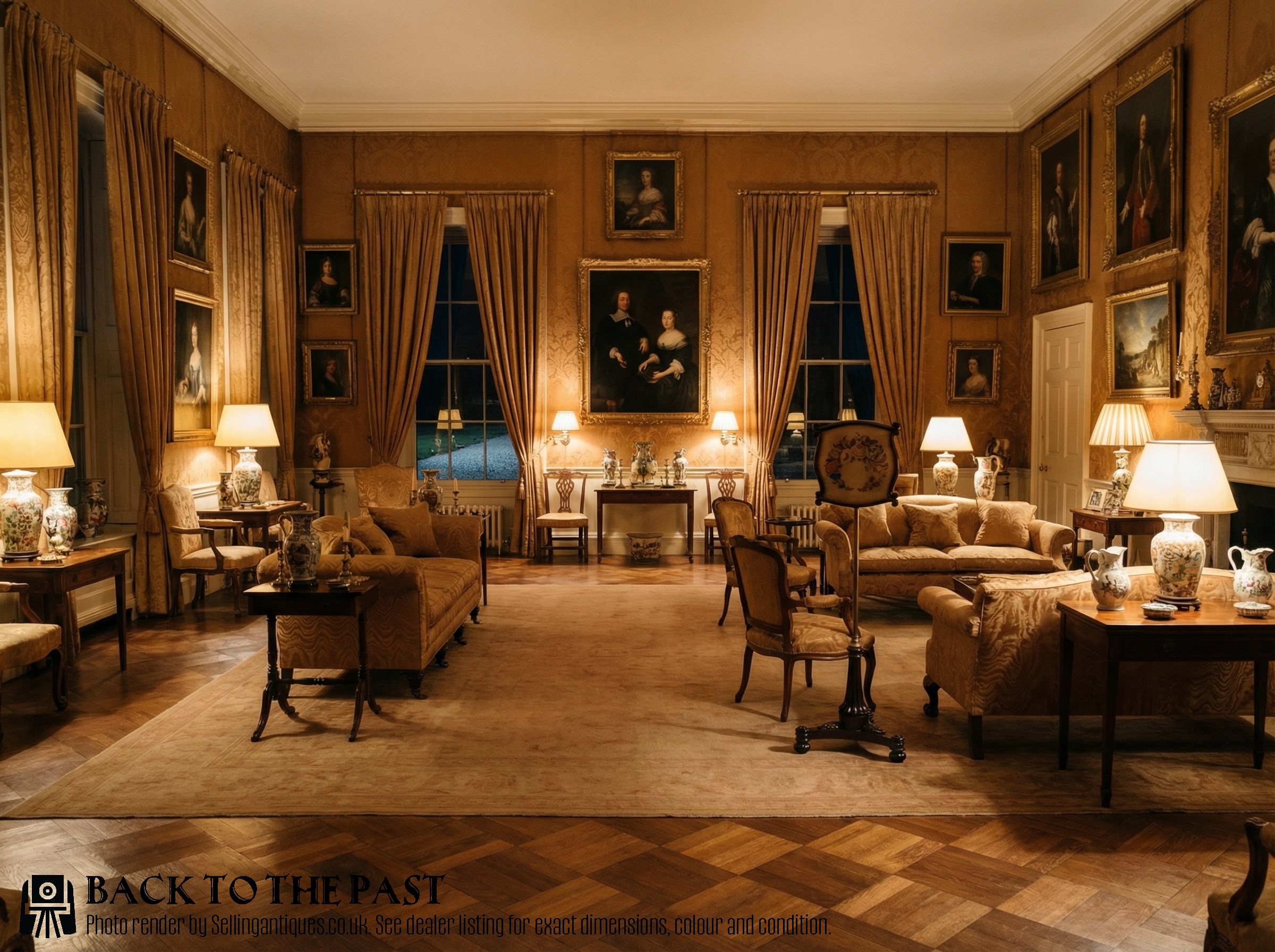
Adjustable Pole Screen
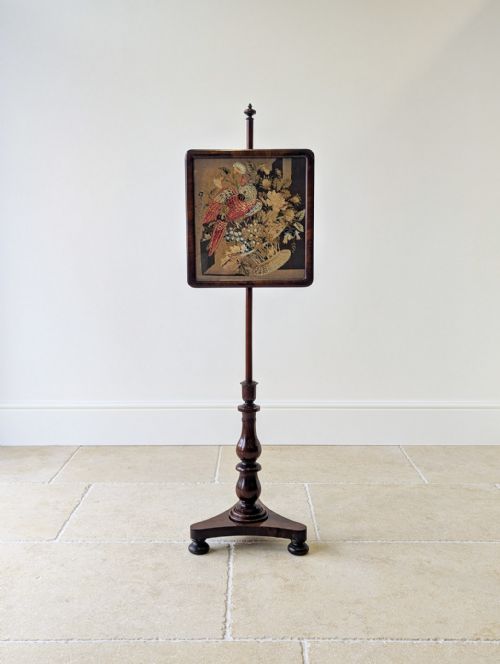
An adjustable pole screen consists of a vertical shaft mounted on a stable base, carrying a sliding panel that moves up and down to shield a person from hearth flames. These pieces appear primarily from the Georgian, Regency, William IV, and Victorian periods.
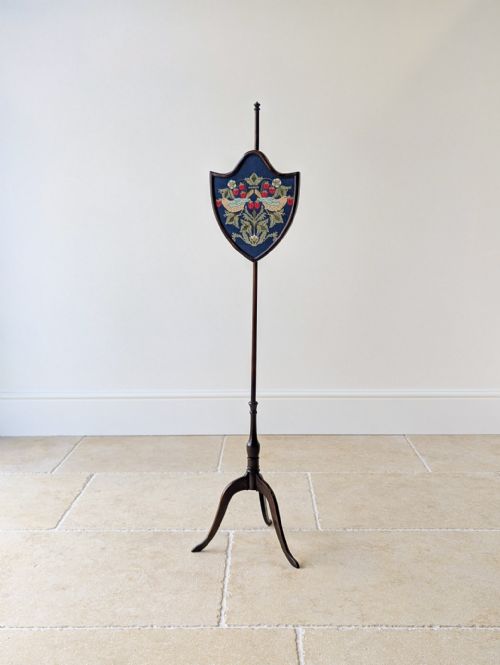
The vertical standards typically take the form of slim turned wooden poles supported by tripod feet or heavy pedestals. You are most likely to encounter rosewood and mahogany examples fitted with embroidered textile panels.
Makers designed these screens for sitting rooms and parlours where fluctuating heat required a moveable barrier. The sliding mechanism uses a thumbscrew or collar to hold the panel at the desired height.
Materials and construction
Cabinetmakers turned dense timbers such as mahogany, rosewood, walnut, and satinwood into slender poles and sturdy tripod bases, sometimes adding giltwood or brass details. Carpenters joined these elements with traditional joints to ensure the central shaft remained plumb under the weight of the screen.
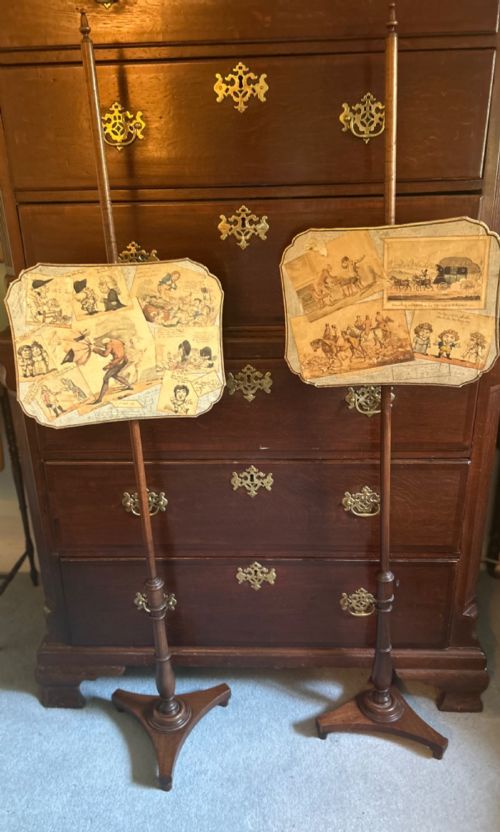
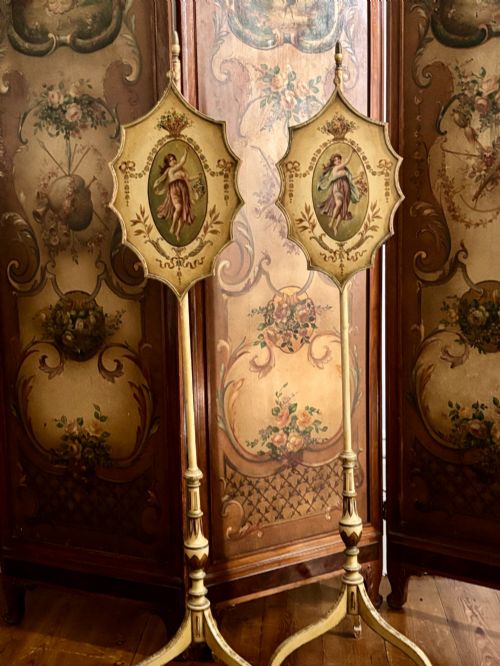
The sliding panels themselves utilise timber frames enclosing textiles, needlepoint, tapestry, silk, wool, glass, or papier-mâché. Workers stitched intricate floral or satirical scenes by hand, inserting the completed fabric into the wooden or papier-mâché mount.
Adjustable Pole Screen Retail Price Guide 2026
Typical asking prices for adjustable pole screen among the pieces listed under this phrase on Sellingantiques today, from the lower quarter to the upper quarter. They describe what is for sale here now, not the wider market.
Several examples preserve witty satirical prints and Welsh topographical scenes right where sitters once warmed their faces.
Judging quality and execution
Superior examples show refined carving on the tripod legs and pillar, where detailed acanthus leaves or crisp reeding indicate a high level of workshop skill. Lesser pieces rely on plain turned wood with minimal decoration.
The finesse of the needlework panel dictates much of the visual success, with finely stitched tent stitch outperforming coarse wool work. Furthermore, the smoothness of the sliding mechanism reveals the care taken in fitting the internal brass collar or screw.
The Adjustable Pole Screen Glossary
- Pole screen
- A moveable hearth accessory featuring a vertical shaft and an adjustable sliding panel. It protected the face from the intense glare and heat of an open coal fire.
- Tripod base
- A three-legged support structure commonly found beneath the central shaft. This configuration provided stability on uneven wooden floorboards.
- Needlepoint
- Stitched thread worked through a stiff canvas mesh to form pictorial or geometric designs. Panels executed in this technique served as the primary screen face.
- Reflector
- A panel surface designed to bounce hearth warmth back toward the fire rather than the user. These often utilised glass or treated metallic elements.
- Papier-mâché
- A moulded composite material made from paper pulp mixed with glue and resin. Makers decorated these smooth surfaces with lacquer and gilt motifs.
Adjustable Pole Screen: Frequently Asked Questions
What is an adjustable pole screen?
An adjustable pole screen is a tall, moveable hearth accessory with a sliding panel mounted on a vertical wooden pole. It was designed to protect a seated person's face from the intense heat of an open fireplace.
The panel could be raised or lowered along the shaft by means of a simple thumb screw or collar mechanism. These pieces served both a practical temperature-control function and a decorative purpose in period drawing rooms.
How do I date a pole screen?
Dating relies heavily on the timber, the style of the base supports, and the medium of the panel. Georgian and Regency examples often feature crisp mahogany or rosewood with delicate tripod legs and fine needlework.
Victorian pieces tend to be heavier in proportion, sometimes incorporating walnut, papier-mâché, or elaborate carving. Comparing the turning style on the central pole to known furniture timelines helps narrow the period of manufacture.
Where were pole screens placed?
Pole screens stood near fireplaces in parlours, withdrawing rooms, and grand libraries. Occupants positioned them between their chairs and the hearth to block direct radiant heat.
Because they were lightweight and moveable, servants or residents shifted them throughout the day as the fire burned down or as seating arrangements changed.
What materials make up the panels?
The panels utilise a wide variety of decorative mediums stretched within wooden or papier-mâché frames. Common materials include hand-stitched wool and silk needlepoint, tapestry, glass, and painted papier-mâché.
Some panels feature satirical prints, floral motifs, or topographical scenes, reflecting the artistic tastes of the Georgian and Victorian eras.