



Floral Needlepoint Screen
These floral needlepoint screen examples bring decorative warmth to a room while shielding occupants from roaring hearths.
What a floral needlepoint screen is
A floral needlepoint screen protects those sitting near a fireplace from excessive radiant heat while adding domestic decoration to a parlour or drawing room. Buyers searching for a floral needlepoint screen encounter pieces functioning primarily as fire screens and fireplace accessories.
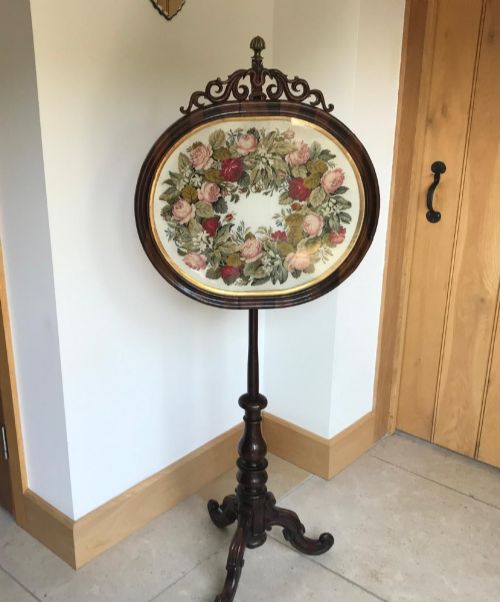
The surviving examples span the Georgian, Regency, William IV, and Victorian eras, alongside pieces dated specifically to eighteen seventy and the nineteenth century generally. These items take the form of fire screens, fireplace screens, and pole screens designed to stand on the floor.
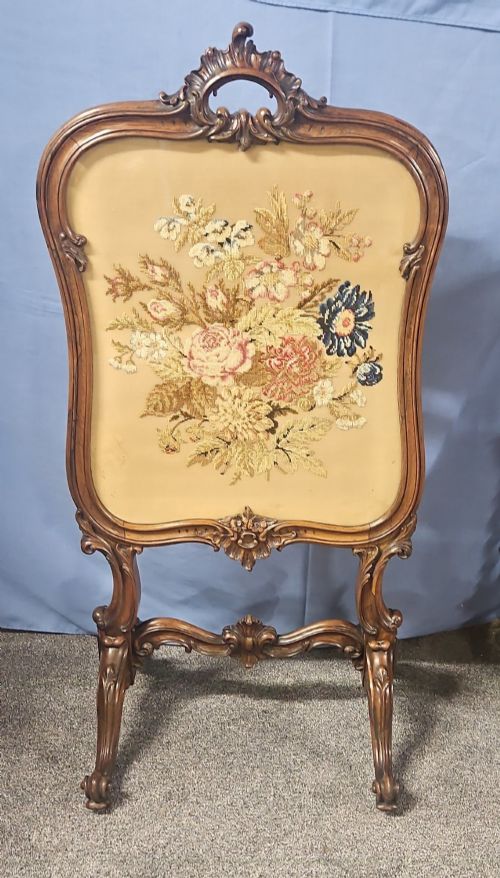
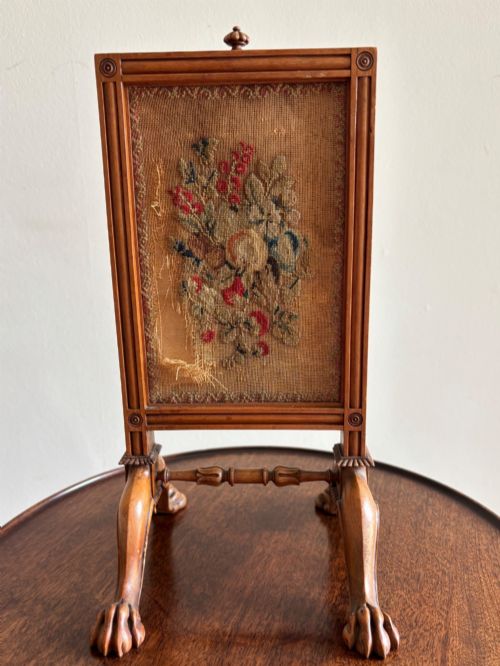
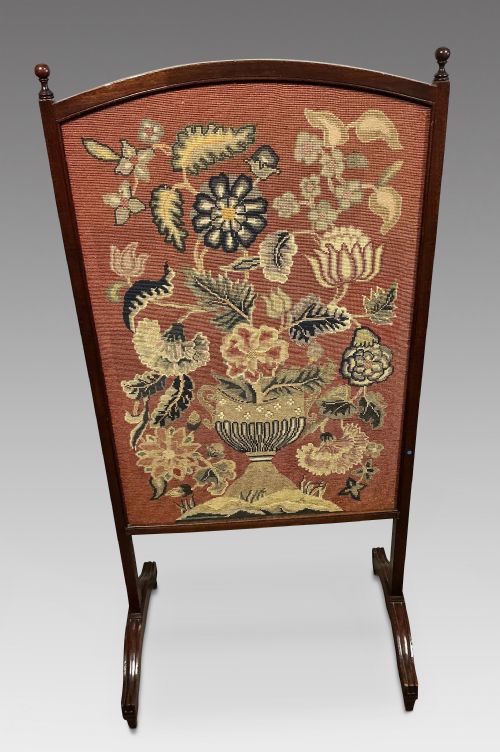
Most items on this page present textile panels mounted within wooden frames or suspended on adjustable wooden poles. The needlepoint and tapestry panels display floral motifs worked in wool.
The structural forms vary between standing frames supported on carved bases and pole screens featuring adjustable panels. These pieces reflect the interior requirements of nineteenth century and earlier British homes.
How they were made
The frames and stands utilise timber species such as rosewood, mahogany, walnut, goncalo alves, and general wood. These timbers are shaped, turned, and sometimes heavily carved to form stable bases and upright supports.
Decoration and structural detailing incorporate brass hardware, particularly on adjustable pole screens. The central panels are constructed using wool needlepoint and tapestry techniques, worked by hand to create floral imagery.
Retail Price Guide 2026
Typical UK retail prices for floral needlepoint screen, calculated from the Sellingantiques database of over a million retail prices indexed since 2003. This retail price guide relies exclusively on Sellingantiques data; no external sources or auction records are used, so the figures do not describe the wider market.
The listings span multiple periods including Georgian, Regency, William IV, and Victorian, alongside pieces dated to eighteen seventy.
What varies in quality
Quality rests upon the execution of the woodwork and the finesse of the textile work. Finely carved wooden bases and dense timber selections separate ordinary utility items from finer parlour furnishings.
The skill evident in the woolwork tapestry panel dictates much of the visual merit. Tightly stitched floral needlepoint with careful shading demonstrates superior craftsmanship compared to simpler or looser textile execution.
The Floral Needlepoint Screen Glossary
- Needlepoint
- A form of counted thread embroidery stitched onto a stiff open weave canvas. This technique forms the floral panels seen across these screens.
- Pole screen
- A type of firescreen featuring a vertical wooden pole where the textile panel slides and adjusts for height. This allows the user to block heat precisely where needed.
- Tapestry
- A hand-woven or needle-worked textile displaying pictorial designs. In these listings, the term describes the decorative woolwork panels.
- Goncalo alves
- A dense tropical hardwood with distinctive figuring utilised for high-end furniture and screen frames. It provides exceptional weight and durability.
Frequently Asked Questions
How do you use a floral needlepoint screen?
These screens are placed between sitting occupants and the open hearth to block intense radiant heat from the fire.
They also serve to decorate the room and conceal an unlit fireplace during warmer months.
What is a pole screen?
A pole screen consists of a vertical wooden shaft on a stable base supporting an adjustable viewing panel.
The textile panel moves up and down the pole to shield the face from the heat of the fire.
How do you date these screens?
Dating relies upon identifying the prevailing stylistic traits of periods like the Georgian, Regency, William IV, and Victorian eras.
Timber choices such as rosewood or goncalo alves and specific carving styles also help establish the correct period.
Are the needlepoint panels original?
The needlepoint and tapestry panels utilise period wool materials consistent with nineteenth century and earlier domestic textile work.
Many pieces maintain their original hand-stitched floral woolwork mounted within the wooden frames.