


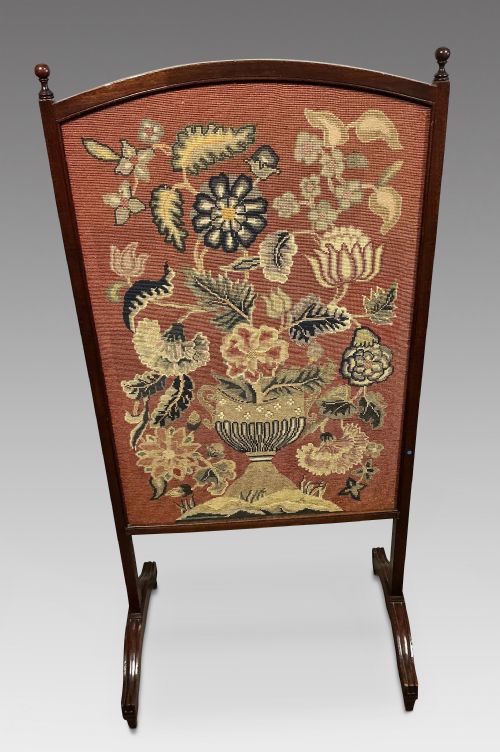


Tapestry Fire Screen
A tapestry fire screen brings tactile warmth and period detail to a room, functioning as both a decorative panel and a functional heat guard.
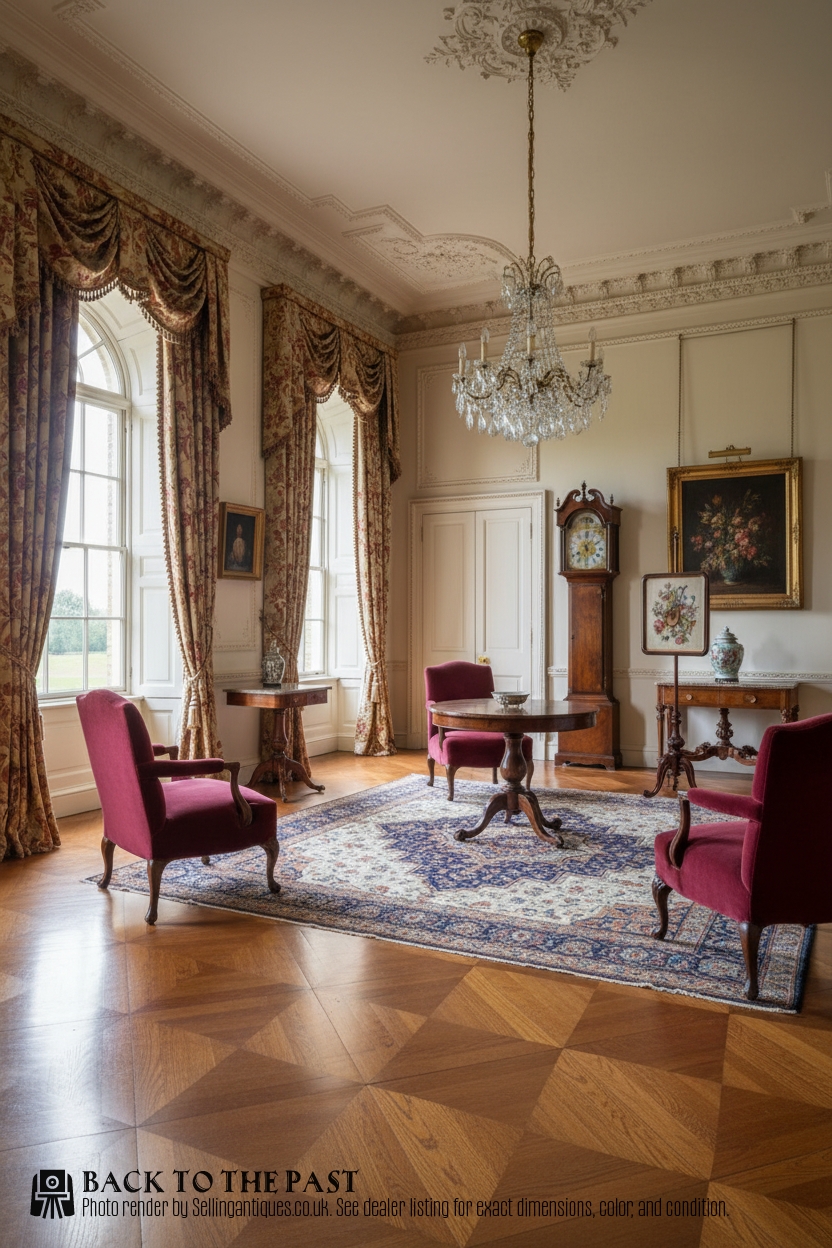
Tapestry Fire Screen
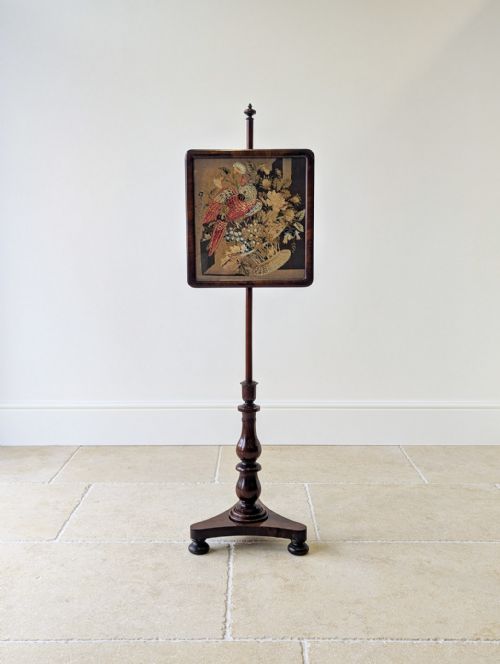
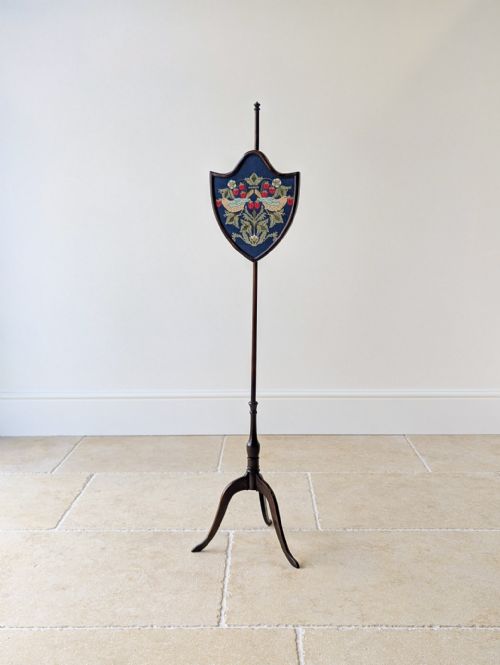
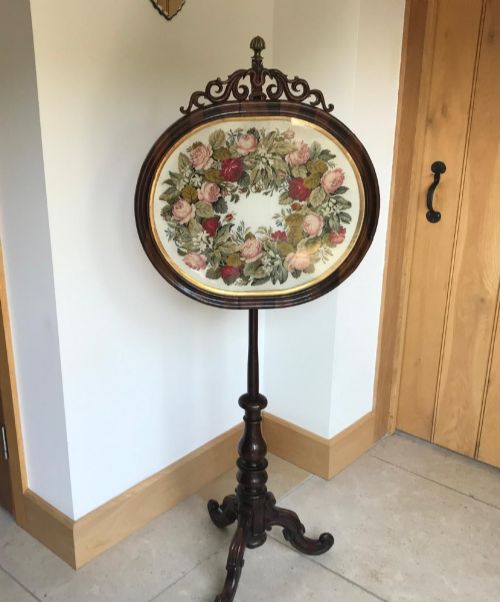
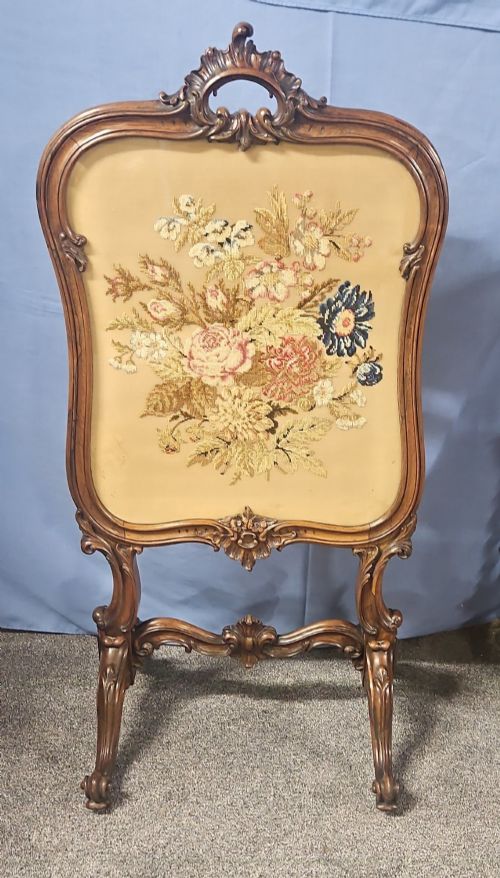
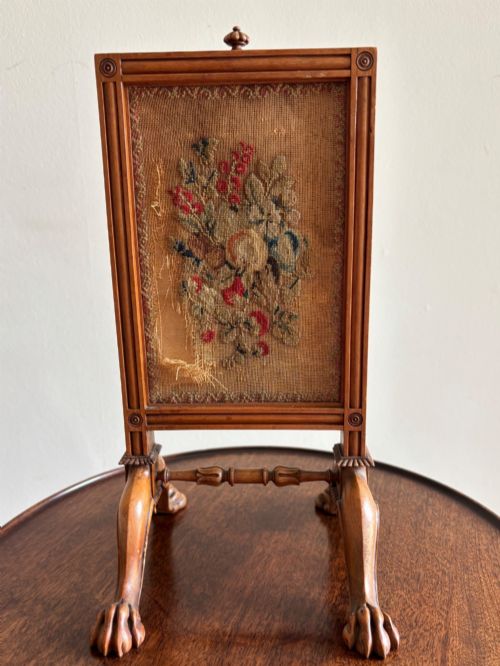
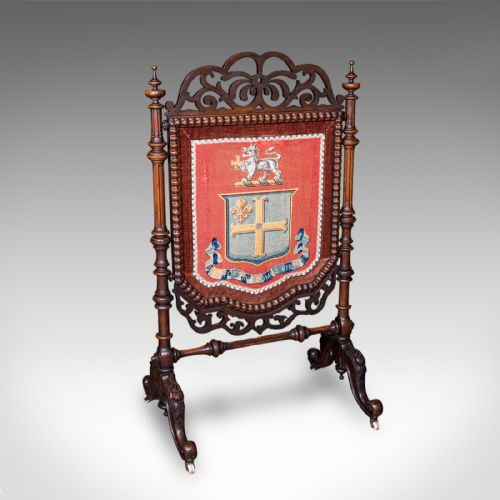
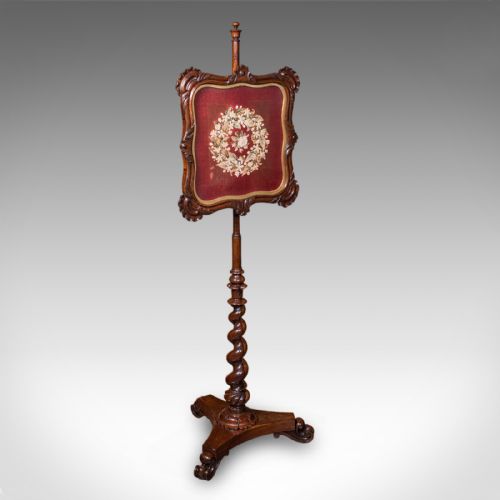
A tapestry fire screen is a specialised piece of antique furniture designed to protect inhabitants from the intense heat of an open hearth while adding decorative interest to a room. The form typically divides into two distinct variants on this page: upright cheval or framed screens resting on floor feet, and pole screens featuring adjustable vertical panels mounted on tripod stands.
Examples span the Georgian, Regency, William IV and Victorian eras, utilising timbers such as mahogany, rosewood, walnut and oak. Many incorporate needlework, woolwork or petit point textile panels depicting pastoral scenes, armorial bearings, floral motifs or historical subjects.
How they were made
Cabinetmakers constructed the supportive framework using dense hardwoods like mahogany, rosewood and walnut, often applying turning, carving, parcel gilding or inlay. Tripod bases, barley twist supports and framed floor panels demonstrate traditional joinery suited to heavy use near domestic hearths.
The visual centrepiece relies on textile arts, combining wool, silk, canvas and needlepoint or tapestry techniques. Embroidered panels were hand-stitched using various gauges of yarn and thread to secure detailed pictorial compositions within the wooden mounts.
Tapestry Fire Screen Retail Price Guide 2026
Typical asking prices for tapestry fire screen among the pieces listed under this phrase on Sellingantiques today, from the lower quarter to the upper quarter. They describe what is for sale here now, not the wider market.
Listings feature 19th-century walnut, mahogany and rosewood frames paired with hand-stitched wool and silk needlepoint panels.
What varies in quality
Quality rests primarily in the crispness of the woodwork carving, the stability of the structural joints, and the fineness of the textile work. Pieces featuring intricate needlepoint, petit point or specialised silk embroidery set apart finer examples from simpler woolwork designs.
The sophistication of the mechanical elements also defines the tier, particularly smooth adjustment mechanisms on pole screens and tightly fitted pivoting frames on tilt-top or metamorphic table combinations.
Gillows
The Tapestry Fire Screen Glossary
- Pole screen
- A vertical wooden stand holding an adjustable tapestry panel designed to slide up and down to block radiant heat. This form became a staple of Georgian and Victorian parlours.
- Needlepoint
- A type of canvas work embroidery stitched by hand using wool or silk threads. It forms the decorative pictorial panel seen on most fire screens.
- Petit point
- A very fine variety of needlepoint stitched over a single thread of the mesh canvas. This technique allows for high detail and shading in antique pictorial panels.
- Cheval screen
- A floor-standing screen supported by two upright pillars and feet, allowing the large framed panel to tilt or remain fixed. It offers a broader surface area than a pole screen.
- Tilt-top
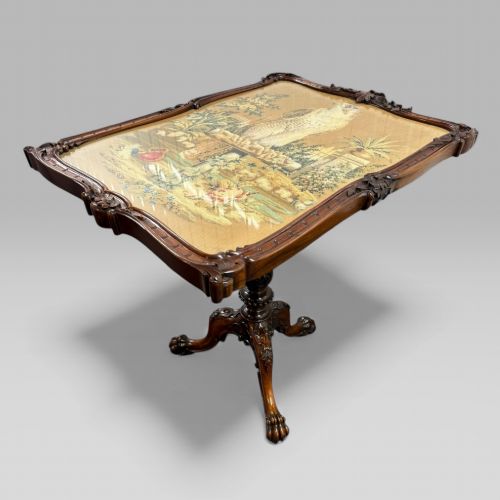
- A tabletop mechanism allowing the screen surface to pivot into a horizontal position. Some examples double as occasional tables.
Tapestry Fire Screen: Frequently Asked Questions
What is a pole screen?
A pole screen is a slender wooden stand featuring a vertical shaft and a tripod base that supports a sliding textile panel. Users adjusted the height of the panel to shield their faces from the direct heat of an open fire.
These pieces were traditionally placed near hearths in formal reception rooms. Over time, their utility shifted from temperature control to purely decorative display.
How do I date a fire screen?
Dating relies heavily on timber choices and decorative styles, such as Regency rosewood, Georgian mahogany, or Victorian walnut frames. The needlework technique and subject matter also offer clear clues to the period of manufacture.
Finer details like tripod leg profiles, brass hardware, and turning styles help narrow the decade of production. Comparing the joinery methods provides further confirmation of age.
Where should I place a screen?
These screens suit placement near inactive fireplaces, in entrance hallways, or as decorative room dividers against empty wall space. Their vertical panels introduce texture and colour without occupying deep floor space.
Avoid positioning antique textiles in direct, harsh sunlight to prevent fading of the wool and silk threads. Stable room temperatures protect the historic timber frames from drying or splitting.
What is needlepoint tapestry?
Needlepoint is hand embroidery stitched through an open-weave canvas mesh to create dense pictorial surfaces. Artisans utilised dyed wool and silk threads to form pastoral scenes, coats of arms, and floral patterns.
In antique screens, these textiles represent significant hours of hand labour by domestic makers. The tightness of the stitch dictates the clarity of the design.