



Needlepoint Hearth Screen
These needlepoint hearth screens are practical room dividers and mantel shields shaped from rosewood, walnut, and mahogany, designed to block radiant heat from open fires.
What needlepoint hearth screens are
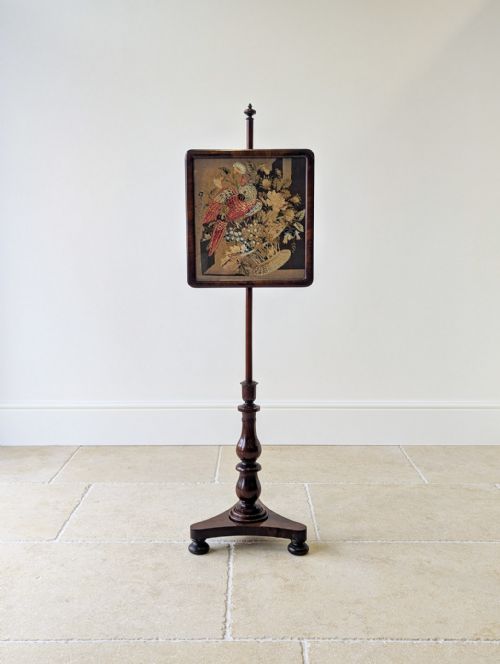
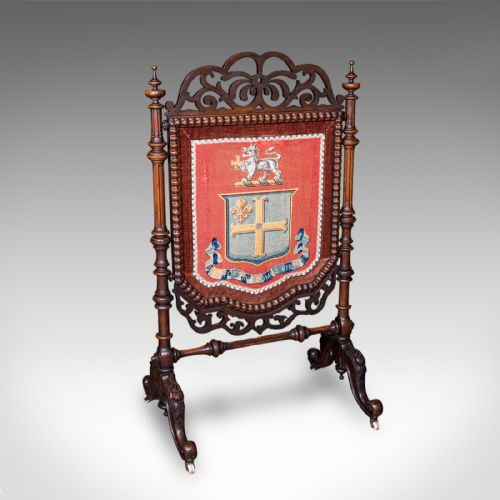
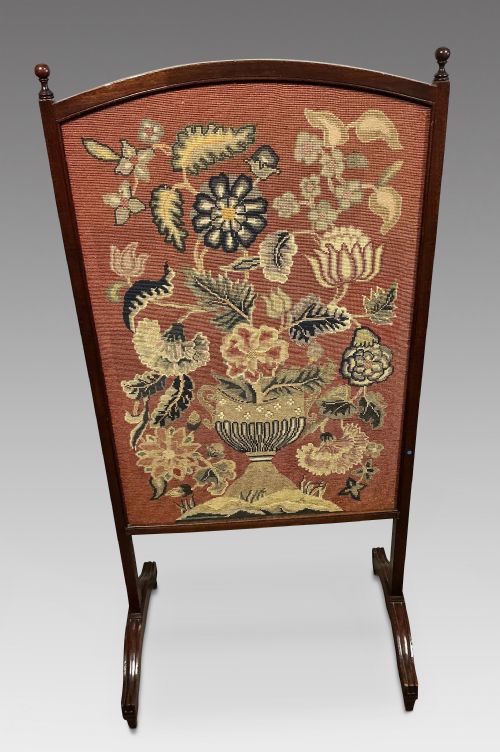
A needlepoint hearth screen stands before an unlit fireplace or beside a burning grate to shield occupants from the fierce heat of an open fire. These items emerge primarily from the Regency and Victorian eras, taking the form of floor-standing panels or adjustable pole screens.
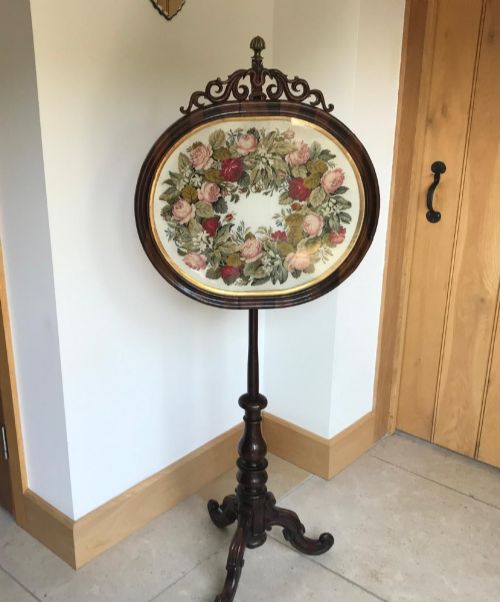
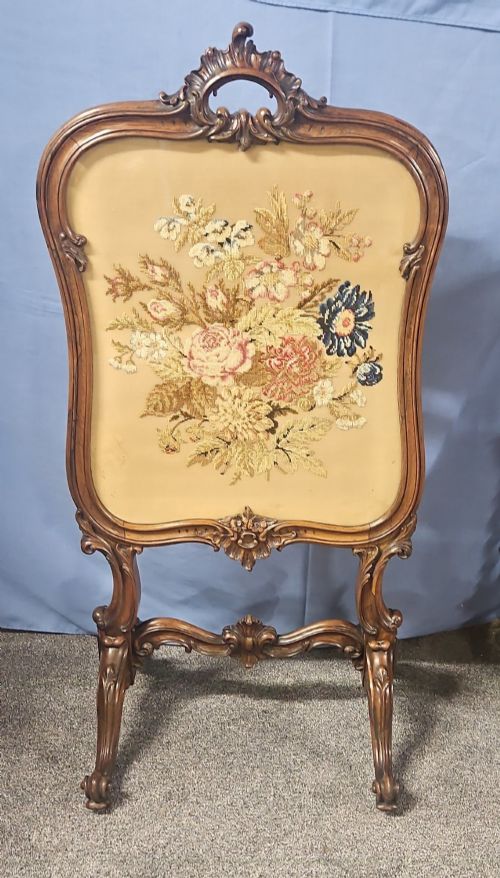
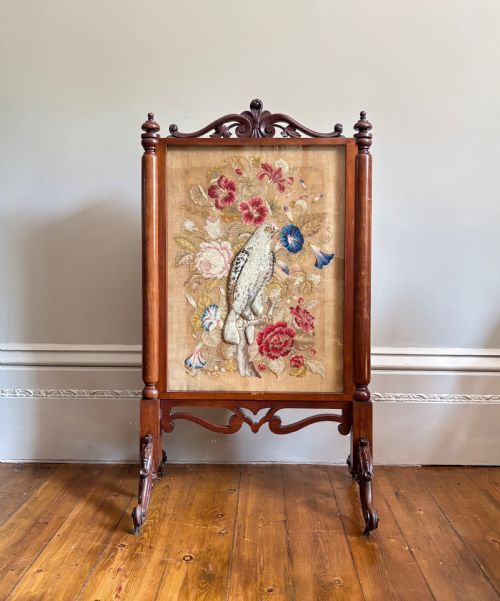
The pieces on this page span the 19th century, featuring styles from Regency elegance to Victorian Rococo Revival. Forms include both large static screens and adjustable pole designs mounted on turned pedestals with tripod feet.
Makers utilised dark timbers such as rosewood, walnut, and mahogany to frame the central wool tapestries. Each example serves as both a functional room furnishing and a decorative textile display.
How they were made
The wooden frames involve traditional cabinet-making techniques, utilising turned uprights, carved scrolling details, and solid bases of rosewood, walnut, or mahogany. Pole screens incorporate brass adjustment mechanisms that allow the central panel to slide vertically and tilt to the desired angle.
The textile panels consist of wool needlepoint or tapestry worked on canvas grounds. Skilled hands stitched intricate floral, geometric, or pictorial patterns using coloured wool threads before mounting the completed textile securely within the wooden framework.
Retail Price Guide 2026
Typical UK retail prices for needlepoint hearth screen, calculated from the Sellingantiques database of over a million retail prices indexed since 2003. This retail price guide relies exclusively on Sellingantiques data; no external sources or auction records are used, so the figures do not describe the wider market.
Listings span the Regency and Victorian periods, incorporating rosewood, walnut, mahogany, glass, and wool needlepoint.
What varies in quality
The distinction between standard examples and finer pieces lies in the complexity of the timber framing and the density of the wool stitching. Elaborate carvings, robust secondary woods like mahogany or palisander, and finely executed needlepoint tapestries distinguish the upper tier of the range.
Proportion and mechanical execution also play a role, as seen in the smooth operation of brass pole screen adjustments and the structural stability of tripod bases. Finer screens exhibit harmonious proportions between the decorative textile panel and the supporting stand.
The Needlepoint Hearth Screen Glossary
- Pole screen
- A vertical standing screen featuring a sliding panel mounted on a central wooden pole with a tripod base. This design allowed occupants to adjust the height of the textile shield against radiant heat.
- Needlepoint
- A type of counted thread embroidery stitched onto an open weave canvas ground. The technique creates a dense, durable surface suitable for heavy domestic use on fire screens.
- Palisander
- A dense, dark tropical timber often grouped with rosewood during the Regency period. Cabinet makers prized it for its rich grain and deep colour.
- Tapestry
- A form of textile art traditionally woven on a loom, though the term also describes needlework panels imitating woven pictures. These form the central decorative element of hearth screens.
Frequently Asked Questions
What is a needlepoint hearth screen?
A needlepoint hearth screen is a decorative standing panel designed to shield people from the intense heat of an open fire. They combine a wooden frame with a stitched wool textile.
Historically placed near the fireplace, these pieces also served to protect delicate interior furnishings and facial complexions from the direct glare of the flames when the hearth was active.
How do pole screens differ from standard screens?
Pole screens feature a central upright wooden shaft with a sliding mechanism that lets the user raise or lower the needlepoint panel. Standard screens are usually fixed-frame panels resting on floor feet.
Both forms belong to the 19th century, with pole screens offering adjustable heat shielding and static screens providing a larger, stable display surface.
What woods were used in these screens?
Cabinet makers utilised dense hardwoods including rosewood, walnut, mahogany, and palisander for the framing and supporting structures. These timbers provided the necessary weight and durability for floor-standing furniture.
Dark finishes and polished surfaces were typical of the Regency and Victorian periods, complementing the rich colours of the wool tapestries.
How should I live with a hearth screen?
Placing a hearth screen near an active fire requires caution, as dry historic wood and vintage wool textiles are sensitive to extreme heat and soot. Modern interiors often use them as decorative room dividers or wall-adjacent focal points.
Keep them away from direct sunlight to preserve the dyed wool colours within the needlepoint canvas.