




Victorian Tapestry Screen
A victorian tapestry screen brings a tactile warmth and a piece of domestic history to a hearth or corner.
Victorian Tapestry Screen
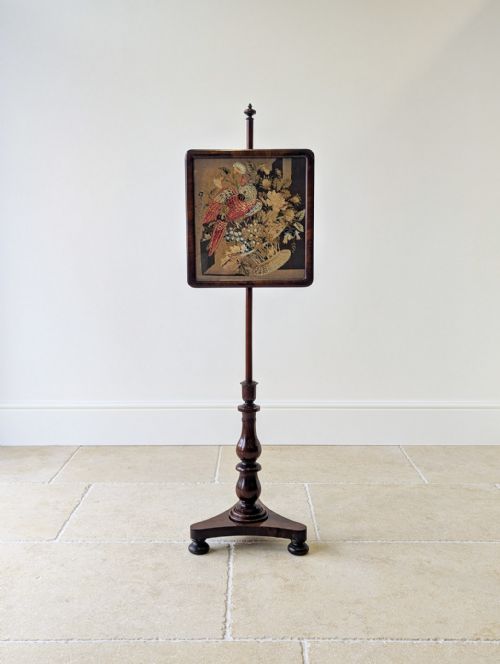
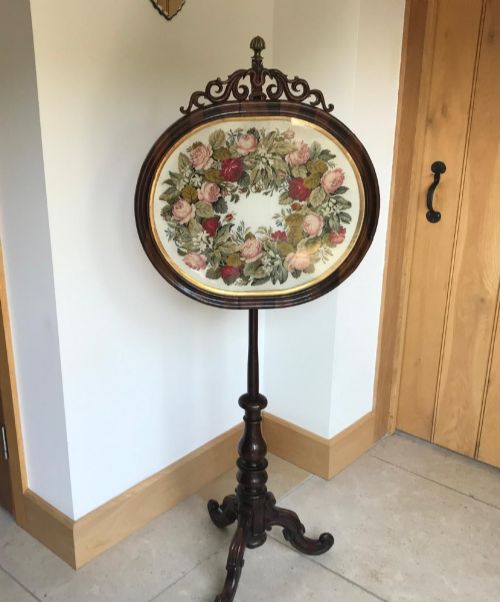
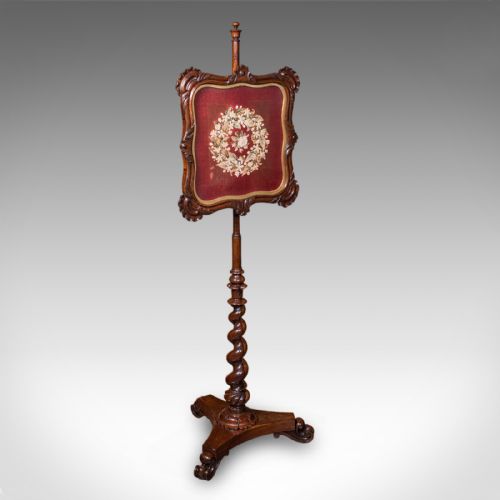
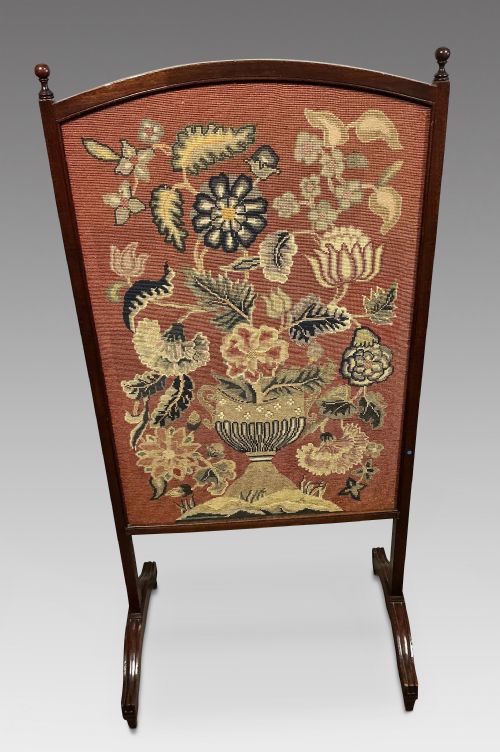
A victorian tapestry screen is an ornamental panel designed to shield a person from the direct heat of an open coal fire or to partition a room. The items range from tall folding room dividers and floor-standing cheval frames to single panels mounted on slender vertical poles with tripod bases.
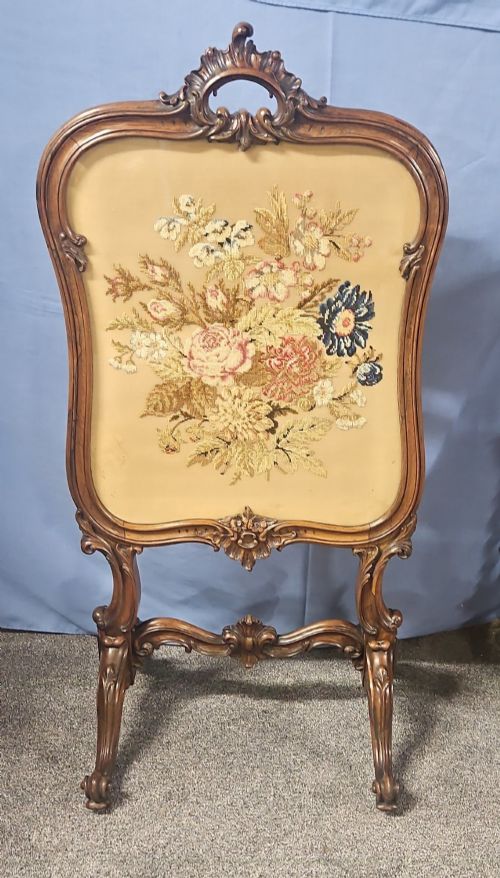
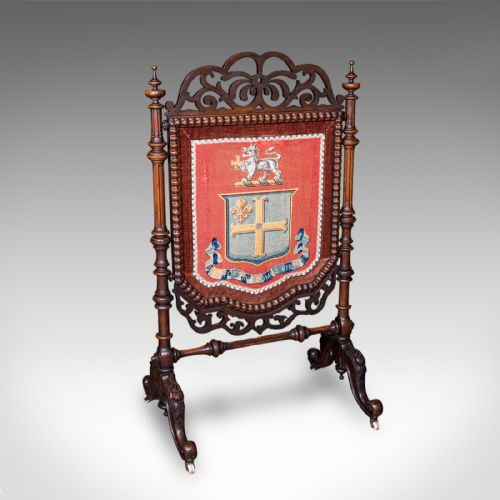
Most examples encountered here date from the nineteenth century, spanning William IV, early Victorian, and later revival styles. The embroidered or woven panels often depict floral arrangements, coats of arms, pastoral scenes, or figures.
Pole screens dominate the selection, offering adjustable panels that slide up and down to catch the warmth at seated height. Larger multi-panel folding screens also appear, serving primarily as decorative partitions or privacy barriers in larger rooms.
Materials and construction
Frames are constructed from dense hardwoods such as rosewood, walnut, and mahogany, often shaped with turned supports, carved tripod bases, or bobbin-turned members. Brass and gilt metal appear in adjustable pole fittings, banner hangers, and occasionally in the structural framing.
The central panels utilise wool, silk, and canvas worked in needlepoint, petit point, or woolwork embroidery by hand. Glazed protection covers some textile panels, while others leave the textured wool and canvas exposed to the room.
Victorian Tapestry Screen Retail Price Guide 2026
Typical asking prices for victorian tapestry screen among the pieces listed under this phrase on Sellingantiques today, from the lower quarter to the upper quarter. They describe what is for sale here now, not the wider market.
Needlepoint panels frequently feature floral arrangements, pastoral scenes, and armorial bearings worked in wool.
Determining quality
Quality rests upon the execution of the woodwork and the density of the needlework. Finely carved rosewood or walnut frames with crisp botanical or scroll detailing indicate a higher workshop standard than plain turned poles.
The complexity and tightness of the embroidery determine the merit of the panel itself. Worked wool and silk depicting detailed armorials, pastoral subjects, or animal figures require considerable time and skill compared to simpler floral repeats.
The Victorian Tapestry Screen Glossary
- Pole screen
- A small framed panel mounted on a vertical wooden shaft with a weighted base, designed to slide upward and downward to deflect fireplace heat from a seated person's face.
- Needlepoint
- Embroidery stitched onto a stiff open-weave canvas ground, completely covering the fabric to form a dense pictorial or geometric surface.
- Cheval screen
- A self-supporting floor screen with a frame mounted on two side pillars, allowing the central panel to tilt or pivot.
- Armorial
- A textile design displaying a heraldic coat of arms, family crest, or shield.
Victorian Tapestry Screen: Frequently Asked Questions
What is a pole screen used for?
In nineteenth-century drawing rooms, coal fires radiated intense heat that could cause discomfort or flush the skin of people sitting nearby. A pole screen stood near the hearth to protect the face and eyes from the blaze.
The adjustable panel slid up and down the wooden stem to match the height of the user. Many designs also doubled as decorative needlework displays when the hearth was not in use.
Where should I place a tapestry screen today?
These pieces fit naturally beside a fireplace, echoing their original nineteenth-century domestic placement. They also serve to divide open-plan spaces or soften an empty corner of a room.
Tall folding screens function well as room partitions or privacy dividers. Smaller pole screens act as decorative accents against plain walls where textile texture is desired.
How do I care for antique woolwork panels?
Wool and silk textiles benefit from gentle dusting with a soft brush and protection from direct sunlight, which fades natural and synthetic dyes over time. Keeping the wood polished with appropriate wax preserves the frame.
Positioning the screen away from damp exterior walls and extreme heat sources prevents the timber from splitting and protects the canvas ground from tension.