



Cheval Fire Screen
A cheval fire screen keeps the draught off your ankles while framing a splendid piece of needlework.
What these screens are
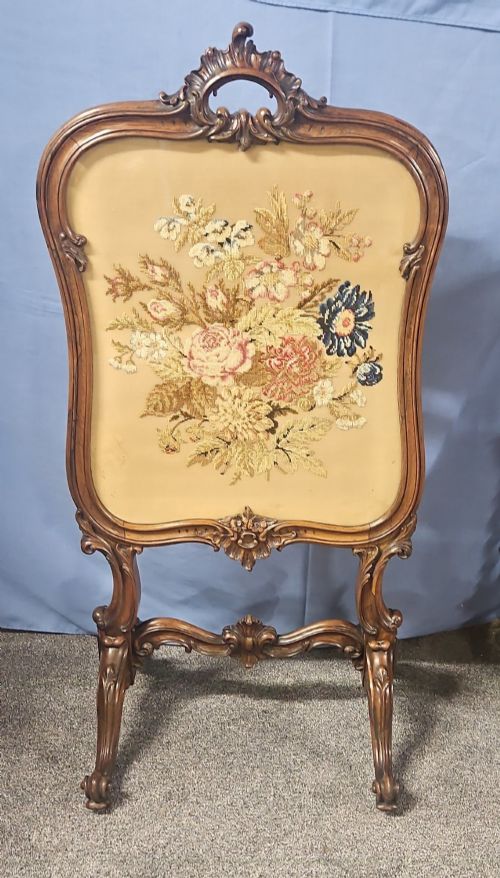
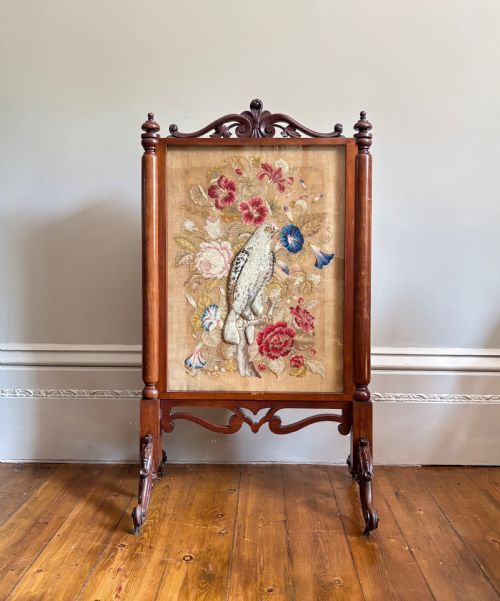
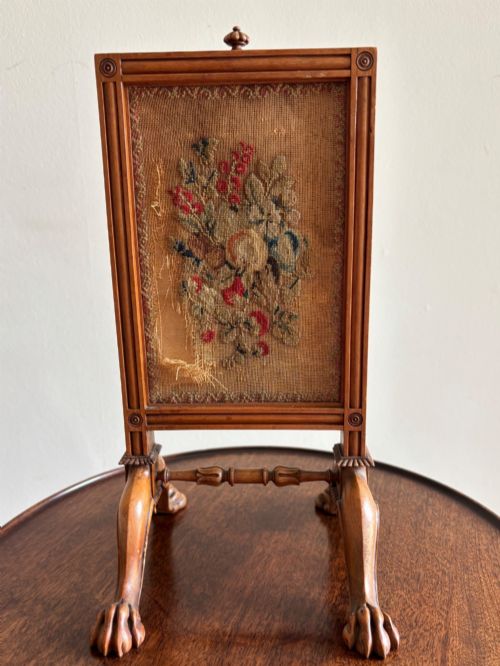
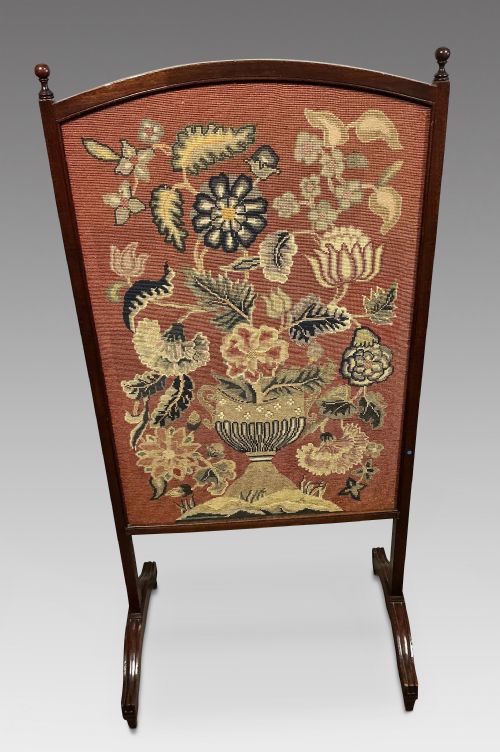
A cheval fire screen is a pivoting floor-standing frame designed to shield you from the fierce heat of an open grate. You will most often meet Victorian and nineteenth-century examples fashioned from walnut or mahogany, standing upright on sturdy feet.
The pivoting frame holds a textile panel, usually needlepoint, Berlin work, tapestry or embroidery on canvas. These panels turn on pivots so you can angle the screen precisely where the heat or the light requires.
How they were made
Cabinetmakers shaped the frames from solid hardwoods like walnut, rosewood and mahogany, often incorporating carved details and sturdy upright supports. Brass hardware secured the pivoting mechanism that allowed the central frame to tilt.
The internal panels displayed needlework, wool textiles and canvas embroidery, worked by hand with intricate floral or figurative patterns before being mounted securely within the wooden framework.
Retail Price Guide 2026
Typical UK retail prices for cheval fire screen, calculated from the Sellingantiques database of over a million retail prices indexed since 2003. This retail price guide relies exclusively on Sellingantiques data; no external sources or auction records are used, so the figures do not describe the wider market.
Listings feature walnut, mahogany and rosewood frames paired with wool, canvas and tapestry panels from the nineteenth century.
What varies in quality
Quality rests in the depth of the timber carving and the crispness of the joinery in the upright frame. Plain turned legs sit at one end of the scale, while deeply carved baronial or Rococo Revival woodwork sits at the other.
The needlework panel dictates much of the character, moving from simple wool embroidery to finely detailed Berlin work and antique tapestry. Finer panels show immense patience in the stitchwork and a richer palette of dyed threads.
The Cheval Fire Screen Glossary
- Cheval
- A freestanding frame that swings on pivots between two upright pillars. The term derives from the French word for horse.
- Berlin work
- A style of charted needlepoint popular in the nineteenth century using brightly coloured wools on canvas. It allowed makers to produce intricate pictorial panels with ease.
- Tapestry
- A heavy textile woven or stitched with pictorial designs. In these screens, the term often describes elaborate needlepoint panels.
- Rococo Revival
- A nineteenth-century design style drawing on eighteenth-century motifs. It favours asymmetrical curves, C-scrolls and naturalistic floral carvings.
Frequently Asked Questions
What is a cheval fire screen?
A cheval fire screen is a movable wooden frame holding a textile panel that stands before a fireplace. It protects people in the room from radiant heat.
These screens date mainly from the nineteenth century and feature adjustable panels that tilt on pivots.
How do you use a fire screen?
You place the screen between your seating area and the fireplace when the fire is lit. The adjustable panel angles to block the direct heat.
When the hearth is cold, the decorative needlework panel serves as an ornamental screen to hide the empty grate.
What woods were used for screens?
Cabinetmakers utilised dense hardwoods such as mahogany, walnut and rosewood. These timbers provided the weight needed to keep the tall frames stable.
Carved walnut and mahogany appear frequently across nineteenth-century examples.
What are the panels made from?
The panels consist of textiles mounted inside the wooden frame. Common materials include wool, canvas and needlepoint.
Many examples showcase Berlin work or traditional tapestry featuring floral and figurative embroidery.