



Embroidered Fireplace Screen
An embroidered fireplace screen combines warmth and needlework artistry, serving as both a functional hearth accessory and a striking decorative panel.
Embroidered Fireplace Screen
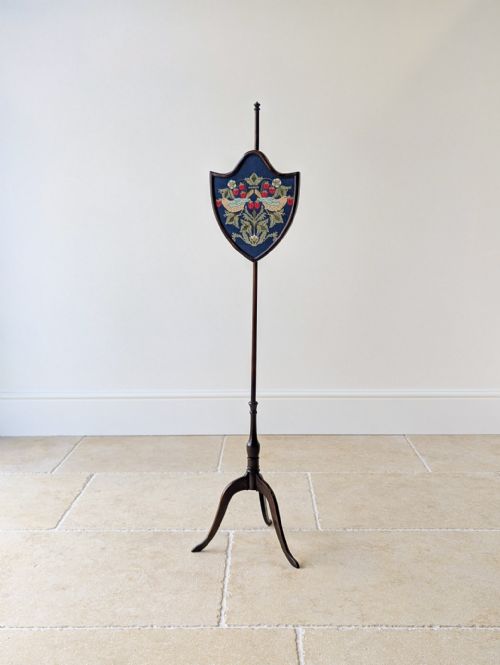
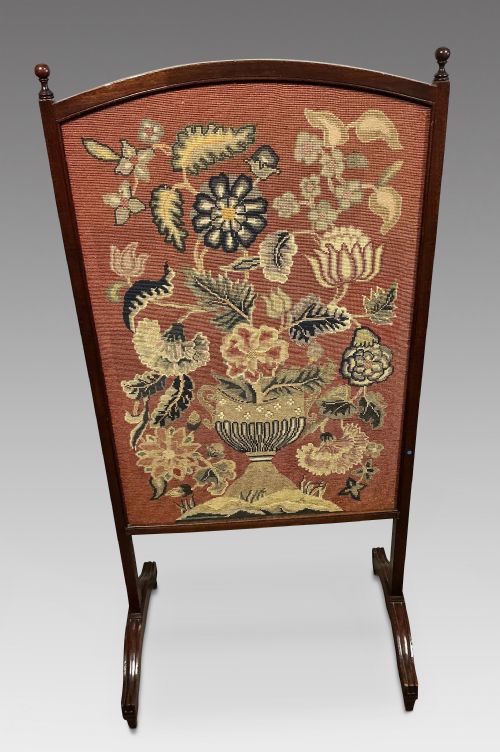
An embroidered fireplace screen is a functional piece of interior furnishing designed to shield occupants from the intense heat of an open fire. These items appear in various forms, most commonly as pole screens standing on slender tripod or pedestal bases or as cheval and folding frames supporting a textile panel.
The pieces on this page span the Georgian, Regency, and Victorian eras up to the twentieth century, reflecting shifting domestic habits and interior tastes. Examples range from simple nineteenth-century mahogany frames to elaborate George III pole screens and metamorphic occasional tables.
Materials vary widely across the inventory, encompassing structural woods like mahogany, walnut, and rosewood paired with needlework, woolwork, silk, or tapestry panels. Buyers encounter both British country house furnishings and occasional international pieces, such as Indian embroidered panels.
How they were made
Frames are constructed from dense hardwoods such as mahogany, walnut, rosewood, and goncalo alves, often featuring turned poles, carved tripod bases, or inlaid details. Joinery techniques reflect the period of manufacture, from eighteenth-century Chippendale styles to nineteenth-century adjustable mechanisms.
The decorative inserts rely on textile craftsmanship, utilising woolwork, needlepoint, tapestry, and silk embroidery. These panels are mounted securely within wooden or brass surrounds, sometimes incorporating glass for protection or adjustable slide mechanisms to raise and lower the display.
Embroidered Fireplace Screen Retail Price Guide 2026
Typical asking prices for embroidered fireplace screen among the pieces listed under this phrase on Sellingantiques today, from the lower quarter to the upper quarter. They describe what is for sale here now, not the wider market.
What varies in quality
Quality rests significantly on the fidelity and density of the embroidery work, where finely executed silk or wool needlepoint commands attention. The artistic merit of armorial depictions, floral tapestries, or pictorial scenes directly influences the distinction of a piece.
Constructional integrity and timber selection separate standard examples from finer items. Robust turned supports, carved tripod bases, and smooth adjustable pole mechanisms indicate superior cabinetmaking compared to utilitarian alternatives.
The Embroidered Fireplace Screen Glossary
- Pole screen
- A vertical wooden stand featuring an adjustable sliding panel designed to block radiant heat from a fireplace. The panel moves up and down on a central turned shaft.
- Needlepoint
- A type of canvas work embroidery stitched with wool or silk yarn. It forms the detailed pictorial or geometric panels seen inset into many screen frames.
- Cheval screen
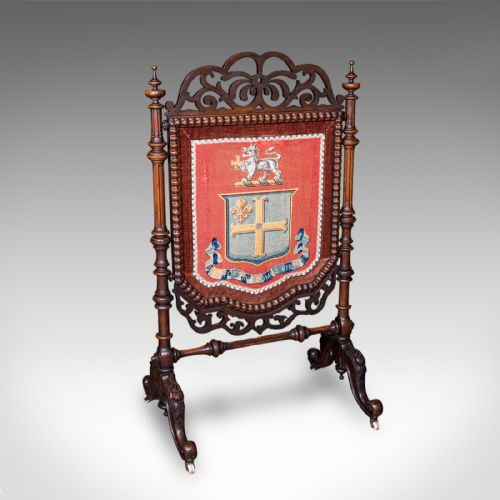
- A self-standing frame supported by two vertical pillars and feet. This design allows the embroidered panel to swing or pivot between the upright supports.
- Tapestry
- A form of textile art traditionally woven on a loom, though the term often describes needlework panels in these listings. These provide the decorative surface facing the hearth.
- Armorial
- A design displaying a coat of arms or heraldic insignia. Several panels depict family crests such as the Clan Maclellan.
Embroidered Fireplace Screen: Frequently Asked Questions
What is a pole screen?
A pole screen is a freestanding vertical furniture piece with a sliding needlework panel mounted on a central wooden shaft. It was positioned near the fireplace to shield a person's face from the direct heat of the flames.
The adjustable panel could be raised or lowered and swivelled to block heat from any angle. Beyond their practical use, they displayed the fine needlework skills of the maker.
How do I date a fireplace screen?
Dating relies on examining the timber species, joinery methods, and the style of the frame and base. Georgian and Regency pieces often feature mahogany or rosewood with tripod legs, while Victorian examples introduce walnut and heavier carved ornament.
The needlework panel itself also offers clues, though textiles were sometimes replaced or updated later in a piece's lifespan. Comparing the turning of the woodwork against known period furniture styles helps confirm the decade of manufacture.
Were these screens actually used for fires?
Yes, they served a vital practical purpose in rooms heated by open coal or wood fires. Victorian and Georgian parlours lacked central heating, making radiant heat control essential for comfort.
Sitting close to an open hearth could overheat the face, particularly for women wearing heavy cosmetics or seated near large fires. The screen acted as a personal barrier against excessive heat.
What is the difference between a pole screen and a cheval screen?
A pole screen uses a single central turned pillar supported by a tripod or weighted base, carrying a small, usually square or round adjustable panel. This design was intended for an individual.
A cheval screen stands on two feet with upright side pillars, holding a much larger rectangular panel that pivots between them. Cheval screens provided broader heat protection for more than one person.