

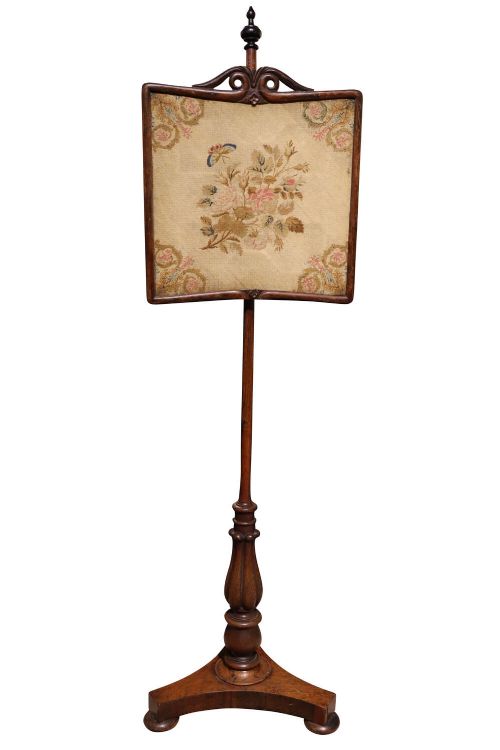
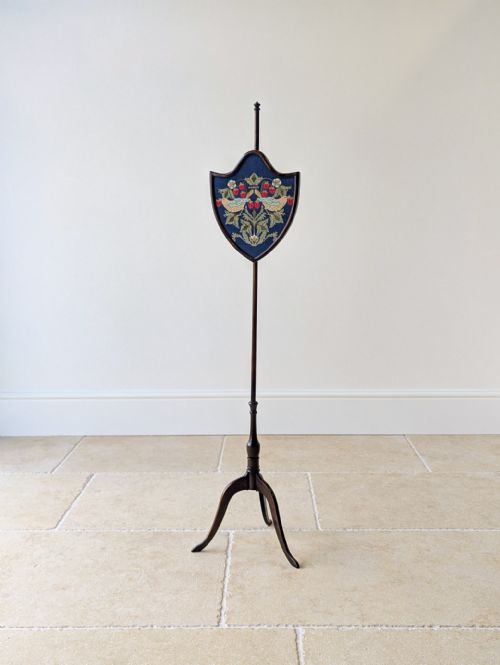
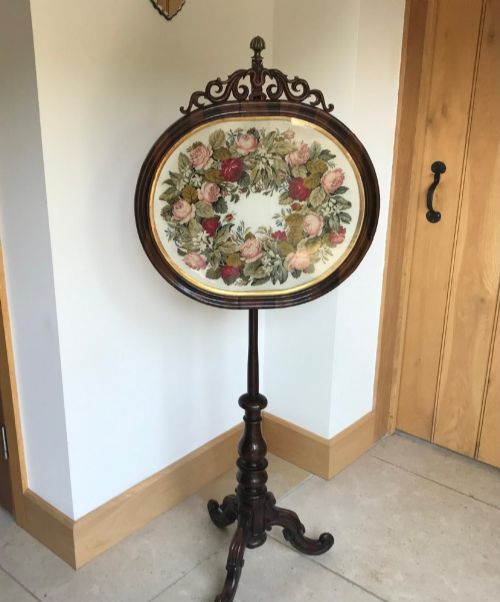


Needlework Pole Screen
A needlework pole screen is a fireside screen with an adjustable panel of embroidery designed to shield the face from the heat of the hearth.
Needlework Pole Screen
A needlework pole screen serves as a practical fireside accessory and a decorative furnishing, featuring a vertical standard that holds a sliding panel. The items encountered here span Georgian, Regency, and Victorian periods, reflecting shifting tastes in interior decoration.
Most examples rely on a sturdy tripod base to support the long wooden shaft and the framed textile above. Mahogany and rosewood dominate the listings, frequently paired with wool or silk embroidery worked by hand.
How they were made
Cabinetmakers turned the timber poles on a lathe and carved the tripod legs with motifs typical of their respective periods, such as Chippendale influence or Regency reeding. Brass mechanisms were integrated into the shaft or frame to allow the needlework panel to slide and lock at the desired height.
Textile panels were mounted into wooden frames, often utilising fine needlepoint, tapestry, or embroidery worked in wool and silk threads. Some panels incorporated glass protection or acted as reflectors for the firelight.
Needlework Pole Screen Retail Price Guide 2026
Typical asking prices for needlework pole screen among the pieces listed under this phrase on Sellingantiques today, from the lower quarter to the upper quarter. They describe what is for sale here now, not the wider market.
Victorian ladies relied on these adjustable screens to prevent their expensive face powders from melting near the hearth.
What varies in quality
The sophistication of the timber turning and the crispness of the carved tripod base set finer pieces apart from standard workshop production. Timbers selected for their rich grain, such as figured mahogany, satinwood, or rosewood, indicate higher status commissions.
The artistic merit and preservation of the needlework panel heavily influence the overall character of the piece. Finely detailed wool or silk embroidery with original mounting demonstrates superior craftsmanship compared to later replacements.
The Needlework Pole Screen Glossary
- Pole screen
- A freestanding fireside screen with an adjustable panel mounted on a vertical pole.
- Tripod base
- A three-legged support structure commonly utilised to keep the upright shaft stable on uneven floors.
- Needlepoint
- A type of counted thread embroidery stitched onto a stiff canvas mesh to create pictorial or geometric panels.
- Reflector
- A panel designed to bounce the warmth or light of the hearth back into the room.
Needlework Pole Screen: Frequently Asked Questions
What is a needlework pole screen used for?
These screens were positioned near the fireplace to protect a person's face from the intense radiant heat of an open coal or wood fire. The adjustable panel could be raised or lowered to shield the complexion while sitting.
Over time, as heating methods evolved, they transitioned from practical everyday items into decorative furnishings valued for their fine woodwork and textile art.
How do I adjust the height?
Most screens feature a sliding mechanism hidden within or attached to the frame of the needlework panel, allowing it to move vertically along the turned wooden pole. Brass thumbscrews or internal friction springs typically hold the panel securely at the chosen level.
Care should be taken when adjusting older mechanisms to avoid straining the aged timber or disturbing the mounted textile.
Are the embroidery panels original?
Many surviving pieces retain their period needlework, often worked in wool or silk during the eighteenth or nineteenth century. Because textiles are fragile, some panels have been re-stitched or replaced during past restorations.
Examining the tension of the fabric, the wear on the threads, and the method of framing helps determine whether the needlework matches the age of the wooden stand.
How do I date a pole screen?
Dating relies heavily on the timber species, the style of the tripod base, and the turning of the central pole. Georgian examples often display mahogany with classical carving, while Regency pieces frequently utilise rosewood and brass inlay, and Victorian versions lean towards heavier proportions.
Comparing the construction techniques of the frame and the characteristics of the embroidery provides further clues to the period of manufacture.