




Antique Standing Fire Screen
An antique standing fire screen brings warmth and decorative needlework or glass to a room, shielding sitters from the intense heat of an open hearth.
Antique Standing Fire Screen
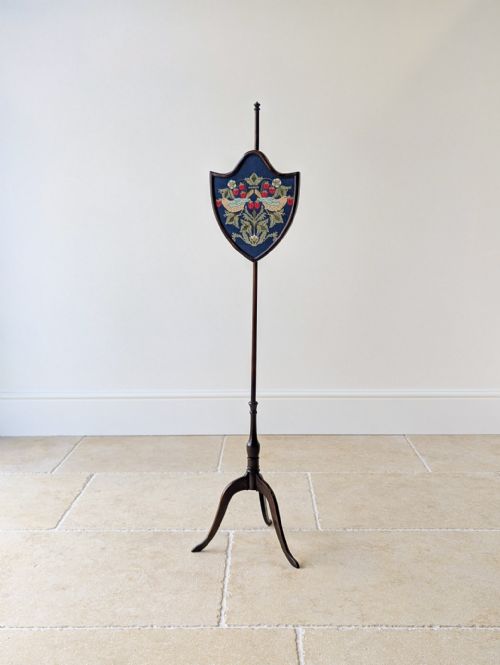
An antique standing fire screen serves as a decorative and functional barrier before the hearth, historically designed to protect the complexion of people seated near an open fire. These pieces emerge in various forms across the Georgian, Regency, and Victorian periods, ranging from tripod pole screens with adjustable panels to larger folding or static guards.
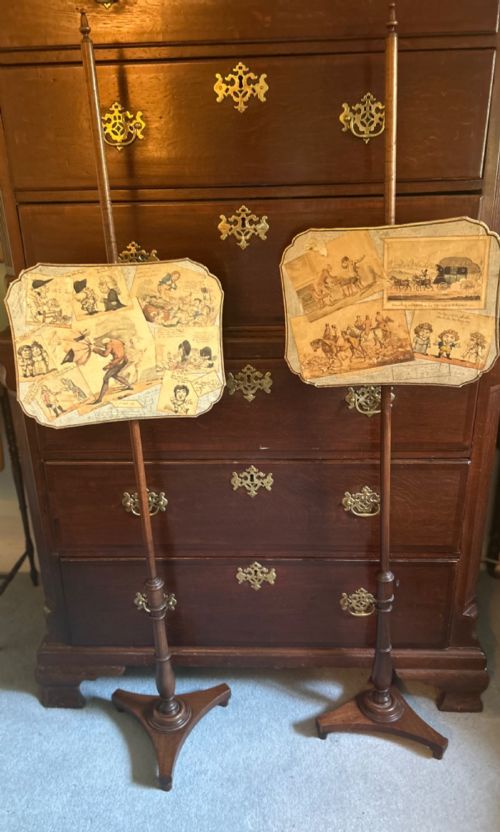
The versions most commonly met on this page include pole screens featuring needlework, tapestry, or painted panels mounted on slender wooden pedestals, alongside solid brass or iron spark guards. Woods such as mahogany, rosewood, and walnut frequently form the frames and stands of these fireside furnishings, often reflecting Regency or Victorian design preferences.
Materials and Construction
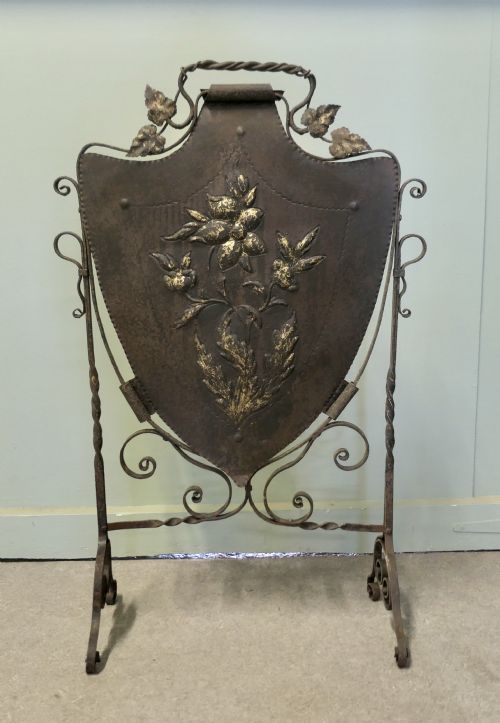
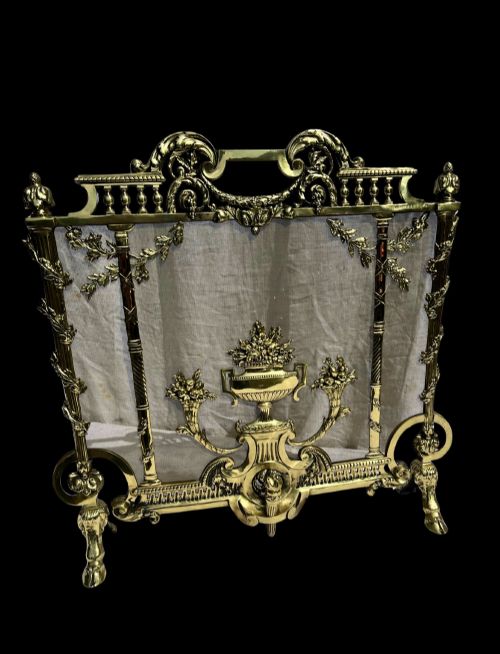
Makers constructed the frames and stands of these pieces from dense timbers like mahogany, rosewood, walnut, and oak, frequently employing turning, carving, and tripod bases for stability. Metal variants utilise cast brass, wrought iron, and copper, sometimes shaped into elaborate rococo scrolls or geometric arts and crafts designs.
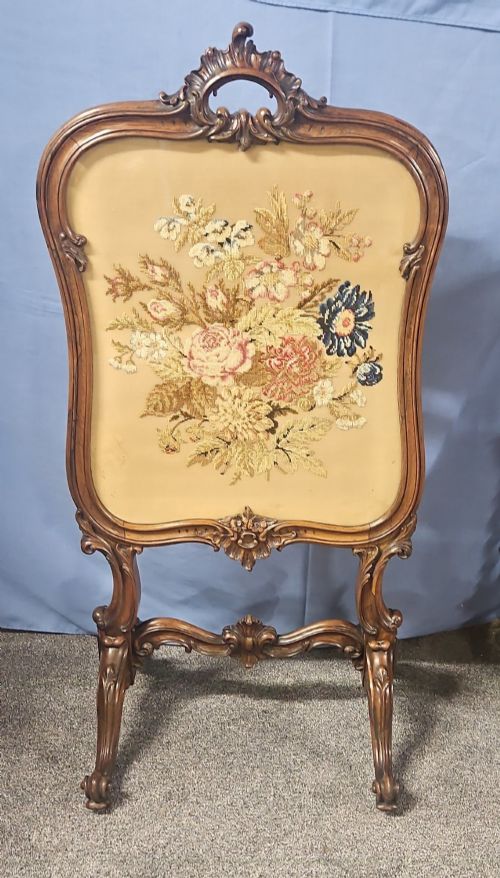
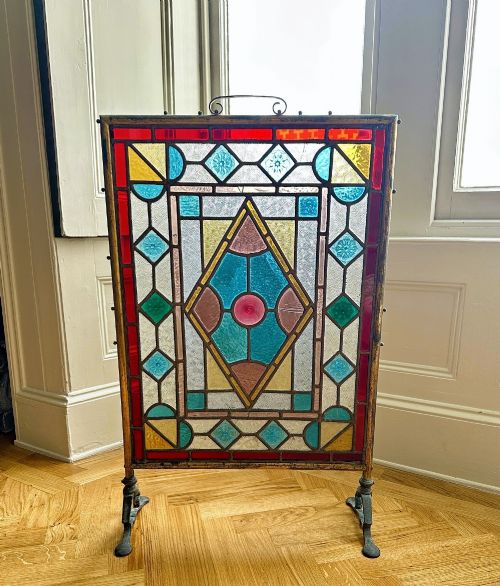
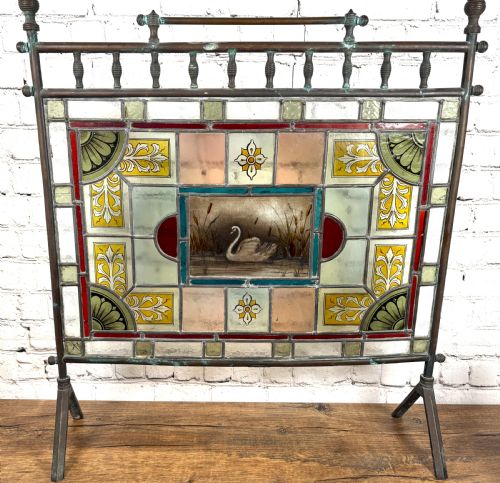
The central panels display diverse textile techniques, incorporating needlepoint, embroidery, silk work, crewel work, and tapestry, while other examples showcase stained glass, painted paper-mache, or satirical prints set within protective wooden or brass borders.
Listings feature textiles including wool, silk, tapestry, and needlework alongside wooden frames in mahogany, rosewood, walnut, and oak.
Distinctions in Execution and Materials
Quality in an antique standing fire screen rests upon the crispness of the timber carving on the base and the structural integrity of the adjustable mechanism. Pieces with finely turned columns, substantial tripod legs, and dense hardwoods like rosewood or mahogany demonstrate superior cabinetmaking.
The execution of the central panel further separates examples, where finely worked needlepoint, detailed silk embroidery, or genuine stained glass show greater artistry than plain wooden panels or simpler prints. The weight and gauge of the brass or iron in metal spark guards also indicate the standard of production.
The Antique Standing Fire Screen Glossary
- Pole screen
- A type of fire screen featuring a vertical wooden pole mounted on a tripod or heavy base, holding a sliding panel that can be adjusted for height.
- Needlework
- Hand-stitched textile art using wool, silk, or cotton yarn on a canvas ground, frequently mounted as the central panel in fireside screens.
- Spark guard
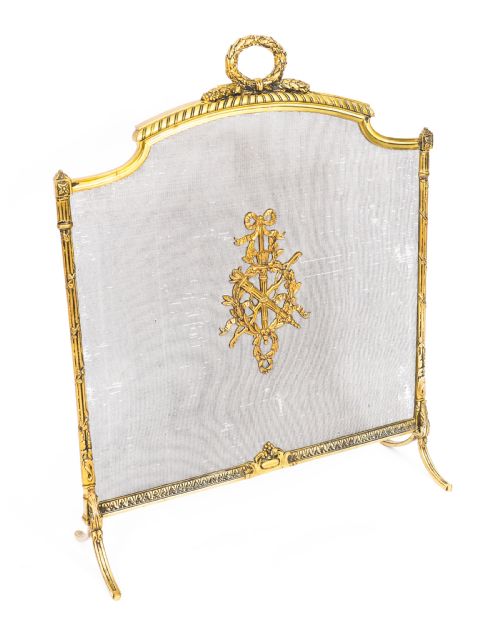
- A metal screen, often made of brass wire mesh or perforated plate, designed primarily to catch flying embers from an open fireplace.
- Tripod base
- A three-legged support structure commonly found beneath the upright posts of pole screens to provide stable placement on uneven floors.
- Gilt bronze
- Copper alloy cast objects treated with a gold amalgam or finish, seen on decorative mountings and French revival fire screens.
Antique Standing Fire Screen: Frequently Asked Questions
What was the purpose of an antique pole screen?
These screens were positioned between sitting areas and open fireplaces to shield people from radiant heat, protecting facial skin and cosmetic wax from melting.
The sliding panel on the pole allowed users to adjust the height depending on where they sat in the room.
How do I adjust the height of a pole screen?
Most pole screens utilise a small internal brass spring clip or friction collar hidden behind the sliding panel to hold it at the desired position on the wooden shaft.
Gentle upward or downward pressure on the panel allows it to slide along the pole and remain fixed once released.
Where should I place a fire screen in a modern home?
While originally designed for functional hearth use against coal or wood fires, these pieces now serve primarily as decorative room dividers or accent furniture.
They work well placed near empty fireplaces, in corners to add vertical interest, or as visual screens in large reception rooms.
What is the difference between a pole screen and a spark guard?
A pole screen consists of an adjustable fabric, needlework, or glass panel mounted on a single vertical stand for radiant heat protection.
A spark guard is typically a low, wide metal mesh or brass screen designed specifically to contain physical embers and sparks from an active fire.