
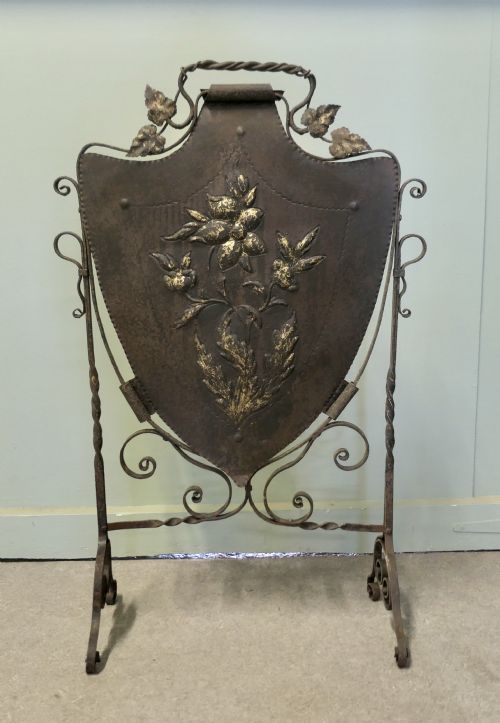


Antique Hearth Shield
These antique hearth shield items, encompassing firescreens and pole screens from the Regency to the Victorian era, offer practical warmth control and refined interior decoration.
Antique Hearth Shield
When you search for an antique hearth shield, you are looking at firescreens and pole screens designed to protect occupants from the intense radiant heat of an open fire. These furnishings take several forms, including adjustable pole screens with suspended panels and standing hearth shields.
The pieces listed on this page span the 17th, 18th, and 19th centuries, capturing styles from Regency and Victorian to Gothic Revival and Dutch Renaissance Revival. You will most frequently encounter Regency pole screens featuring needlework, tapestry, or poker work panels mounted on slender timber supports.
Makers utilised various formats, from freestanding wrought iron shields to elaborate brass and oak pieces bearing coats of arms. Each object reflects the domestic requirements of period parlours and drawing rooms, combining functional utility with decorative craftsmanship.
How they were made
The construction of these screens relies heavily on fine timbers such as mahogany, rosewood, satinwood, and oak, often shaped into poles, frames, and carved bases. Giltwood and wrought iron also appear, providing structural support and decorative contrast for the shields.
Panels demonstrate diverse techniques including embossed and chased brass, needlepoint tapestry, silk, and poker work. Glass panels also serve as fireside reflectors, mounted securely within wooden or metal surrounds to withstand domestic hearth environments.
Early screen panels doubled as handy hand-guards to stop ladies' expensive facial makeup from literally melting off in front of a roaring blaze.
What varies in quality
Quality in these pieces is determined by the crispness of the timber turning, the precision of the joinery, and the material execution of the shield panel itself. Finely chased brass and intricate needlework tapestries elevate a piece above standard domestic utilitarian versions.
The sophistication of the adjustable mechanism on pole screens distinguishes finer examples, alongside the integrity of original materials like satinwood, rosewood, and giltwood. Proportion and balance in the supporting tripod or pedestal base complete the assessment.
The Antique Hearth Shield Glossary
- Pole screen
- A freestanding firescreen featuring a vertical wooden pole with an adjustable sliding panel designed to block radiant heat from the face. The panel can be raised or lowered as required.
- Poker work
- A method of decorating wood or other materials by burning designs with a heated metal point. It appears frequently on Regency panels.
- Needlepoint tapestry
- Hand-stitched textile work executed on canvas mesh, commonly stretched across screen frames to display pictorial or geometric designs. It formed a primary decorative element for 18th and 19th-century screens.
- Giltwood
- Timber that has been coated with a thin layer of gold leaf or gold paint. This finish provides a bright, reflective surface seen on select Regency frames.
- Chased brass
- Metalwork decorated by hammering or punching the front surface to raise low relief designs. This technique adds texture and pattern to brass hearth shields.
Antique Hearth Shield: Frequently Asked Questions
How do I use a pole screen?
A pole screen stands near the fireplace to shield the face from the intense heat of an open fire. You adjust the height of the panel along the vertical pole to suit your seating position.
In period rooms, they were repositioned throughout the day as the fire burned and room temperatures shifted, serving both a functional and a decorative purpose.
What is the difference between a pole screen and a hearth shield?
A pole screen consists of a vertical stand with a sliding panel that can be adjusted up and down. A hearth shield or fixed firescreen generally stands directly on the floor without a central pole mechanism.
Both items served to protect sitters from excessive heat, but pole screens offered adjustable directional screening while fixed screens provided broader stationary coverage.
How do I date a Regency firescreen?
Regency pieces often display characteristic timber choices such as rosewood, mahogany, and satinwood alongside specific decorative motifs like poker work or fine needlepoint tapestry. The presence of slender turned poles and tripod bases points directly to this early 19th-century period.
Comparison with documented examples from around 1820 helps confirm the manufacturing era and stylistic markers.
Where should I place a firescreen at home?
These screens fit naturally in a drawing room or living space near a fireplace, echoing their original domestic context. They can stand to the side of the hearth when the fire is lit or serve as decorative room dividers when not in use.
Ensure they are kept at a safe distance from active heat sources to protect delicate textiles, glass, and polished timber surfaces.