


Brass Pole Screen
A brass pole screen directs adjustable warmth and light away from the face, combining a weighted standard with a sliding needlework or tapestry panel.
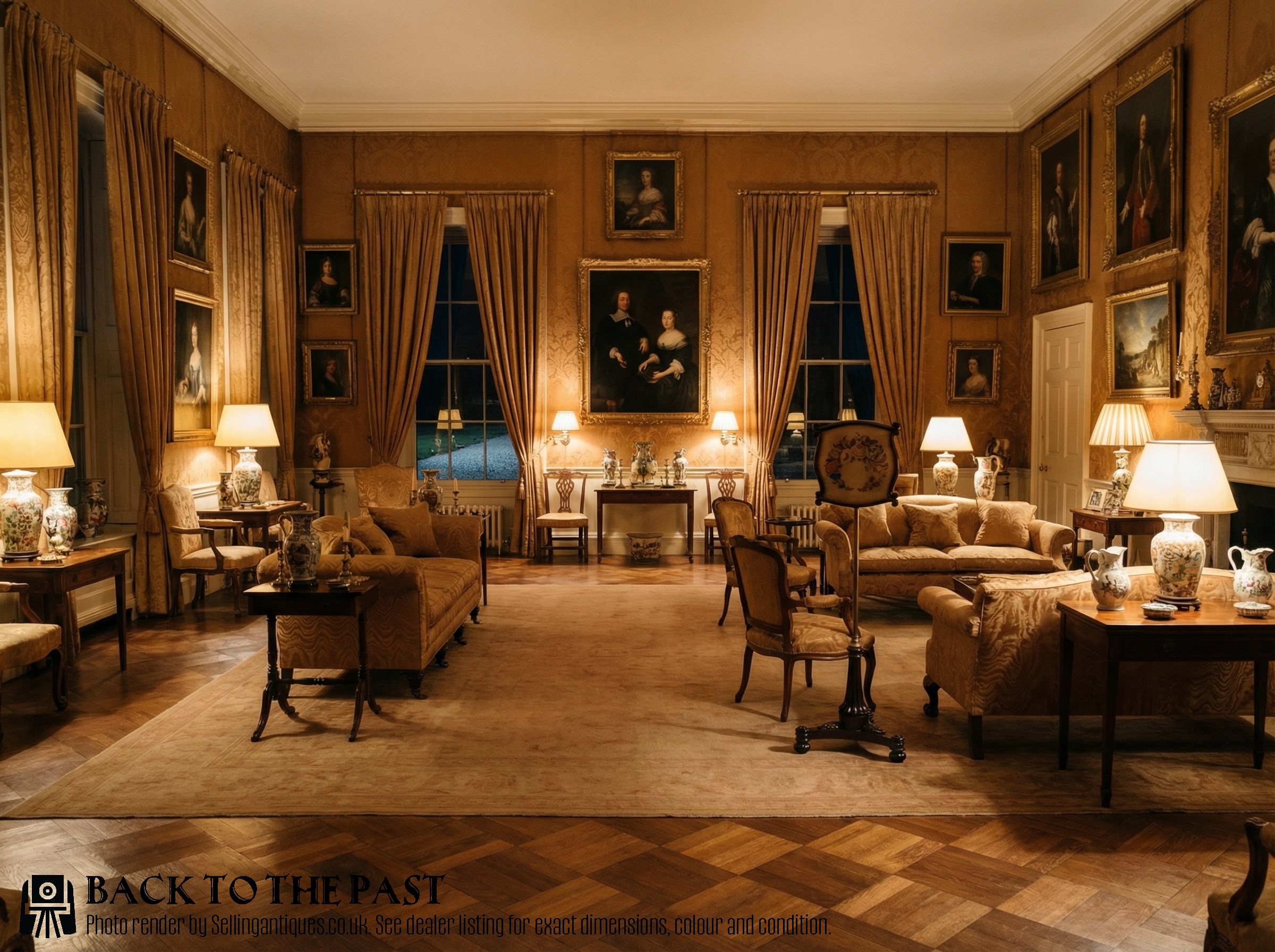
Brass Pole Screen
A brass pole screen stands upright on a weighted base, carrying a vertical shaft designed to hold a sliding decorative panel. When searching for a brass pole screen, buyers encounter slender floor standards fashioned from mahogany, rosewood, and gilt brass, supporting textile banners.
The versions most commonly met on this page span the Georgian, Regency, and Victorian periods. These pieces frequently feature wool needlework, tapestry banners, or poker work panels that slide up and down the brass rod to intercept the heat of an open hearth.
Makers and cabinetmakers produced these furnishings in several distinct regional styles, including Gothic Revival, Victorian Rococo Revival, and Regency Chinoiserie. Alongside standard fire screens, the evidence records related domestic items such as candle shields and floor lamp conversions.
How they were made
Craftsmen shaped these furnishings using turned hardwoods like mahogany and rosewood alongside cast and gilded brass. The vertical shafts combine slender timber or metal stems fitted with specialised brass thumb screws and brackets that allow the screen panel to hold its height.
Panels incorporate hand-worked textiles, notably wool needlepoint and tapestry banners secured within wooden or gilt frames. Some specialised examples utilise poker work on wood panels or incorporate patent mechanisms designed for dual candle shielding.
Brass Pole Screen Retail Price Guide 2026
Typical asking prices for brass pole screen among the pieces listed under this phrase on Sellingantiques today, from the lower quarter to the upper quarter. They describe what is for sale here now, not the wider market.
One listed piece retains a patent mechanism named after Days, designed to shield candles from errant parlor draughts.
What varies in quality
Quality rests upon the crispness of the brass turning and the structural integrity of the sliding collar mechanism. Finer examples maintain a smooth vertical adjustment without slipping, paired with substantial weighted bases that prevent tipping.
The textile panels also set pieces apart, distinguishing simple woven surfaces from intricately worked wool needlepoint and detailed poker work. Timber selection similarly marks grade, with dense rosewood and rich mahogany framing outlasting simpler secondary woods.
The Brass Pole Screen Glossary
- Pole screen
- A freestanding domestic furnishing featuring a sliding panel mounted on a vertical brass or timber rod. It was designed to protect a seated person's face from the direct heat of a fireplace.
- Needlework panel
- A textile screen worked in wool or silk threads, mounted within a frame to slide upon the standard. These often display floral or pictorial designs.
- Poker work
- A decorative technique using heated metal tools to burn designs into a wooden panel. Examples of this work appear on adjustable fire screen panels.
- Tapestry banner
- A woven fabric hanging suspended from a brass support or held within a sliding frame. These textiles provide the primary decorative surface of the screen.
Brass Pole Screen: Frequently Asked Questions
How did people use them?
Homeowners placed these screens between their seating and the open fire to block radiant heat and protect delicate facial complexions from scorching. Users adjusted the height of the panel along the central pole as needed.
They also functioned as candle shields to prevent drafts from flickering open flames, directing illumination where required in the room.
How do I date a pole screen?
Dating relies on stylistic markers found in the woodwork, brass turning, and panel embroidery. Regency and Georgian examples often display cleaner classical lines and rosewood or mahogany framing.
Victorian pieces frequently incorporate heavier ornamentation, such as Rococo Revival curves, gilt brass highlights, or Gothic Revival motifs.
Can I convert one into a lamp?
Period conversions do occur where the central standard is adapted to hold electrical wiring and a light fitting. The listings record historical examples modified to serve as floor lamps.
Buyers should examine how the wiring integrates with the original brass pole and whether the alteration preserves the structural integrity of the standard.