
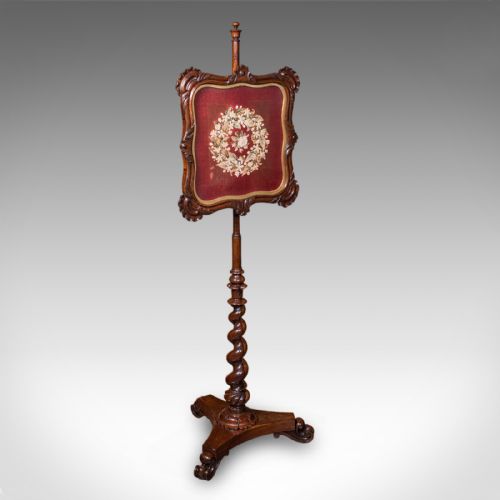


Embroidered Pole Screen
These embroidered pole screen pieces are adjustable fireside heat reflectors you will want for their decorative textile panels and fine timber stands.
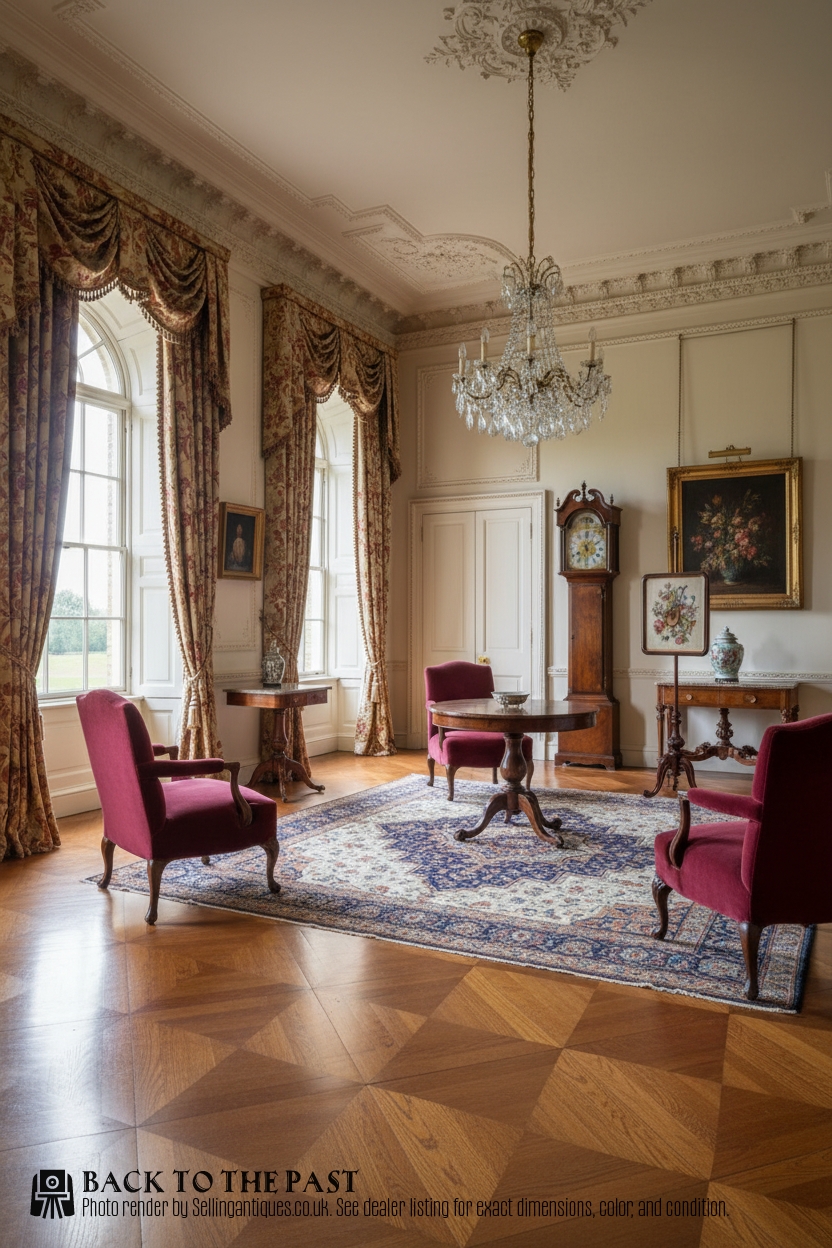
What an embroidered pole screen is
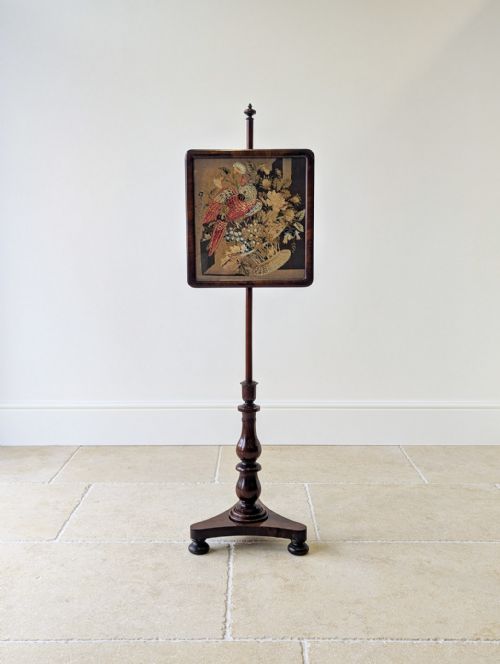
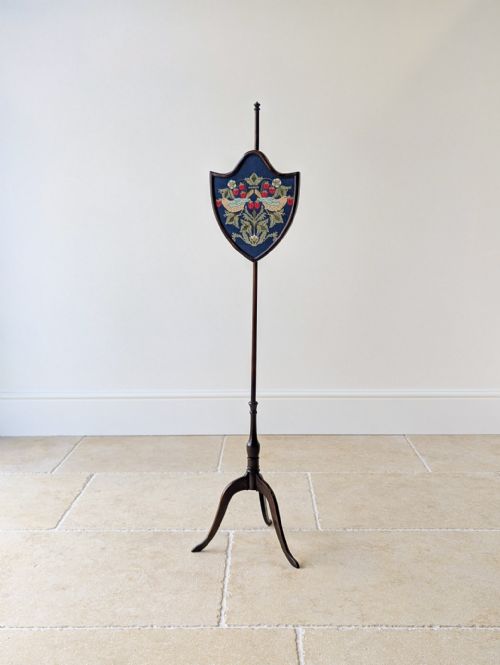
An embroidered pole screen stands near a fireplace to shield a person's face from the direct heat of the fire. The listings and archive show these items taking the form of adjustable screens mounted on vertical timber poles supported by pedestal bases.
Most examples you meet on this page date from the Georgian, Regency, William IV, and Victorian periods. You find both single screens and matched pairs constructed in timber such as mahogany, goncalo alves, rosewood, and satinwood.
How they were made
Cabinetmakers shaped dense hardwoods like mahogany, rosewood, and goncalo alves into slender vertical poles and stable platform or tripod bases. Brass mechanisms or wooden adjustment screws allowed the screen panel to slide up and down the pole to regulate the height.
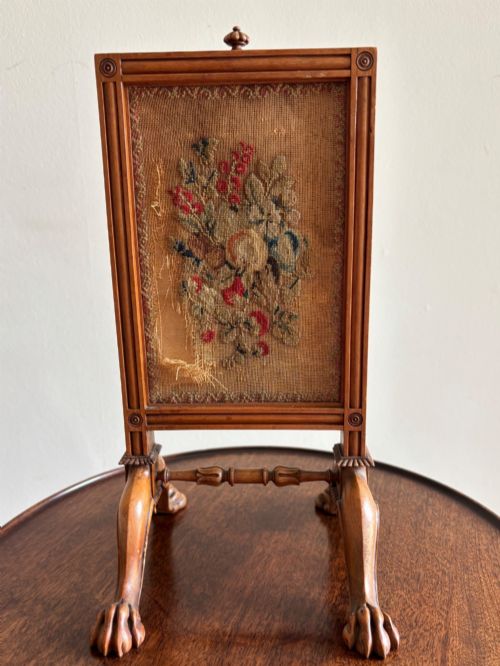
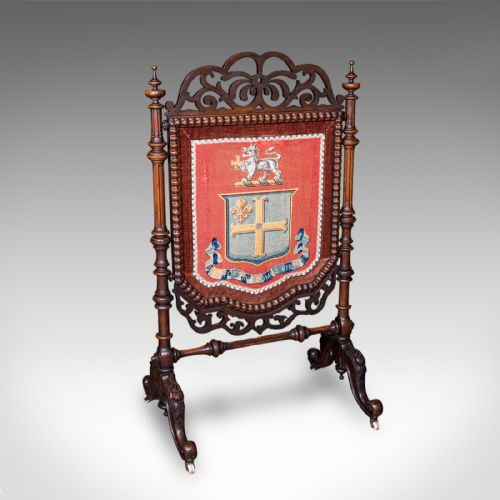
Craftspeople mounted textile panels, including embroidered wool and silk tapestry or damask silk, within wooden frames often protected by glass. These stitched surfaces required skilled needlework, utilising durable threads set into supportive fabric grounds.
Retail Price Guide 2026
Typical UK retail prices for embroidered pole screen, calculated from the Sellingantiques database of over a million retail prices indexed since 2003. This retail price guide relies exclusively on Sellingantiques data; no external sources or auction records are used, so the figures do not describe the wider market.
Listings combine timber varieties including mahogany, goncalo alves, rosewood, and satinwood with textile panels of wool, tapestry, and damask silk.
What varies in quality
The distinction between the ordinary and the exceptional rests on the choice of timber and the ambition of the woodwork. Figured mahogany, goncalo alves, or satinwood combined with well-turned pedestal bases and precise adjustment mechanisms lift a piece above standard utility items.
Needlework forms the other half of the judgement, where finely executed silk and wool embroidery holds greater visual interest than plain damask or worn textile panels. Matched pairs also command greater attention from collectors who seek symmetry for formal room layouts.
The Embroidered Pole Screen Glossary
- Pole screen
- A movable fireside screen with an adjustable panel mounted on a vertical wooden stand. It protects the face from excessive hearth heat.
- Damask silk
- A reversible figured fabric woven on a jacquard loom with patterns formed by contrasting warps and wefts. It appears frequently as panel upholstery.
- Goncalo alves
- A dense exotic hardwood with striking contrasting grain patterns used in Regency furniture. It provides a rich dark surface for decorative stands.
- Tapestry
- A form of heavy textile art woven or embroidered by hand with pictorial or decorative designs. These panels form the visual centrepiece of the screen.
- Adjustable
- Fitted with a mechanism to alter the height of the screen panel along the vertical pole. This allows the user to control the level of heat protection.
Frequently Asked Questions
How do you adjust the screen height?
A brass collar or wooden screw mechanism secures the framed panel to the vertical pole. Loosening this fixture allows the panel to slide up or down before tightening again at the desired level.
This functional design lets people seated near the hearth position the textile shield precisely where heat protection is required.
Where were pole screens used?
These items stood in reception rooms and parlours close to open coal or wood fires. Their primary purpose was to shield delicate complexions from the fierce heat of the hearth.
As heating methods changed, they remained in rooms as decorative furniture pieces that displayed fine needlework and timber turning.
How do I date a pole screen?
Dating relies on timber choices, leg designs, and the style of the base turning. Georgian and Regency examples often feature tripod legs and slender poles, while Victorian versions show heavier proportions.
Archival records and current listings demonstrate that these items span the late eighteenth century through the mid nineteenth century.
Are pairs common for pole screens?
Pairs appear occasionally in both current listings and archive records alongside single pieces. They were originally placed symmetrically on either side of a large fireplace or mantelpiece.
Finding a matching pair of poles and embroidered panels increases the visual impact in a larger period room.